General
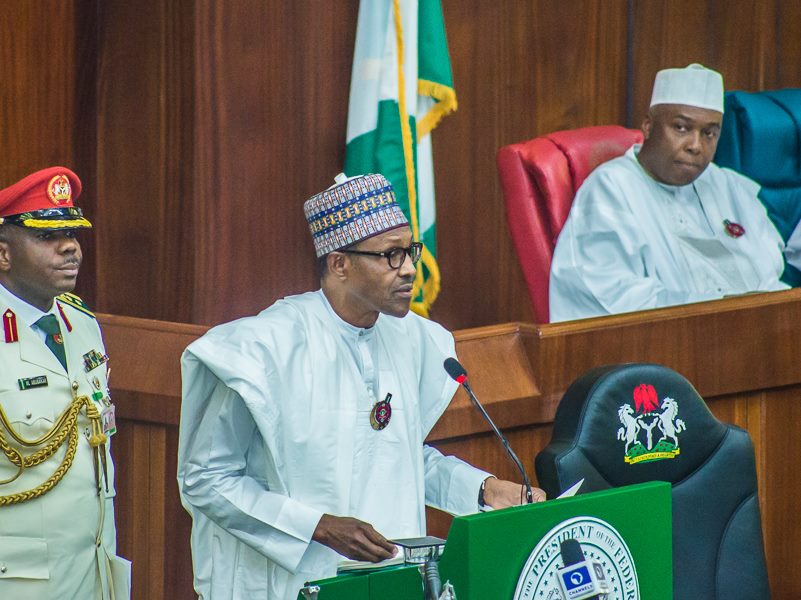
FG Shows Private Sector Opportunities in 2020 Budget
By Adedapo Adesanya
The federal government has urged stakeholders in the private sector in Nigeria to tap from the several opportunities tucked inside the 2020 Appropriation Bill, which was designed to reshape and sustain the economy.
This was the position of the Director-General, Budget Office of the Federation, Mr Ben Akabueze, at the 2019 Fellows’ Night and Investiture of the Institute of Directors (IoD) Nigeria, where he delivered a lecture on A Critical Analysis of the FGN 2020 Budget Proposals.
He emphasized that government was committed to strengthening the partnership with the private sector by bringing them onboard to invest in infrastructure through the private public partnerships (PPPs).
Mr Akabueze noted that government was committed to finding the resources for infrastructural investment to create favourable environment for the private sector to increase their investments, and significantly contribute to economic growth and job creation.
On the implications of global and domestic developments, he mentioned that global economic recovery was set to improve from 3.0 percent as projected by the International Monetary Fund (IMF) for 2019 to 3.4 percent in 2020, while sub-Saharan Africa is projected to continue to grow, rising from 3.2 percent in 2019 to 3.6 percent in 2020.
He said all areas including the financial sector had a lot to benefit from investing in government backed securities as this was a good opportunity for them to invest in Nigeria because key reforms such as the Strategic Revenue Growth Initiative (SRGI), would be implemented to improve revenue collection and expenditure management in the country.
Comparing the country’s total taxes to the nation’s gross domestic product (GDP), value added tax (VAT) to GDP, and excise to GDP with other African nations, Mr Akabueze explained that it indicates capacity to do a lot more to improve the country’s fiscal space.
“Key assumptions driving the budget are realistic, derived from extensive and robust modelling with comparative analysis.
“Achieving FGN 2020 budget objectives require bold, decisive, and urgent action. Government has always maintained a comparative posture to oil benchmark price. Government is determined to act as may be required,” he added.
General
NMDPRA Begins Stakeholder Talks on Cost-Reflective Petrol Pricing
By Adedapo Adesanya
The Nigerian Midstream and Downstream Petroleum Regulatory Authority (NMDPRA) has commenced consultations with industry stakeholders on the implementation of a cost-reflective pricing framework for Premium Motor Spirit (PMS), also known as petrol.
The move is aimed at promoting stability, transparency and long-term sustainability in Nigeria’s downstream petroleum sector.
The high-level stakeholder engagement brought together marketers, operators and other industry participants to deliberate on a pricing regime that reflects prevailing market conditions while balancing the interests of consumers, investors and petroleum operators.
According to the authority, the initiative follows a similar consultative approach recently adopted to address price distortions in Nigeria’s domestic liquefied petroleum gas (LPG) market.
Speaking on this, the regulator’s chief executive, Mr Rabiu Umar, said the engagement was designed to encourage transparent and solution-driven dialogue on emerging challenges in the downstream sector.
“The engagement was designed to foster transparent, inclusive, and solution-oriented dialogue with stakeholders to address emerging industry challenges, strengthen market surveillance, and enhance Nigeria’s energy security through a more efficient and resilient downstream market,” Mr Umar said.
The meeting was led by the Minister of State for Petroleum Resources (Oil), Mr Heineken Lokpobiri, who received recommendations from stakeholders and reaffirmed the federal government’s commitment to building a competitive downstream petroleum industry.
Mr Lokpobiri said the government would continue to work closely with industry players to implement policies that promote investor confidence while safeguarding consumers.
“The federal government will continue to collaborate with all stakeholders to implement policies that inspire investor confidence, protect consumers, ensure fair market practices, and support Nigeria’s long-term economic growth and energy security,” the minister said.
He added that the stakeholder engagement would continue until an acceptable pricing framework is achieved.
He also assured everyone that this strategic engagement would be an ongoing drive until a satisfactory outcome is achieved in the near term.
The NMDPRA said the consultations form part of ongoing efforts to deepen market efficiency, strengthen energy security and establish a transparent pricing framework capable of supporting sustainable investment across Nigeria’s downstream petroleum industry.
General
Nigeria Probes Big Tech Over Anti-Competitive Practices, News Content Use
By Adedapo Adesanya
Nigeria is investigating major technology companies over alleged anti-competitive practices and unauthorised use of news content following a directive from President Bola Tinubu to the Federal Competition and Consumer Protection Commission (FCCPC) on Monday.
The anti-trust commission launched an investigation into major technology companies over allegations of anti-competitive practices, unlawful use of news content and other actions said to be harmful to Nigerian media organisations.
The development was disclosed in a statement issued on Monday by the FCCPC’s Director of Corporate Affairs, Mr Ondaje Ijagwu, following a joint petition submitted to the Presidency by the Nigerian Press Organisation (NPO).
The NPO comprises the Newspaper Proprietors’ Association of Nigeria (NPAN), the Nigeria Union of Journalists (NUJ), the Broadcasting Organisations of Nigeria (BON) and the Guild of Corporate Online Publishers (GOCOP).
The commission will also investigate Generative Artificial Intelligence platforms operating in Nigeria as part of the inquiry.
The federal government conveyed the directive to the FCCPC in a letter signed by the Minister of Information and National Orientation, Mr Mohammed Idris.
The petition centres on concerns by media stakeholders over the growing influence of some digital platforms on the survival of Nigeria’s news industry.
NPO accused major technology firms, including Meta, Alphabet and X, formerly known as Twitter, as well as some Generative AI platforms, of engaging in practices that could weaken fair competition, threaten the financial survival of media organisations and violate the rights of publishers and content creators.
FCCPC Executive Vice Chairman and Chief Executive Officer, Mr Tunji Bello, said the commission would carry out a transparent and evidence-based investigation into the claims.
“We recognise the strategic importance of the media to Nigeria’s democracy and the equally significant role of technology in driving innovation and economic growth. Our responsibility is to objectively determine the facts and ensure that competition within the digital ecosystem remains fair, transparent, and consistent with Nigerian law,” Mr Bello said.
Bello said the inquiry was not based on any assumption of guilt but was aimed at establishing the facts and hearing from all parties involved.
“This inquiry is not directed at any entity by presumption of wrongdoing. Rather, it is an opportunity to carefully examine the facts, hear from all affected parties, and determine whether any conduct has resulted in anti-competitive outcomes or unfair business practices. Every party will be accorded a fair opportunity to present relevant information before any conclusions are reached.”
He said the commission would determine whether the alleged conduct violates the Federal Competition and Consumer Protection Act 2018 or any other relevant law.
The FCCPC had previously investigated Meta and secured a judgment against the company in 2025 over breaches of the FCCPA, including data violations, resulting in a $220 million fine. Meta has appealed the ruling.
According to the commission, the new investigation will focus on allegations of market dominance and possible anti-competitive conduct by the companies involved.
It will also examine claims that copyrighted news articles, broadcast materials and other original journalistic works were extracted, scraped, ingested or commercially used without authorisation for the training and development of Generative AI models.
Another issue under review is the alleged absence of fair commercial arrangements between global technology companies and Nigerian media publishers. At the centre of this is the claim that local media organisations have not been given meaningful opportunities to negotiate compensation or proper commercial terms for the use of their content.
The FCCPC noted that a similar intervention in South Africa led to an agreement under which Google would pay South African news media R688 million, equivalent to about $40 million, every year for a period of three to five years following agitation by media organisations and an investigation by the South African Competition Commission.
France fined Google €500 million in 2021 over failures in negotiations with news publishers and breaches linked in part to the use of publisher content by AI systems. Australia and Canada have also introduced bargaining frameworks that resulted in payment agreements between technology companies and publishers.
General
MTN’s CEO Ralph Mupita Joins Global Commission Shaping AI for Good
By Adedapo Adesanya
The chief executive of MTN Group, Mr Ralph Mupita, has been named as a commissioner on the AI for Good Global Commission, an initiative of the United Nations’ International Telecommunication Union that looks to expand digital access and accelerate the economic impact of responsible AI.
The MTN CEO was named alongside several leaders from government and business as a commissioner of the AI for Good Global Commission.
“It’s an honour to be one of the founding commissioners of the AI for Good Global Commission,” said Mr Mupita.
“At MTN Group, we believe that the developments in AI have the potential to advance health, education, food security and industrial productivity,” he added, noting that AI must be safe, ethical and globally inclusive, and that these perspectives align fully with the work of this global commission.
The commission is made up of over 40 founding members, including leaders from government, business and international organisations.
Other commissioners include Nvidia CEO, Mr Jensen Huang, Microsoft President, Mr Brad Smith and Mr Andy Jassy, their counterpart at Amazon.
The organisation builds on the Broadband Commission for Sustainable Development, which helped shape global priorities for extending digital inclusion and economic development.
The first meeting of the commission, which is co-chaired by Rwandan President Paul Kagame and Salesforce CEO Marc Benioff, will take place in Geneva, Switzerland.
MTN said that strategic priorities are to ‘leverage AI for growth’, targeting R30 billion in value-creation opportunities in the next three to five years.
Mr Mupita joined the board of Dangote Fertiliser in January as the firm prepares to expand and list on the Nigerian Exchange (NGX) Limited.
The South African also spearheaded the listing of MTN Nigeria on the Nigerian bourse in 2019, making it the second most valued company on the Nigerian stock market after BUA Foods Limited.
-
Feature/OPED6 years agoDavos was Different this year
-
Travel/Tourism10 years ago
Lagos Seals Western Lodge Hotel In Ikorodu
-
Showbiz4 years agoEstranged Lover Releases Videos of Empress Njamah Bathing
-
Banking8 years agoSort Codes of GTBank Branches in Nigeria
-
Economy3 years agoSubsidy Removal: CNG at N130 Per Litre Cheaper Than Petrol—IPMAN
-
Banking4 years agoSort Codes of UBA Branches in Nigeria
-
Banking3 years agoFirst Bank Announces Planned Downtime
-
Sports3 years agoHighest Paid Nigerian Footballer – How Much Do Nigerian Footballers Earn