Connect with us

General

General Electric Completes Four Hydro Turbines, Generator Projects in Nigeria

Published

on

general electric Hydro Turbines

By Adedapo Adesanya

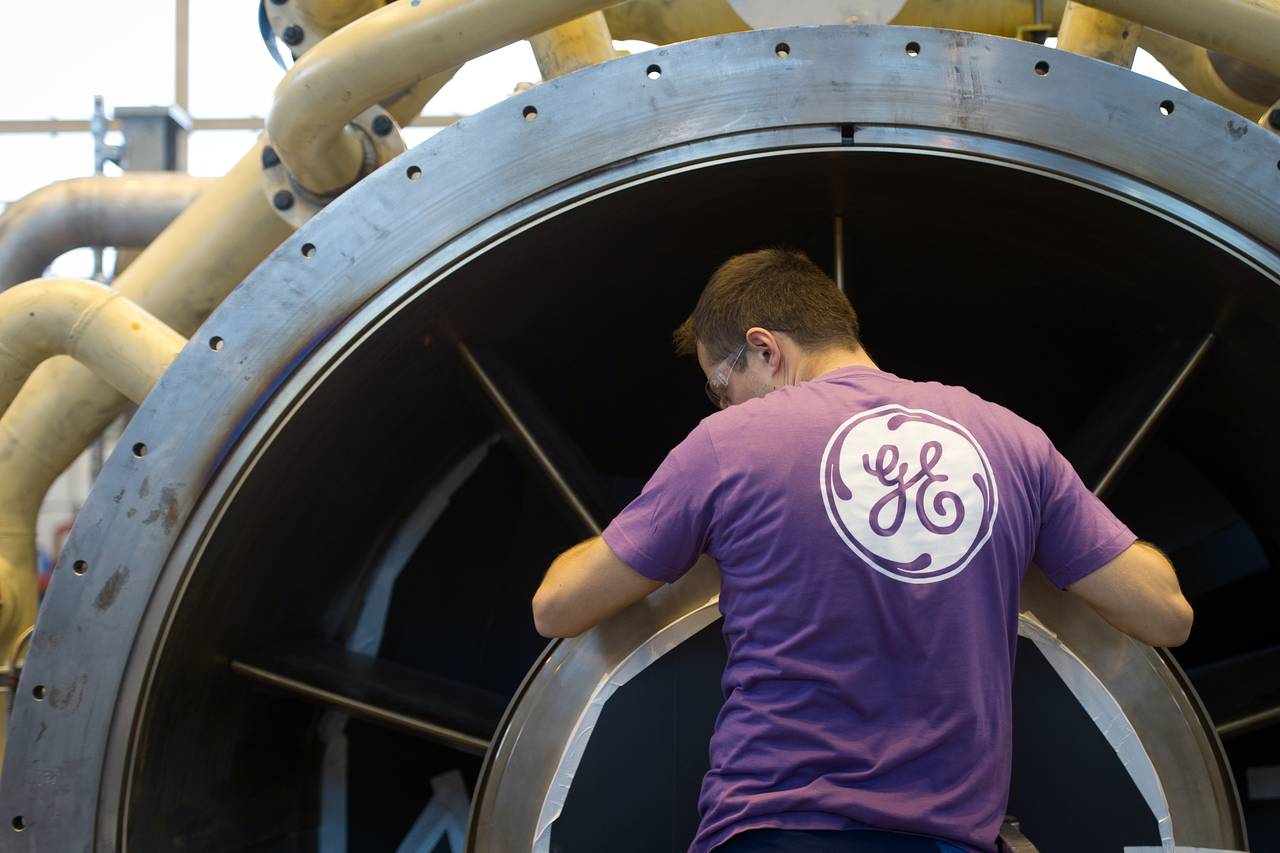
General Electric Vernova has completed the commissioning of the four 175 MW Francis hydropower turbines and generators at the Zungeru project in Nigeria, now in commercial operation, to boost electricity generation in Nigeria.

According to the firm, it was selected by the EPC (Engineering, Procurement, and Construction) arm of China National Electrical Equipment Corporation (CNEEC) to design, supply, supervise installation and commission the four hydropower units.

Located on the Kadina River in Niger State, the 700 MW Zungeru project is the second largest hydropower plant in Nigeria. With the beginning of operations, it is expected to meet around 10 per cent of Nigeria’s total domestic electricity requirements, with renewable and reliable energy.

The site will also help in controlling floods and support irrigation for the region.

The total exploitable potential of hydropower in Nigeria is estimated at over 14 GW and hydropower remains essential to help accelerate the energy transition in Nigeria, which has one of the worst electricity value chains in the world.

GE Vernova has been collaborating with energy stakeholders to deploy innovative technologies tailored to respond to the needs of the Sub-Saharan Africa region since the 1950s.

Speaking on the potential, Mr Brian Selby, Hydropower Asia Leader, GE Vernova, said the country has the resources to tap into opportunities available for hydro-electricity.

“Nigeria is gifted with large rivers and natural falls that create opportunities for hydropower development. As the Government of Nigeria continues to pursue the expansion of generation capacity and extend the capability of its power grid.

“We are happy to help take advantage of the country’s water reserves to meet its increasing demand for sustainable, reliable, and efficient power.”

“This project will have a wide-reaching impact on the country’s energy landscape. The Zungeru project received investment support from the Export-Import Bank (Exim Bank) of China and we are pleased to see it come to life,” he added.


Adedapo Adesanya is a journalist, polymath, and connoisseur of everything art. When he is not writing, he has his nose buried in one of the many books or articles he has bookmarked or simply listening to good music with a bottle of beer or wine. He supports the greatest club in the world, Manchester United F.C.

Click to comment

Leave a Reply

Your email address will not be published. Required fields are marked *

General

Nigerian Oil and Gas Park to Start Operations Q4 2026

Published

on

Nigeria oil and gas park scheme NOGaPS

By Adedapo Adesanya

The Nigerian Content Development and Monitoring Board (NCDMB) has reaffirmed that the anticipated Nigerian Oil and Gas Park Scheme (NOGaPS) will become operational by the fourth quarter of 2026.

According to a statement by the General Manager of Corporate Communications Division at NCDMB, Mr Obinna Ezeobi, ahead of the target date for the park located at Emeyal-1, in Ogbia Local Government Area of Bayelsa State,  the NCDMB is set to install a 2.5-megawatt Com- pressed Natural Gas (CNG) power plant at the park.

He added that the power plant is one of the key steps to getting the facility operational, as it will provide a reliable and sustainable electricity supply to support industrial operations within the park.

Mr Ezeobi gave the assurance after an assessment visit to the facility by key personnel of the Board.

According to the statement, the tour revealed significant progress across key infrastructure and support systems designed to position the facility as a major industrial hub for Nigeria’s oil and gas industry.

It added that the Nigerian Oil and Gas Park Scheme was conceived to deepen Nigerian Content by providing a conducive environment for the manufacturing of components, equipment and other inputs required by the oil and gas industry, while creating employment opportunities for over 2000 persons when fully operational, and stimulating economic growth.

The oil and gas park scheme is a purpose-built industrial park with manufacturing shop floors and factories, warehouses, training centres, mini estates, truck parking and holding spaces, fire stations, administrative blocks, and security services, among other things, and is a critical initiative of the board geared towards in-country capacity development through local manufacture of equipment components and spare parts required in the oil and gas industry.

Six parks have been conceptualised and are located in different parts of the country, and they form a key part of NCDMB’s strategy for sustainable local content development and industrialisation. Two of the parks at Odukpani, Cross River State, and at Emeyal 1, Bayelsa State, have been completed, and interested companies have begun to take up shop floors, preparatory to the commencement of operations.

Continue Reading

General

Yuno, Onafriq to Unlock Pan-African Payments for Global Merchants

Published

on

yuno Onafriq

By Modupe Gbadeyanka

A partnership for the integration of Onafriq’s leading pan-African payment network into Yuno’s orchestration platform has been entered into between the two organisations.

This collaboration gives merchants a single connection to Africa’s most expansive payments infrastructure, bringing the continent’s most expansive payments infrastructure to merchants worldwide.

Through this integration, Yuno’s clients gain instant access to Onafriq’s network spanning 43 African markets, nearly one billion mobile wallets, 500 million bank accounts, and 2,000 cross-border payment corridors, all through Yuno’s single, developer-friendly API.

The partnership is part of Yuno’s broader strategy to build a truly global platform that connects merchants to every meaningful payment method and network, regardless of geography. Following successful expansion in the Middle East, Europe, and Asia, Africa is a key pillar of Yuno’s next phase of growth.

For Onafriq, the integration with Yuno extends its reach to an entirely new segment of global merchants who now benefit from a streamlined entry point into African markets. The partnership reinforces Onafriq’s mission of making borders matter less, bringing together mobile money operators, banks, fintechs, and enterprises into one connected payment ecosystem.

“Africa represents one of the most exciting growth opportunities in global commerce, and yet too many merchants are still locked out by payment infrastructure that wasn’t built for scale.

“Our partnership with Onafriq changes that. By bringing their unmatched African network into our infrastructure layer, we’re giving our clients a single path to a continent-wide ecosystem with the reliability, compliance, and local depth they need to grow with confidence,” the chief executive of Yuno, Mr Juan Pablo Ortega, stated.

Also commenting, the chief executive of Onafriq, Mr Dare Okoudjou, said, “Africa’s payment landscape has never lacked ambition or momentum; what it needed is the right infrastructure that matches its pace.

“Our partnership with Yuno changes the equation for global merchants who want to be part of this growth story. Through a single connection, global merchants can reach consumers and businesses across Africa more seamlessly than ever before, while more people across the continent gain access to the digital economy on their own terms. For us, this is what making borders matter less looks like in practice.”

Onafriq’s infrastructure supports the full payment lifecycle, from real-time disbursements and omnichannel collections to card issuance, treasury management, and stablecoin settlement, all underpinned by local regulatory licences and ISO 27001 and CMML3-certified security.

For Yuno’s merchant base, this means the ability to pay out to mobile wallets, bank accounts, or cash pickup points, and accept payments across channels, without managing multiple integrations or compliance frameworks independently.

The integration is now live and available across Egypt, Ghana, Kenya, Nigeria, Cameroon, Côte d’Ivoire, and Uganda. Yuno’s clients can access Onafriq’s capabilities, including mobile money disbursements and collections, card issuance, and FX treasury services, directly from the Yuno dashboard with no additional contract or integration required.

Continue Reading

General

SERAP Sues NNPC Over Alleged N5.9bn Rebranding Expenditure

Published

on

serap nnpc

By Adedapo Adesanya

The Socio-Economic Rights and Accountability Project (SERAP) has dragged the Nigerian National Petroleum Company (NNPC) Limited to court over its alleged failure to account for N5.9 billion reportedly spent on its rebranding and transitioning from a corporation to a liability company.

In the suit filed at the Federal High Court in Abuja, SERAP is seeking an order compelling the national oil firm to explain how the funds were spent and disclose the officials and contractors involved in the process.

According to the organisation, the NNPC allegedly spent N2.9 billion from petroleum product proceeds on incorporation expenses, while the National Petroleum Investment Management Services (NAPIMS) reportedly charged another N2.9 billion to crude oil revenue for the same purpose, bringing the total expenditure to about N5.9 billion.

SERAP said it is seeking “an order of mandamus to direct and compel the NNPCL to account for about N5.9 billion allegedly spent on the rebranding of the NNPC to the NNPCL.”

The group also asked the court to compel the company to provide “a comprehensive reconciliation statement detailing the specific financial transactions relating to the N5.9 billion expenditure, including the identities of the contractors involved and how the funds were utilised.”

It further requested the disclosure of the names and official positions of government officials who authorised and approved the expenditure, as well as clarification on whether the spending complied with procurement laws and due-process requirements.

The suit, marked FHC/ABJ/CS/1248/2026, was disclosed in a statement issued on Sunday by SERAP Deputy Director, Kolawole Oluwadare.

The legal action was filed on behalf of SERAP by lawyers, Ms Oluwakemi Agunbiade, Ms Kehinde Oyewumi and Mr Andrew Nwankwo.

According to SERAP, the Senate Committee on Public Accounts had reportedly raised concerns over the expenditure categorised as incorporation and transition costs during the transformation process.

“The Committee described the spending of the ₦5.9 billion as excessive, unjustifiable and deserving of further explanation, investigation and legislative scrutiny in the public interest,” the organisation stated.

SERAP argued that the public has a right to know how the funds were spent, insisting that transparency and accountability must guide the operations of the state-owned oil company.

“The NNPCL has a legal responsibility to explain whether the ₦5.9 billion expenditure represents value for money, constitutes lawful spending of public funds, and complies with applicable due-process requirements,” SERAP said.

“There ought to be full transparency and accountability regarding the reported ₦5.9 billion spent on rebranding NNPC to NNPCL. Nigerians have the right to know who approved the expenditure, who received the funds, the nature of the services rendered, and whether due process and procurement requirements were strictly followed.”

The organisation added that disclosing the identities of the officials involved and the approval process would enable Nigerians to assess whether the expenditure was properly authorised and in line with extant laws.

SERAP further argued that the alleged failure to account for the funds reflects broader accountability concerns within the NNPCL.

“The failure to account for the spending of the ₦5.9 billion on the rebranding from NNPC to NNPCL reflects a broader failure of accountability and is directly linked to the institution’s continuing inability to uphold transparency and accountability principles,” it stated.

Continue Reading

Trending