General
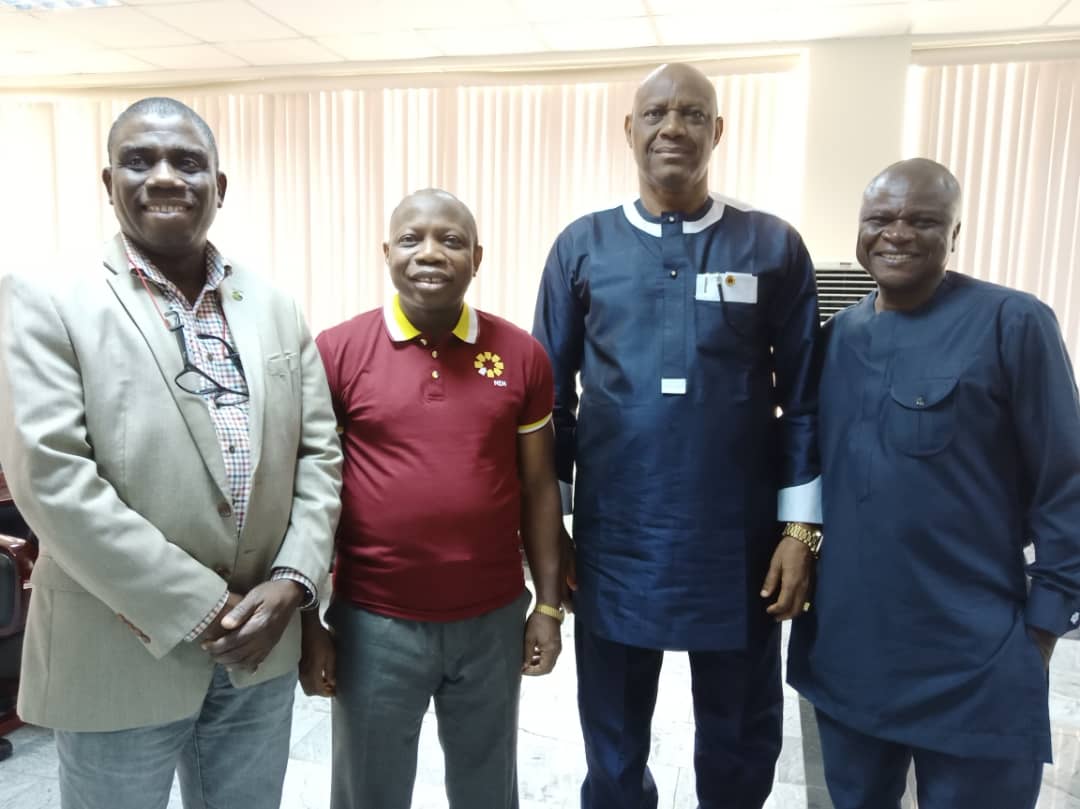
Governor, Others for 2019 ‘Iyara Day’ October 19
Plans have been concluded by a group known as the Iyara Development Movement (IDM) for the celebration of another Iyara Day on Saturday, October 19, 2019.
According to a statement issued by the organization, the event is scheduled to hold at Iyara Town Hall Premises, Iyara, Kogi State by 10 am.
In the statement dated September 5, 2019 and jointly signed by the President of IDM, Professor Mike Ikupolati, and its Director General, Mr Funso Fayomi, it was revealed that the 2019 Iyara Day celebration is the 26th in the series and will feature cultural activities by various groups to make the event memorable.
The theme of the celebration, according to the statement, which was made available to journalists, is Operation Quench Thirst in Iyara Water Project and the event would be marked with fanfare such as cultural dances, displays, and celebrations.
The water project is estimated to cost N100 million.
It will be recalled that the fund raising for the ambitious project started during the 25th Anniversary of Iyara Day in September last year.
Expected at the event, which had been endorsed in the past by former president Ibrahim Babangida and Mrs Kemi Nelson, are the Executive Governor of Kogi State, Mr Yahaya Bello, who is the Special Guest, while the Minister of State for the Federal Capital Territory, Mrs Ramatu Tijani Aliyu, is the Special Guest of Honour.
Others that will add colour to the ceremony are the Board Chairman of Financial Reporting Council of Nigeria and a top management consultant, Mr Dotun Sulaiman, who will serve as the Chairman of the event and the Chairman of Nigerian Insurance Association, who is also the Vice President of the African Insurance Organization and Managing Director of NEM Insurance PLC, Mr Tope Smart, who is the Chief Launcher.
Ikupolati and Fayomi revealed in the statement that the water project was meant to provide potable water for the people of the community and put an end to years of suffering of the residents due to unavailability of potable water in the community.
“This year’s Iyara Day has been planned to be the best in recent times.
“We are happy that we are all alive to celebrate this special day and we look forward to seeing our people trooping to the town and joining us in this celebration and fund-raising ceremony.
“We use this opportunity to invite all Okun sons and daughters to this special event and we assure them that they will be glad to be part of this year’s event that promises to be full of actions, colour and tradition,” they said in the statement.
It will be recalled that in 1993, a group of young persons identified the advantages of community day celebration they witnessed in their respective areas of domicile and were motivated to replicate same in Iyara, headquarters of Ijumu LGA, Kogi State.
The celebration was the first of its kind in Okunland and it has become an avenue to unite the people of the community.
Ikupolati and Fayomi revealed in the statement that the laudable idea of Iyara Day is the flagship of such celebrations in Okunland and that it has become a reference point, which others have since emulated.
The duo emphasized in the statement that Iyara Day has become an avenue to unite the people of the community and that it is getting better by the day.
They recalled that the jubilee celebration of Iyara Day, which they said held in September 2018, is still being talked about by the people of the community and others, adding that this year’s celebration would be far better.
“Iyara Community will always be grateful to God for what He has done for us and we will continue to showcase those things that unite us as a people.
“We are committed to the development of Iyara Town and its people and we are proud of the dreams of the founding fathers of Iyara Community and Iyara Development Movement (IDM) will continue to do its best to move the community and it’s people forward.
“2019 Iyara Day will surely mark a turnaround for the community and it will also be an avenue to socialise and make better plans for the development of the community and its people.
“May you be honoured and celebrated as you be a part of this event and we are sure that your efforts will not be in vain as you support our humble efforts of uplifting our common heritage,” the statement read.
General
Preparing Pot of Jollof Rice Now Costs Nearly N30,000—SBM Jollof Index
By Adedapo Adesanya
Preparing a pot of Nigeria’s most valued delicacy, jollof rice, costs as much as N29,578 in June 2026 compared to N25,798 in July 2025, an increase of 14.6 per cent, according to a new survey by SBM Intelligence.
The data and research firm, in its Jollof Index Q2 2026 report, titled Rebasing, Redefining, and the Weather’s Toll on the Pot, stated that it rebased the index in the July edition to a higher standard as of July 2025 and introduced re-standardised ingredient measures.
According to the report, the index now more accurately captures how households navigate the current affordability crisis.
The study collected monthly price data on 12 key ingredients: rice, vegetable oil, turkey or chicken, beef, tomatoes, pepper, onions, tinned tomatoes, salt, curry, thyme, and seasoning cubes from 13 markets across Nigeria’s six geopolitical zones.
The markets include Nyanya and Wuse II (North Central), Bauchi (North East), Kano (North West), Awka and Onitsha (South East), Port Harcourt, Calabar Municipal, and Bayside Mbakpa (South South), and Bodija, Dugbe, Trade Fair, and Balogun (South West).
The report stated that the upward trajectory in the cost of jollof rice since July 2025 was non-linear, with prices dipping in September and October 2025 before accelerating from November through the first half of 2026.
It revealed that the index has risen from N4,087 in July 2016 to N29,578 in June 2026, a staggering 624 per cent increase over 10 years.
“The data confirms that food inflation is not a cyclical phenomenon but a structural crisis, embedded in Nigeria’s failure to secure supply chains, stabilise its currency, invest in agricultural resilience, and now adapt to a changing climate,” the SBM survey stated.
Throughout the second quarter of 2026, Nigeria’s agricultural supply chain has been gripped by a compounding crisis driven by extreme weather patterns and structural logistical failures, the report stated.
From April through June, reports from urban markets across the country- Port Harcourt, Calabar, Onitsha, Lagos, Ibadan, Bauchi, Kano, and Abuja- revealed a consistent pattern of food scarcity and sharp price volatility.
Meanwhile, the National Bureau of Statistics (NBS) said Nigeria’s food inflation stood at 17.52 per cent on a year-on-year basis in June.
“The crisis has been most acute for perishable crops, particularly tomatoes and peppers, but its reach has extended to staples such as yams, plantains, garri, and even grains.
“Across every region, the story is the same: heavy rains have flooded roads, damaged farmland, delayed harvests, and driven up transport costs. Consumers are adapting, but their options are narrowing,” the report stated.
According to the report, consumers across the country are responding in similar ways: buying in smaller quantities, substituting fresh produce with dried or processed alternatives, and reducing portions.
“But these are coping strategies, not solutions,” the report added.
Geographically, the gap between Nigeria’s cheapest and most expensive markets has widened to N14,700.
According to the SBM report, Calabar Municipal is the most expensive market to cook a pot of jollof rice at N34,750, while Awka is the cheapest at N22,050.
“The most expensive markets are either in the South-South (where protein costs and import restrictions have surged) or in Lagos (the import gateway).
“The cheapest markets are in the South-east, which has benefited from local farming and shorter supply chains,” the report stated.
In North-central, ingredient prices at Abuja’s two markets, Nyanya and Wuse II, rose significantly.
Over the year to June 2026, Nyanya rose from N24,300 to N25,450, a modest 4.7 per cent increase, while Wuse II climbed from N28,150 to N29,200, a 3.7 per cent increase.
The report stated that Abuja’s food economy is fundamentally distorted by its dependence on distant supply corridors.
“Every grain of rice, every tomato, every onion must travel from Benue, Kaduna, Nasarawa, Niger, or beyond.
“When diesel prices surge, when insecurity blocks roads, when checkpoints multiply, or when heavy rains flood roads, Abuja’s markets feel it first and most acutely,” the report stated.
In the North-east, Bauchi recorded the most dramatic price movement of any market. The index fell from N38,850 in July 2025 to N32,350 by June 2026, a 16.7 per cent decline.
This correction followed a period of hyperinflation in mid-2025, during which Bauchi’s index peaked above N41,000.
“The decline reflects a combination of factors: a localised influx of early harvest yields, a collapse in demand as prices became unsustainable, and some improvement in supply routes,” the report stated.
In the North-west region, Kano’s Jollof Index rose from N24,520 in July 2025 to N25,820 in June 2026, a 5.3 per cent increase.
The modest rise showed a deeper reality because Kano’s index has been structurally expensive for years, driven by high protein costs and logistical challenges in moving goods into the region.
“Customers will have less money to spend on beauty products when they are struggling to buy food,” a cosmetics seller in Kano captured the sentiment.
Additionally, the South-east remains Nigeria’s cheapest region for jollof, but the gap with the rest of the country is narrowing.
At Awka, the index price of jollof rice rose from N21,700 in July 2025 to N22,050 in June 2026, a 1.6 per cent increase, while the index price at Onitsha market climbed from N22,200 to N22,550, a similar increase.
“These are the only markets below N23,000. The region’s relative affordability reflects its strong local farming culture and shorter supply chains,” the report stated.
It further clarified that the trend is upward because of the South-east’s reliance on food imports from North-central states for staples such as yams and vegetables.
The report stated that this reliance exposed the region to the same transport cost increases that impact Abuja and Kano.
The South-south region recorded the steepest increases of any zone, driven by a combination of structural shifts, policy changes, weather disruptions, and logistics costs.
Port Harcourt rose from N26,400 in July 2025 to N31,200 in June 2026, an 18.2 per cent increase.
Calabar Municipal jumped from N25,500 to N34,750, a 36.3 per cent surge, while Bayside Mbakpa climbed from N25,500 to N34,650, a 35.9 per cent increase.
The South-west region, and Lagos in particular, recorded dramatic price increases.
According to the report, the index price at Trade Fair and Balogun markets rose from N23,200 in July 2025 to N34,700 in June 2026, a 49.6 per cent increase, the sharpest of any market.
“The surge reflects Lagos’s position as Nigeria’s import gateway,” the SBM report stated.
According to the survey, when global oil prices spike, when the naira weakens, when shipping costs rise, or when heavy rains disrupt supply routes, Lagos feels it first.
The Iran war fuel shock in March 2026 pushed both markets from N20,400 in February to N25,200 in March, a 23.5 per cent monthly increase, the report stated.
The upward momentum continued through April, May, and June.
At Ibadan’s markets, Bodija and Dugbe, prices rose more moderately but still significantly.
Both increased from N25,930 in July 2025 to N28,550 in June 2026, a 10.1 per cent rise.
“The gap between Lagos and Ibadan has widened, reversing a trend of convergence seen in previous years.
“In Oyo State, researchers reported that fresh pepper, tomatoes, yam, and plantain are in extreme short supply,” the report stated.
General
Xenophobia: Reps to Document Losses, Seek Compensation For Nigerians in South Africa
By Adedapo Adesanya
The House of Representatives has called for a comprehensive investigation into the losses, casualties and properties abandoned by Nigerians following recent xenophobic attacks in South Africa.
This development comes after the final batch of Nigerians was evacuated from South Africa following mass protests calling for the exit of other Africans from their country, leaving many to abandon their livelihoods and businesses.
The lawmakers urged the federal government to intensify diplomatic engagements, pursue legal measures and strengthen bilateral cooperation with South Africa to ensure the safety and protection of Nigerians living in the country.
The resolution followed the adoption of a motion sponsored by the member representing Ikorodu Federal Constituency of Lagos State, Mr Babajimi Benson, during Tuesday’s plenary session presided over by Speaker Abbas Tajudeen.
The motion seeks to mandate the House Committees on Diaspora and Foreign Affairs to document the human and economic losses suffered by Nigerians during the attacks, compile an inventory of abandoned properties and recommend diplomatic and legal measures to improve the protection of Nigerians residing in South Africa.
Lawmakers argued that a thorough assessment of the impact of the attacks is necessary to support affected Nigerians and strengthen the country’s response to future incidents.
Also at plenary, the House considered a motion calling for a comprehensive audit of all seized, forfeited and recovered assets since May 29, 1999.
The motion, sponsored by Ibe Osonwa, who represents Arochukwu/Ohafia Federal Constituency of Abia State, advocates the creation of a national digital registry of recovered assets and the establishment of an ad hoc committee to enhance transparency, accountability and legislative oversight in asset management.
General
FG to Partner Stakeholders for Affordable, Inclusive Housing
By Aduragbemi Omiyale
The federal government has promised to collaborate with stakeholders in the real estate sector to drive affordable and inclusive housing, aligning with broader initiatives aimed at improving access to decent homes for low-income and informal-sector workers.
The Minister of Housing and Urban Development, Mr Muttaka Rabe Darma, made this pledge at the 2026 Abuja International Housing Show (AIHS), where industry heavyweights like Dangote Cement, HBM Nigeria and others showcased their products.
Mr Darma noted that the government was ready to partner with organisations to address Nigeria’s housing challenges, remarking that the exhibition’s theme, Housing Solutions for Low-Income and Informal Workers in Africa, aligned with government efforts to expand access to affordable and inclusive housing.
He lauded Dangote Cement and others for their significant contribution to affordable housing and infrastructure development in Nigeria, describing them as key partners in efforts to bridge the nation’s housing deficit and improve access to quality building materials.
The Minister also commended Mr Aliko Dangote for his commitment to Africa’s industrialisation and economic transformation, noting that his investments continue to drive sustainable growth across the continent.
In the same vein, the chief executive of AIHS, Mr Festus Adebayo, described Dangote Cement as a dependable partner whose consistent support has contributed to the growth and success of the annual housing exhibition.
Dangote Cement’s Regional Sales Director for North Central, Mr Bankole George, who represented the National Sales Director, Dolapo Alli, said housing remains critical to dignity, social stability, economic productivity and inclusive development.
He identified major barriers to affordable housing as high land costs, expensive building materials, limited access to mortgage financing, weak rental systems and planning regulations.
He advocated innovative housing finance models tailored to low-income earners and informal workers, including micro-mortgages, rent-to-own schemes, cooperative savings programmes, employer-assisted housing and incremental housing loans.
The exhibition attracted thousands of policymakers, investors, housing professionals, exhibitors and delegates from several countries, reinforcing its status as one of Africa’s leading platforms for housing and urban development dialogue.