
General
How to Apply for Gulder Ultimate Search: The Age of Craftsmanship


By Ashemiriogwa Emmanuel
Popular Nigerian television reality show, Gulder Ultimate Search (GUS) is making a return to TV screens after going off-air for over half a decade.
The survival reality show, which dominated the Nigerian airwaves in the early 2000s, was created and sponsored by Nigerian Breweries Plc to promote the Gulder Lager Beer with its first season premiered in 2004.
With 11 epic seasons streamed on air, the show went on to become the most-watched reality TV series in Nigeria before went on break in 2014.
The come-back of the series was announced by the Corporate Affairs Director, Nigerian Breweries Plc, Mrs Sade Morgan, on Wednesday and she was quoted as saying, “We are really excited to be bringing back the Gulder Ultimate Search for the viewing pleasure of Nigerians who have over the years continued to call for the return of the show.”
The comeback of this year’s season is themed The Age of Craftsmanship as registration for participants kicked off on September 1 and will close on September 8, 2021.
Speaking on how to apply for Gulder Ultimate Search, Mrs Morgan said the interested applicants must be Nigerians and must fall within the age bracket of 21-35 years.
To register, applicants will have to visit the Gulder Ultimate Search official website (www.gulderultimatesearch.ng) to submit their data.
She said that the screening session for the show will commence September 13 in Abuja and Enugu, while individuals in Lagos who want to take part should take note of the kick-off for the screening exercise which is on September 16.
The show will officially begin October 16, 2021, and will run till December 19, when the grand finale will hold.
However, the host of the show remains unknown and the location of this edition’s hunt has also not been disclosed.
As it has always been, the tradition of the show involves contestants who will be camped in different parts of the country to thrive in wild in their pursuit for a hidden treasure that brings to the last person standing instant fame and fortune.
The cash prize for the last man standing has in time risen from N3 million from the first edition to N10 million along with a brand new SUV, which was given to the winner of the last edition.
While the prize for this year’s edition is yet unknown, the series will be streamed on DStv and other local stations across the country for people to watch in their homes.




By Modupe Gbadeyanka
Celebrated broadcaster with Arise TV, Mrs Ayo Mario-Ese, has charged women to be open to collaboration and not limit themselves.
The charming media personality was one of the panellists at the UBA Business Series themed Introducing Gen W – The Evolved Woman, held at the UBA House in Lagos last Thursday.
At the event moderated by popular actor, Mr Tobi Bakre, the Morning Show anchor on Arise TV expressed worry about females who are usually laidback about speaking up and sharing their achievements, and said that women need to own their stories.
“A lot of women are doing phenomenal work and are sometimes afraid of showcasing what they are doing. As an evolved woman, you have to find out what you are comfortable doing, create your own unique offering, and also be open to collaboration,” she submitted.
Another panellist, Ms Joycee Awosika, described an evolved woman as one who has awareness of who she is.
“That woman does not need to ask to sit at the table; she is creating her own table and adding value. As your company is growing, you must grow too, and always do an audit of where you need to become a better leader,” the energy economist stated.
For a digital entrepreneur, Ms Tomike Adeoye, the question of what a woman is bringing to the table has now become obsolete, as the evolved woman is now bringing their own table.
“She is now more vocal about their struggles, setting the standards, and she is not ready to give up on her dreams,” she declared.
For the founder of Fine-Funky, Ms Olufunke Davies, she remarked that, “Creating unique designs that are affordable remains my driving force and something that has helped me grow as an evolved woman.”
In her remarks, the Group Head for Brand, Marketing and Corporate Communications at UBA, Ms Alero Ladipo, said, “Raising each woman is actually not that hard, because everyone has their community as well as their story; and so as women, we need to take a position so that we can give to others.”
She said the Gen W platform of the lender is dedicated to the evolved woman, adding, “Through expert insights, real stories, and practical resources, the platform connects women who are building brands, creating businesses, growing careers, and leading across industries. They also have access to a plethora of discounted products and loans. The best part: it is open to every woman. No UBA account needed. This is Gen W, for the evolved woman.”
This edition of the UBA Business Series was hosted to mark International Women’s Month.

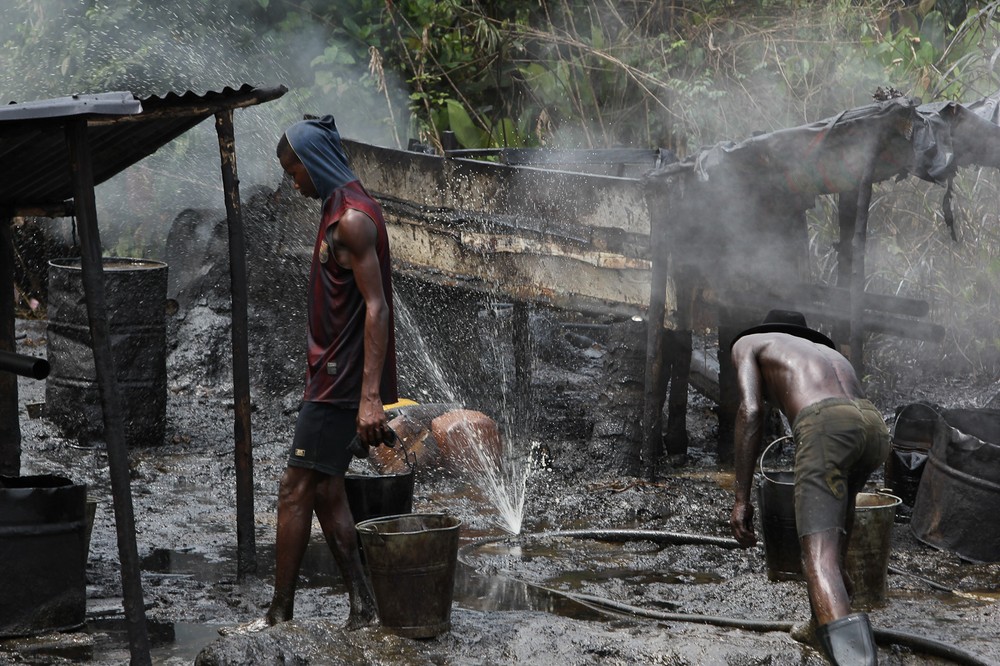
By Adedapo Adesanya
The Nigerian Navy has intensified its crackdown on crude oil theft and illegal bunkering, destroying a reactivated illegal refinery site in Rivers State and intercepting suspected stolen petroleum products in Calabar.
The Director of Naval Information, Captain Abiodun Folorunsho, disclosed this in a statement on Sunday in Abuja, revealing that personnel of the Nigerian Navy Ship SOROH, operating under Operation Delta Sentinel, destroyed a reactivated illegal refinery site at Okolomade Community in Abua-Odual Local Government Area (LGA) of Rivers State.
He said the action followed credible intelligence that a previously dismantled illegal refining site had resumed operations.
According to him, an Anti–Crude Oil Theft (Anti-COT) team deployed to the location discovered that the dismantled refining oven had been reconstructed.
“Further exploitation of the area led to the discovery of additional refining equipment and storage facilities containing about 3,000 litres of product suspected to be illegally refined Automotive Gas Oil (AGO),” he said.
Mr Folorunsho added that the illegal refining infrastructure—including ovens, storage tanks, hoses, connected pipes and newly acquired metal components used for illegal refining—was destroyed in line with operational procedures.
He said personnel of the Nigerian Navy Ship Victory, in another operation, intercepted about 3,950 litres of suspected stolen petroleum products at the Nigerian Ports Authority (NPA) area in Calabar, Cross River.
He said the interception was based on credible intelligence on suspected siphoning of petroleum products from vessels berthed at the port.
The naval patrol team, according to him, swiftly deployed to the area and traced the illegally siphoned products to a trailer park within the port facility.
“On sighting the naval patrol team, the suspected perpetrators fled the scene, after which the area was cordoned off and the illegally siphoned products secured,” he said.
The official said further inspection led to the recovery of about 3,950 litres of Automotive Gas Oil stored in drums and jerrycans, which had been evacuated to the naval base for further necessary action in line with extant regulations.
He noted that the successes aligned with the directive of the Chief of the Naval Staff, Vice Adm. Idi Abbas, to intensify operations against crude oil theft and other maritime crimes across Nigeria’s maritime domain.
The captain reiterated the Navy’s commitment to sustaining the operational tempo of Operation Delta Sentinel through intensified surveillance, patrols and intelligence-driven operations aimed at combating crude oil theft, illegal bunkering and other forms of economic sabotage.


Search Engine Optimization isn’t what it used to be.
Gone are the days of stuffing keywords, buying random backlinks, and expecting overnight rankings. Today, SEO is a sophisticated blend of technical precision, content authority, brand positioning, and strategic digital PR.
At RiseGrower.com, we’re launching with one mission:
To help brands grow through ethical, scalable, authority-driven SEO.
This isn’t just another SEO agency. This is the next evolution of ranking strategy.
🌍 SEO in 2026: What Has Changed?
Search engines—especially Google—have become dramatically smarter.
Modern ranking systems analyze:
- Topical authority
- Content depth and expertise
- User engagement signals
- Link quality (not quantity)
- Brand credibility
- Search intent satisfaction
SEO today is no longer about “gaming the algorithm.” It’s about becoming the most trusted answer in your industry.
That’s where RiseGrower comes in.
🚀 What RiseGrower.com Is Built For
We specialize in performance-focused SEO strategies designed to:
- Increase organic traffic
- Improve high-intent keyword rankings
- Strengthen domain authority
- Build sustainable backlink profiles
- Turn search visibility into revenue
Our approach combines:
- Advanced technical SEO audits
- Strategic content architecture
- Authority guest posting campaigns
- White-hat link acquisition
- On-page optimization
- Data-driven reporting
We don’t chase vanity metrics. We build growth systems.
🧠 Our Philosophy: Authority Wins
Search engines reward expertise and trust.
That’s why our strategy centers around three pillars:
1️⃣ Topical Authority
We help brands dominate entire keyword clusters—not just single keywords.
2️⃣ Editorial Authority
Through high-quality guest posting on real industry publications, we build contextual backlinks that move rankings safely and effectively.
3️⃣ Technical Excellence
From crawl optimization to structured data, we ensure search engines fully understand and prioritize your content.
🔥 Why Most SEO Strategies Fail
Many businesses struggle with SEO because:
- They focus only on backlinks without strategy
- They publish content without search intent research
- They ignore technical site health
- They chase short-term wins instead of long-term growth
SEO is not a trick.
It’s a system.
RiseGrower builds systems.
📊 Our Approach Is Data-Driven
Every campaign starts with:
- Competitive analysis
- Keyword gap research
- Link profile audit
- SERP intent mapping
We analyze what’s ranking—and why.
Then we engineer a strategy that outperforms it.
🏢 Who We Work With
RiseGrower is built for ambitious brands:
- SaaS companies
- eCommerce brands
- Agencies
- Startups
- Enterprise businesses
- Niche industry leaders
If your goal is sustainable organic growth, you’re in the right place.
⚖️ White-Hat SEO Only
We believe in:
- Real editorial placements
- Ethical outreach
- Genuine authority building
- Search engine compliance
We do not use:
- Private Blog Networks (PBNs)
- Spammy link schemes
- Automated backlink tools
- Manipulative ranking shortcuts
Long-term growth requires integrity.
📈 The Rise of Performance-Based SEO
The future of SEO isn’t “deliverables.”
It’s measurable outcomes.
At RiseGrower, we align our strategy with:
- Ranking milestones
- Traffic growth targets
- Lead generation goals
- Revenue impact
Because rankings are only valuable if they drive business growth.
🌟 What Makes RiseGrower Different?
We blend:
- SEO strategy
- Digital PR
- Authority guest posting
- Content intelligence
- Conversion-focused thinking
We don’t just improve rankings.
We build market leaders.
🔮 The Future of Search
AI-generated content is flooding the internet. Competition is rising daily.
Search engines will increasingly reward:
- Authentic expertise
- Brand mentions
- Trusted backlinks
- Valuable long-form content
- Real-world credibility
The brands that invest in authority now will dominate tomorrow.
RiseGrower was created for that future.
🚀 Launching Soon
RiseGrower.com is preparing to launch with a clear promise:
Growth through strategic SEO authority.
If you’re ready to:
- Outrank competitors
- Scale organic traffic
- Build long-term visibility
- Turn search into revenue
We’re ready to grow with you.











-
 Feature/OPED6 years ago
Davos was Different this year
-
Travel/Tourism10 years ago
Lagos Seals Western Lodge Hotel In Ikorodu
-

 Showbiz3 years ago
Estranged Lover Releases Videos of Empress Njamah Bathing
-
 Banking8 years ago
Sort Codes of GTBank Branches in Nigeria
-

 Economy3 years ago
Subsidy Removal: CNG at N130 Per Litre Cheaper Than Petrol—IPMAN
-

 Banking3 years ago
Sort Codes of UBA Branches in Nigeria
-

 Banking3 years ago
First Bank Announces Planned Downtime
-

 Sports3 years ago
Highest Paid Nigerian Footballer – How Much Do Nigerian Footballers Earn