Connect with us

General

Ikeja Electric Begins Electronic Tagging of Poles for Better Services

Published

on

Ikeja Electric Award

By Modupe Gbadeyanka

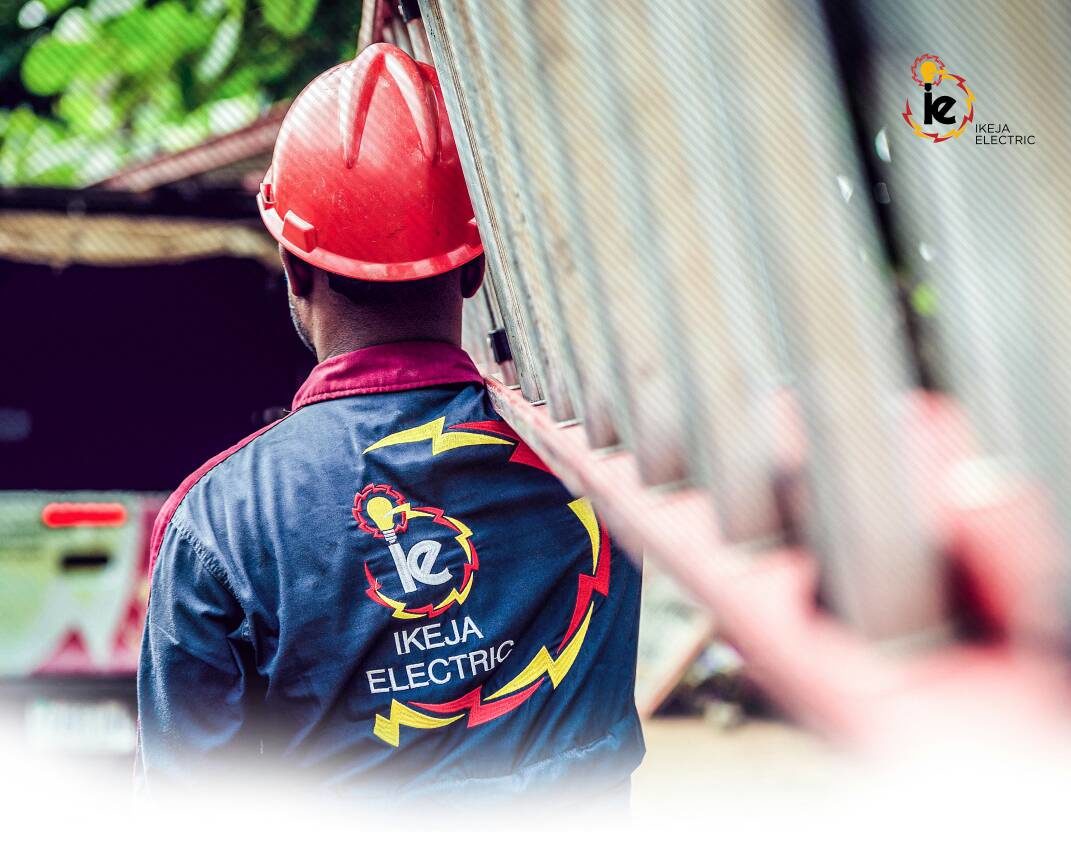
In order to further optimize operations through adequate maintenance of installations and reduction of downtime, Nigeria’s leading Electricity Distribution Company, Ikeja Electric Plc (IE), has commenced the electronic tagging of electricity poles across its network.

The exercise known as E-Pole Tagging Project entails labelling of all 11KV and 33KV High Tension (HT) poles with electronic Quick Response (QR) Code stickers. It will accelerate fault clearing, ensure proper record keeping for poles and feeders that need urgent maintenance to bring about stable power distribution to customers.

Speaking on the initiative, Head of Corporate Communication at Ikeja Electric, Mr Felix Ofulue, said, “At Ikeja Electric, we are consistent and committed to improving our operations in line with best practice in order to give the desirable services to our customers. We are engaging in activities that will provide significant outcome and impact positively on the sector.”

“This consistency shows that we are driven by commitment and passion to add value to the lives of our customers through exploring ways of improving the network,” he said.

The project, according to the company, kicked off three weeks ago and is expected to end by December 31, 2019. 

It will cover 274 units of 11KV overhead Feeders and 64 units of 33KV overhead feeders. The electronic stickers are designed in QR Code (Quick Response Code) format. Information about the feeders and poles are embedded into the fibre metallic stickers that are attached to the poles.

These information can be read by scanning the QR Code on the stickers pasted on the poles with any smartphone devices. The scanned information will show the Index Number, Feeder Name, Pole Material Type (Wooden or Concrete), Pole ID, Longitude/Latitude and Pole Structure (Single or Dual Poles).

The initiative will enable the technical team to track work and maintenance history, reducing human error in the upkeep of regular maintenance and speeding up tracking times for new work orders. The project is a continuation of the CETAAM Project contracted to KEPCO.

Part of the recent improvement done by the DisCo includes upgrading of the PTC Undertaking at Ikeja GRA to offer a highly effective Point-of-Sales self-service, fully automated Electronic Queue Management System (EQMS) and well-trained Executives Sales Representative.

Other projects executed to scale up supply across our network also include commissioning of the Mushin 1x15MVA Injection Substation and the New Oworo 15 MVA Injection Sub-Station.

Towards the end of last year, IE carried out a thorough rehabilitation of the Agege Injection Substation with the replacement of two obsolete high voltage switchgears, while it has also set up a Preventive Maintenance Team to check failure of equipment and guarantee stable power supply.


Modupe Gbadeyanka is a fast-rising journalist with Business Post Nigeria. Her passion for journalism is amazing. She is willing to learn more with a view to becoming one of the best pen-pushers in Nigeria. Her role models are the duo of CNN's Richard Quest and Christiane Amanpour.

Click to comment

Leave a Reply

Your email address will not be published. Required fields are marked *

General

Navy Intercepts 92,660 Litres of Illegally Refined Diesel in Rivers

Published

on

Illegally Refined Diesel

By Adedapo Adesanya

The Nigerian Navy has recorded another breakthrough in its campaign against crude oil theft and illegal refining in the Niger Delta, recovering 92,660 litres of suspected illegally refined Automotive Gas Oil (AGO), commonly known as diesel, along the Rivers-Bayelsa border.

The recovery was made under Operation Delta Sentinel following intelligence reports that led personnel of the Nigerian Navy Ship (NNS) SOROH to the Okolomade community in Abua-Odual Local Government Area of Rivers State.

According to a statement issued by the Director of Naval Information, Captain Abiodun Folorunsho, aerial surveillance and follow-up search operations uncovered about 138 sacks containing suspected illegally refined diesel. The products were reportedly hidden beneath thick vegetation and at several concealed locations along adjoining waterways.

The maritime force said the discovery highlights the evolving tactics being adopted by illegal petroleum operators, who increasingly use remote creek corridors and hidden storage points to evade detection by security agencies.

Mr Folorunsho noted that the recovered products were handled in line with existing regulatory procedures, effectively preventing them from being distributed through illegal channels.

He stated that the operation forms part of ongoing efforts to dismantle networks involved in crude oil theft, illegal refining and unauthorised petroleum distribution across the Niger Delta. Solid minerals reports

“The operation demonstrates our continued commitment to intelligence-driven actions aimed at disrupting economic sabotage and protecting Nigeria’s critical oil and gas assets,” the statement said.

The latest recovery adds to a series of recent successes recorded by security agencies in the region as authorities intensify efforts to curb oil theft, protect national revenue, improve environmental security in oil-producing communities and help the Nigerian economy

The Nigerian Navy reaffirmed its resolve to sustain surveillance and enforcement operations across the Niger Delta, stressing that collaboration with local communities and timely intelligence remain critical to combating illegal petroleum activities.

Continue Reading

General

Nigerian Telco Operators Reject NBS Telecom Foreign Investment Figures

Published

on

nigerian Telco Operators

By Adedapo Adesanya

Nigerian telecommunication operators, under the Association of Licensed Telecommunications Operators of Nigeria (ALTON), have disputed capital importation data released by the National Bureau of Statistics (NBS), insisting it underrepresents the sector’s total investment, which they put at N2.13 trillion in capital expenditure in 2025.

The stats office in the Nigerian Capital Importation data for the first quarter of 2026, released last Friday, said foreign investment in the telecom sector fell 91 per cent to $7.24 million from $80.78 million in 2025.

In a statement issued on Monday, jointly signed by ALTON’s Chairman, Mr Gbenga Adebayo, and Publicity Secretary, Mr Damian Udeh, the group said it welcomed the NBS report but stressed that the data needed a broader context to properly reflect sector dynamics.

“While we recognise the importance of accurate data in shaping investor perceptions and guiding policy decisions, we believe that additional context regarding the telecommunications sector’s current investment landscape will provide stakeholders with a more comprehensive understanding of the industry’s health and trajectory,” ALTON stated.

The telco operators argued that although the report shows a decline in foreign capital importation from $80.78 million in 2025 to $7.24 million in the first three months of 2026, the figures capture only a portion of total capital deployed in the sector.

The statement noted that the industry’s capital expenditure profile suggests investment is increasingly being driven by domestic capital sources and reinvested earnings, financial mechanisms that may not be fully captured in traditional capital importation data.

“The sector’s recovery is reflected in sustained capital deployment. In 2025, mobile network operators, tower companies, and other players in the sector recorded a total capital expenditure of N2.13tn, with a planned capital expenditure of N1.86tn for 2026, directed towards network infrastructure expansion,” the association said.

According to ALTON, the investment momentum reflects the impact of policy support measures, including a 50 per cent tariff increase approved in 2025 by the federal government.

ALTON said the tariff adjustment in January 2025 played a pivotal role in stabilising the telecoms sector, addressing critical revenue sustainability gaps, and restoring operational viability during a particularly challenging period.

It added that operators have since moved from financial distress toward a more sustainable investment cycle, with continued capital deployment into network infrastructure.

The group warned that the gap between official foreign inflows and actual sector spending highlights limitations in how telecom investment is currently measured.

“This disparity between reported foreign capital inflows and actual infrastructure investment highlights a gap in how sectoral capital deployment is currently measured and reported,” ALTON said.

It then called for a joint framework involving the Nigerian Communications Commission (NCC), the NBS, and the Central Bank of Nigeria (CBN) to improve tracking of telecom investment flows.

Continue Reading

General

FCCPC Denies Approval of New Airtime Credit Operators

Published

on

FCCPC

By Adedapo Adesanya

The Federal Competition and Consumer Protection Commission (FCCPC) has dismissed reports claiming that President Bola Tinubu has approved the entry of nine new operators into Nigeria’s airtime credit market, insisting it had no knowledge of, or involvement in, such claims.

In a statement issued by its Director of Corporate Affairs, Mr Ondaje Ijagwu, the commission described the reports as inaccurate, stressing that it did not submit any list of Fintech companies to the presidency for approval as part of reforms in the sector.

The reports, which circulated in several national newspapers (excluding Business Post), alleged that the President endorsed proposals by the FCCPC to restructure the airtime credit market and approved a number of Nigerian financial technology firms to operate within the space.

However, the agency clarified that the regulatory framework under which such approvals were reportedly granted remains suspended, following a court order.

Mr Ijagwu explained that the implementation of the DEON Consumer Lending Regulations 2025 was halted after an interim injunction was issued by the Federal High Court in Lagos on April 15, 2026.

The case was instituted by the Wireless Application Service Providers Association of Nigeria (WASPA), which challenged aspects of the regulation and secured a judicial restraint pending the determination of the substantive suit.

The FCCPC said as a law-abiding institution, it remains bound by the court’s directive and cannot enforce or act on the suspended framework until the matter is resolved.

Reacting to the development, WASPA also raised concerns about how approvals could be granted under a regulatory regime that is currently under judicial review and administrative suspension.

The controversy has left unanswered questions about the origin of the reports, which included detailed policy proposals and named specific companies allegedly cleared to operate in the sector. The case is scheduled for further hearing on July 20, 2026.

This newspaper reports that with the suspension, lending services such as Globacom’s Borrow Me Credit and Airtel airtime advances have been restored, allowing subscribers to get airtime or data during emergencies or temporary cash shortages. Meanwhile, MTN has yet to restart the service.

Continue Reading

Trending