Connect with us

General

In Nigeria, Still African Time

Published

on

African time

By Prince Charles Dickson PhD

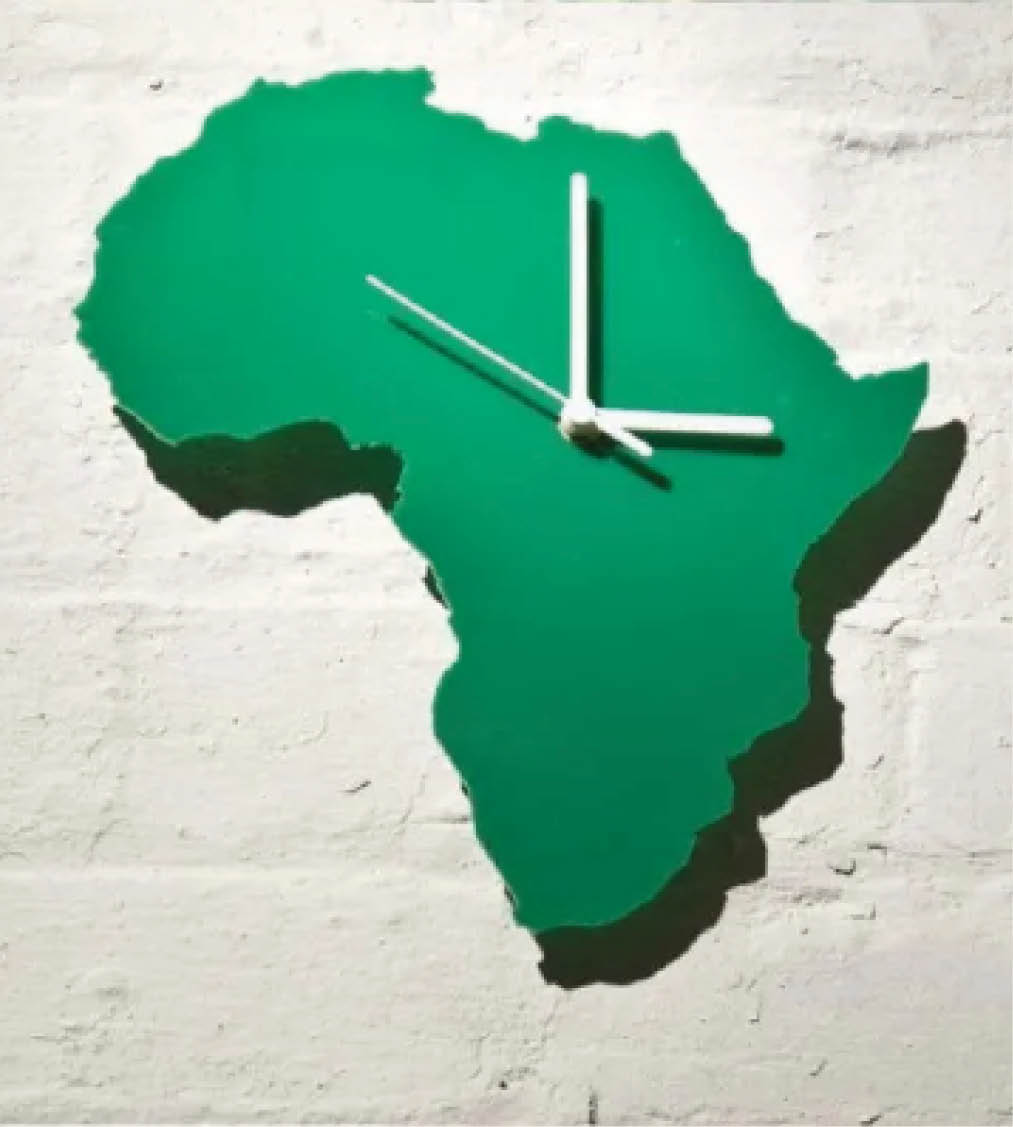
How many times have you heard the phrase “No African time” and maybe if you naively wondered, what is African time? “African time” is a colloquialism that refers to the cultural tendency in some African countries, including Nigeria, to have a more relaxed attitude towards time and punctuality.

While it’s difficult to quantify the exact amount of time wasted due to “African time,” here are some common scenarios that might give you an idea: Meetings and events starting 30 minutes to several hours late (In fact, if it starts 30 minutes late, it is considered an early start). Social gatherings and parties beginning later than scheduled, delays in responding to messages or returning calls, and crass ineptitude characterized by some ridiculously flexible attitudes towards deadlines and time commitments

Keep in mind that “African time” is a stereotype, and not all Nigerians (or Africans) adhere to this cultural phenomenon. Let me state that many individuals and organizations prioritize punctuality and respect for other people’s time, but they are few in comparison.

Let’s dive deeper into the concept of “African time” and its cultural significance in Nigeria.

The term “African time” is believed to have originated from the colonial era, when Western colonizers imposed their time-keeping systems on African societies. This disruption of traditional time-keeping practices led to a more flexible attitude towards time.

The manifestations of “African Time” in Nigeria

  1. Flexibility: Time is viewed as a flexible concept, rather than a rigid framework. For instance:

    – A meeting scheduled for 10:00 AM might start at 11:30 AM, with attendees trickling in at their own pace.

    – A friend might ask to meet up at 5:00 PM, but show up at 6:30 PM, expecting you to still be available.

  1. Relaxed attitude: People may prioritize social interactions and relationships over punctuality. For example:

    – A family gathering might be scheduled for 2:00 PM, but the host might not mind if guests arrive an hour or two late, as long as they come with a warm smile and a willingness to socialize.

    – A colleague might show up late to a meeting, but make up for it by bringing a plate of freshly baked pastries or a bouquet of flowers.

  1. Adaptability: Nigerians often adapt to changing circumstances, including unexpected delays or setbacks. For instance:

    – A sudden rainstorm might cause a traffic jam, forcing you to arrive late to a meeting. Instead of apologizing profusely, you might simply shrug and say, “Ah, the rain caught me!”

    – A power outage might disrupt a wedding reception, but the guests might simply laugh and continue celebrating by candlelight.

– A wedding reception might be scheduled for 12:00 PM, but the food might not be served until 3:00 PM.

    – A birthday party might start at 5:00 PM, but the cake might not be cut until 7:30 PM.

Painfully, this attitude strays and influences not just various aspects of daily life in Nigeria but very important aspects, imagine where start times may be delayed, and punctuality is not always expected at a doctor’s appointment, scheduled for 9:00 AM, but the doctor might not see patients until 10:30 AM. A business meeting might start 30 minutes late, but the attendees might spend the first 15 minutes chatting and laughing together.

In Nigeria, “African time” has significant implications for politics and governance, and this was the point I had said I was coming to;

  1. Flexible Schedules: Government meetings, events, and even court proceedings often start late, with attendees trickling in at their own pace.
  2. Delayed Decision-Making: The flexible attitude towards time can lead to delayed decision-making, as officials may not feel pressured to meet deadlines.
  3. Inefficient Bureaucracy: The concept of “African time” can contribute to an inefficient bureaucracy, where tasks are completed at a slower pace.
  4. Lack of Accountability: The relaxed attitude towards time can make it challenging to hold officials accountable for their actions and decisions.
  5. Cultural Expectations: In some cases, “African time” is seen as a cultural expectation, where punctuality is not always valued.

On the last point above, rather than assume, I would preferably ask, how many times have you seen a top government official, a governor or a minister arrive early, or on time for a meeting, even whether business or social, it is seen as demeaning for the official or dignitary to be at the venue early or on time.

We have seen election delays like the 2019 presidential election, which was delayed by a week, with the Independent National Electoral Commission (INEC) citing logistical challenges. We have been served ‘breakfast’ of Budget Delays, as the Nigerian government has consistently failed to meet its budget deadlines. Let me not even delve into the perennial delays in infrastructure, where the construction of major infrastructure projects, such as roads and bridges, often experience significant delays, with some projects taking years or even decades to complete or never completed.

The concept of “African time” in Nigerian politics and governance poses several challenges, we care less about the economic consequences of delays and inefficiencies, including lost productivity and revenue. The relaxed attitude towards time erodes trust in government institutions and officials, and how it leads to inefficient service delivery, including delayed or inadequate healthcare, education, and other essential services.

As Nigeria continues to modernize and integrate into the global economy, there is a growing recognition of the importance of punctuality and time management, I have seen the widespread use of digital technologies increasing awareness of time and promoting more efficient time management.

Interactions with people from other cultures have encouraged Nigerians to adopt more rigid time-keeping practices, Nigerians will still have a way of arriving at the airport late, but will seldom go for a VISA interview late and it speaks volumes.

To address the challenges posed by “African time,” it is essential to promote a culture of punctuality and respect for other people’s time. This can be achieved by implementing efficient systems and processes, fostering accountability, and encouraging citizens to prioritize punctuality.

In conclusion, “African time” is a complex and multifaceted phenomenon that reflects Nigeria’s cultural heritage and historical context. While it presents challenges, it also painfully promotes flexibility, adaptability, and strong social relationships. By understanding and addressing the challenges posed by “African time,” Nigeria can promote a more efficient and effective governance system, ultimately benefiting its citizens and promoting economic growth and development.


Advertisement
Click to comment

Leave a Reply

Your email address will not be published. Required fields are marked *

General

NERC Seeks Reallocation of Rural Electrification Fund to Industries, Others

Published

on

REA fund

By Adedapo Adesanya

The Nigerian Electricity Regulatory Commission (NERC) is seeking the reallocation of the $2 billion currently domiciled with the Rural Electrification Agency (REA) beyond rural use to include industries and other large-scale needs.

The Vice Chairman of NERC, Mr Musiliu Oseni, called for a policy rethink in the management and utilisation of the REA fund, saying Nigeria must go beyond powering homes to powering industries and national prosperity.

Mr Oseni, speaking during the Technical Sessions to mark NERC’s 20th Anniversary in Abuja, said the commission’s focus has now shifted toward unlocking private capital, particularly in the transmission sub-sector, through the newly established Transmission Infrastructure Fund (TIF).

“Through effective regulation, we have saved the Federal Government several trillions of naira in subsidies, strengthened market reliability, and enhanced consumer protection,” he said.

The REA fund is part of efforts address Nigeria’s electricity access gaps. It was established for the purpose of supporting rural and underserved electrification. The fund provides capital subsidies or grants to schemes that can help achieve the electrification goal.

According to Mr Oseni, transmission remains a challenge beyond generation and distribution.

“But now we must move from subsidy savings to investment stimulation. That is why our attention is on transmission, the weakest link in the electricity value chain.“

The NERC Vice Chairman explained that the TIF will provide a financing platform to attract both local and international investors into Nigeria’s transmission grid, thereby enhancing stability and capacity for industrial growth.

On the management of the Rural Electrification Fund, Mr Oseni urged the federal government to deploy part of the $2 billion fund toward large-scale industrial and commercial power supply.

“You can power access through mini-grids, but you can’t power your economy to prosperity,” he said pointedly.

“We must ensure that access translates to productivity, and productivity translates to jobs and growth,” he added.

Continue Reading

General

NCSP Urges Stronger Alignment  to Unlock Private Capital for Nigeria’s Blue Economy

Published

on

Nigeria Blue Economy

By Adedapo Adesanya

The Nigeria–China Strategic Partnership (NCSP) has urged stronger alignment among federal, state, and global climate strategies to unlock billions of dollars in private capital for Nigeria’s growing Blue Economy.

This call was made by the Director-General of NCSP, Mr Joseph Tegbe, at the 11th Lagos International Climate Change Summit (LICCS), held from November 6–7, 2025 in Lagos.

The DG, represented by the Head of Investment Management, Mr Taiwo Ajetunmobi, commended the Lagos State government for leading subnational climate action and setting a continental benchmark for sustainable growth.

Organized by the Lagos State Ministry of the Environment and Water Resources, the summit, themed Blue Economy, Green Money; Financing Africa’s Coastal Resilience and Ocean Innovation, convened policymakers, investors, climate experts, and development partners to explore innovative financing for ocean-based and climate-resilient projects.

Highlighting Lagos’s 180-kilometre coastline and dynamic private sector, the Director-General identified the state as a natural leader in Nigeria’s Blue Economy transformation.

He cited the Lekki Deep Sea Port as a prime example of effective federal–state collaboration that attracted over $1 billion in private equity investment, reinforcing Nigeria’s position as a regional maritime hub.

“Investors look for three things policy coherence, regulatory predictability, and project bankability. When these align, private capital follows,” he stated.

“By synchronizing federal vision with subnational execution, Lagos can unlock billions in blended finance for coastal resilience and sustainable infrastructure,” he added.

He further outlined Public–Private Partnership (PPP) models such as Build–Operate–Transfer (BOT), Design–Build–Finance–Operate (DBFO), and Lease–Develop–Operate (LDO), urging reforms to standardize processes, improve transparency, and strengthen institutional capacity.

The NCSP DG also highlighted China’s growing role as a strategic partner in Nigeria’s Blue Economy, noting investor interest in waste-to-energy, solar-powered cold-chain, and water transport projects.

“China leads globally in clean energy and marine infrastructure. With transparent, commercially viable frameworks, Lagos can attract long-term equity partnerships that deliver real value to its people,” he added.

Mr Tegbe called for unified action among stakeholders: “The tide of opportunity is rising and Lagos must rise with it. By aligning state, federal, and global strategies, we can turn Nigeria’s maritime potential into real wealth and shared prosperity.”

NCSP also reaffirmed its commitment to supporting projects that strengthen Nigeria’s climate resilience and solidify Lagos’s position as Africa’s hub for sustainable Blue Economy innovation.

Continue Reading

General

We Will Defeat Every Form of Terrorism, Secure Nigerians—Tinubu

Published

on

Tinubu address trump

By Modupe Gbadeyanka

President Bola Tinubu has promised to protect the country and work very hard to ensure every form of terrorism in Nigeria is defeated.

Mr Tinubu gave this assurance during the Federal Executive Council (FEC) meeting in Abuja on Thursday.

He disclosed that Nigeria remains on a steady growth trajectory, with more promise of stability and prosperity as economic reforms continue to yield results and gain national and international acceptance.

Speaking in reaction to the threats by President Donald Trump of United States to raid terrorists’ camps in Nigeria, Mr Tinubu asked, “Do we have problems? Yes. Are we challenged by terrorism? Yes. But we will defeat terrorism. We will overcome the CPC designation.

“Nigeria is one happy family, and we shall spare no effort until we eliminate all criminals from our society. We want our friends to help us as we step up our fight against terrorism, and we will eliminate it.”

The President also disclosed that the federal government was engaging with the world diplomatically, noting, “The most important thing is the fact that despite the political headwinds and the fear of our people, we will continue to engage with partners.”

Commenting on the economy, he said, “The success of the $2.3 billion Eurobond that was oversubscribed by 400 per cent is the most assuring. So, the task ahead is immense; we are engaging the world diplomatically, and we assure all of you that we will defeat terrorism in this country.

“The task ahead is immense, but it is our resolve to move forward with unity and purpose, guided by the Renewed Hope Agenda to build a prosperous, inclusive and resilient Nigeria.”

Mr Tinubu directed the Minister of Finance and Coordinating Minister of the Economy, Mr Wale Edun, to brief the council on the nation’s economic performance, stated that the government will continue to sustain and consolidate the gains.

Continue Reading

Trending