General
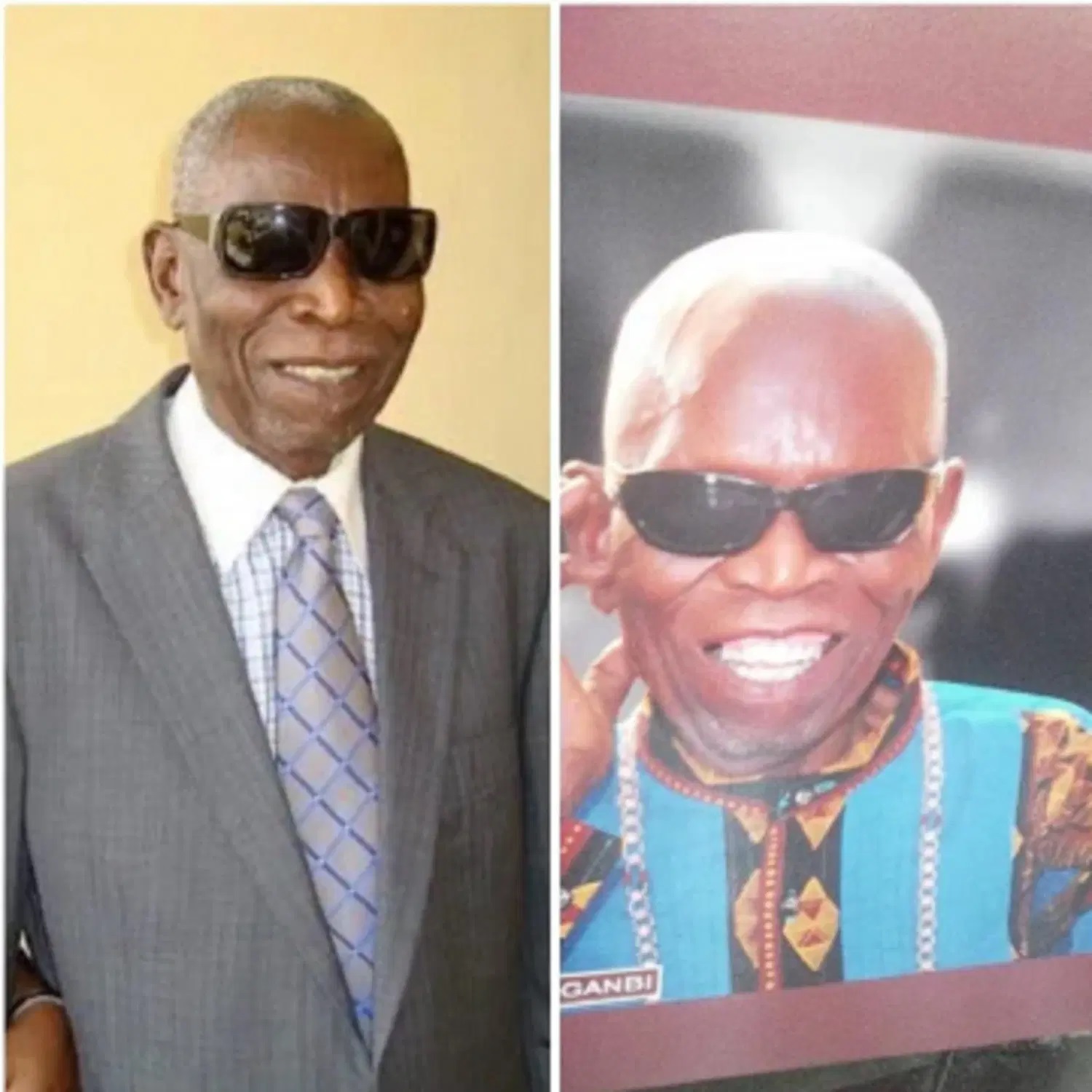
Itsekiri Bible Translator Deacon Stephen Ejueyitsi Aganbi Set for Recognition
By Felix Aganbi
Churches in the Niger Delta region are set to honour Itsekiri Bible Translator and dominant political force during the Second Republic, Deacon Stephen Ejueyitsi Aganbi.
“Hundreds of people, including high profile politicians, religious leaders and business moguls will honour Deacon Stephen Ejueyitsi Aganbi on Wednesday, December 10, 2025 in Koko” a statement by the chief executive of Akogate Group, Mr Felix Aganbi, said.
Tagged Koko Sings for Deacon Stephen Aganbi, the statement said artists and church choirs from across the country have been invited to the special carol service in honour of a man of character, courage and compassion.
The event scheduled for Wednesday, December 10 at Canaan Land, Koko Road will bring guests from Nigeria and abroad.
Deacon Stephen Aganbi was a lawyer, a community leader and a lover of God. He was a highly reputed politician of the Second Republic in Nigeria and the Olare-Aja (community leader) of Koko’’.
The nonagenarian, gifted interpreter and scholar died on Thursday, March 19, 2020.
The 99-year-old legal luminary, politician par excellence and an astute intellectual was interred on Saturday, May 9, 2020 in his hometown.
Deacon Aganbi served as chairman for the Itsekiri Bible Translation Project, the team that completed the Old and New Testament translation in the Itsekiri language.
Meanwhile, the 2025 Canaan Land Smart City Golf Tournament and Business conference will begin on Friday, December 12 in Delta State.
“Koko Town has the huge potential for investment, particularly in real estate, agriculture, health, tourism and other areas. So we are expecting investors and some of the most famous and highly-ranked golfers in the sport’s history and in the contemporary game from different parts of the world” Mr Aganbi added.
The golf tournament and business and conference will be held from 12-14 December, 2025 in Canaan Land, Koko Town.
“Koko Town is a hub for fishing and shrimping operations. There are a lot of oil and gas companies. Whether you are a local or foreign investor or looking at residential or commercial properties, there is something for everyone in Koko.”
The statement said “the event will showcase the diverse range of opportunities that the port town has to offer”
On security, Mr Aganbi said “Steps have been taken to ensure that visitors from within and outside the country have a secure and conducive atmosphere within which to assess the economic opportunities of Koko.”
He emphasized the tight security in Koko and the hospitality for which the residents are known.
“Top business men in Nigeria and abroad, members of the diplomatic corps and key actors in government across the country are looking forward to converging on Koko beginning from December 12, 2025. They are excited by the prospect of experiencing the hospitality for which the good people of Koko are known for and the vast opportunities for commerce, tourism and industry.”
According to Mr Aganbi, the event is expected to drive long term sustainable economic participation and create new opportunities for local and foreign investors in the area.
“It will provide valuable insights into untapped business opportunities, encourage private sector participation, showcase the real estate and tourism potentials of Koko and unite the people and the communities.
“Situated off Benin-Sapele expressway, the port town is 30 minutes’ drive from Benin City and over 45 minutes away from Warri town by road. Koko has the best aquatic products in Nigeria as of today. Completion of the coastal road will reduce travel time between Delta and Lagos to less than two hours. There are ongoing refinery projects. People who are coming to Koko will be in for a surprise,” he added.
General
State Police: Memorandum Submission Deadline Shifts to August 21
By Adedapo Adesanya
The Presidential Working Group on the National Policing Bill has extended the deadline for the submission of memoranda and position papers on the proposed legislation to Friday, August 21, 2026, at 5:00 p.m. West Africa Time.
In a statement signed by the Chief of Staff to the President and Chairman of the Presidential Working Group, Mr Femi Gbajabiamila, the group said the extension was intended to ensure that interested individuals, institutions and organisations have adequate opportunity to make substantive contributions to the proposed legislation.
“The Presidential Working Group is committed to ensuring that the process of developing the National Policing Bill benefits from broad consultation and the informed perspectives of Nigerians and relevant stakeholders,” the statement read.
The proposed legislation is intended to provide the operational, administrative, institutional and funding framework necessary for an effective policing architecture that responds to Nigeria’s evolving security needs, while providing appropriate safeguards for accountability, professionalism and the protection of citizens’ rights.
“Given the significance of the proposed reform to the future of policing and internal security in Nigeria, the Working Group considers it important that stakeholders are afforded more opportunity to make substantive and technically sound contributions to the process,” the statement said.
The former lawmaker said legal practitioners, civil society organisations, security sector professionals, state governments, professional bodies, academics, experts and interested members of the public are encouraged to take advantage of the extended window to submit their memoranda and position papers, exclusively through the official National Policing Bill portal, nationalpolicingbill.com, on or before the new deadline.
According to him, developing an effective policing framework required careful consideration of a number of critical issues, including sustainable funding, command and control structures, recruitment and training standards, operational jurisdiction, inter-agency coordination, accountability mechanisms and safeguards against political interference or abuse.
“These considerations underscore the importance of robust stakeholder engagement in developing a framework that is effective, accountable, sustainable and responsive to the peculiar security needs of communities across the federation,” he added.
He noted that at the conclusion of its assignment, the Presidential Working Group will present a final, implementation-ready draft of the National Policing Bill for onward legislative processing.
The Presidential Working Group appreciated stakeholders who had already made submissions and encouraged others intending to participate in the process to take advantage of the extension.
The National Policing Bill portal went live on August 3, 2026, when Gbajabiamila first announced the public consultation window during a press briefing on the reform, at the time indicating that submissions would close after roughly two weeks.
The Working Group is expected to present the completed Executive Bill package to President Bola Tinubu for review on September 3, 2026.
General
Insecurity Affecting Operations, Revenue Generation—Nigeria Customs
By Adedapo Adesanya
The Nigeria Customs Service (NCS) says the prevailing insecurity in parts of the country is negatively affecting its operations and revenue generation.
The Assistant Comptroller-General of Customs and Zonal Coordinator, Zone B, Mrs Nsikak Umoh, disclosed this in Minna while inspecting the Niger/Kogi Area Command Headquarters and engaging with vehicle importers on the operational challenges confronting the command.
Mrs Umoh said insecurity was not peculiar to the Niger/Kogi Area Command, but affected several Customs formations across the North-West, including Sokoto, Kebbi, Katsina and Zamfara states.
“The security challenge is not peculiar to only Niger/Kogi Area Command. The whole of North-West comprising Sokoto, Kebbi, Katsina and Zamfara States, which are all under my command, are facing the same security challenge,” she said.
According to her, the security situation had exposed customs personnel to increasing threats, with some officers killed or injured in the course of performing their duties, adding that the development had forced some commands to scale down their operations or adopt more cautious approaches, thereby affecting revenue collection.
Mrs Umoh explained that the service was encouraging its officers to adopt intelligence-led operations to minimise risks while ensuring that legitimate Customs duties continued.
“But we are trying our best to encourage them to use an intelligence-based operating system to do their job, and that is why in most of the commands, we have a reduction in revenue collections,” she added.
The ACG also expressed concern over the impact of insecurity on the physical and psychological wellbeing of Customs personnel, noting that some officers had developed health complications, including hypertension, due to fear and stress associated with their duties.
Despite the security challenges, Umoh said the Niger/Kogi Area Command had continued to perform strongly in revenue generation, disclosing that the command had surpassed its monthly revenue target of N17 million, generating more than N200 million as of August 12.
She commended the officers and stakeholders in the command for sustaining revenue collection despite the difficult operating environment.
General
EFCC Recovers N115bn NDDC Levies From Defaulting Oil Firms
By Adedapo Adesanya
The Economic and Financial Crimes Commission (EFCC) has recovered more than N115 billion in statutory levies owed to the Niger Delta Development Commission (NDDC) by defaulting oil companies between 2021 and 2023.
The recovery comprises N76.883 billion and $81.076 million, according to an EFCC representative, Mr Francis Oka-Phillips Usani, who disclosed the figures before the Senate Committee on Public Accounts on Wednesday.
Mr Usani spoke while the committee was investigating the 2021–2023 Oil and Gas Sector Audit Report of the Nigeria Extractive Industries Transparency Initiative (NEITI).
He said the EFCC investigated 43 oil companies over outstanding three per cent statutory levies payable to the NDDC.
According to him, 24 of the companies operating in the Niger Delta were found to have outstanding liabilities of N76,883,705,907.17 and $81,076,655, while the remaining 19 companies were cleared of any outstanding liability.
“At the commencement of the investigation, EFCC invited 43 oil companies, out of which 24 operating within the Niger Delta were found to have outstanding liabilities in the sums of N76,883,705,907.17 and $81,076,655.00, while the remaining 19 other oil companies were given a clean bill of health,” Mr Usani said.
The agent explained that following the investigation and pressure mounted by the commission, some of the affected companies paid their outstanding liabilities directly to the NDDC.
He said the direct payments amounted to N6.709 billion and $16.994 million.
Mr Usani further disclosed that of the funds recovered by the EFCC on behalf of the NDDC, N73.373 billion and $67.070 million had so far been released to the commission, noting that the balance of N3.510 billion and $14.005 million remained in the EFCC’s recovery account.
He, however, stated that the commission was also mindful of other possible outstanding statutory obligations and taxes payable to the federal government.