General
Jumia, Facebook Partner to Spur SMEs Growth
A partnership to empower small and medium scale enterprises in Nigeria has been entered into by Jumia and Facebook.
The coming together of these two giants in their respective sectors is to allow entrepreneurs enjoy free masterclass on business growth accelerators, effective customer engagement strategy, and how to advertise their businesses and ultimately grow their businesses.
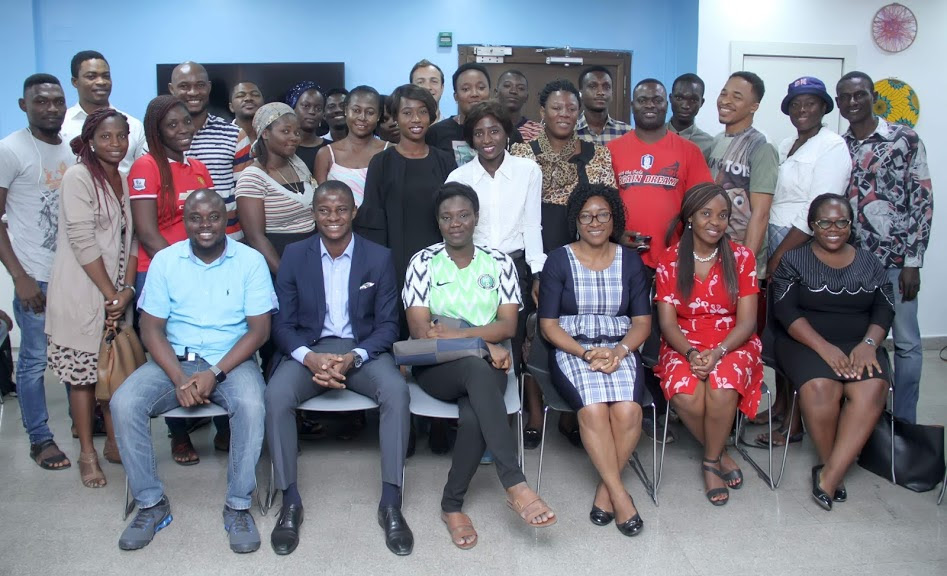
Recently, an empowerment programme was held at Facebook’s NG_Hub and was attended by hundreds of Jumia sellers and featured talks by Jumia and Facebook representatives.
Attendees learnt how to sell and list products on the eCommerce platform via the seller centre, factors that affect sales on Jumia and top factors that determine pricing. Other topics covered also included how sellers can build and create content for their business pages on Facebook and how they can advertise their businesses on Facebook.
“The purpose of this training is to enable our sellers and partners to grow their businesses online. This means allowing the sellers to not only be successful on Jumia but also to fetch customers and bring them to their stores through Facebook.
“We expect that the sellers will implement what they learnt from this training to boost their sales and drive more traffic to their stores,” said Charles De Moucheron, Head of Jumia Force (J-Force) Africa.
“The Facebook boost with Jumia programme is about empowering small businesses by making it possible for them to take advantage of the endless opportunities that are available online. I believe this training has given the Jumia sellers the ability to reach people where they spend their time,” Elizabeth Ajala, Senior Community Trainer, Facebook Small Business Team stated.
Ndidi Nwankwo, a new Jumia seller who sells hair products, commended the partnership adding that she had learnt so many things which she hopes to implement in her business to get a good return on investment.
General
2027: Tinubu Retains Shettima as Vice Presidential Candidate
By Dipo Olowookere
Nigeria’s Vice President, Mr Kashim Shettima, will run as the vice-presidential candidate of the All Progressives Congress (APC) in the 2027 presidential election.
President Bola Tinubu retained Mr Shettima as his running mate for re-election next year, according to the National Chairman of the APC, Mr Nentawe Yilwatda.
In a post on Friday on X, the ruling party chairman described this as “another significant milestone in the journey of our great party.”
He also said it reaffirms the party’s collective resolve to sustain the Renewed Hope Agenda and deepen the progress already being recorded across the country.
It was gathered that Mr Tinubu submitted his presidential nomination forms today through his Special Adviser on Political and Other Matters, Mr Ibrahim Masari.
The submission was done ceremony at the Continental Hotel, Abuja, attended by several party chieftains, including The event brought together an impressive array of leaders of our great party, including the Chairman of the Progressive Governors’ Forum and Governor of Imo State, Mr Hope Uzodimma; Governor Mai Mala Buni of Yobe State, Governor Nasir Idris of Kebbi State, Governor Abba Kabir Yusuf of Kano State, Governor Uba Sani of Kaduna State, Governor Babagana Umara Zulum of Borno State, Governor Ahmadu Umaru Fintiri of Adamawa State, as well as other governors, party executives and critical stakeholders from across the federation.
“The All Progressives Congress remains focused on strengthening its grassroots support, consolidating the achievements of the Renewed Hope Agenda and working together to build a more prosperous, secure and inclusive Nigeria for all,” the party leader stated.
General
Abducted Oyo Pupils, Teachers Regain Freedom After 56 Days
By Adedapo Adesanya
The pupils and teachers abducted in Oriire Local Government Area of Oyo State have regained their freedom after 56 days in captivity.
The development was disclosed on Friday by the Special Adviser to the President on Information and Strategy, Mr Bayo Onanuga, on X. He revealed that eight of the kidnappers have been arrested and are now in the custody of the Department of State Services (DSS), while some others were neutralised during the operation.
“Finally, all the kidnapped pupils and teachers in Oriire, Oyo have been rescued by our security agencies,” he wrote.
He said no concession was made to the terrorists to secure the freedom of the abducted pupils and teachers.
Mr Onanuga explained that the kingpin whose release the kidnappers had demanded was neither freed nor spared, as he remains under prosecution for offences linked to his terrorist activities.
The abductions occurred on May 15, 2026, when armed men attacked three schools: Community Grammar School, Baptist Nursery and Primary School, and L.A. Primary School, in the Esiele and Yawota communities of Oriire Local Government Area.
No fewer than 39 pupils and seven teachers, including a principal, were taken during the attacks. During the attack, a teacher, Mr Joel Adesiyan, was killed while attempting to escape.
Another teacher, Mr Michael Oyedokun, was reportedly beheaded in the kidnappers’ den.
The terrorists holding the victims had reportedly made a four-point demand before agreeing to free the captives, including the release of detained terrorist commanders, payment of ransom, two Hilux vehicles and the implementation of Sharia-related law.
The Oyo State Government had consistently maintained that no ransom would be paid to secure the release of any victims.
The Nigeria Union of Teachers (NUT) embarked on a month-long strike in the state to press for the victims’ rescue before suspending the action in July.
It also drew federal intervention, with military and police authorities repeatedly assuring Nigerians that operations to secure the victims’ freedom were ongoing.
The President’s spokesperson said that security agencies would soon provide a comprehensive account of the operation.
General
EBID Injects $260m Into Nigeria’s Cross-Border Highway Project
By Adedapo Adesanya
The board of the ECOWAS Bank for Investment and Development (EBID) has approved a $260 million financing package for the construction of a 123-kilometre section of the Trans-Saharan Highway in Nigeria as part of more than $417 million earmarked for strategic projects across West Africa.
The approval was granted during the bank’s 99th Ordinary Session, chaired by its President, Mr George Donkor, according to a statement issued after the meeting. It was noted that the total financing will support five public and private sector projects spanning infrastructure, healthcare, housing, mining, financial resilience and regional connectivity.
EBID said the approved investments underscore its commitment to funding high-impact projects that drive economic growth, create jobs and improve living standards across the sub-region.
“The projects approved during this 99th Board Session demonstrate EBID’s unwavering commitment to financing development solutions that directly improve the lives of West African citizens.
“From clean energy and transport infrastructure to healthcare, housing and financial sector resilience, these investments will strengthen regional competitiveness and support sustainable and inclusive growth across our community,” said Mr Donkor.
That of Nigeria is to improve connectivity, facilitate trade, reduce logistics costs and support economic integration; West African CFA franc (XOF) 10 billion in a line of credit to Banque de l’Habitat de Côte d’Ivoire (BHCI) to expand housing finance and support SMEs operating across the housing and construction value chain; €80 million for the design, construction, equipment and maintenance of the 150-bed Regional Hospital of Ferkessédougou in Côte d’Ivoire under a public-private partnership;
XOF 12.82 billion (West African CFA Franc) for the renovation, operation and maintenance of the Symphonie Building in Abidjan under a public-private partnership and $47.4 million for Azumah Resources Ghana Limited to finance the procurement of long-lead process plant equipment and critical early-stage development activities for the Black Volta Gold Project.
“These approvals advance EBID’s Growth, Resilience and Optimisation (GRO) Strategy, which prioritises transformative infrastructure, human capital development, private sector growth and regional integration. Through these investments, the Bank continues to promote sustainable development and shared prosperity across West Africa,” the statement said.