Connect with us

General

Lagos Seeks Support of Advertisers on Eco-friendly Environment

Published

on

By Dipo Olowookere

Members of the Advertisers Association of Nigeria (ADVAN) have been urged to support the Lagos State government’s environmental sustainability programme by utilising recyclable materials.

Governor of Lagos State, Mr Akinwunmi Ambode, who made this appeal, also tasked the advertisers to ensure that the location or placement of advert billboards and signage conform to the standards set by the Lagos State Signage and Advertising Agency (LASAA) in the interest of all.

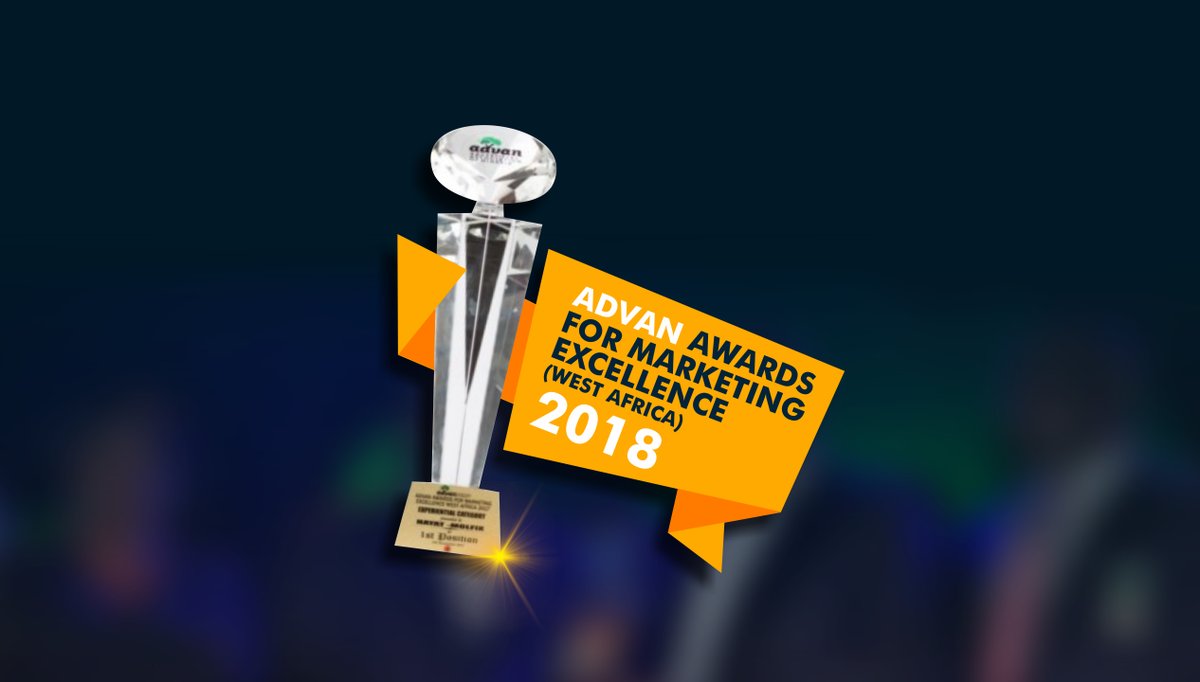
Speaking at the 2018 ADVAN Awards for Marketing Excellence (West Africa), Mr Ambode explained that the appeal became imperative because of the continued danger the usage of non-recyclable materials for advertisements and brand projection constitutes.

The Governor, represented by Commissioner for Information and Strategy, Mr Kehinde Bamigbetan, stressed the need for ADVAN to abide with regulatory standards in carrying out its activities, adding that LASAA as the ombudsman was established to regulate the placement or location of advert billboards or signage across the state hence, ADVAN must cooperate with the Agency in ensuring the sanitisation of the environment.

“While it is a fact that the advertising industry has a role to play in facilitating economic growth, we cannot overlook the fact that the state of the economy also has its impact on the industry and indeed other sectors of the economy.

“Therefore, as the government is working hard to build the enabling environment for the business and investment to thrive, the Advertising Association of Nigerian must synergise with government by upholding high professional standards and ethics of the profession,” the Governor opined.

Governor Ambode commended the leadership and entire members of the association for remaining true to the ideals of its founding fathers by sustaining the legacy of recognising innovative and effective contributions of stakeholders in the growth and development of marketing as a tool of economic development and growth.

“I commend the efforts of the leadership and entire members of ADVAN for their efforts towards entrenching professionalism in the advertisement industry in Nigeria.

“Although the industry has not grown to compare favourably with what obtains in developed economies, I believe that through the commitment, vision and resilience of practitioners, this industry has achieved so much in spite of the challenges facing the growth of the industry,” he noted.


Dipo Olowookere is a journalist based in Nigeria that has passion for reporting business news stories. At his leisure time, he watches football and supports 3SC of Ibadan. Mr Olowookere can be reached via [email protected]

Click to comment

Leave a Reply

Your email address will not be published. Required fields are marked *

General

All On Celebrates 10th Anniversary with Dinner and Fireside Chat Event, Brings Renewable Energy Leaders Together to Shape the Next Decade of Energy Access in Nigeria

Published

on

All On 10th anniversary

Nigeria’s renewable energy ecosystem came together in Lagos as All On Partnerships for Energy Access hosted its 10th Anniversary Dinner and Fireside Chat, convening leaders from government, development finance institutions, the private sector, development organisations, academia and the renewable energy industry to celebrate a decade of catalytic investment while setting the agenda for the future of energy access in Nigeria.

The evening reflected ten years of building businesses, strengthening markets and expanding access to clean, reliable and affordable energy through collaboration. More importantly, it looked ahead, bringing together some of the sector’s most influential voices to explore how partnerships, innovation and long-term investment can accelerate universal energy access for millions more Nigerians.

Representing the His Excellency, Mr. Babajide Olusola Sanwo-Olu
Executive Governor of Lagos State, the Honourable Commissioner for Energy and Mineral Resources, Hon. Biodun Ogunleye, congratulated All On on its ten-year journey, describing the organization as an important contributor to Nigeria’s renewable energy ecosystem. Delivering the Governor’s goodwill message, he commended All On for demonstrating that underserved communities are not beyond the reach of sustainable investment and reaffirmed Lagos State’s commitment to creating an enabling policy environment that encourages innovation, investment and private sector participation in the electricity market.

Welcoming guests, Caroline Eboumbou, Chief Executive Officer of All On, reflected on the organization’s evolution from an ambitious vision into one of Nigeria’s leading impact investors and ecosystem builders. She acknowledged the presence of the founding visionary and former Board Chairman, Dr. Osagie Okunbor, the Board of Directors, investees, partners, government institutions and communities whose collective efforts have helped shape All On’s first decade.

Reflecting on the organization’s journey, Eboumbou noted that while capital was essential, experience had shown that expanding energy access required far more than financing businesses alone.

“We realized very quickly that we needed to be more than just an investor. Building this market required us to combine catalytic capital with technical assistance, venture support, ecosystem development and strategic partnerships. That is how lasting impact is created.”

Today, All On’s work has contributed to reaching nearly two million lives, demonstrating what is possible when patient capital is combined with innovation, entrepreneurship and long-term collaboration across the renewable energy ecosystem.

One of the evening’s defining moments was a fireside conversation between Eboumbou and Damilola Ogunbiyi, Chief Executive Officer and Special Representative of the United Nations Secretary-General for Sustainable Energy for All (SEforALL). Their discussion explored the evolution of Nigeria’s off-grid energy sector over the past decade and the partnerships required to deliver universal energy access across Africa.

Drawing on years of collaboration with All On, Ogunbiyi reflected on the organization’s role in helping shape Nigeria’s renewable energy market, highlighting the importance of institutions that build markets, strengthen businesses and mobilize investment rather than simply financing individual projects. Together, both leaders agreed that while significant progress has been made, the next decade will require even stronger partnerships, continued innovation and sustained investment to ensure that millions more Africans gain access to reliable, affordable and sustainable energy.

The conversation was followed by an Impact Showcase, where Dalberg presented findings from its independent evaluation of All On’s first decade of work. The assessment highlighted the organization’s contribution to expanding energy access through catalytic investment, venture building, enabling finance and ecosystem development, while demonstrating measurable improvements in business growth, market development and opportunities for underserved communities. The showcase reinforced the impact of an integrated approach that combines investment with long-term market building.

Looking ahead, a second fireside discussion shifted the focus from reflection to the future of Nigeria’s renewable energy sector. Moderated by Abiodun Oni, Chief Executive Officer of FundCo, the panel featured Sandra Dozie, Chief Executive Officer of Salpha Energy and Muhammad Wakil, Country Delivery Lead (Nigeria) for the Global Energy Alliance for People and Planet (GEAPP). Together, they explored the opportunities and challenges shaping the next phase of Nigeria’s energy transition, highlighting local manufacturing, innovative financing, enabling policy, private sector investment and strategic collaboration as critical drivers of future growth.

The evening also featured a Special Recognition segment celebrating the collaborations that have shaped All On’s first decade. Awards of Excellence were presented to organizations and individuals whose vision, leadership and collaboration have helped strengthen Nigeria’s renewable energy ecosystem, from pioneering ecosystem development and policy advocacy to advancing innovation, market growth and universal energy access. Honourees included The Rockefeller Foundation, Nigeria Climate Innovation Centre (NCIC), Sustainable Energy for All (SEforALL), the Rural Electrification Agency (REA), the Renewable Energy Association of Nigeria (REAN), Shell Nigeria, and Dr. Osagie Okunbor, Founding Chairman of the All On Board of Directors.

Closing the evening, All On reaffirmed its commitment to building on the momentum of its first decade. As the organization looks towards the future, its focus remains on mobilizing catalytic capital, strengthening businesses, fostering innovation and deepening partnerships that will accelerate access to clean, reliable and affordable energy for million more Nigerians. The first decade demonstrated what is possible. The next decade will be about scaling that impact. 

About All On:

All On Partnerships for Energy Access (All On), an independent impact investing company, was seeded by Shell to catalyze the growth of Nigeria’s off-grid energy market to provide affordable, reliable, and sustainable energy for low-income households and small businesses.

All On provides debt and equity funding, as well as non-financial support, to Nigerian energy companies that align with its mission of closing Nigeria’s access-to-energy gap through renewable energy solutions. Visit https://www.all-on.com/ to learn more. For media enquiries, contact co************@****on.com

Continue Reading

General

Nigeria, Ghana Sign Bilateral Maritime Cooperation

Published

on

Nigeria and Ghana

By Adedapo Adesanya

The Nigerian Maritime Administration and Safety Agency (NIMASA) and the Ghana Maritime Authority (GMA) have signed a Memorandum of Understanding (MoU) to strengthen bilateral maritime cooperation, enhance regional maritime governance, and promote the sustainable development of the Blue Economy across West Africa.

Speaking during the signing ceremony in Lagos, the Director General of NIMASA, Mr Dayo Mobereola, expressed appreciation to Ghana for its support during Nigeria’s successful re-election to the International Maritime Organisation (IMO) Category C Council, noting that the longstanding relationship between both countries continues to advance maritime development within the region.

He stated that the MoU provides a practical framework for deeper collaboration in maritime safety and security, mutual recognition of Certificates of Competency (CoC), institutional capacity building, knowledge sharing, comparative research, joint enforcement initiatives, and regional cooperation at international maritime fora.

According to Mr Mobereola, the partnership must be driven by measurable outcomes through a structured implementation process.

“We will continue to work together to grow our economies and make the maritime sector safer. This Memorandum of Understanding is a commitment to do better. NIMASA will fully play its part in implementing the agreement, while both institutions must establish annual implementation agendas to monitor progress and deliver tangible results,” he said.

The NIMASA DG noted that Nigeria and Ghana, as leading maritime nations in the sub-region, have a shared responsibility to shape the future of maritime development in West and Central Africa.

He added that the partnership should generate benefits that extend beyond both countries by fostering regional and sub-regional collaboration capable of unlocking the enormous potential of the Blue Economy.

Under the agreement, both maritime administrations will establish a Joint Consultative Team (JCT) to develop action plans, coordinate implementation, and monitor agreed programmes through designated focal persons.

The JCT will meet twice yearly, with meetings hosted alternately by Nigeria and Ghana to review implementation progress, evaluate cooperation activities, and strengthen bilateral engagement.

The MoU is expected to improve maritime governance, strengthen institutional capacity, promote evidence-based policymaking through comparative research, enhance regulatory effectiveness, and reinforce collaborative efforts to combat piracy, armed robbery at sea, and maritime terrorism, particularly within the Gulf of Guinea.

Earlier in his remarks, the Director General of the Ghana Maritime Authority, Mr Kamal-Deen Ali, described the agreement as a significant milestone in the longstanding relationship between both maritime administrations.

He acknowledged Nigeria’s leadership role within the region, noting that Ghana has over the years drawn valuable lessons from several Nigerian maritime initiatives, including the country’s Cabotage regime, ship registry, and regulatory frameworks.

“This Memorandum of Understanding consolidates an already mutually beneficial relationship. Ghana remains fully committed to implementing every aspect of the agreement as we continue to learn from one another and work together to strengthen maritime administration across the region,” he said.

The signing of the MoU underscores the commitment of both maritime administrations to advancing regional integration, improving maritime safety and security, and promoting sustainable economic growth through stronger institutional collaboration.

Continue Reading

General

SERAP Questions NASS on N1.3bn Budgetary Allocation to Phantom Presidential Council

Published

on

SERAP

By Adedapo Adesanya

The Socio-Economic Rights and Accountability Project (SERAP) has asked Senate President Godswill Akpabio and Speaker of the House of Representatives Tajudeen Abbas to explain how over N1.3 billion was allocated in the 2026 Appropriation Act to a presidential council that the Presidency has described as non-existent.

In a Freedom of Information (FoI) request dated July 4, 2026, and signed by its Deputy Director, Mr Kolawole Oluwadare, SERAP demanded certified copies of all documents relating to the approval of the N1,302,978,784 allocation to the Presidential Foreign Intervention Promotion Council (PFIPC), also referred to in the budget as the Presidential Economic Advisory Council.

The organisation also urged the leadership of the National Assembly (NASS) to immediately invoke its investigative powers under Sections 88 and 89 of the 1999 Constitution (as amended) to probe the circumstances surrounding the allocation and identify those responsible for any irregularities.

SERAP further requested records identifying the lawmakers and committees that considered and approved the allocation, as well as the public officials who appeared before the committees to defend the proposed funding.

It also asked the parliament to clarify whether the allocation formed part of the Executive’s original 2026 Appropriation Bill or was inserted during the legislative process. The group also sought to know whether any lawmaker questioned the legal status or operational mandate of the council before the budget was passed.

According to the group, the request became necessary following conflicting claims over the existence of the council, noting that while the 2026 Appropriation Act reportedly earmarked more than ₦1.3 billion for the PFIPC/Presidential Economic Advisory Council, the Presidency has since publicly stated that the body was never established by the Federal Government and is fictitious.

The rights organisation said the contradiction raises serious concerns about the integrity of Nigeria’s budget process, legislative oversight, public financial management and accountability.

“Nobody has a more sacred obligation to obey the law than those who make the law,” SERAP said, stressing that the National Assembly has a constitutional duty not only to approve budgets but also to thoroughly scrutinise Executive proposals before authorising public spending.

It argued that Nigerians have a right to know whether public funds were appropriated for an entity that was not lawfully established and, if so, how the allocation found its way into the national budget.

According to the organisation, making the requested documents public would enable citizens to determine whether the National Assembly fulfilled its constitutional responsibilities in scrutinising and approving the allocation.

SERAP warned that if the requested information is not provided within seven days of receipt or publication of the FoI request, it would initiate legal proceedings to compel the National Assembly to disclose the records.

It maintained that releasing the documents would strengthen public confidence in the credibility of the National Assembly, enhance transparency in the appropriations process and promote accountability in the management of public funds.

The group also cited the Freedom of Information Act, the Nigerian Constitution and Nigeria’s obligations under international human rights instruments, arguing that public institutions are required to proactively disclose information of significant public interest, particularly where allegations of financial impropriety or misuse of public resources have arisen.

Continue Reading

Trending