
General
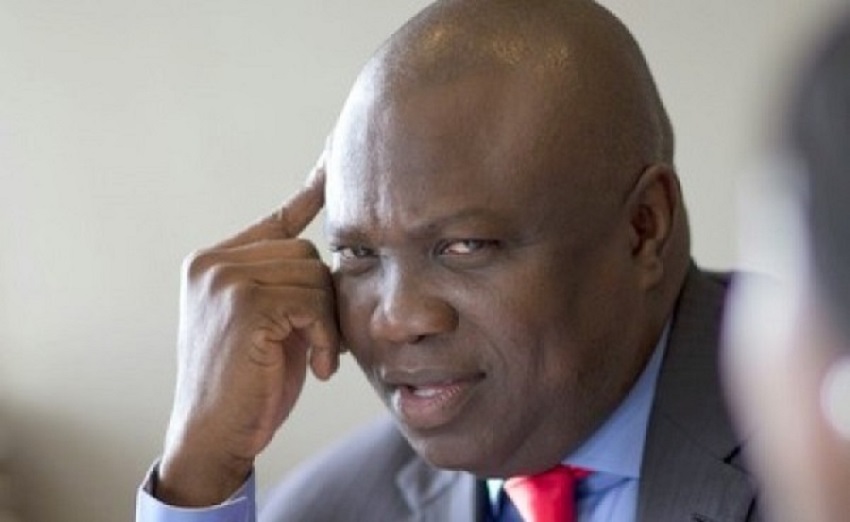
Lagosians Blast Ambode Over Public Holiday Declared for Buhari’s Visit

By Modupe Gbadeyanka
On Tuesday, the Lagos State government declared Thursday, March 29, 2018 as work free day in the state to welcome President Muhammadu Buhari, who is on a two-day working visit to the metropolis.
A statement issued by Commissioner for Information and Strategy, Mr Kehinde Bamigbetan, explained that the holiday was to allow residents of the ‘Aquatic State’ come out enmasse to welcome the President.
In the statement, Mr Bamigbetan urged residents to adhere to the security guidance earlier announced to make the visit as peaceful and orderly.
While in Lagos, Mr Buhari will commission the new Ikeja Bus Terminal, attend a colloquium in honour of national leader of the All Progressives Congress (APC) and former governor of the state, Mr Bola Tinubu, and as well as embark on tour of the Eko Atlantic City, among others.
During the visit, traffic would be diverted in some routes and Commissioner of Police in the state, Mr Imohimi Edgal, during a press briefing yesterday at the Lagos House in Alausa, Ikeja, said adequate preparations have been made to mitigate the impact of the road diversions on residents, while access would be given to any emergency situation.
Mr Edgal, who addressed the briefing alongside heads of security and emergency agencies in the state, said, “To ensure smooth, security-free visit of the President, we would need to do some diversions.
“Some certain roads will be closed at certain times; some diversions will be made but I want to use this opportunity to appeal for the support and understanding of Lagosians that this temporary road closures and diversions might cause a little inconvenience.
“We want the people to bear with us to ensure that we all join hands together to make the visit of Mr. President not only hitch-free but also very memorable.
“The road closures and diversions will be very temporary and immediately the President leaves a certain location, that area will be opened very quickly for the general public. We have also made adequate arrangements to mitigate the impact of the closures on residents.”
He listed the areas to be affected to include Bank Anthony Way in Ikeja, Agege Motor Road, a section of Eko Hotel Road in Victoria Island and Old Marina in Ikoyi axis.
Besides, Mr Edgal said security arrangement was already in top gear and that people would see a lot of deployment of personal of both military and civil logistics adding that it is nothing to worry about.
“We have done the necessary threat assessments; we have reached out to all stakeholders in areas that we believe we should reach out to them to ensure their full cooperation. We are using this opportunity to call again on the Okada Unions and the National Union of Road Transport Workers that they must abide with the terms of agreement we reached during meetings with them regarding the visit.
“We will not want to see commercial motorcycles plying the prohibited routes of Agege Motor Road, Bank Anthony Way and anywhere on the Island. Should that order be disobeyed, we would be constrained to ensure that you are arrested with your motorcycles impounded.
“Whoever is also found as a passenger will also be arrested and prosecuted so do not patronize these Okadas on these prohibited routes not only for the purpose of the visit but also to ensure that Lagos State Laws on the regulation of commercial motorbikes are obeyed at all times,” Mr Edgal warned.
He added that three locations have been designated for all first emergency responders to station their equipment and officials including the Police, National Emergency Management Agency (NEMA), Lagos State Emergency Management Agency (LASEMA), LASAMBUS, Civil Defence, Fire Brigade, among others at Ikeja, Victoria Island and Free Trade Zone at Lekki-Akodo axis.
On the Apapa gridlock which has spilled over to other parts of the state, the police chief said while the Joint Task Force set up by the state government was already working to ensure free-flow of traffic, the government nonetheless has commenced the construction of a new Trailer Park in Ijora axis that can conveniently accommodate 2,800 trucks and tanker at a time.
“The Governor of Lagos State, Mr Akinwunmi Ambode, in collaboration with stakeholders, has identified a location known as the White Sand in Ijora axis and we have done an assessment of the place with my colleagues in other agencies and all shanties there have been destroyed.
“Now, the state government has given out the contract to a firm and they are now smoothening up the place. It has the capacity to take well over 2,800 trucks and tankers at the same time. Work is ongoing there at a very fast pace and I can assure Lagosians that very soon, the place will be completed and we intend to move all trucks, tankers to that location and as soon as that is done, we would have permanently take care of this trucks and tankers,” he said.
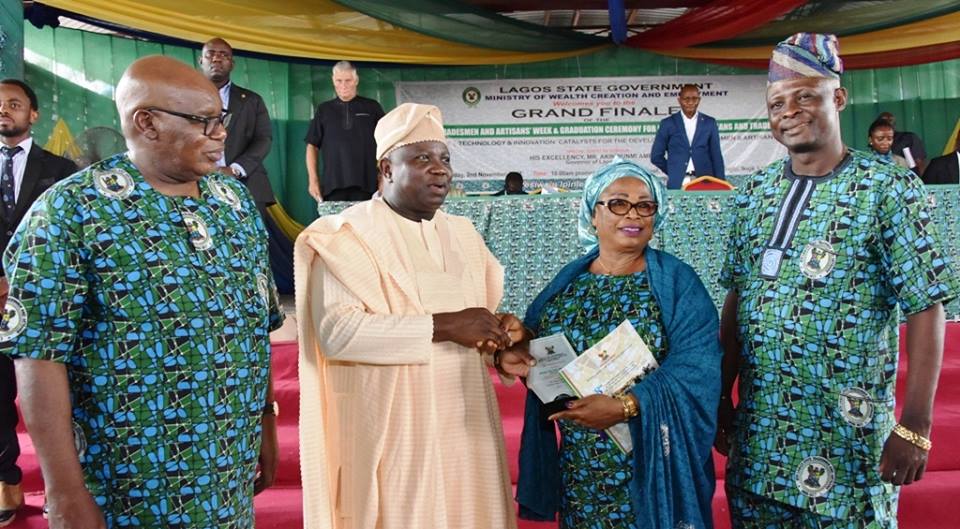
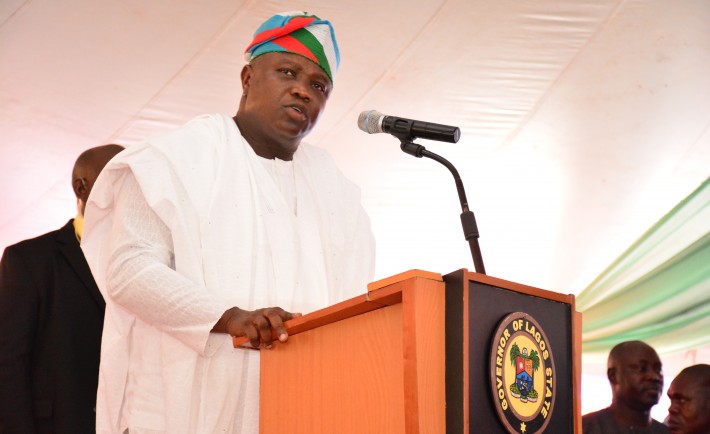
But reactions have trailed this announcement by the state government with some residents castigating Mr Ambode for declaring a public holiday to welcome the President.
They argued that it was wrong to shut down economy of a ‘mega city’ just because the President was commissioning a ‘mere’ bus terminal that has minute effect on the economy at large.
Furthermore, the critics said it was insensitive to declared Thursday a work free day when Friday and Monday have already been declared as public holidays by Federal Government to mark Easter break.
A journalist with Bloomberg, Mr Paul Wallace, who wrote on his Twitter page, “#Nigeria’s President #Buhari is going to be in #Lagos on Thursday for the first time in a while and Lagos State government has declared it a “work free day,” had many Nigerian lambasting Lagos Governor for the move.
“Senseless set of leaders, declaring work free day for failed president…Lagos is (an emoji showing a face with medical mask),” one of the commenters said.
Another said, “Declare a work-free day, just like that; this doesn’t add up as many businesses especially banks will be adversely affected with Friday and Monday already public holidays.”
“Grounding To A Halt Businesses On A Thursday For The Commissioning Of A “BUS TERMINAL” ??? Outright Rubbish!!!..” a commenter also wrote.
“Arrant nonsense! How does this even make sense to our government? Shutting down a state for a whole day just to commission a bus station! Gutted!” another person said.



By Adedapo Adesanya
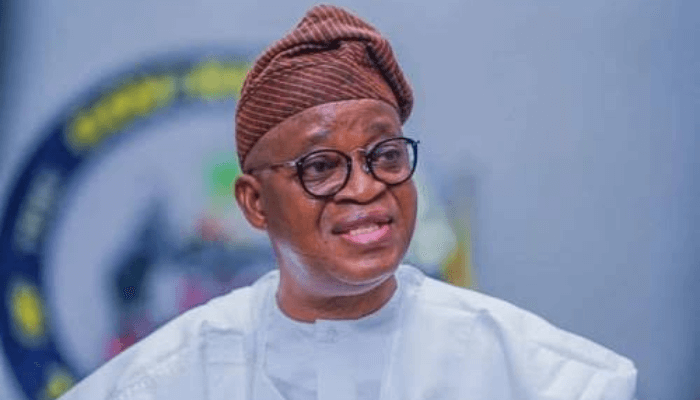
The Minister of Marine and Blue Economy, Mr Adegboyega Oyetola, has issued a strong warning to heads of agencies under the ministry, demanding strict accountability and measurable results.
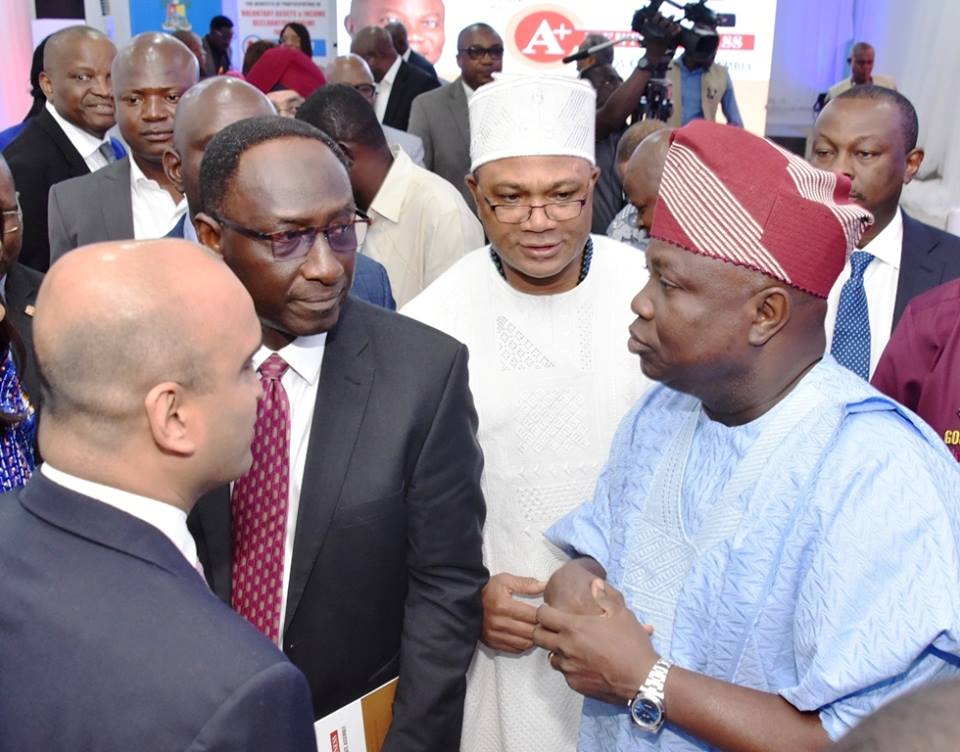
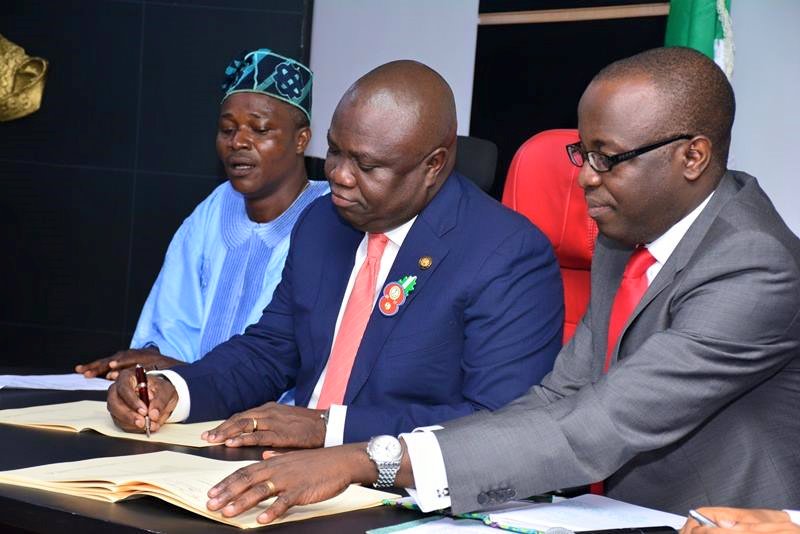
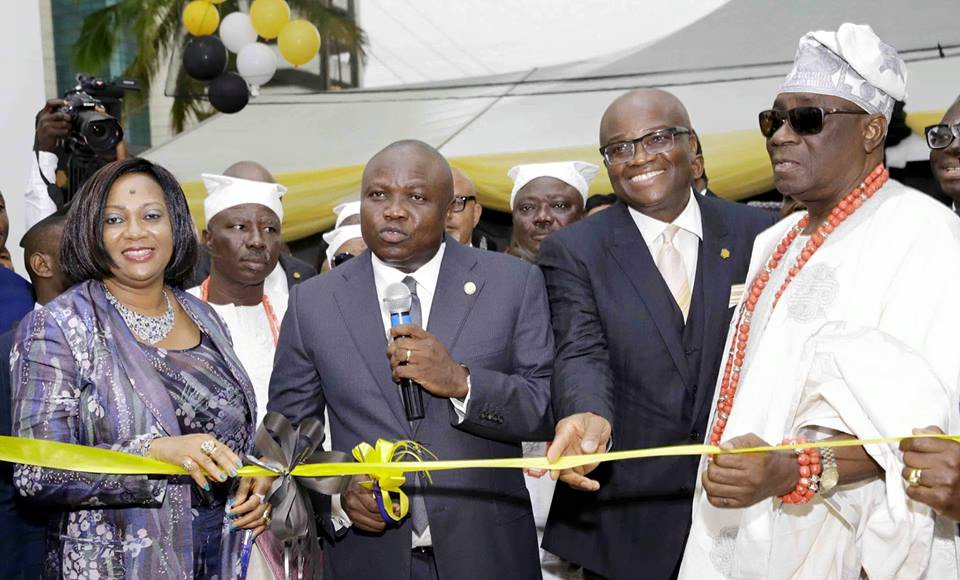
Mr Oyetola issued the warning during the signing of performance bonds with heads of maritime agencies at the Ministerial Management Retreat, held alongside the 2026 first-quarter stakeholders’ engagement in Lagos on Thursday, where he emphasised the need for performance-driven governance.
“Let me emphasise that all Departments and Agencies under the Ministry must remain firmly focused on delivering tangible results,” he said.
In a statement by Mr Bolaji Akinola, Special Adviser to the Minister, Mr Oyetola noted that performance bonds to be signed during the retreat are binding commitments that will be closely monitored and rigorously evaluated.
“These are not ceremonial documents. They are binding commitments. Accountability will not be optional,” the Minister declared.
Mr Oyetola reiterated the need for data-driven decision-making, robust monitoring and evaluation frameworks, and alignment with the Ministry’s strategic objectives.
“At the institutional level, we must remain disciplined and accountable. Every department and agency must deliver measurable outcomes,” he added.
He explained that the retreat was designed to foster alignment between policy formulation, implementation, and stakeholder expectations.
“The integration of this engagement enables us to listen, reflect, and recalibrate,” he said.
The agencies include the Nigerian Ports Authority (NPA), Nigerian Maritime Administration and Safety Agency (NIMASA), Nigerian Shippers’ Council (NSC), National Inland Waterways Authority (NIWA), Maritime Academy of Nigeria, and the Council for the Regulation of Freight Forwarding in Nigeria.
He also announced a 160 per cent increase in revenue generated by agencies under the ministry, attributing the growth to sweeping reforms and a renewed focus on accountability.
“In 2023, our agencies generated N700.79 billion. By the end of 2025, this figure had risen to approximately N1.83 trillion. This remarkable achievement is the result of deliberate and sustained reforms,” he stated.
The Minister explained that the gains were driven by strengthened regulatory oversight, improved revenue assurance mechanisms, digitalisation of key processes, and a firm commitment to blocking leakages.
“This gathering reflects our commitment to a governance approach that is inclusive, transparent, and results-driven,” he added, noting that the convergence of stakeholders, policymakers, and institutional leaders was designed to align policy with implementation and public expectations.
Mr Oyetola linked the ministry’s improved performance to broader sectoral reforms, including port modernisation, approval for disbursement of the Cabotage Vessel Financing Fund (CVFF), and ongoing efforts to enhance indigenous participation in maritime activities.
By Modupe Gbadeyanka
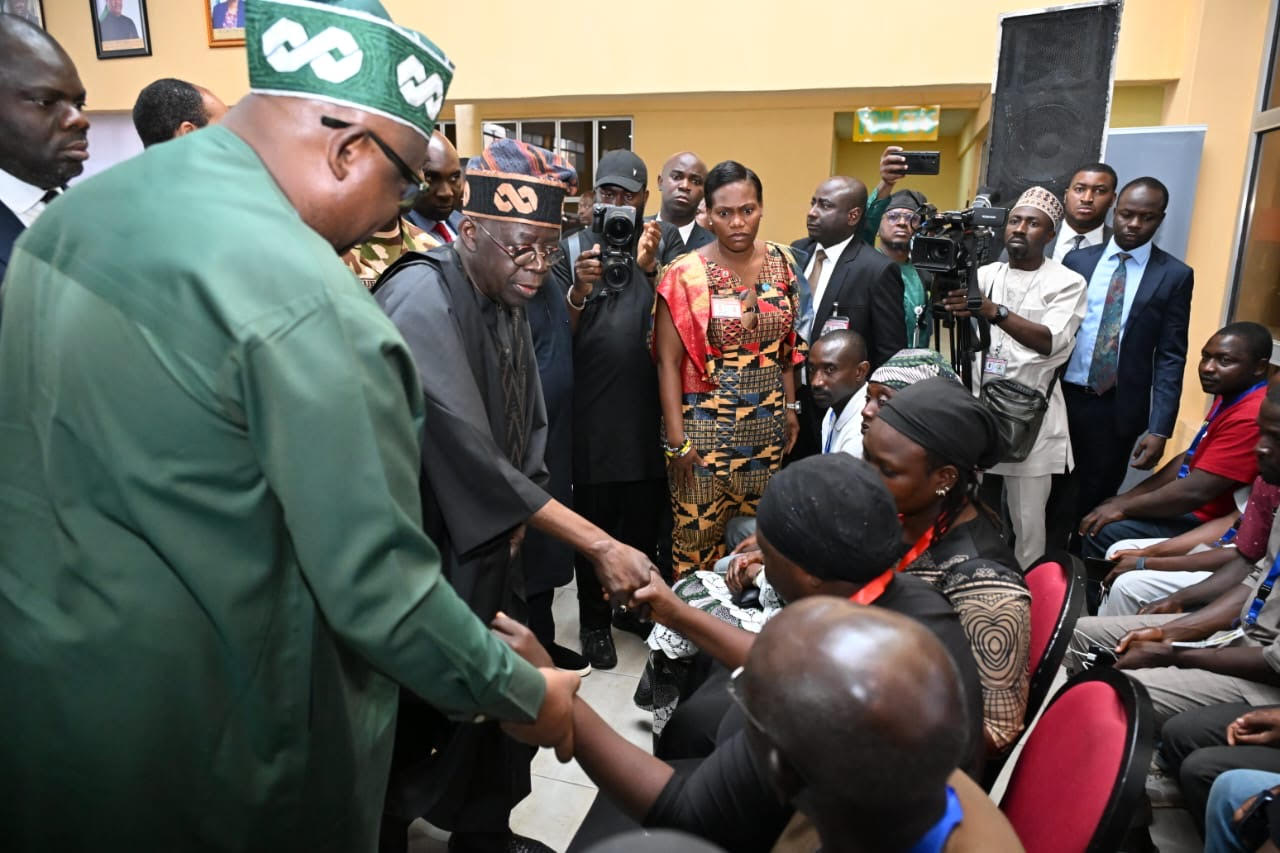
The Special Adviser to the President on Information and Strategy, Mr Bayo Onanuga, has explained why Mr Bola Tinubu addressed the victims of the Plateau attacks at the airport on Thursday evening.
The decision of President Tinubu to console victims of the attacks, which left over 20 persons dead, at the Yakubu Gowon Airport in Jos last night has continued to generate reactions.
He was criticised for not visiting the victims at the epicentre, Angwan Rukuba, instead of having them to travel to meet with him at the airport.
In a statement on Friday, Mr Onanuga said his principal’s itinerary for yesterday included two main engagements: receiving the Chadian President, Mahamat Idriss Déby Itno, and proceeding to Iperu, Ogun State.
“After Governor Caleb Mutfwang’s briefing, President Tinubu suspended the trip to Ogun. Overnight, the Presidential Villa made arrangements for the visit to Jos, with presidential assets quickly deployed. However, the President could not postpone the scheduled visit by the Chadian leader.
“The President of Chad was at the Presidential Villa for a very important bilateral meeting focused on strengthening security collaboration between the two countries. The meeting ran longer than expected, affecting President Tinubu’s scheduled departure for Jos.
“Upon arrival in Jos, the visit encountered some logistical challenges. While the road distance from the airport to Jos township is approximately 40 minutes, the runway does not support night flights due to the absence of navigational aids. The constraints made it unfeasible to drive into town, meet victims for on-the-spot assessment and return to the airport before dusk.
“Consequently, state and federal officials decided to bring representatives of the affected community to a hall adjoining the airport so the President could meet with them promptly while adhering to flight restrictions. Among the people in the hall were the Minister of Defence, the Chief of Army Staff and the Inspector General of Police, who had visited Rukuba, the epicentre of the conflict. President Tinubu deployed the high-level team to Rukuba, including the Senior Special Assistant on Community Engagement, to undertake critical groundwork on security and community engagement, with a view to stabilising the area before his arrival.
“Beyond expressing his condolences to the victims, President Tinubu’s objective was to engage with critical stakeholders in Plateau State on ending the recurring, decades-old conflict that has resulted in needless loss of lives and property.
“President Tinubu’s visit to Jos was not merely symbolic. It was a strategic, high-level engagement aimed at bringing all stakeholders together to address the root causes of conflict and insecurity in the state.
“He interacted with the victims, consoled them, and listened to them. He also listened to local leaders and assured them that the federal government would deliver justice and end the cycle of violence. He promised the deployment of 5000 AI-enabled cameras to monitor the city and enhance the identification and arrest of troublemakers.
“Furthermore, the President invited the community leaders to Abuja for further talks on finding a lasting solution to the recurring violence in the state.
“The meeting, televised live, was solemn and reassuring, boosting residents’ confidence. President Tinubu achieved the purpose of his visit, despite the naysayers’ attempts to ridicule it. He dropped an unmistakable message: sustainable peace must be built with the people, not imposed on them,” the presidency explained.
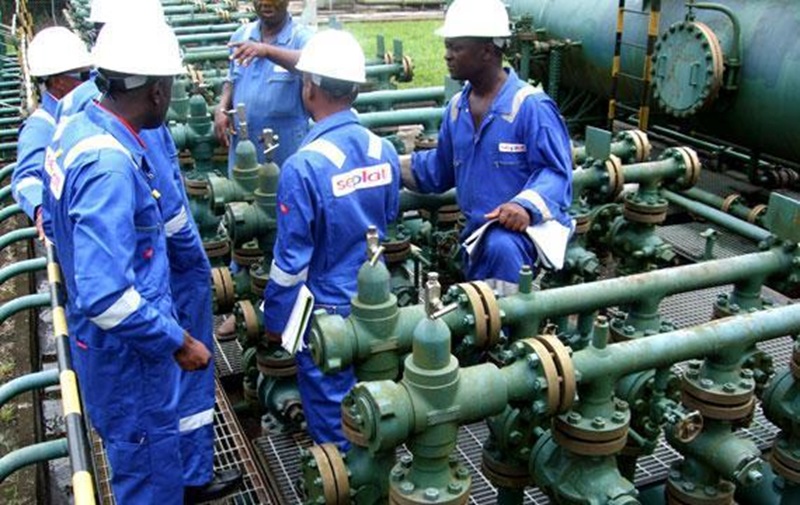
By Adedapo Adesanya
Workers of Seplat Energy Plc, under the aegis of the Petroleum and Natural Gas Senior Staff Association of Nigeria (PENGASSAN), began an indefinite strike on Friday as talks over a collective bargaining agreement and staff welfare issues broke down.
This development may impact Nigeria’s oil production at a time when the world is facing shortages due to the Iran war, and global oil prices are recording multi-year highs.
It will also hurt Seplat Energy’s operation as Nigeria’s largest independent oil and gas producer, adding to pressure on the country to maximise supply, which is fluctuating around 1.3 million barrels per day.
PENGASSAN said its action would remain active “until further notice, adding that its members would suspend most operations, including production reporting and export activities, while maintaining only essential safety and power functions.
The strike notice covers onshore and offshore assets, joint‑venture operations and offices nationwide from Friday.
Other less-skilled workers are covered by the Nigeria Labour Congress (NLC), which is not on strike with PENGASSAN.
Seplat Energy’s group production averaged 131,506 barrels of oil equivalent per day in 2025, according to its latest audited results. That is the equivalent of around 7 per cent–9 per cent of Nigeria’s total liquids production.
The company expects output to rise to 155,000 barrels of oil equivalent per day, making any sustained disruption particularly sensitive for Nigeria’s supply outlook.
With the company’s output expected to rise, any prolonged disruption could significantly impact Nigeria’s oil supply and fiscal outlook.
The company also plans to revive hundreds of Nigerian oil wells lying fallow, which, according to its chief executive, Mr Roger Brown, will be done in collaboration with the state-owned Nigerian National Petroleum Company (NNPC) Limited, as legally mandated in the country’s oil and gas industry.
-
 Feature/OPED6 years ago
Davos was Different this year
-
Travel/Tourism10 years ago
Lagos Seals Western Lodge Hotel In Ikorodu
-

 Showbiz3 years ago
Estranged Lover Releases Videos of Empress Njamah Bathing
-
 Banking8 years ago
Sort Codes of GTBank Branches in Nigeria
-

 Economy3 years ago
Subsidy Removal: CNG at N130 Per Litre Cheaper Than Petrol—IPMAN
-

 Banking3 years ago
Sort Codes of UBA Branches in Nigeria
-

 Banking3 years ago
First Bank Announces Planned Downtime
-

 Sports3 years ago
Highest Paid Nigerian Footballer – How Much Do Nigerian Footballers Earn