Connect with us

General

LIRS Partners Deloitte to Deepen Transparency, Accountability

Published

on

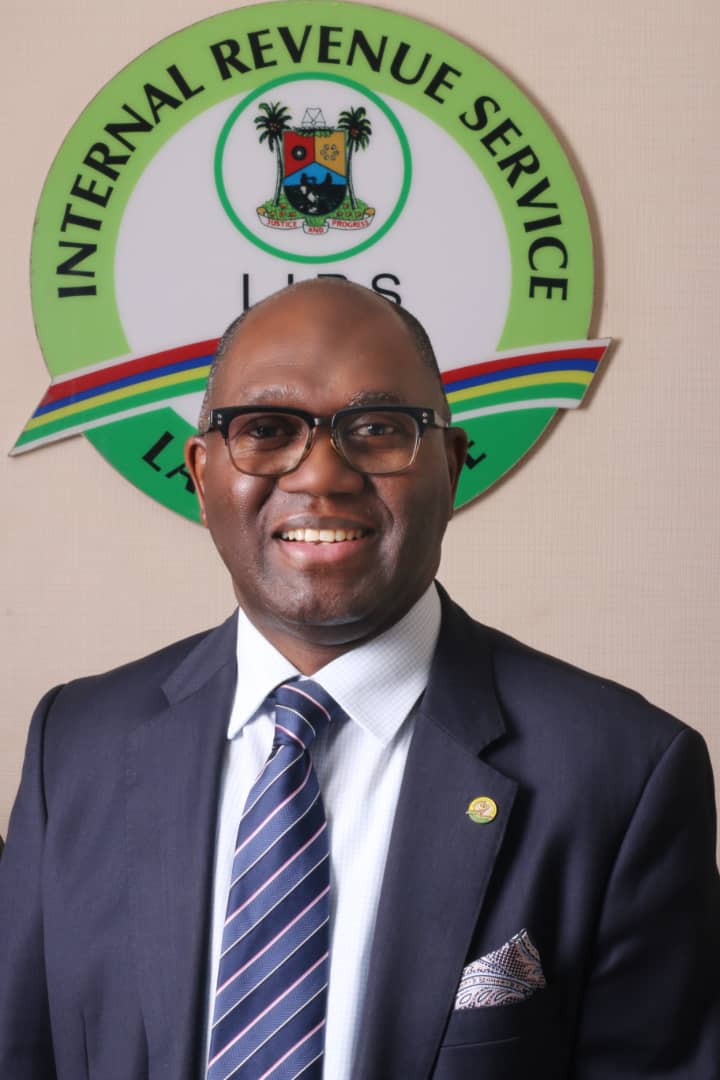
Chairman-of-Lagos-State-Internal-Revenue-Service-LIRS-Mr.-Ayodele-Subair.jpeg

By Adedapo Adesanya

The desire to deepen transparency, and accountability and uphold a high standard in the administration of the tax system has made the Lagos State Internal Revenue Service (LIRS) collaborate with a globally recognised accounting and audit firm, Delloite Nigeria.

The partnership between both firms is majorly on the Whistle-Blower Initiative of the tax collecting organisation, according to a statement, which quoted its Executive Chairman, Mr Ayodele Subair.

Last Friday, LIRS launched the initiative to encourage the reporting of illegal actions or financial crimes through the appropriate channel, with a view to correcting the violations and optimally boosting the tax administration in the state.

He said the scheme, an initiative of the state government, will be driven by Delloite Anonymous and the Confidential Whistle-Blowing facility, adding that the whistle-blowing facility will promote the reporting of acts of commission or omission that borders on unethical conduct of the LIRS employees, management, and other stakeholders through the designated channels to the authorities.

“The facility is designed to ensure that concerns about wrongdoings or malpractice observed in the LIRS administrative and operational activities can be raised by any stakeholder without fear of victimisation, subsequent discrimination, disadvantage, or dismissal.

“This facility does not only provide the avenue to report but ensures the credibility of reports through investigation, feedback to the whistle-blower and ensures protection for such whistle-blower from possible reprisals or victimisation for all disclosures made in good faith.

“The whistle-blowing initiative is a two-way affair; even though it is aimed at exposing the LIRS staff involved with misconduct, employees of entities who want to report employers who circumvent tax laws or even members of the public who wants to raise the alarm on persons or entities who willfully commit financial crimes leading to revenue loss for the state can make use of the whistle-blowing platform,” he said.

Mr Subair said Deloitte’s engagement as an independent assessor was to ensure an objective and unbiased review of issues raised.

Also speaking at the event,  the Commissioner for Finance, Mr Rabiu Onaolapo Olowo said the Whistle-Blower Initiative of the LIRS is a pilot scheme of the Lagos State Speak-Up programme aimed at encouraging feedback mechanism from the general public, boosting their confidence and trust in the operational activities of government.

Mr Olowo said it was logical to choose the LIRS as the pilot scheme for the initiative because it is responsible for more than half of the revenue generated by the state and due to its multifaceted interactions with the members of the public, the Lagos government could use the channel to boost its message of openness and transparency.

He said: “In our pursuit to make transparency, accountability, and openness count in governance in the last three and half years, this is one step to help us to wrap up some of the things we have been doing to take government down to the people. We have to appreciate Governor Babajide Sanwoolu for approving this Speak-Up initiative. It will further help us to effectively discharge the policy thrust of this government and we believe it will promote and engender trust and citizen engagement.

“The reason we have chosen the LIRS as the pilot MDA for this scheme is quite obvious because it is the major revenue-generating agency for the state. Today, LIRS accounts for almost 75 per cent of Lagos’s revenue and it engages with the public at multi-faceted levels. Thousands of people across the world see infractions every day but they decided to remain silent because they feel there is nothing they can do to change the situation, but today, we are launching a channel that will encourage and remind people of their civic responsibilities to speak up when they observe unethical behaviour, especially in the process of conducting their businesses with the government.”

Joining the conversation, the Commissioner for Economic Planning and Budget, Mr Samuel Egube, believes citizen participation in governance invariably stimulates public trust which consequently enables the government to make the right investment decision on behalf of the people.

He stated that the channel will further open the Lagos State government to scrutiny and the openness and transparency that the initiative generates will lead to more development.

“We believe this channel will enable citizen participation in governance which will surely stimulate the trust of the people in what we do with their investment. You cannot talk about development in South Korea, Singapore, or Dubai in the United Arab Emirates without working out how that is connected to the United Nations Citizen Participation Index which states the line of relationship between the citizens and government and this is what this channel has addressed. Since we have launched the 30-year development plan this is another attempt at making the people of Lagos State work together with the government to make the plan works,” he said.

On his part, Mr Beulah Adeoye, Partner, Deloitte Nigeria, said the whistle-blowing service provides multilingual, multiple reporting channels including a 24-Hour toll-free hotline (0800TIPOFFS and 0800 847 6337).

Users can also use Delloite’s web portal (https://tip-offs.deloitte.com.ng); Email (ti******@**********om.ng) or download the app (Deloitte Tip-offs, and Anonymous App) on the mobile app store.

Adedapo Adesanya is a journalist, polymath, and connoisseur of everything art. When he is not writing, he has his nose buried in one of the many books or articles he has bookmarked or simply listening to good music with a bottle of beer or wine. He supports the greatest club in the world, Manchester United F.C.

Click to comment

Leave a Reply

Your email address will not be published. Required fields are marked *

General

NERC Orders DisCos to Pay 20% Compensation to Affected Band A Customers

Published

on

Prepaid Meters DisCos

By Adedapo Adesanya

The Nigerian Electricity Regulatory Commission (NERC) has ordered electricity distribution companies (DisCos) to pay 20 per cent compensation to eligible Band A customers who were affected by power shortfalls between February and March 2026.

In Directive No. NERC/2026/002, the commission said, generation constraints, which were largely caused by inadequate gas supply and vandalism of gas and transmission infrastructure, prevented DisCos from meeting committed service levels for some Band A feeders.

NERC Mandated that for feeders that supplied less than 18 hours per day, affected Band A feeders will not be downgraded during the covered period, and eligible customers will receive special compensation equal to 20 per cent of approved energy figures for February 2026.

However, for Band A feeders that recorded an average daily supply of between 18 and 20 hours, the existing compensation framework under Addendum No. NERC/2024/003 applies to both Maximum Demand (MD) and Non-Maximum Demand (Non-MD) customers.

MD customers are high-consumption users who typically have their own dedicated transformer and operate with a load of 45 kVA and above; they include large residential estates, banks, hotels, supermarkets, industrial facilities and oil and gas complexes.

Non-MD customers do not have a dedicated transformer and instead share public transformers, and they generally consume less, often below 45–50 kVA.

For Non-MD customers, compensation is set at 20 per cent of the approved February 2026 energy cap applicable to the affected feeder.

For MD customers, compensation is 20 per cent of the average energy billed per MD customer in February 2026.

According to NERC, prepaid customers will receive their compensation as token credits, while postpaid customers will receive bill adjustments.

The commission said that compensation for February must be completed by 31 May 2026, while compensation for March must be completed by 30 June 2026.

The commission prohibited Distribution companies from using compensation credits to offset any existing customer debt, adding that customers must be clearly informed of the value and period of the compensation they receive.

NERC said it will monitor implementation and verify compliance to ensure all eligible customers receive what they are due.

The commission reaffirmed its commitment to protecting electricity consumers while ensuring the stability and sustainability of the electricity market.

Continue Reading

General

TCN Confirms Destruction of Six Transmission Towers in Nasarawa

Published

on

Transmission Towers

By Adedapo Adesanya

The Transmission Company of Nigeria (TCN) has confirmed the destruction of six transmission towers along the Apir–Lafia 330kV line in Nasarawa State, causing significant disruption to electricity supply in parts of the country.

In a statement issued on Wednesday, TCN spokesperson, Mrs Ndidi Mbah, said the incident occurred on May 30 at about 1:15 a.m. during a heavy downpour.

She explained that the transmission line initially tripped, prompting operators to attempt a trial reclosure of Line II at about 2:08 a.m., but the effort failed.

A subsequent inspection of the transmission corridor, however, revealed extensive damage to key components of towers T125 to T130, confirming that the infrastructure had been vandalised.

“The tripping of the lines prompted a physical line trace to determine the fault, which revealed damage to critical components of towers T125 to T130, confirming vandalism on the affected sections of the transmission corridor,” Mbah said.

The incident has forced both Apir–Lafia 330kV Transmission Lines I and II out of service pending the reconstruction of the damaged towers.

TCN said its engineers have been deployed to the site to assess the extent of the damage and determine the materials required to restore normal transmission along the corridor.

As an interim measure, the Lafia 330kV Transmission Station is being supplied through an alternative line to minimise the impact on electricity consumers within the franchise areas of Abuja Electricity Distribution Company (AEDC) and Jos Electricity Distribution Company (JEDC).

The company condemned the persistent vandalism of power infrastructure, warning that such acts undermine investments in the electricity sector and threaten the stability of the national grid.

It also urged residents and host communities to remain vigilant and report suspicious activities around transmission installations to security agencies or the nearest TCN office.

TCN stressed that safeguarding critical national infrastructure requires collective responsibility to ensure a reliable and uninterrupted electricity supply nationwide.

Continue Reading

General

IFC, NGX Group, LCCI Unveil Nigeria Gender Country Programme

Published

on

Gender and Equal Opportunities Commission

By Aduragbemi Omiyale

A Nigeria Gender Country Programme (NGCP) to advance private sector action on gender equality and inclusive economic growth has been unveiled at a high-level virtual CEO Roundtable convened by the International Finance Corporation (IFC), Nigerian Exchange (NGX) Group Plc, and the Lagos Chamber of Commerce and Industry (LCCI).

The NGCP builds on the momentum of Nigeria2Equal and other initiatives that have advanced workplace inclusion, women’s leadership, entrepreneurship, and sustainable finance across Nigeria’s private sector.

Designed as a more integrated and collaborative platform, the programme seeks to scale impact through coordinated action among development institutions, business leaders, regulators, and the organised private sector.

Anchored on three strategic priorities, the programme aims to increase women’s representation in leadership, improve access to quality employment, and expand access to productive assets—including finance, technology, and markets—for women and women-led businesses.

The partners are expected to formally launch the Nigeria Gender Country Program at a physical event scheduled for July 9, 2026, where stakeholders will further advance implementation of the programme’s strategic priorities.

At the virtual event, the Director General of the Securities and Exchange Commission (SEC), Mr Emomotimi Agama, said, “Gender inclusion is fundamentally an economic growth imperative. Closing gender gaps can unlock billions of dollars in value for Nigeria while strengthening business performance and national competitiveness. We must therefore move beyond viewing inclusion as a corporate social responsibility initiative or compliance exercise, and instead recognise it as a strategic driver of productivity, innovation, and sustainable economic growth.”

Commenting on the initiative, the chief executive of NGX Group, Mr Temi Popoola, said the initiative “presents a significant opportunity to deepen impact and accelerate progress across corporate Nigeria. By expanding women’s access to leadership opportunities, quality employment, finance, technology, and markets, we can unlock substantial economic value while building a more competitive, inclusive, and resilient private sector. At NGX Group, we believe the capital market has a critical role to play in advancing these outcomes through stronger governance, transparency, and stakeholder engagement.”

On his part, the IFC Head of Office in Lagos, Mr Christian Mulamula, said, “Closing the gender gap is one of the most significant opportunities to strengthen competitiveness and productivity. Across Africa, gender inequality is estimated to cost up to $2.5 trillion. Through the Nigeria Gender Country Program, IFC is working with the private sector to expand women’s leadership, improve access to better jobs, and increase opportunities for women-led businesses. Building on Nigeria2Equal, this initiative focuses on practical, measurable solutions that help businesses grow while advancing inclusive growth.”

In her remarks, the DG of LCCI, Ms Chinyere Almona, noted that the programme’s success would depend on leadership accountability and sustained commitment from business leaders, particularly in embedding gender inclusion into organisational strategy and execution.

Continue Reading

Trending