Connect with us

General

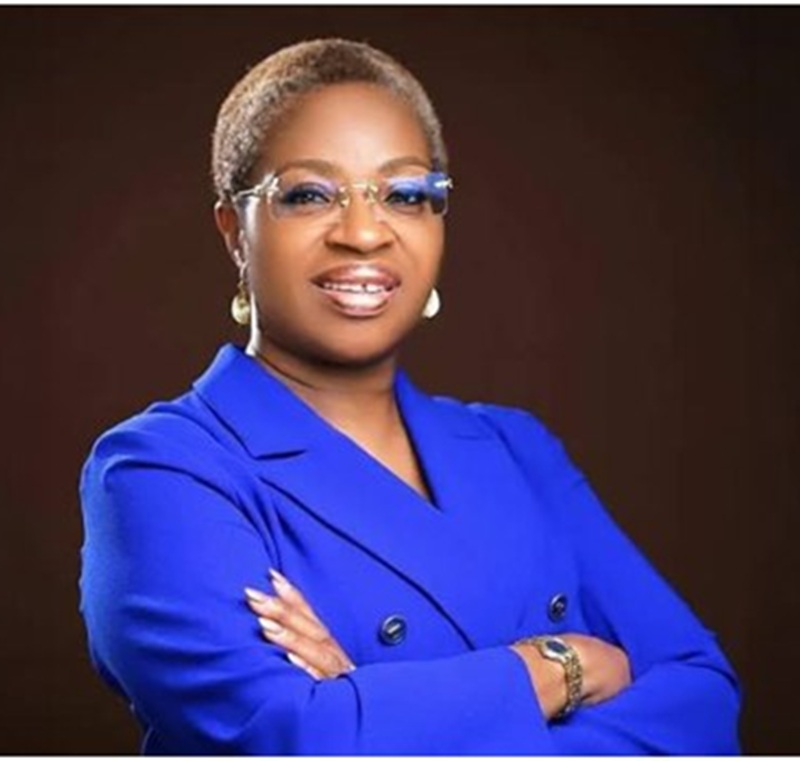
NBA Elects Oyinkansola Badejo-Okusanya as Second Ever Female President

Published

on

Oyinkansola Badejo-Okusanya

By Adedapo Adesanya

The Nigerian Bar Association (NBA) has elected Mrs Oyinkansola Badejo-Okusanya, a Senior Advocate of Nigeria (SAN), as its next president after she polled the most votes when voting officially ended on Sunday morning.

‎Mrs Badejo-Okusanya, the only female among the three presidential candidates, polled 12,317 votes to emerge the winner of the election, which was held through electronic voting for 24 hours, from 7:35 am on Saturday to 7:34 am on Sunday.

‎She defeated her two challengers, polling 47.18 per cent of the 26,106 ballots cast in the presidential election, based on the final tally. Her closest challenger, Mr Lateef Akangbe (SAN), garnered 7,934 votes, representing 30.39 per cent of the total votes cast, while the third candidate, Mr Olumuyiwa Akinboro (SAN), polled 5,855 votes, representing 22.43 per cent, to emerge third in the contest.

The Electoral Committee of the NBA (ECNBA) Chairman disclosed that a total of 26,106 votes were recorded for the highly disputed presidential election.

With her victory, Mrs Badejo-Okusanya will become the 33rd President of the legal association, successfully re-enacting a 34-year-old history as the second female to lead the NBA since its formation in 1933.

Meanwhile, Mr Afam Okeke was elected General Secretary of the legal body, having polled a total of 8,478 votes to defeat his opponents.

All the elected officials will be in office for two years, spanning 2026 to 2028.

The NBA president-elect was absent when the results of the election were announced at the NBA headquarters in Abuja. A member of her campaign team, Mr Aminu Gadanya (SAN), revealed that she had a flight delay and declared her resolve to extend a “handshake of friendship” to all the aggrieved candidates.

In his remarks after the results were announced, the outgoing President of the NBA, Mr Afam Osigwe (SAN), noted that the election faced several challenges, including a cyberattack that almost derailed the electoral process.

“Many went to great lengths to truncate the electoral process. They maligned the process with their utterances, but we held firm. Every effort to derail the process failed,” Mr Osigwe stated.

He urged the winners to be magnanimous in victory, warning that they should celebrate moderately.

“This is a trying time for the Bar. Many people may still go to great lengths to rubbish the association. However, this is a time for healing. At the end of the day, let the Bar be the winner,” he added.

He said the ECNBA would carry out an in-depth analysis, especially of the challenges encountered, so as to come up with recommendations that will engender greater confidence in the association’s electoral process.

“The cyberattack shows that we must do more, not only for data protection, but to protect our electoral integrity. We must insulate our electoral process from such activities.

“Someday the story will be told of how the ICT system had to be rebuilt and moved to a safer server to ensure that the election was held.

“The Bar must always protect its independence and eternally determine the course of its electoral process,” the outgoing NBA President added.


Adedapo Adesanya is a journalist, polymath, and connoisseur of everything art. When he is not writing, he has his nose buried in one of the many books or articles he has bookmarked or simply listening to good music with a bottle of beer or wine. He supports the greatest club in the world, Manchester United F.C.

Click to comment

Leave a Reply

Your email address will not be published. Required fields are marked *

General

Nigeria Backs Phased Introduction of ECOWAS Single Currency

Published

on

eco currency

By Adedapo Adesanya

Nigeria has reaffirmed its support for the gradual implementation of a single West African currency known as the Eco.

The planned single currency has been in motion for years but has been hit with multiple delays; the latest implementation target is set for 2027.

The country also pledged unwavering commitment to regional integration, democratic governance, peace, security and sustainable development across West Africa, at the 69th Ordinary Session of the Authority of Heads of State and Government of the Economic Community of West African States (ECOWAS) held in Sierra Leone.

Representing President Bola Tinubu at the meeting, Vice President Kashim Shettima underscored Nigeria’s continued support for the implementation of the ECOWAS Compact for the Future of Regional Integration.

He described it as a strategic framework for building a more resilient, prosperous, inclusive and people-centred community.

The Vice President commended the government and people of Sierra Leone for hosting the summit and congratulated President Julius Maada Bio on the successful completion of his tenure as Chairman of the ECOWAS Authority of Heads of State and Government.

He also lauded the commissioning of the Julius Maada Bio International Conference Centre, describing it as a significant contribution to regional diplomacy and cooperation.

Nigeria reaffirmed its support for deeper economic integration through expanded intra-regional trade, industrialisation, infrastructure connectivity, investment promotion, food security and the gradual implementation of the Eco single currency.

The Vice President stressed that regional prosperity depends on removing barriers to trade, facilitating the free movement of persons, goods and services, and creating an enabling environment for businesses and investors.

On peace and security, Nigeria reiterated its commitment to constitutional governance, the rule of law and zero tolerance for unconstitutional changes of government.

The Vice President emphasised that sustainable development can only thrive in an atmosphere of peace and stability and reaffirmed Nigeria’s support for strengthening the ECOWAS Standby Force, enhancing intelligence sharing, counter-terrorism cooperation and preventive diplomacy across the region.

He also highlighted the importance of digital transformation, innovation, science and technology in accelerating regional economic growth, while advocating greater investment in women and youth as critical drivers of West Africa’s development.

He further called for stronger ECOWAS institutions founded on transparency, accountability, efficiency and sustainable financing to enhance public confidence and improve the implementation of regional decisions.

Recognising the evolving global geopolitical landscape, Nigeria reaffirmed its commitment to preserving the unity and relevance of ECOWAS through dialogue, solidarity and constructive engagement with all member states.

The Vice President urged regional leaders to remain steadfast in advancing a shared vision of a peaceful, integrated and prosperous West Africa.

Continue Reading

General

Favy Wins MasterChef Nigeria N73m Cash Prize

Published

on

Chef Favy Favour Bessan

After 13 weeks of unforgettable challenges, bold flavours and inspiring determination, 26-year-old Favour Bessan, better known as Favy, has been crowned the winner of MasterChef Nigeria Season 1, taking home the coveted MasterChef Nigeria trophy and the N73 million cash prize.

The historic finale saw Favy go head-to-head with fierce competitor Fads in a gruelling challenge that drew on every skill they had acquired or honed throughout the competition. Judged by renowned culinary experts, Chef Stone and Chef Eros, this showdown proved to be the ultimate measure of both contestants’ creativity, composure, decision-making and excellence.

For their final assignment, the two home cooks were tasked with creating a three-course menu that reflected their culinary identity. Before cooking began, Chef Stone encouraged them with a simple yet powerful instruction: “Cook from your heart. Put yourself on the plate.”

Favy rose to the occasion with a menu that reflected confidence, technique and imagination. For her starter, she served smoked salmon with potato mash and roasted bell pepper soup. Her carefully curated menu impressed the judges with its balance of flavour, presentation and storytelling, ultimately earning her the title of Nigeria’s first MasterChef.

Favy’s victory marked the culmination of one of the season’s most remarkable journeys. Throughout the competition, she consistently demonstrated resilience, poise under pressure, and an unwavering commitment to growth. She also made history as the first contestant to win the MasterChef Nigeria Immunity Pin, a strategic advantage that proved pivotal in securing her place in the semi-finals.

Speaking after being announced as the winner, an emotional Favy described the moment as “a dream come true” and dedicated the achievement to every aspiring home cook who believes that passion, perseverance and hard work can open extraordinary doors.

Since premiering on 26 April 2026, MasterChef Nigeria has captured the hearts of audiences across the country, celebrating the richness of Nigerian cuisine while showcasing the incredible talent of everyday home cooks. Over 13 weeks, viewers watched contestants transform as they navigated pressure tests, mystery boxes, team cook-offs and eliminations, highlighting the depth and diversity of Nigeria’s culinary landscape.

Reflecting on the success of the inaugural season, Tamara van Eeckhoven, Managing Director of Primedia Africa, the producer of MasterChef Nigeria, thanked the contestants, judges, headline sponsor Power Oil, and all the sponsors and partners, whose invaluable contributions brought the series to life.

The show’s sponsors include headline sponsors Power Oil, Addme, Minimie Chinchin, Indomie, Dano Milk, Malta Guinness, Kellogg’s and Power Pasta, together with supporting sponsors Sonia Tomato Mix, Pretty Lady Rice, Wild Africa, South African Tourism, Lagos Fashion Week, Golden Penny Flour, Golden Penny Sugar, Golden Penny Garri, Golden Penny Semolina, Golden Penny Chocolate Spread, Golden Penny Wheat, Deli and Kola, Simi Teds, and The Alternative Bank.

She also expressed her gratitude to the millions of viewers whose support made MasterChef Nigeria a resounding success.

MasterChef Nigeria was created to celebrate the nation’s extraordinary culinary talent, and the response to this first season has been truly remarkable. Favy’s journey embodies everything the competition stands for – passion, resilience, creativity and excellence. We congratulate her on making history and celebrate every contestant who inspired audiences throughout this unforgettable season,” van Eeckhoven said.

As the first season draws to a close, MasterChef Nigeria leaves behind more than just a winner. It has sparked a national celebration of food, inspired aspiring culinary talent across the country, and reinforced Nigeria’s standing as one of the world’s most exciting culinary destinations.

For Favy, this victory marks the start of a new chapter. For MasterChef Nigeria, it is the beginning of a legacy that promises to help shape the future of Nigerian cuisine for years to come.

Continue Reading

General

Digital Switchover: NBS, NigComsat Train Installers in Ibadan

Published

on

Charles Ebuebu DG NBC Train Installers Digital Switchover

By Modupe Gbadeyanka

Over 50 skilled technicians drawn from various states across the South-West region of Nigeria converged on Ibadan, Oyo State, on Friday for a comprehensive technical and sensitisation training programme for set-top box installers and associated reception equipment technicians.

This training was organised by the National Broadcasting Commission (NBC) in partnership with the Nigerian Communications Satellite Limited (NIGCOMSAT) to guarantee a smooth, efficient, and error-free rollout of Nigeria’s digital broadcasting migration.

Nigeria’s journey toward digital terrestrial television has spanned nearly two decades. The country formally adopted the digital switchover policy in 2008 in line with the International Telecommunication Union’s (ITU) 2006 global mandate, which set a June 2015 deadline for member states.

Successive missed targets in 2017 and beyond stemmed from funding constraints, policy inconsistencies, infrastructure gaps, and logistical challenges. While pilot projects were implemented in Plateau, Lagos, Kano, Enugu, Kwara, Osun, Kaduna, and the Federal Capital Territory, nationwide coverage remained a distant goal.

After substantial public investment exceeding N60 billion with limited results, the federal government unveiled a bold, renewed strategy in 2025 titled The Big Picture on June 17, 2026, with a firm analogue switch-off date set for December 31, 2028.

The new framework introduces a hybrid broadcasting model that intelligently combines Digital Terrestrial Television (DTT), Direct-to-Home (DTH) satellite delivery via NIGCOMSAT-1R, and Internet Protocol (IP)-based distribution.

By prioritising satellite technology, Nigeria leverages its sovereign satellite assets to significantly reduce dependence on expensive terrestrial transmission infrastructure. This approach is projected to accelerate digital television rollout by over 65 per cent while delivering near-instantaneous national coverage.

The Head of the Digital Switchover (DSO) unit and Deputy Director of Public Affairs at the NBC, Mrs Clementine Usman-Wamba, noted that the Ibadan session is the first of many planned across Nigeria’s geopolitical zones.

The Ibadan training directly addresses the technical demands of this hybrid ecosystem. Installers will be equipped with skills in satellite dish alignment for DTH, terrestrial antenna optimisation for DTT signals, and the configuration of hybrid reception devices.

Given the significant departure from analogue systems and earlier pilots, this sensitisation is essential to minimise installation errors, reduce service disruptions, and ensure that even households in rural and underserved communities can enjoy seamless access to superior digital broadcasts.

The FreeTV platform, built on open-standard DVB-S2 technology, will offer up to 100 free-to-air high-definition channels to an estimated 40 million television households across the country.

For terrestrial reception, Nigeria has adopted the advanced DVB-T2 standard with MPEG-4 AVC compression, which supports up to 20 channels per frequency—far more efficient than previous systems.

Consumers can access the service using affordable DVB-S2-compatible set-top boxes (priced between N15,000 and N25,000) or smart TVs with built-in DVB-T2 digital tuners.

Beyond technical excellence, the DSO represents a major national economic transformation project. The reallocation of broadcast spectrum (the “digital dividend”) will unlock new opportunities in telecommunications and broadband services. The advertising market is projected to expand by up to N605.2 billion, while local manufacturing and assembly of reception equipment is expected to generate over 20,000 jobs.

Continue Reading