General
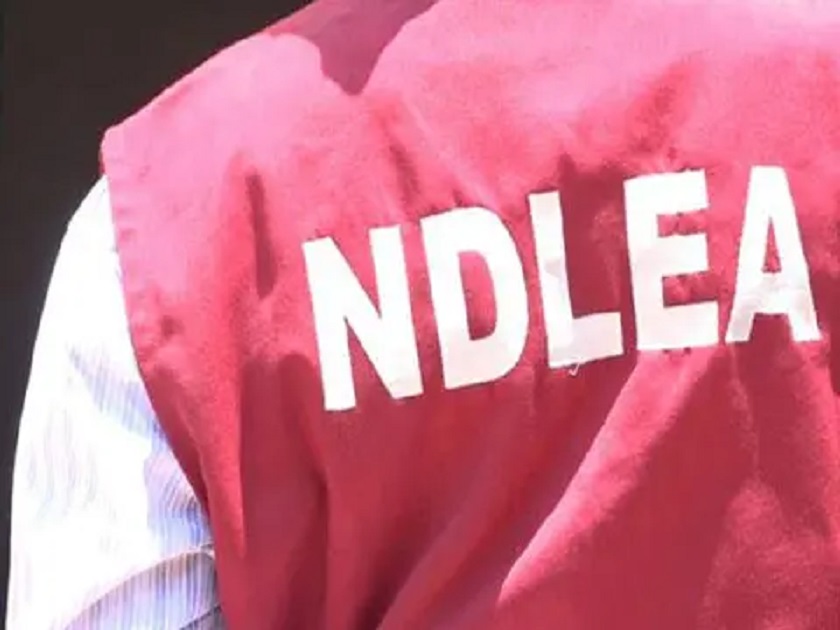
NDLEA Busts Three Drugs Syndicates In Lagos
By Adedapo Adesanya
The National Drug Law Enforcement Agency (NDLEA), following various intelligence-led operations across parts of Lagos state, has clamped down three drug syndicates involved in dealing with multi-billion naira worth of cocaine, opioids and cannabis.
In the wake of the raid, NDLEA officials arrested an alleged baroness and four other kingpins recovered from their hideouts.
The female head of one of the syndicates, Mrs Faith Ebele Nwankwo, was arrested on Wednesday, August 9, at her residence, House 6, C close, 3rd Avenue, Festac area of Lagos shortly after she returned from a warehouse at Plot 3432 Sola Akinsola Street, Divine Estate, Amuwo Odofin where she loaded eight cartons of tramadol 225mg into an unmarked white Honda Pilot SUV.
Authorities say that a search of her residence and the warehouse led to the recovery of two million seven hundred and fifty thousand (2,750,000) pills of tea making, a brand of tramadol 225mg and 250mg packed in 39 cartons weighing 1,916 kilograms. The drugs and the SUV were recovered while the suspect was taken into custody.
In another operation targeted at a group of transnational syndicates involved in the importation, exportation, distribution, and dealing of cocaine and Canadian Loud, operatives of the same Special Unit of the Agency on Friday, August 4, tracked the drug syndicate to Atlantic Nominee Estate in Lekki- Ajah area of Lagos where a blue Toyota Highlander SUV was loaded with 8.49kg of cocaine and 10.3kg Canadian Loud for distribution by the duo of Mrs Urama Chinemelum Precious, 32, and Mr Adelakun Ilelabayo Oluade, 55.
A follow-up operation at the residence of Chinemelum at House 7, Road 7, Lagra estate, Eti-Osa, Lagos, led to the recovery of additional 18 blocks of Loud weighing 18.5kg.
The following day, Saturday, August 5, operatives of the Special Unit went after another syndicate involved in the importation, distribution and diversion of ephedrine hydrochloride, a precursor chemical used for the production of methamphetamine, following intelligence that members of the cartel were planning to divert 25 kilograms of the substance.
Two suspected members of the syndicate: Mr Udeh Vincent Ogbonna, 53, and Mr Okonkwo Ifeanyi Uzozie, 50, were arrested at a commercial bus terminal in Jibowu, Yaba, Lagos, where they were attempting to send the concealed substance to the South East.
A body search conducted on the two suspects led to the recovery of $3,000 found on Mr Udeh Vincent Ogbonna.
In operations across four other states of Ogun, Ondo, Edo and Nasarawa, NDLEA operatives recovered over 13,391.8 kilograms of skunk.
No fewer than 1,955kgs of the illicit substance packed in 139 jumbo bags and stored in the warehouse of a wanted suspected drug dealer, Mr Lekan Jimoh (aka Konmo Konmo) in Ado Odo Ota area of Ogun state, were recovered in the early hours of Saturday 12th August in collaboration with officers and men of the Nigerian Army.
In Ondo, Mr Ogbu Paul Odey, 30; Me Daniel Osidi, 34; Mr John Iyage, 41; Mr Friday Simon, 28; and Mr Friday James, 24, were arrested in connection with the seizure and/or destruction of over 10,325.5kgs of cannabis sativa in Iju and Ala forests, in Akure area of the state between Wednesday 9th and Thursday, August 10.
Also, a 22-year-old, James Aga, was arrested during the raid of an uncompleted building on the outskirts of Utese town in Ovia North East LGA of Edo State on Friday, August 11, with 10kg skunk, 976kg of the same substance was recovered from the building in addition to the recovery of four motorcycles.
In an earlier operation in Utese forest on Tuesday, August 8, at least 46.545kgs of skunk were recovered and 1.581146 hectares of cannabis farms destroyed while two suspects, Mr Onyelunisue Azuka, 48 and Mr Abraham Ayomide, 30, were arrested.
Similarly, in Nasarawa state, a 49-year-old, Mr Umar Abdullahi, was arrested on Friday, August 11, with 64.8kgs of cannabis sativa in Doma LGA, while NDLEA operatives of the Directorate of Operations and General Investigation (DOGI) on Wednesday, August 9, intercepted a 4.5kg consignment of Loud coming from the United States at a courier firm in Lagos.
In his reaction to the clinical dismantling of the three-drug syndicates and arrest of their kingpins, the Chairman/Chief Executive Officer of NDLEA, Mr Mohamed Buba Marwa, commended the officers and men of the Special Unit for being proactive and pragmatic in the operations.
He also applauded their colleagues in Ogun, Ondo, Edo and Nasarawa Commands and those of DOGI for their zeal and professionalism. He charged them and their compatriots across the country to remain vigilant and focused.
General
Tinubu Confirms Killing of Abu-Bilal Al-Manuki by Nigerian, US Forces
By Modupe Gbadeyanka
President Bola Tinubu on Saturday confirmed the killing of a senior ISIS leader, Mr Abu-Bilal Al-Manuki, in an overnight operation carried out by the United States and Nigeria.
President Donald Trump had earlier announced the elimination of the notorious terrorist via a post on his Truth Social.
Later, in a statement today, Mr Tinubu praised the action, describing it as “a significant example of effective collaboration in the fight against terrorism.”
“Our determined Nigerian Armed Forces, working closely with the Armed Forces of the United States, conducted a daring joint operation that dealt a heavy blow to the ranks of the Islamic State,” he said in the statement.
According to him, early assessments confirm the elimination of the wanted IS senior leader, Abu-Bilal Al-Manuki, also known as Abu-Mainok, along with several of his lieutenants, during a strike on his compound in the Lake Chad Basin.
He commended the partnership between Nigeria and America in waging war against terrorists, thanking his US counterpart “for his leadership and unwavering support in this effort.”
“I commend the personnel involved on both sides for their professionalism and courage, and I look forward to more decisive strikes against all terrorist enclaves across the nation,” the Nigerian leader added.
General
Nigeria Steps up AI Surveillance, Anti-Drone Systems for National Security
By Adedapo Adesanya
Nigeria is set to strengthen its defence architecture by deploying artificial intelligence-powered surveillance systems and advanced anti-drone technology as part of efforts to modernise the country’s military capabilities, according to the Minister of Defence, Mr Christopher Musa.
He disclosed this during a high-level visit to Monaco, where he led a Nigerian delegation to conclude discussions on the multi-domain Hybrid Intelligence Shield (HIS) project.
According to Mr Musa, the initiative is designed to enhance border security, protect urban centres and improve the country’s response to emerging security threats.
The project is expected to introduce AI-driven surveillance systems capable of identifying threats rapidly through smart algorithms, while anti-drone technology will be deployed to intercept and neutralise unmanned aerial threats.
The government also plans to establish national and regional command-and-control centres to improve real-time coordination and response to security incidents across the country.
Mr Musa said the initiative would place strong emphasis on technology transfer and local capacity development through the establishment of a military Centre of Excellence in Nigeria.
He added that the federal government would leverage partnerships with international firms, including Marss UK Ltd, while simultaneously building indigenous capabilities to address insurgency, illegal mining, piracy and other security threats.
Nigeria has continued to battle multiple security challenges in recent years, including insurgency in the North-East, banditry and kidnappings in the North-West, farmer-herder clashes in the North-Central region, crude oil theft in the Niger Delta and piracy in the Gulf of Guinea.
Nigeria is stepping up its defence as the border region of Nigeria, Benin and Niger on the southern edge of the Sahel region is becoming a new stronghold for jihadists, as militants turn forests and pastoral networks in West Africa into bases for recruitment and international attacks.
Attacks in Nigeria have also risen, with data from the website of the Armed Conflict Location & Event Data (ACLED), a conflict-monitoring group, affirming that the number of suicide bombings in Nigeria by March already matched the annual average over the past six years.
The Nigerian military has also been dealt a blow to its military bases and senior figures targeted. In April, Brigadier-General Oseni Omoh Braimah was killed when Islamist fighters attacked a base in Borno State.
To also meet the defence goal, Nigeria is stepping up efforts to build domestic arms-manufacturing capacity.
General
Nigeria, Morocco to Seal Atlantic Gas Pipeline Deal by Q4 2026
By Adedapo Adesanya
Nigeria and Morocco are set to sign a major intergovernmental agreement later this year to push forward the long-delayed Nigeria-Morocco Gas Pipeline project, a multi-billion-dollar energy corridor expected to reshape gas trade across West Africa and Europe.
The agreement, expected to be signed in the fourth quarter of 2026 by President Bola Tinubu and King Mohammed VI of Morocco, follows the completion of preliminary technical studies for the ambitious project, according to officials from both countries.
The pipeline, also known as the African Atlantic Gas Pipeline, is projected to stretch about 6,900 kilometres along offshore and onshore routes across West Africa, making it one of the largest gas infrastructure projects on the continent.
With an estimated cost of $25 billion, the pipeline is designed to transport up to 30 billion cubic metres of gas annually once completed.
Discussions on the project gained fresh momentum during a telephone conversation between Nigeria’s Minister of Foreign Affairs, Mr Bianca Odumegwu-Ojukwu, and her Moroccan counterpart, Mr Nasser Bourita.
The project would not only strengthen energy cooperation between the two countries but also improve regional economic integration and expand Africa’s access to European energy markets.
According to Morocco’s hydrocarbons and mining agency, ONHYM, part of the gas supply will support Morocco’s domestic energy demand, while large export volumes will be directed to Europe.
The project, first proposed about a decade ago, is seen as a strategic alternative gas supply route amid rising global energy security concerns and Europe’s search for more diversified energy sources.
Beyond the pipeline, Nigeria and Morocco are also exploring broader economic partnerships, particularly in fertiliser production and distribution to support food security across Africa.
Both countries also agreed on the need to revive the Nigeria-Morocco Business Council to strengthen trade and investment relations under the African Continental Free Trade Area framework.
Analysts noted that the project could significantly boost gas monetisation opportunities for Nigeria, expand regional infrastructure development, and deepen economic ties between West African nations and Europe if successfully executed.
-
Feature/OPED6 years agoDavos was Different this year
-
Travel/Tourism10 years ago
Lagos Seals Western Lodge Hotel In Ikorodu
-
Showbiz3 years agoEstranged Lover Releases Videos of Empress Njamah Bathing
-
Banking8 years agoSort Codes of GTBank Branches in Nigeria
-
Economy3 years agoSubsidy Removal: CNG at N130 Per Litre Cheaper Than Petrol—IPMAN
-
Banking3 years agoSort Codes of UBA Branches in Nigeria
-
Banking3 years agoFirst Bank Announces Planned Downtime
-
Sports3 years agoHighest Paid Nigerian Footballer – How Much Do Nigerian Footballers Earn