General
NEMA DG Canvasses for Cost-Saving Methods
By Modupe Gbadeyanka
The Director-General of the National Emergency Management Agency (NEMA), Mr Mustapha Habib Ahmad, has stressed the need to adopt and sustain cost-saving methods.
He said this has become necessary following the economic downtown occasioned by the dreaded COVID-19 pandemic.
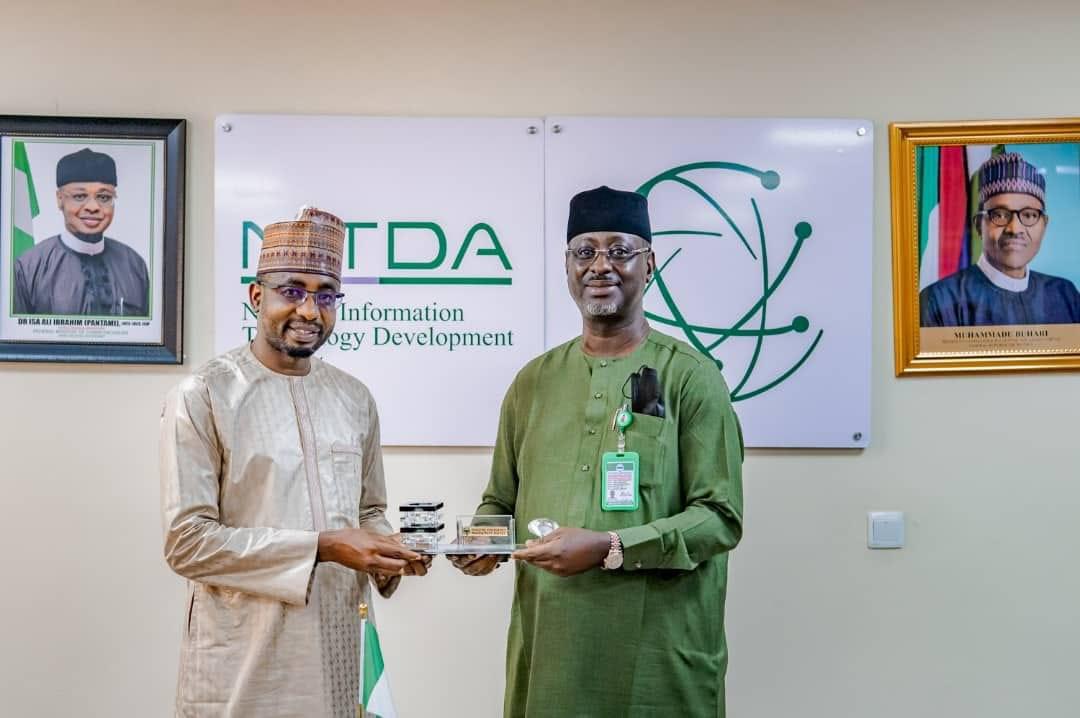
Mr Ahmad was recently at the office of his counterpart at the National Information Technology Development Agency (NITDA), Mr Kashifu Inuwa Abdullahi, to seek the agency’s collaboration on the use of ICT infrastructure and digital platform with a view to ensuring timely and lifesaving search and rescue operations.
He informed the NITDA boss that his organisation has the statutory mandate to seek collaborative support between the two agencies.
According to him, NEMA’s Act empowers it to manage human and natural disasters as well as support Nigerians in distress and mitigate the impact of such calamities, thereby building the culture of resilience on Nigerians.
He added that the country was faced with wide-ranging disasters such as insurgent activities ravaging the North East, communal conflicts, kidnappings and banditry, annual floods and most recently the COVID-19 global pandemic.
“Resources at the agency’s disposal no doubt have been overstretched and can barely meet the various disaster challenges across the nation,” the NEMA DG said.
Mr Ahmad stated that he approached NITDA and other stakeholders as part of efforts to address disaster risk management in Nigeria.
He said the agency can specifically assist NEMA’s zonal territorial and operational offices with real-time and sudden onset disaster communication, video conferencing, collection of damage and loss assessment data to enable timely lifesaving search and rescue operations as well as deployment of humanitarian support in the right time.
In his remarks, the NITDA DG promised to work with the agency to achieve its goals, noting that as the government apex IT regulatory body, it was saddled with the mandate of developing and regulating the use of ICT in Nigeria.
He further said NITDA is also required to deploy its expertise on virtually all aspects of human and operational endeavours that require the application of digital technology which NEMA is not an exception.
He described NEMA’s operations as one that requires the application of modern technology, adding that “to work effectively and efficiently you need ICT; technology can help you get insight and predict a disaster even before it happens.”
He said modern technology will in no small measure positions agencies like NEMA to always be on their toes ahead of any emerging situation easily, quickly, and conveniently as well as providing useful information that will make the agency take proactive measures.
The DG assured the agency of NITDA’s unalloyed commitment to incorporating it into its Digital Transformation Working Group (DTWG) to facilitate organizing capacity building for their personnel, to have a full grasp of the process, when where and how to deploy and apply the technology appropriately.
He also expressed NITDA’s readiness to key into providing technology guide on effective communication methods with their Zonal and State Offices for quick, easy and convenient information dissemination of locations for disaster.
Mr Abdullahi used the occasion to congratulate his counterpart at DG NEMA on his recent appointment, describing his task as onerous that requires sustained and strengthened partnerships for him to succeed in his duties due to its magnitude and impact on distressed Nigerians.
General
Senate Passes State Police Bill
By Aduragbemi Omiyale
The bill seeking to establish state police in Nigeria was on Wednesday, June 24, 2026, passed by the Senate during a plenary presided over by the Senate President, Mr Godswill Akpabio.
The piece of legislation was passed today after more than two-thirds of the lawmakers in the red chamber of the National Assembly voted in support via a manual voting process involving the raising of hands.
Before the passage at the plenary, the chairman of the Senate Committee on the Review of the Constitution, Mr Barau Jibrin, presented the panel’s report to his colleagues.
According to him, the bill will transform policing in the country and boost security, as it allows the sub-nationals to create their own policing system.
The bill provides for the Federal Police Service to be headed by the Inspector-General of Police, while the State Police Service will be led by a Commissioner of Police, who will be appointed by the governor of the state, subject to confirmation by the state’s House of Assembly.
To prevent the misuse of state police against political opponents or critics, ensuring that any action taken against such individuals or groups complies with due process and existing laws, the bill prohibits the Commissioner of Police of a state from arresting, detaining, investigating, or deploying force against any critic of the state governor, except in accordance with the law.
After the clauses of the bill were considered at the Committee of the Whole, the bill was passed and will be transmitted to the President for assent into law.
General
Daystar Power Expands Nestlé Solar Partnership Across West Africa
By Adedapo Adesanya
Daystar Power Group has expanded its renewable energy partnership with Nestlé in West Africa, commissioning solar power systems with a combined capacity of 6.884 megawatts across four manufacturing facilities in Côte d’Ivoire, Ghana, and Senegal.
According to a statement, the deployments bring the total installed capacity across Nestlé’s sites to 6,884 kWp, nearly 7 megawatts, making it one of the largest commercial and industrial solar partnerships in the region.
The four sites, two in Abidjan, one in Tema, and one in Dakar, are all fully operational, with each system designed around the specific grid and operational profile of its location.
“Nearly 7 megawatts across four Nestlé facilities is a number we are proud of, but what it represents matters more than the figure itself. It means that one of the world’s most demanding manufacturers has tested our model, trusted it, and come back. Our job now is to keep earning that, across every market where industry needs energy it can count on,” Mr Yischai Beinisch, CEO, Daystar Power Group said in a statement.
The partnership began with a single commissioning and expanded to span three countries and four facilities. In Côte d’Ivoire, Daystar Power has delivered 3,447 kWp across two Abidjan sites. In Ghana, a 2,547 kWp system powers Nestlé’s Tema factory. In Senegal, an 890 kWp installation operates at the Dakar facility.
The company said each system is sized and configured to deliver measurable environmental and social impact, including reduced greenhouse gas emissions and improved energy resilience. The design is tailored to the operational and grid conditions at each location, ensuring reliable, clean energy access while supporting local development and aligning with Nestlé’s publicly stated net-zero commitments.
Adding his input, Mr Samer Chedid, CEO, Nestlé Central and West Africa Region, said the investment reflects its commitment to building a business that not only grows but does so responsibly.
“By advancing solar energy projects in Ghana, Côte d’Ivoire, and Senegal, we are embedding sustainability into our growth, reinforcing our role as a force for good, creating long-term value for communities, and ensuring that our footprint actively contributes to a cleaner, more resilient future,” he said.
General
Nigeria Adopts New Security Framework to Safeguard Oil Assets
By Adedapo Adesanya
Nigerian Upstream Petroleum Regulatory Commission (NUPRC) and the Federal Ministry of Defence have agreed to deepen collaboration on the protection of critical oil and gas infrastructure through a new non-kinetic security framework designed to curb threats, strengthen community relations and sustain rising output.
The initiative comes as Nigeria recorded crude oil production of nearly 1.8 million barrels per day, one of the highest production levels in recent years, amid intensified efforts to combat crude oil theft, pipeline vandalism and other security challenges across the Niger Delta.
Speaking during a courtesy visit by a delegation from the Ministry of Defence to the Commission’s headquarters in Abuja, the chief executive of NUPRC, Mrs Oritsemeyiwa Eyesan, said the country’s recent production gains were directly linked to coordinated interventions involving security agencies and industry stakeholders.
“Today, we are benefiting from those efforts. Last month, we recorded production of nearly 1.8 million barrels per day throughout the month,” Mrs Eyesan said.
She noted that sustained investments in security operations, technology deployment and human capacity development had significantly improved production stability and operational efficiency in the upstream petroleum sector.
According to her, maintaining and expanding the gains has become critical as Nigeria seeks to increase crude oil output, attract fresh investments and maximise revenue generation from the petroleum industry.
“As we look to the future, we desire to grow production and must have assurances that security threats can be effectively managed. We can only achieve this through stronger collaboration with security agencies and industry stakeholders,” she stated.
Mrs Eyesan stressed that safeguarding oil and gas assets remains central to Nigeria’s energy security strategy and economic growth objectives, noting that production assurance has become a key requirement for investors considering new upstream projects.
She disclosed that the Commission was exploring wider deployment of advanced technologies, including drone surveillance systems, to improve monitoring of the country’s vast oil and gas infrastructure network and detect threats before they escalate into operational disruptions.
The NUPRC boss further revealed that the Commission would work closely with operators to refine and implement a new security framework, while providing leadership in stakeholder engagement and governance structures needed to ensure long-term sustainability.
The Minister of Defence, Mr Christopher Gwabin Musa, said the Ministry was introducing a non-kinetic security intervention model aimed at addressing the underlying causes of insecurity in oil-producing communities.
Rather than relying solely on military operations, he explained that the strategy would focus on community engagement, youth empowerment and social inclusion programmes to build lasting peace around critical energy infrastructure.
“One of the best ways to engage youths in oil-producing areas is through sports-based interventions,” Mr Musa stated.
He explained that the initiative would utilise sports development programmes to channel youthful energy into productive activities, reduce vulnerability to criminal networks and strengthen community ownership of critical national assets.
The Defence Minister, who was represented by one of his aides, added that the intervention would also include structured programmes for persons living with disabilities, creating broader opportunities for participation and economic inclusion in host communities.
According to him, the initiative aligns with the Host Community Development provisions of the Petroleum Industry Act (PIA) and is expected to strengthen relationships between operators and host communities while promoting sustainable development.
-
Feature/OPED6 years agoDavos was Different this year
-
Travel/Tourism10 years ago
Lagos Seals Western Lodge Hotel In Ikorodu
-
Showbiz3 years agoEstranged Lover Releases Videos of Empress Njamah Bathing
-
Banking8 years agoSort Codes of GTBank Branches in Nigeria
-
Economy3 years agoSubsidy Removal: CNG at N130 Per Litre Cheaper Than Petrol—IPMAN
-
Banking3 years agoSort Codes of UBA Branches in Nigeria
-
Banking3 years agoFirst Bank Announces Planned Downtime
-
Sports3 years agoHighest Paid Nigerian Footballer – How Much Do Nigerian Footballers Earn