General
Nigeria, Four Others Sign MoUs on Nigeria-Morocco Gas Pipeline
By Aduragbemi Omiyale
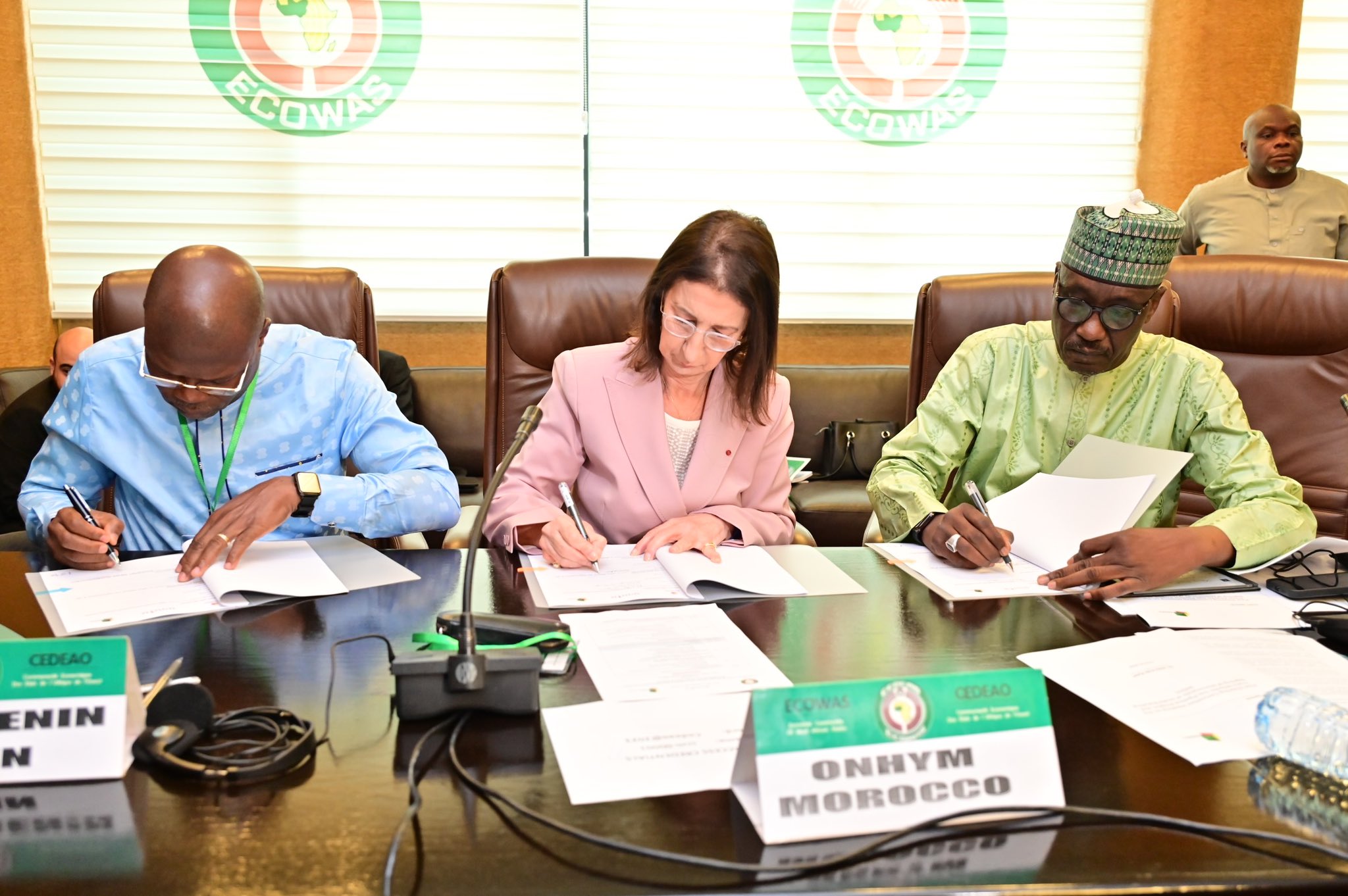
Four significant Memoranda of Understanding related to the Nigeria-Morocco Gas Pipeline project have been signed by Nigeria and four other African countries.
The deals were signed on Friday, June 16, in Abuja by the Nigerian National Petroleum Company (NNPC) Limited, the Office National des Hydrocarbures et des Mines (ONHYM) of Morocco, the Société Nationale des Opérations Pétrolières of Cote d’Ivoire (PETROCI), the National Oil Company of Liberia (NOCAL), the Société Nationale des Hydrocarbures of Benin (SNH-Benin), and the Société Nationale des Pétroles of the Republic of Guinea (SONAP).
They are similar to those signed with ECOWAS on September 15, 2022, Mauritania and Senegal on October 15, 2022, and The Gambia, Guinea-Bissau, Sierra Leone, and Ghana on December 5, 2022.
The project will enhance the monetisation of the affected African countries’ natural gas resources and offer a new alternative export route to Europe.
It will also contribute to accelerating access to energy for all, improving the living conditions of the populations, integrating the economies of the sub-region, and mitigating desertification.
It will achieve these goals through the provision of a sustainable and reliable gas supply that aligns with the continent’s new environmental commitments while providing Africa with a new economic, political, and strategic dimension.
Speaking at the project’s Steering Committee meeting, where the MOUs were sealed, the group chief executive of NNPC, Mr Mele Kyari, thanked the Nigerian government for entrusting the company with this strategic project as the national energy company.
“As a commercial enterprise, NNPC sees this project as an opportunity to monetise Nigeria’s abundant hydrocarbon resources by expanding Access to energy to support economic growth, industrialisation, and job creation across the African continent and beyond,” he said.
Also, the Director-General of ONHYM, Amina Benkhadra, said that the gathering represents a progressive step in ensuring social and economic development through energy security and accessibility geared towards attaining total development of Africa by Africans.
In his remarks, the ECOWAS Commissioner for Infrastructure, Energy and Digitisation, Mr Sédiko Douka, said the gas pipeline project is significant as it will help strengthen the region’s electricity production/generation capacity, stimulate industrial and agricultural development, and contribute to the energy transition by using a source of energy that is cleaner than other fossil fuels.
The meeting was attended by representatives from ECOWAS and all the participating countries, including Nigeria, Benin, Togo, Ghana, Côte d’Ivoire, Liberia, Sierra Leone, Guinea, Guinea-Bissau, The Gambia, Senegal, Mauritania, and Morocco.
General
Egbin Power Unveils Tech Empowerment Scheme for Youth Employability, Others
By Modupe Gbadeyanka
An initiative designed to encourage entrepreneurship, expand access to opportunities in the digital economy, and improve the employability of young people in its host communities has been launched by Egbin Power Plc.
The tech-based empowerment programme will equip young persons from Egbin, Ijede and Ipakan areas of Lagos State with digital skills.
The chief executive of the power-generating firm, Mr Mokhtar Bounour, described the initiative as part of the company’s Personal Corporate Social Responsibility (PCSR) efforts, reflecting its commitment to inclusive and sustainable development, adding that its responsibilities extend beyond electricity generation to empowering people in surrounding communities.
“In today’s digital age, technology is no longer optional but a critical driver of economic inclusion and growth,” Mr Bounour said, noting that deliberate interventions were needed to bridge digital gaps and prevent uneven development.
He explained that when communities are excluded from the digital economy, development becomes uneven and unsustainable, reinforcing the need for deliberate interventions that bridge digital gaps.
He pointed out that, “The Empowerment Programme is designed to address this gap by providing young people in Egbin, Ijede and Ipakan with access to practical and in-demand digital skills that can improve employability, foster entrepreneurship, and create new economic opportunities within their communities.”
The first cohort brings together beneficiaries from the three communities for structured training in ICT fundamentals, graphic design, full-stack web development, digital marketing, cybersecurity and data analytics. The programme combines classroom instruction with hands-on learning.
Participants were selected through a screening process that assessed curiosity, determination and willingness to learn, the company said. Beyond technical training, the programme also includes workplace skills such as ethics, problem-solving, collaboration, professionalism and digital responsibility.
Mr Bounour urged beneficiaries to act as ambassadors of the initiative and demonstrate the values of integrity, discipline and service, saying their progress would serve as evidence that strategic corporate responsibility can deliver measurable impact.
He encouraged participants to recognise their broader responsibility to their communities, urging them to learn with character, pay their knowledge forward, mentor others, and use their skills to solve real local problems. He noted that the true legacy of the programme will be the ripple effects it creates through shared success and communal growth.
The launch of the Tech Empowerment Programme underscores Egbin Power’s continued commitment to sustainable community development, trust-building, and long-term value creation.
The company reaffirmed its dedication to investing strategically in people, strengthening host communities, and contributing meaningfully to Nigeria’s digital and economic future.
General
NPA Working to Eliminate Manual Bottlenecks, Synchronise Operations Across Seaports
By Adedapo Adesanya
The managing director of the Nigerian Ports Authority (NPA), Mr Abubakar Dantsoho, has said the organisation is in collaboration with the International Maritime Organisation (IMO) to deploy the Port Community System (PCS) will eliminate manual bottlenecks and synchronise operations across Nigeria’s seaports.
Mr Dantsoho disclosed this at a recent three-day high-level stakeholder engagement in Lagos titled Achieving a 7-day Cargo Dwell Time, organised by the Presidential Enabling Business Environment Council (PEBEC) in collaboration with the NPA.
The engagement convened the Ports and Customs Efficiency Committee (PCEC) under the Business Environment Enhancement Programme Accelerator (BEEPA) framework, focusing on streamlining port processes to improve efficiency and ease of doing business.
According to the NPA boss, the PCS will serve as the digital backbone of the National Single Window, enabling seamless information exchange among port stakeholders and reducing delays caused by manual documentation.
On her part, the director-general of PEBEC, Mrs Zahrah Mustapha, said the session was designed to go beyond identifying challenges and focus on implementing long-overdue practical solutions.
“Nigeria loses significantly every day due to operational inefficiencies,” Mrs Mustapha said. “These are not just numbers; they represent missed opportunities, jobs not created, and delayed economic growth. This reform is about resilience and unlocking the nation’s economic potential.”
She added that the initiative brings together government regulators and private-sector stakeholders to promote transparency and accountability, with the ultimate objective of reducing cargo dwell time and improving vessel turnaround time.
Recall that the NPA recorded a 100 per cent success rate in PEBEC reforms, ranking fifth among government agencies in 2025 with an 84.2 per cent compliance rating.
Outcomes from the stakeholder engagement are expected to be implemented in the coming months. By addressing operational gaps identified during port inspections, the NPA and PEBEC aim to build a more competitive maritime environment that attracts investment and facilitates seamless trade.
General
Swedfund Puts $15m into Phatisa for Sustainable Food Systems in Africa
By Modupe Gbadeyanka
The sum of $15 million has been invested in Phatisa Food Fund 3 by Swedfund to improve food security, support decent job creation, and contribute to more resilient and sustainable food systems across Africa.
Swedfund’s investment is part of an $86 million first close, together with development finance institutions BII, Norfund, IFC, and FinDev Canada.
The investment aims to improve food security, support decent job creation, and contribute to more resilient and sustainable food systems.
Phatisa will invest in companies seeking to grow or transition ownership, and building on its long track record in the sector, the investment is expected to support companies that can expand production capacity, enhance efficiency and create more stable employment in local and regional markets.
Africa’s food systems are under increasing pressure from population growth, climate impacts, and fragmented value chains. Enhancing production, processing, and distribution is essential to ensure food becomes more accessible and affordable, while strengthening livelihoods.
“Strengthening food systems is essential for inclusive and resilient growth across African markets. Through this investment, we help channel long-term capital to companies that can expand production, support decent jobs, and improve access to affordable and nutritious food.
“The investment also contributes to deeper value chain integration, supporting more stable and sustainable livelihoods over time,” the Investment Manager for Food Systems at Swedfund, Sebastian Süllmann, stated.
Phatisa Food Fund 3 focuses on established companies across the food value chain in multiple African markets.
-
Feature/OPED6 years agoDavos was Different this year
-
Travel/Tourism9 years ago
Lagos Seals Western Lodge Hotel In Ikorodu
-
Showbiz3 years agoEstranged Lover Releases Videos of Empress Njamah Bathing
-
Banking8 years agoSort Codes of GTBank Branches in Nigeria
-
Economy3 years agoSubsidy Removal: CNG at N130 Per Litre Cheaper Than Petrol—IPMAN
-
Banking3 years agoSort Codes of UBA Branches in Nigeria
-
Banking3 years agoFirst Bank Announces Planned Downtime
-
Sports3 years agoHighest Paid Nigerian Footballer – How Much Do Nigerian Footballers Earn