General
Nigeria Hunger Crisis Worsens, Hits Lake Chad Basin

By Modupe Gbadeyanka
Few days ago, the United Nations’ Food and Agriculture Organisation (FAO) raised an alarm of food crisis in northeast Nigeria caused by activities of Boko Haram militants.
It warned then that if nothing urgent was done, it could become worse.
However, on Friday, the FAO further warned that the food security situation in Nigeria and the Lake Chad Basin is drastically deteriorating as conflict and instability continue.
The agency has called for swift and decisive action from the international community to protect the livelihoods of millions of families dependent on farming, livestock and fishing for their food and livelihoods.
It said with the next planting season starting in May, and with scarcity of animal fodder and water points during the lean season, it is crucial that crop seeds, tools and livestock support reach families urgently to limit the scope of the deepening crisis that now involves four countries: Cameroon, Chad, Niger and Nigeria.
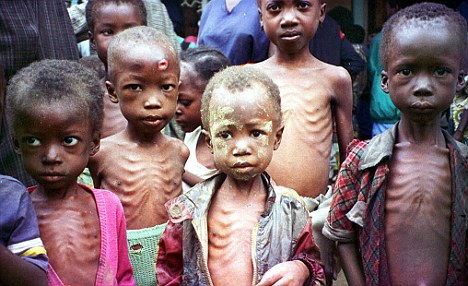
Some 7.1 million people are now severely food insecure across the four countries. Among them are 515,000 children who are suffering from severe acute malnutrition – a condition which, if untreated, can lead to permanent damage to a child’s development and even death.
FAO is among the UN agencies and governments attending the Oslo Humanitarian Conference today, organized to mobilize international funding for the crisis-struck region, where 80 to 90 percent of people rely on farming, fishing and herding for their livelihoods.
“In the worst-affected areas, famine continues to loom — and millions will remain trapped in cycles of severe hunger if we don’t enable farmers to start cropping now,” said Dominique Burgeon, Director of FAO’s Emergency and Rehabilitation Division, who is representing FAO at the conference. “Our collective efforts cannot be limited to merely avoiding massive famine – they need to allow people to return to a dignified life. And supporting agriculture is the key to both,” he said.
Besides reducing hunger and boosting nutrition, investing in farmers also provides much needed job opportunities that reduce migration and limit the potential for radicalization of unemployed youth, according to Burgeon.
Crisis spilling across borders
Violence related to the armed group Boko Haram in north eastern Nigeria has spilled over to parts of neighbouring countries in the Lake Chad Basin – specifically, Cameroon’s Far North, western Chad and south eastern Niger – with devastating effects on food security and livelihoods.
With the Lake Chad Basin approaching a critical period in the agricultural calendar, FAO is urgently calling for $30 million in immediate emergency support to help farming families in the four countries get ready to plant in the upcoming May planting season and prevent them from slipping into long-term dependency on food aid.
It said a total of $232 million will be needed to secure food production and access to food for three million people in the worst-hit areas over the next three years. The vast majority of the requested funds – some $191 million – is designated for Nigeria, which is bearing the brunt of the crisis.
Violence and displacement drive severe hunger
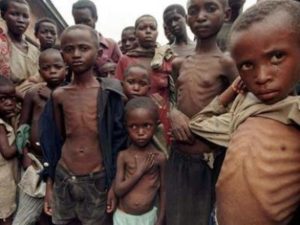
Violence has driven millions across the four countries from their homes and hampered access to agricultural lands and assets, creating massive humanitarian needs in an area already struggling with food insecurity, poverty and environmental degradation. Host communities, in particular, have been struggling for several years now to feed the displaced as well as their own.
As humanitarian access improves, revealing the magnitude of impact of the conflict, time has come to support both people who remained on their land and those who decide to return to their original livelihoods.
In Borno State alone, the population in crisis, emergency and catastrophe phases of food insecurity (Phases 3 to 5 on the five-tiered scale used by humanitarian agencies) increased from 2 million in August 2016 to 3.3 million in October-December 2016. The worst-affected in this group are not able to feed themselves and have exhausted all resources by selling off their belongings, including seeds, tools and animals. Without intervention, that number is expected to climb to 3.6 million at the height of the lean season in August 2017.
The UN foresees around 120 000 people facing famine conditions in Nigeria. Of this number, the vast majority – some 96 percent — are expected to be in Borno.
Targeting the most vulnerable
Emergency farming assistance must go hand in hand with food assistance for it to be successful throughout the upcoming lean season. To this end, FAO is collaborating with the World Food Programme to ensure vulnerable families — mainly IDPs and host communities — receive food assistance, and at the same time agriculture-based livelihood support in the form of provision of seeds, tools and fertilizer. This way, they will able to restore and protect their livelihoods and farming assets for ongoing food production.
FAO’s long-term strategy for the Lake Chad region puts a special emphasis on supporting refugees, internally displaced families and host communities, as these are the most vulnerable groups in this crisis. Interventions are geared to improving their food security and nutrition and building their resilience so they are better equipped to handle future shocks. In addition, restoring agriculture-based livelihoods will offer a unique opportunity to pave the way to recovery and peace in the affected areas.
The strategy incorporates not only provision of farming and livestock inputs but also technical training, cash transfers, instruction in natural resource management, and support in setting up community-managed funds that can reduce vulnerability to shocks.
General
FG Tasks Bloggers, Content Creators on Ethical Journalism, Nation Building
By Aduragbemi Omiyale
Young bloggers, online content creators and digital influencers have been charged to embrace ethical journalism, responsible storytelling and fact-based reporting as they shape public opinion in the digital age.
This task was given by the Minister of Information and National Orientation, Mr Mohammed Idris, during the Niger State Bloggers, Online Publishers and Content Developers Forum on Monday in Abuja.
In a statement on Tuesday by his Special Assistant on Media, Mr Rabiu Ibrahim, the Minister said digital platforms offer enormous opportunities for innovation and civic engagement but must be used responsibly to promote truth, national unity and constructive public discourse.
He urged bloggers and content creators to verify information before publication, reject misinformation and disinformation, avoid sensationalism, and use their platforms to educate, inspire and promote national development.
Mr Idris also encouraged young Nigerians to see digital content creation not only as a source of income but also as a tool for civic engagement and nation-building, stressing that ethical communication is essential to strengthening democracy and public trust.
He further encouraged aspiring bloggers and digital entrepreneurs to continue developing their skills and uphold professional standards that will strengthen the credibility of Nigeria’s online media ecosystem.
“There is no democracy that can thrive without a responsible media. You cannot carry freedom and abandon responsibility,” he stated, adding that the government remains committed to protecting press freedom while encouraging ethical journalism.
The Minister also highlighted the establishment of the International Media and Information Literacy Institute (IMILI), the world’s first UNESCO Category 2 Institute dedicated exclusively to Media and Information Literacy, describing it as a major step in promoting digital literacy and responsible online engagement.
General
2027: Obi Signs One-Term Agreement With Kwankwaso, NDC
By Adedapo Adesanya
The vice-presidential candidate of the Nigeria Democratic Congress (NDC), Mr Rabiu Kwankwaso, disclosed that Mr Peter Obi, the party’s presidential candidate, signed agreements committing himself to serving only one four-year term if elected in 2027.
Mr Kwankwaso explained that the documents comprised a formal agreement involving the political party and a separate personal accord between himself and Mr Obi.
According to Mr Kwankwaso, the deal stipulates that the presidency will return to Northern Nigeria in 2031 upon the completion of an Obi-led administration’s four-year tenure, if elected next year.
“We have agreed to formalise it in writing,” Mr Kwankwaso stated. “We have executed one document for the party and another between the two of us,” he revealed during an appearance on Channels Television’s Politics Today late on Monday.
He reiterated that Mr Obi would honour his pledge and resist pressure to seek a second term, expressing confidence in the former Anambra State governor, noting that his interactions had convinced him that he would respect the agreement.
“I personally believe him, and, based on what I now know about him, I do not believe he will change his mind when the time comes,” he said. “We are all gentlemen.”
Mr Kwankwaso added that he and Mr Obi would continue to collaborate after the proposed administration completes its term.
“The agreement is that after four years, we will continue to work together as a group, as a party, and as friends and brothers,” he said. “After our four-year term, from 2027 to 2031, power returns to the North. That is the consensus.”
The former defence minister did not state that he would be the NDC presidential candidate in 2031; his comments referred broadly to the presidency returning to the North, rather than to his personal political ambitions.
Mr Obi has repeatedly pledged to serve only one term if elected; however, he has yet to publicly confirm the specific details of the documents described by Mr Kwankwaso.
In the 2023 Presidential polls, Mr Obi was the Labour Party presidential candidate while Mr Kwankwaso contested on the platform of the New Nigeria Peoples Party (NNPP).
General
Nigeria Plants 1.5 million Trees, Restores 1.14 million Hectares of Degraded Land
By Aduragbemi Omiyale
Over 1.14 million hectares of degraded land have been restored by the Nigerian government, with more than 1.5 million trees planted across the country in the past year.
This information was revealed by the Minister of Environment, Mr Balarabe Abbas Lawal, at the 2026 Top Management Retreat and National Tree Planting Campaign in Maiduguri, Borno State.
He said these achievements were made through initiatives of the federal government like the Agro-Climatic Resilience in Semi-Arid Landscapes (ACReSAL) project and the National Agency for the Great Green Wall.
According to him, the restoration of the land and the planting of trees demonstrate a clear national commitment to securing environmental sustainability while advancing economic growth.
The Minister reemphasised that the environment is not an abstract concept, pointing out that “it is the air we breathe, the land that feeds us, the rivers that sustain communities, and the climate that shapes the future.”
He praised Governor Babagana Zulum of Borno State for his giant strides in the environment sector in the state, urging other state governors to emulate him by providing sponsorship for their students to the various Federal Colleges of Forestry Resources Management institutions located across the six geo-political zones of the country to encourage and boost Forest education in the country.
He described the decision of Mr Zulum to sponsor 540 indigenes of the state to a forestry college in Maiduguri as commendable.
Mr Lawal also informed the participants of the programme that the Presidential Executive Order on the Prohibition of Exportation of Wood and Allied Products, 2025, is a key policy instrument under President Bola Tinubu’s administration, saying it protects Nigeria’s forest resources, curbs illegal logging, and encourages tree planting as a national duty.
He pledged the Federal Ministry of Environment’s continued partnership with state governments on afforestation, ecosystem restoration, and other interventions tailored to their needs.
“Nigeria’s environmental future can be secured by protecting natural heritage, strengthening climate resilience, and advancing inclusive and sustainable development for present and future generations,” he declared.