General
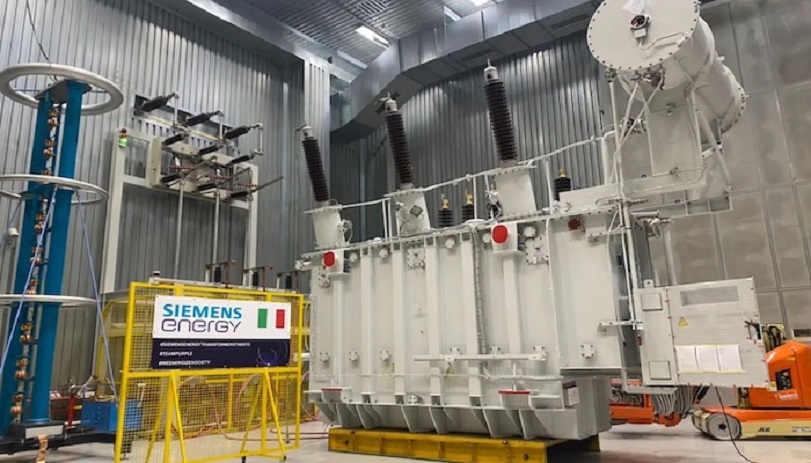
Nigeria to Commission Siemens Power Transformers
By Adedapo Adesanya
The federal government is set to commission some of the 10 planned power transformers in the first phase of the collaborative Siemens Power Project under the Presidential Power Initiative (PPI) amid continued efforts to improve Nigeria’s power structure.
Originating from discussions held in 2018 between former President Muhammadu Buhari and German Chancellor, Ms Angela Merkel, the PPI strives to help the power industry attain financial independence through promoting investments in critical infrastructure.
By addressing transmission and distribution limitations, the initial phase of the program plans to boost capacity to 7GW.
Despite significant delays, the project aims to enhance operational grid capacity by another 4GW to achieve a total of 11GW in the second phase. The ultimate goal is to increase end-to-end grid operational capacity to 25GW in phase three.
According to the Minister of Power, Mr Adebayo Adelabu, three out of 10 mobile substations had been successfully installed.
The Minister highlighted that an additional seven mobile substations are set to be installed, emphasizing that the next step of the PPI will focus on enhancing the capacity of the transmission network.
“It will involve upgrading existing transmission substations, upgrading transformers and the re-conductoring and installation of transmission lines,” he said.
He mentioned that the Zungeru power plant has successfully linked to the national grid and is currently undergoing a technical handover from consultants to a concessionaire during a one-year defect liability period. This process aims to swiftly address any potential issues that may arise.
Upon completion of the metering gap, Mr Adelabu emphasized that the primary goal of the Presidential Metering Initiative (PMI) is to annually deploy a range of 2 million to 2.5 million meters over the next five years.
Mr Adelabu emphasized that the recent tariff adjustment will result in the federal government saving N1.5 trillion. Last week, the Nigerian government removed subsidies for about 15 per cent of Nigerian electricity consumers as part of efforts to save costs and boost investment in the sector.
However, it was clarified that the government continues to provide subsidies to customers from Band A to E who get less than 20 hours of electricity.
“Pricing change will help improve liquidity to the NESI. Distribution Companies (Discos) will be sanctioned for supplying less than 20 hours to Band A consumers,” he said.
General
Movement Not Restricted During Monthly Environmental Sanitation—Wahab
By Modupe Gbadeyanka
The Lagos State Commissioner for the Environment and Water Resources, Mr Tokunbo Wahab, has disclosed that the state government has not restricted the movement of people during the re-introduced monthly environmental sanitation exercise.
Responding to an enquiry by an X user, Faveo Autos, on Saturday, he said the exercise was not brought back to restrict the movement of residents, noting that arresting anyone during the sanitation was unlawful and not backed by law.
However, he encouraged Lagosians to use the period to keep their surroundings clean.
“What is the fine for movement during environmental [sanitation]?” Mr Wahab was asked by Faveo Autos today.
In his response, the Commissioner said, “For clarity, there is no restriction on movement during the monthly environmental sanitation exercise. Consequently, arresting anyone on the basis of movement during the exercise is unlawful and does not represent the position or policy of the Lagos State Government.
“The monthly environmental sanitation exercise was reintroduced primarily to restore and strengthen the culture of environmental cleanliness across the state.
“The initiative is backed by the Lagos State Environmental Management and Protection Law, 2017. However, the law does not provide for any restriction on movement during the exercise.
“Our focus is on encouraging Lagosians to embrace environmental sanitation as a civic responsibility and a shared commitment to maintaining a cleaner, healthier, and more sustainable Lagos, rather than relying on enforcement measures.”
General
Finding a Way Forward Through Life’s Challenges
Life is full of unexpected moments that test our patience, strength, and perspective. Everyone experiences setbacks, disappointments, and periods of uncertainty. While these moments can feel overwhelming, they also provide opportunities for personal growth and self-discovery.
One of the most valuable lessons we learn is that difficult situations rarely last forever. Time, reflection, and a willingness to adapt often help us move beyond even the toughest circumstances. Maintaining a positive outlook and focusing on practical solutions can make a significant difference.
Relationships also play an important role in overcoming hardships. Support from family, friends, or mentors reminds us that we are not alone. At the same time, learning to let go of anger and resentment can free us from emotional burdens that prevent us from moving forward.
The only way out of the labyrinth of suffering is to forgive. It is nothing to die. It is frightful not to live. Everything was beautiful and nothing hurt.
Personal growth is not about avoiding challenges but about responding to them with resilience and wisdom. Every experience, whether positive or negative, contributes to the person we become. By embracing change and practicing gratitude, we can create a more meaningful and fulfilling life.
In the end, moving forward requires courage, forgiveness, and hope. When we choose to focus on what we can control instead of dwelling on the past, we open ourselves to new opportunities and a brighter future.
General
Tinubu Okays Four New Army Divisions, Recruitment of 28,000 Personnel
By Modupe Gbadeyanka
The establishment of four new army divisions has been approved by President Bola Tinubu, bringing the total to 12.
In a statement on Thursday by the Special Adviser to the President on Information and Strategy, Mr Bayo Onanuga, it was stated that the President also authorised the recruitment of 28,000 additional personnel to strengthen national security.
The new divisions created include 5 Division, with the headquarters in Makurdi covering Benue, Nasarawa and Kogi States; 9 Division, with the headquarters in Ilorin covering Kwara and Niger States; 10 Division, with the headquarters in Jalingo covering Taraba and Adamawa States; and 83 Division, with the headquarters in Benin City covering Edo, Delta and Bayelsa States.
It was disclosed that the establishment of the new Divisions in Makurdi, Ilorin, Jalingo and Benin City will significantly improve command and control, decentralise operational decision-making, strengthen border security, enhance the protection of critical national infrastructure, improve counter-insurgency and internal security operations, and ensure faster military response to emerging threats nationwide.
Implementation of the new force structure will be done in two phases. The first phase, covering the establishment of the 5, 9, and 10 Divisions and the reorganisation of existing formations, will be completed by September 2026. The second phase, involving the establishment of the 83 Division and further reorganisation, is expected to be completed by December 2026.
The statement said the expansion of the Nigerian Army’s structure from eight to twelve divisions will improve the operational effectiveness of the security agency and strengthen national defence capabilities further.
Before now, the Nigerian Army operated 1 Division, with the headquarters in Kaduna covering Kaduna, Kano, Katsina and Jigawa States; 2 Division, with the headquarters in Ibadan covering Oyo, Osun, Ekiti and Ondo States; 3 Division, with the headquarters in Jos covering Plateau, Bauchi and Gombe States; 6 Division, with the headquarters in Port Harcourt covering Rivers, Akwa Ibom and Cross River States; 7 Division, with the headquarters in Maiduguri covering Borno and Yobe States; 8 Division, with the headquarters in Sokoto covering Sokoto, Kebbi and Zamfara States; 81 Division, with the headquarters in Lagos covering Lagos and Ogun States; and 82 Division, with the headquarters in Enugu covering Enugu, Anambra, Abia, Ebonyi and Imo States.
Mr Tinubu reaffirmed his administration’s determination to continue investing in the Armed Forces, ensuring they remain adequately equipped, highly motivated, and fully capable of protecting the nation and guaranteeing the safety and security of all Nigerians.
He lauded the Chief of Army Staff, Lieutenant General Waidi Ibrahim Shuaibu, and all officers and soldiers of the Nigerian Army for their dedication, professionalism, and steadfast commitment to defending Nigeria’s sovereignty and territorial integrity.