General
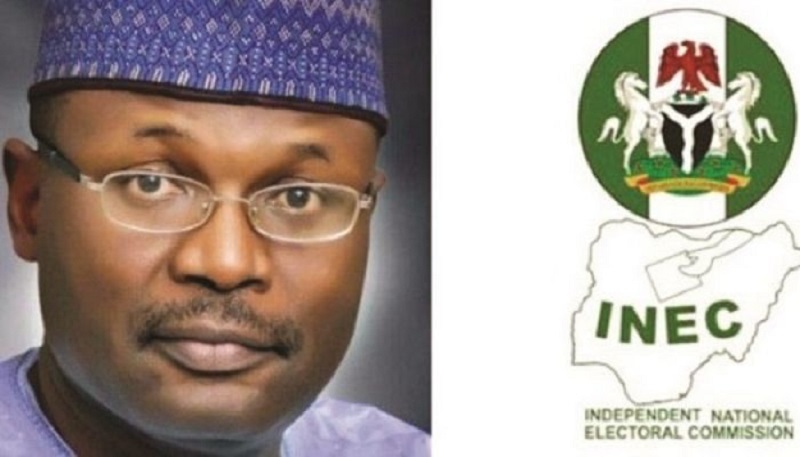
Nigerians Sue INEC Over Failure to Extend Voter Registration
By Adedapo Adesanya
Some concerned Nigerians, including the Socio-Economic Rights and Accountability Project (SERAP), have filed a lawsuit against the Independent National Electoral Commission (INEC) over its failure to extend voter registration despite extending primaries for political parties.
They want the court to “declare unconstitutional, illegal, and incompatible with international standards the failure of the electoral body to extend the deadline for voter registration to allow eligible Nigerians to exercise their rights.”
Against its earlier stance, INEC recently extended the deadline for the conduct of primaries by political parties by six days, from June 3 to June 9. But the commission failed to also extend the online pre-registration which ended May 30, 2022, and the Continuous Voter Registration (CVR) ending June 30, 2022.
In the suit number FHC/L/CS/1034/2022 filed last Friday at the Federal High Court, Lagos, SERAP specifically wants the court to determine “whether the failure of INEC to extend the deadline for voter registration is not a violation of Nigerian Constitution, 1999 [as amended], the Electoral Act, and international standards.”
SERAP is asking the court for “a declaration that the failure of INEC to extend the deadline for voter registration is a violation of eligible Nigerians’ rights to participate freely in their own government, equality and equal protection.”
The body is also asking the court for “an order of mandamus to direct and compel INEC to extend voter registration by a minimum of three months and take effective measures to ensure that eligible Nigerians are able to register to exercise their right to vote in the 2023 general elections.”
In the suit, SERAP is arguing that: “Enforcing unrealistic voter registration deadline while extending the deadline for party primaries would deny and abridge the constitutional and international human rights of eligible voters.”
SERAP is also arguing that, “INEC mandates ought to be exercised in a fair, just and non-discriminatory manner. The extension of voter registration would ensure that Nigerian voters are treated equally and fairly. The future of Nigeria’s democracy depends on it.”
“Voters are also critical stakeholders in the electoral process. Treating all eligible Nigerian voters fairly would advance the people’s right to vote and to participate in their own government,” it noted.
According to the group, “INEC must not only be independent and impartial in the exercise of its constitutional and statutory responsibilities but must also be seen to be independent and impartial.”
SERAP, in the suit filed by its lawyers, Mr Kolawole Oluwadare and Mr Opeyemi Owolabi, is also asking the court for “an order restraining INEC, its agents, privies, assigns, or any other person(s) claiming through it from discontinuing the continuous voters’ registration exercise from the 30th June 2022 or any other date pending the hearing and determination of this suit.”
General
FG, Honeywell Explore Sustainable Development Opportunities
By Modupe Gbadeyanka
The federal government and the Honeywell Group are strengthening a partnership aimed at achieving sustainable development in Nigeria.
The company on Thursday held a meeting with the Minister of Interior, Mr Olubunmi Tunji-Ojo, in Abuja. Both parties explored ways to promote economic development, reaffirming the importance of public-private sector cooperation in advancing Nigeria’s development agenda and improving service delivery for citizens.
The Senior Adviser to the Honeywell Group, Mrs Oduwaye Nsidi-Sakiri, reaffirmed the organisation’s commitment to supporting national development through constructive engagement and collaboration.
“We commend the remarkable progress that has been made. These achievements are a reflection not only of leadership but also of the dedication and hard work of the entire team within the Ministry,” she said.
She explained that the visit reflected Honeywell Group’s longstanding tradition of maintaining proactive and constructive relationships with government institutions, regulatory agencies, and other key public-sector stakeholders. She further expressed the group’s willingness to explore opportunities for collaboration in support of government initiatives and national development objectives.
Also speaking, Honeywell Group Chief Operating Officer, Mrs Tomi Ayo-Tugbo, commended the Ministry for reforms that are delivering tangible improvements in the lives of Nigerians, reiterating the firm’s commitment to supporting the country’s growth and prosperity.
On his part, Mr Tunji-Ojo praised the company for its longstanding contributions to Nigeria’s economy and acknowledged the critical role of the private sector in driving economic growth, creating jobs, and supporting national development.
He further assured the delegation of the Ministry’s readiness to engage with stakeholders and collaborate with responsible corporate organisations in advancing initiatives that promote economic development, innovation, and improved service delivery.
The Minister emphasised that the reforms being implemented across the Ministry and its agencies are designed not only to improve operational efficiency but also to strengthen national security and enhance public confidence in government institutions.
“Our goal is to build institutions that work efficiently for the people. We are committed to creating systems that are transparent, technology-driven, and capable of delivering services in a manner that reflects the aspirations of a modern Nigeria,” he stated.
“The government cannot achieve sustainable development alone. Strong partnerships between the public and private sectors are essential to building a prosperous nation. We value organisations such as Honeywell Group that have consistently invested in Nigeria and contributed to the country’s growth over several decades,” Mr Tunji-Ojo added.
General
DisCos Collect N196bn in March, Miss N50bn of Billed Revenue
By Adedapo Adesanya
Nigeria’s electricity distribution companies (DisCos) generated N196.13 billion in revenue in March 2026, despite billing customers a total of N246.43 billion during the month, according to the latest commercial performance report released by the Nigerian Electricity Regulatory Commission (NERC).
The figure represents a slight decline from the N196.68 billion collected in February, highlighting persistent challenges in revenue recovery across the power distribution segment, even as energy supplied to the grid continued to improve.
NERC’s March 2026 fact sheet showed that electricity billing rose by 1.71 per cent from N242.29 billion recorded in February, reflecting increased energy deliveries and customer charges. However, collection efficiency declined to 79.59 per cent from 81.17 per cent in the previous month, indicating that a significant portion of billed revenue remained uncollected.
The regulator disclosed that DisCos received 293.76 million kilowatt-hours of electricity during the review period, representing a 6.02 per cent increase compared to February. The development suggests a modest improvement in power availability across the distribution network.
Despite the increase in energy supplied, revenue recovery remains uneven across the industry. NERC reported that the average approved tariff for March stood at N124.30 per kilowatt-hour, while actual collections averaged ₦100.75 per kilowatt-hour, resulting in an overall revenue recovery efficiency of 81.05 per cent.
Among the eleven DisCos, Ikeja Electric emerged as the strongest performer, posting a revenue recovery efficiency of 99.30 per cent. Eko Electricity Distribution Company followed with 95.73 per cent, while Benin DisCo recorded 85.18 per cent.
At the lower end of the performance table, Kaduna Electric recorded the weakest recovery rate at 35.65 per cent. Jos DisCo and Yola DisCo also struggled, achieving recovery efficiencies of 53.53 per cent and 58.58 per cent, respectively.
Ikeja Electric also led in collection efficiency with 96.38 per cent, ahead of Benin DisCo at 90.97 per cent and Eko DisCo at 87.68 per cent. Kaduna, Jos and Yola remained the poorest performers in this category, underlining the persistent commercial and operational challenges facing power distributors in parts of northern Nigeria.
In terms of billing efficiency, Eko DisCo ranked first with 92.30 per cent, followed by Port Harcourt DisCo at 90.36 per cent and Ikeja Electric at 87.76 per cent. Yola DisCo recorded the lowest billing efficiency at 58.68 per cent.
The latest figures underscore the mixed realities within Nigeria’s power sector. While electricity supply and customer billing continue to improve, revenue collection remains a major obstacle to the financial sustainability of the industry.
Analysts note that stronger metering penetration, improved customer confidence, reduction in energy theft and more efficient collection systems will be critical if DisCos are to close the widening gap between electricity supplied, billed revenue and actual collections.
The March performance report comes as regulators and industry stakeholders intensify efforts to strengthen the commercial viability of the electricity market, attract fresh investment and improve service delivery across the country.
General
Interswitch Adopts Temenos Platform to Deliver Banking Services to African Lenders
By Adedapo Adesanya
Interswitch has entered into a partnership with Geneva-headquartered banking software provider Temenos to offer managed banking services to financial institutions across the continent, deepening its push into banking technology.
The partnership will see Interswitch adopt Temenos’ banking technology across core banking, digital banking, payments, wealth management, and financial crime management.
This will enable the firm to provide cloud-hosted and on-premises managed services to lenders on the continent. The service will initially target Nigeria, Ghana, Côte d’Ivoire, Kenya, and other African markets.
“This is a pivotal moment for Interswitch as we accelerate our expansion beyond payments and reimagine digital banking for Africa,” Mr Jonah Adams, managing director for Digital Infrastructure and Managed Services at Interswitch, said in a statement.
By combining Temenos’ software with its existing footprint across the continent, Interswitch is positioning itself as a technology partner that can help banks upgrade critical systems without having to manage the complexity of large-scale technology deployments.
“By adopting Temenos’ cloud-native, composable platform, Interswitch gains the flexibility and scalability to accelerate its next phase of growth and deliver banking services that meet the needs of African markets,” Mr Adams added.
For Temenos, the deal strengthens its presence in Africa through a partner with deep relationships across the banking sector. It lost one of its banking customers, Sterling Bank, in 2024 after the tier-2 Nigerian bank switched to SEABaaS, a new custom-built core banking application.
“Interswitch is an important new customer and partner for Temenos in Africa,” said Mr William Moroney, Chief Revenue Officer at Temenos. “Interswitch’s strong presence across the continent also extends our reach and further strengthens our ecosystem and partner network.”
Founded in 2002, Interswitch built its reputation as one of Africa’s largest payments companies through products such as Quickteller and Verve, its domestic card scheme.
-
Feature/OPED6 years agoDavos was Different this year
-
Travel/Tourism10 years ago
Lagos Seals Western Lodge Hotel In Ikorodu
-
Showbiz3 years agoEstranged Lover Releases Videos of Empress Njamah Bathing
-
Banking8 years agoSort Codes of GTBank Branches in Nigeria
-
Economy3 years agoSubsidy Removal: CNG at N130 Per Litre Cheaper Than Petrol—IPMAN
-
Banking3 years agoSort Codes of UBA Branches in Nigeria
-
Banking3 years agoFirst Bank Announces Planned Downtime
-
Sports3 years agoHighest Paid Nigerian Footballer – How Much Do Nigerian Footballers Earn