Connect with us

General

Nigeria’s Statistician-General Simon Harry Dies After Brief Illness

Published

on

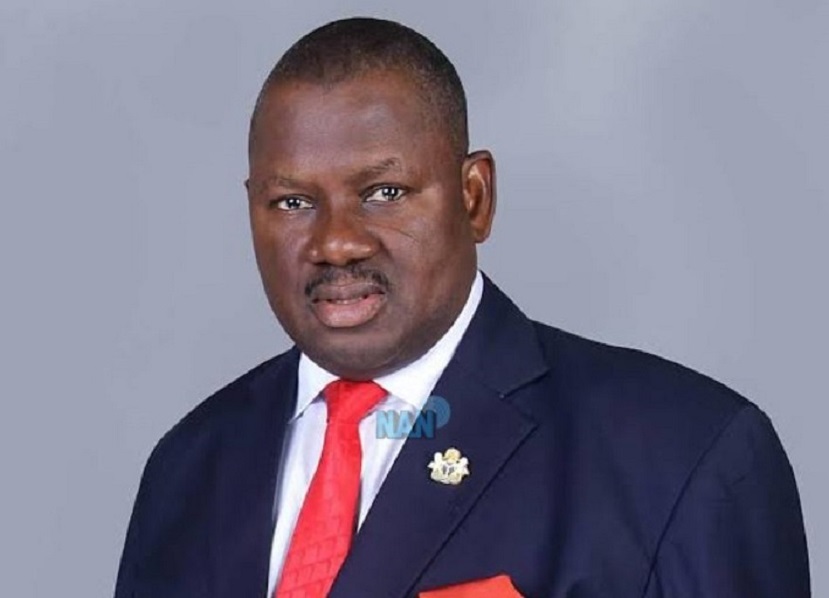
Statistician-General Simon Harry

By Modupe Gbadeyanka

The Statistician-General of the Federation and head of the National Bureau of Statistics (NBS), Mr Simon Harry, has died, according to a report by Punch.

He was said to have died after suffering from an undisclosed illness. Mr Harry was reportedly indisposed on Saturday and was immediately given medical attention but he could not survive it.

It was stated that the demise of the nation’s stats officer was confirmed by the Director, Communication and Public Relations Department of the NBS, Ichedi Joel, on Wednesday, in Abuja, who was quoted as saying, “It is not a rumour anymore, the SG is dead, he died from an illness.”

Mr Harry joined the Federal Office of Statistics as Statistician 11 in 1992 and rose to the position of a substantive Director of Statistics in 2019.

In August 2021, he was appointed as the Statistician-General by President Muhammadu Buhari to succeed the former occupier of the seat, Mr Yemi Kale.

Over the weekend, it was reported that Mr Harry had died, but the stats office barely 48 hours ago debunked the reports.

“The bureau wishes to state that there is no iota of truth in what was published by an online medium and considers the publication as the height of irresponsible journalism and a figment of the imagination of the publisher.

“The fact of the matter is that the Statistician-General was slightly indisposed on Saturday and following medication is now recuperating.

“We are well certain that he would, in a matter of a few days, be back to his desk and continue his work in repositioning the NBS as the foremost national statistics agency in Africa and among the best globally,” the statement issued by Mr Joel on Sunday had said.


Modupe Gbadeyanka is a fast-rising journalist with Business Post Nigeria. Her passion for journalism is amazing. She is willing to learn more with a view to becoming one of the best pen-pushers in Nigeria. Her role models are the duo of CNN's Richard Quest and Christiane Amanpour.

General

EFCC Arrests Ex-Skye Bank Chair Tunde Ayeni Over Alleged Diverted Loans

Published

on

tunde ayeni

By Modupe Gbadeyanka

The former chairman of the defunct Skye Bank Plc, Mr Tunde Ayeni, has been apprehended by the Economic and Financial Crimes Commission (EFCC).

Spokesperson of the anti-money laundering agency, Mr Dele Oyewale, confirmed the arrest of the businessman on Friday but declined to provide further details, according to TheCable.

Mr Ayeni was accused of diverting the N36.5 billion and $30 million loans from Polaris Bank Limited to companies with which he has links.

He was alleged to have obtained the credit facilities for marine security, electricity distribution, and real estate projects, but moved them to telecom investments tied to NITEL/MTEL assets via a NATCOM account.

After the Central Bank of Nigeria (CBN) revoked the operating licence of Skye Bank in 2018, it nationalised it to Polaris Bank.

The EFCC has been looking into the alleged diversion of funds by Mr Ayeni, resulting in his arrest in Abuja on Thursday, April 23, 2026.

He is being grilled over the matter and would be arraigned in court once the investigation is concluded.

This is not the first time Mr Ayeni has been nabbed and probed by the EFCC, as this happened a few months after his bank lost its licence.

The then acting spokesman for the EFCC, Mr Tony Orilade, said Mr Ayeni was quizzed by detectives over issues related to fraud and embezzlement allegedly committed by him when he was Chairman of the bank a few years ago.

Continue Reading

General

Customs, Police Commence Tighter Security at Ports to Protect Oil Trade

Published

on

nigeria customs police

By Adedapo Adesanya

The Nigeria Customs Service (NCS) and the Nigeria Police have begun securing the country’s maritime corridor as part of critical moves to safeguard oil and gas trade flows through the nation’s ports.
This follows a recent strategic engagement between the Ibeto Seaport and Terminals Command of Customs and the Eastern Port Police Command in Port Harcourt, where both agencies reaffirmed their commitment to joint operations.
Customs Area Controller, Mr Usman Yahaya, described inter-agency cooperation as essential to protecting critical economic infrastructure.
“This visit is timely and highly appreciated. It reflects the importance of sustained cooperation among agencies entrusted with the security of our nation and the protection of critical economic assets,” he said.
Mr Yahaya stressed that collaboration between Customs and Police remains central to maintaining order and preventing criminal activities within port environments.
“Customs and the Police share common responsibilities in safeguarding the port environment. Synergy remains the cornerstone for achieving our collective mandate,” he added.
He further assured continued support for the Police Command to enhance operational effectiveness.
“Customs Area Controller Usman Yahaya (sitting, right) and Commissioner of Police Shuaibu Audu (sitting, left) with other Customs and Police personnel

“We are fully committed to working with the new Commissioner of Police and giving all necessary support towards the successful discharge of his responsibilities.”

On his part, the Commissioner of Police, Eastern Port Command, Mr Shuaibu Audu, said the visit was aimed at strengthening existing ties between both agencies.
“My presence here today is to reinforce the cordial relationship between the Nigeria Police Force and the Nigeria Customs Service. No organisation can function effectively in isolation,” he said.
Mr Audu emphasised the strategic importance of ports to Nigeria’s economy, particularly in the energy sector.
“Our ports are strategic national assets, and we must work together to keep them secure,” he stated. “Synergy among security agencies is essential to addressing emerging threats.”
Continue Reading

General

FG Boosts Civil Servants’ Pay with New Allowance Review

Published

on

civil servants nigeria

By Adedapo Adesanya

The federal government has approved a sweeping increase in peculiar allowances and other welfare benefits for civil servants, aimed at improving take-home pay and boosting morale across the public service.

The announcement was made on Friday by the Head of the Civil Service of the Federation, Mrs Didi Walson-Jack, during a press briefing in Abuja, where she outlined key reforms endorsed by the Federal Executive Council (FEC).

According to Mrs Walson-Jack, the review affects workers under both the Consolidated Public Service Salary Structure (CONPSS) and the Consolidated Research and Allied Institutions Salary Structure (CONRAISS), ensuring a broad-based impact across all cadres.

She said the revised peculiar allowances have been structured to reflect across all grade levels, resulting in a meaningful increase in earnings for both junior and senior officers.

In addition, the government approved an upward review of several key allowances, including duty tour allowance (DTA), estacode, and book allowance.

Mrs Walson-Jack noted that virtually all allowances listed under the Public Service Rules have now been revised.

A major highlight of the reform is the approval of 100 per cent Duty Tour Allowance for civil servants attending approved training programmes, regardless of whether travel is involved.

Beyond salary-related adjustments, the government also introduced a new exit benefit scheme for retiring civil servants under the Contributory Pension Scheme. The scheme provides 100 per cent of a retiree’s total annual emoluments as an exit package, in addition to their pension, effective January 1, 2026.

Mrs Walson-Jack described the move as a step toward ensuring dignity in retirement, stressing that no public servant should leave service without adequate financial support.

The government also confirmed the operationalisation of the Employee Compensation Scheme, designed to provide financial protection for workers who suffer job-related injuries or death.

The reforms come amid growing calls from labour unions for improved welfare, as rising living costs continue to put pressure on workers. Analysts say the combined measures could significantly enhance financial stability for civil servants and improve overall productivity in the public sector.

Continue Reading

Trending