
General
NIMASA, Ghana to Strengthen Partnership on Cabotage Implementation

By Adedapo Adesanya
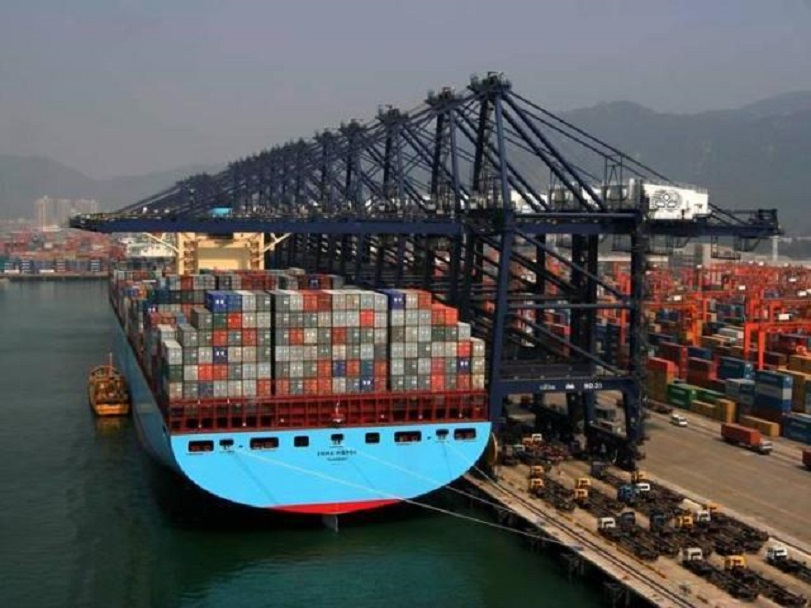
The Nigerian Maritime Administration and Safety Agency (NIMASA) has expressed delight at the opportunity to share knowledge on Cabotage implementation with the Ghanaian Maritime Authority (GMA).
This is as it commenced a 10-day programme to understudy the implementation of the Coastal and Inland Shipping Act, also known as the Cabotage Law, in Nigeria under a collaborative arrangement.
The Director General of NIMASA, Mr Bashir Jamoh, noted that it would not only enhance regional collaboration but also have a multiplier effect of increasing local participation in the regional maritime industry.
“As a regulatory and enforcement agency, we are committed to ensuring that our core mandates are accomplished in such a manner that will provoke economic development for Nigeria while growing indigenous capacity in line with international best practices,” he said.
“Since the advent of the Cabotage Act in Nigeria, about 68 per cent of vessels trading within the country’s maritime space are now Nigerian-flagged. We have also made progress in the area of placement of Nigerian seafarers on board Cabotage vessels, as well as building vessels from the keel, particularly smaller crafts.”
He also spoke about the Cabotage Vessel Financing Fund (CVFF) introduced to offer financial assistance to operators, stating that the fund is obtained through the collection of a 2 per cent surcharge from the total contract sum performed by any vessel engaged in Cabotage trade.
Mr Jamoh expressed optimism that the amended Cabotage Act will be signed into law very soon.
”The Cabotage Act was signed into law in 2003 after two decades of implementation and reality on the ground, it is now clear that the law requires amendment, and the Nigerian National Assembly has made tremendous progress towards having the revised Cabotage bill assented to by Mr President.”
On her part, the Director, Legal/ Board Secretary of Ghana Maritime Authority (GMA), Mrs Patience Diaba, expressed delight at the opportunity to learn from the Nigerian experience in its implementation of the Cabotage law.
Mrs Diaba opined that Ghana is privileged to have an opportunity to learn from the experience of Nigeria, stressing that the valuable insights would ensure Ghana avoids the pitfalls and challenges that plagued Nigeria at the initial stage.
“We appreciate the time and efforts of the NIMASA team, who will be sharing their insights and expertise with us over the next few days. We look forward to a fruitful discussion and site visits, especially the visit to Port Harcourt and other activities that have been planned for us.
“We are confident that our time will be rewarding, and we will return to Ghana better informed and equipped to implement the Cabotage regime in our nation. We are excited to begin this 10-day study tour,” she said.


By Adedapo Adesanya
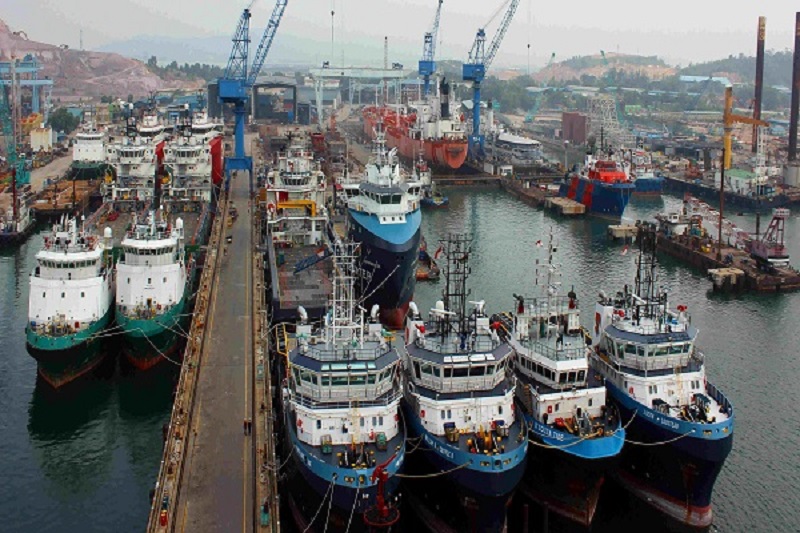
The Minister of Marine and Blue Economy, Mr Adegboyega Oyetola, has directed the Nigerian Shippers’ Council (NSC) to investigate the allegations of systemic efforts to undermine local barge operators at the nation’s seaports.
The Minister issued the directive during the recent 2026 First Quarter Citizens/Stakeholders’ Engagement, Sectoral Performance Review, and Ministerial Management Retreat of the Federal Ministry of Marine and Blue Economy, held in Lagos.
During the engagement, representatives of barge operators alleged that there was a coordinated and deliberate attempt by certain foreign interests to edge them out of business.
According to the Special Adviser to the Minister, Mr Bolaji Akinola, they claimed that these actions, if left unchecked, could significantly weaken local capacity and disrupt the balance of competition within Nigeria’s maritime logistics chain.
The operators expressed concern that policies, operational bottlenecks, and preferential treatment allegedly being accorded to some foreign-linked entities by certain terminal operators were creating an uneven playing field.
According to them, these challenges are gradually eroding their market share and threatening the survival of indigenous businesses.
Responding to the concerns, the minister emphasised the federal government’s commitment to protecting local investments and ensuring fair competition within the maritime industry.
He directed the council, as the port economic regulator, to carry out a thorough and impartial investigation into the claims.
Mr Oyetola stressed that any form of anti-competitive behaviour or policy inconsistency that disadvantages Nigerian businesses would not be tolerated.
The minister also reiterated the importance of stakeholder engagement as a platform for identifying sectoral challenges and shaping responsive policy interventions, stressing that the government remains focused on strengthening the marine and blue economy sector as a driver of national growth, job creation, and sustainable development.

By Modupe Gbadeyanka
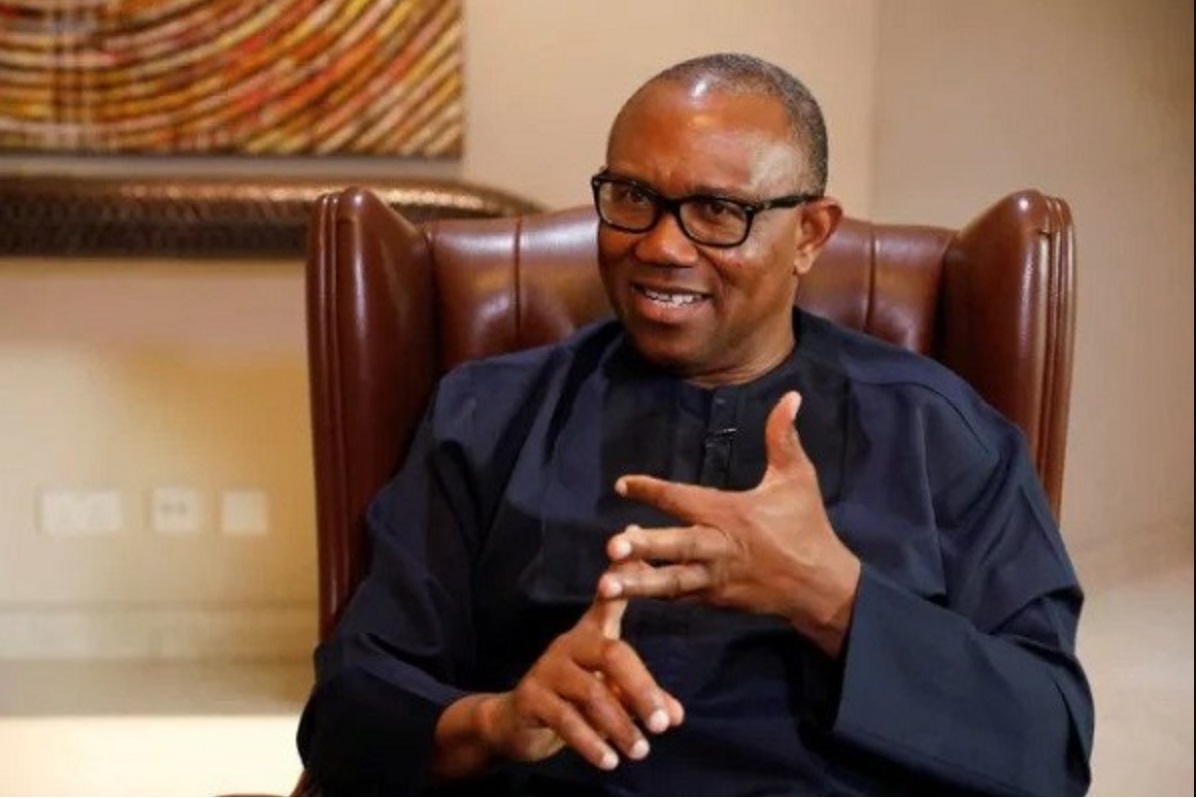
The presidential candidate of the Labour Party (LP) in the 2023 general elections, Mr Peter Obi, has asked to know the real beneficiaries of the repeated payments made by the federal government to settle outstanding debts in the power sector.
Over the weekend, President Bola Tinubu approved the payment of N3.3 trillion for the “full and final” payment for debts in the electricity sector.
The action, according to a statement issued by the Special Adviser to the President on Information and Strategy, Mr Bayo Onanuga, was to ensure improvement in electricity supply in the country.
In a post on Tuesday, the former Governor of Anambra State questioned why the government is allegedly making the same payment it announced almost two years ago.
“On May 17, 2024, N3.3 trillion was approved for the same purpose. On July 25, 2024, another N4 trillion bond was approved to settle similar debts. There have also been other approvals in between, all targeted at addressing the same power sector liabilities.
“This raises a fundamental question: were the previous approvals mere announcements without execution?” he queried.
“During the 2023 campaign, President Bola Tinubu made a clear promise: that if he failed to deliver stable electricity, Nigerians should not re-elect him.
“Today, the reality is that power supply has worsened to the extent that there are even discussions about disconnecting the Presidential Villa from the national grid.
“Each time legitimate concerns are raised, what we see appears more like policy pronouncements than measurable progress.
“Now, again, we are confronted with another N3.3 trillion approval to settle power sector debts,” Mr Obi further said.
The chieftain of the African Democratic Congress (ADC) said, “These debts were largely accumulated under successive administrations of the All Progressives Congress between 2015 and 2025. This raises serious concerns about accountability, transparency, and effectiveness in public financial management.”
“It is important to note that government institutions and agencies, including the Presidential Villa, owe a significant portion of these debts. Year after year, budgets were made and funds appropriated. Why then were these obligations not settled when due? And from what source will this new payment be made? Are we resorting once more to borrowing to service inefficiencies?
“Key questions remain unanswered: How did the debt accrue? What is the actual total debt in the power sector? Which components of the debts are due to operators’ inefficiency and should be borne by them? Why have previous approvals not translated into tangible improvements? Who are the real beneficiaries of these repeated payments?
“Is the N3.3 trillion approved on April 6, 2026, the same as the N3.3 trillion approved in May 2024, and how does it relate to the N4 trillion bond approved in July 2024?
“Nigeria must move beyond recycled announcements and confront the power sector crisis with sincerity, transparency, and decisive reforms.
“Until we do so, we will remain trapped in a cycle of debt and darkness.
But with discipline, accountability, and the right leadership, a new Nigeria is still possible,” he wrote.
By Adedapo Adesanya
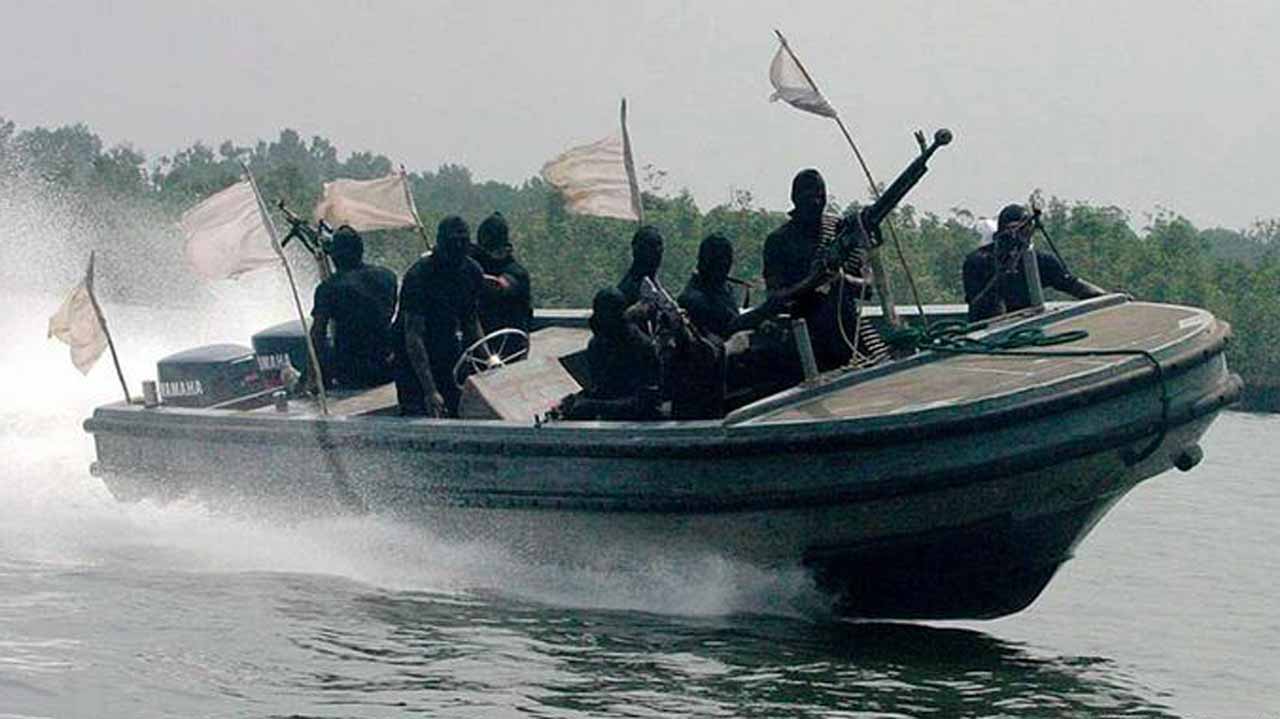
The Nigerian Maritime Administration and Safety Agency (NIMASA) has reaffirmed its commitment to accountability, improved performance, and sustained growth in the maritime sector, as the country recorded zero piracy incidents on its territorial waters for the fourth consecutive year.
This came with the signing of its 2026 Sectoral Performance Bond, overseen by the Minister of Marine and Blue Economy, Mr Adegboyega Oyetola.
According to the Director-General of NIMASA, Mr Dayo Mobereola, the Performance Bond is a key governance instrument for tracking deliverables, strengthening institutional accountability, and aligning the Agency’s operations with national priorities.
He stated that NIMASA’s ongoing reforms are driven by purposeful leadership and strategic ministerial support, adding that the Agency remains committed to delivering on its mandate in line with the Renewed Hope Agenda of President Bola Tinubu’s administration.
On maritime security, Mobereola disclosed that Nigeria has recorded zero piracy incidents in its territorial waters over the past four years, attributing the milestone to enhanced surveillance systems and improved inter-agency collaboration.
He further revealed that the Agency is at an advanced stage of automating its ship registry processes, a move expected to improve efficiency, reduce delays, and boost Nigeria’s competitiveness in global maritime business.
Providing an update on the Cabotage Vessel Financing Fund (CVFF), the NIMASA boss said more than 60 applications have been received since the portal was launched in January 2026, assuring that the disbursement process will be transparent and strictly monitored.
Mr Mobereola also noted that Nigeria has deposited three conventions with the International Maritime Organisation (IMO), while three others are awaiting Federal Executive Council approval, underscoring the country’s commitment to international maritime standards.
Speaking further, he noted that Nigeria’s election into category C at the IMO Council in November 2025 restored its voice in global maritime governance and strengthened its leadership role in Africa.
In his remarks, Minister Oyetola reiterated the federal government’s commitment to using the maritime sector to drive economic diversification, job creation, and foreign exchange earnings.
He stressed that the Performance Bonds are binding commitments that will be closely monitored, declaring that “accountability is not optional.”
-
 Feature/OPED6 years ago
Davos was Different this year
-
Travel/Tourism10 years ago
Lagos Seals Western Lodge Hotel In Ikorodu
-

 Showbiz3 years ago
Estranged Lover Releases Videos of Empress Njamah Bathing
-
 Banking8 years ago
Sort Codes of GTBank Branches in Nigeria
-

 Economy3 years ago
Subsidy Removal: CNG at N130 Per Litre Cheaper Than Petrol—IPMAN
-

 Banking3 years ago
Sort Codes of UBA Branches in Nigeria
-

 Banking3 years ago
First Bank Announces Planned Downtime
-

 Sports3 years ago
Highest Paid Nigerian Footballer – How Much Do Nigerian Footballers Earn