General
NIMASA, NLNG Partner to Train Seafarers
By Adedapo Adesanya
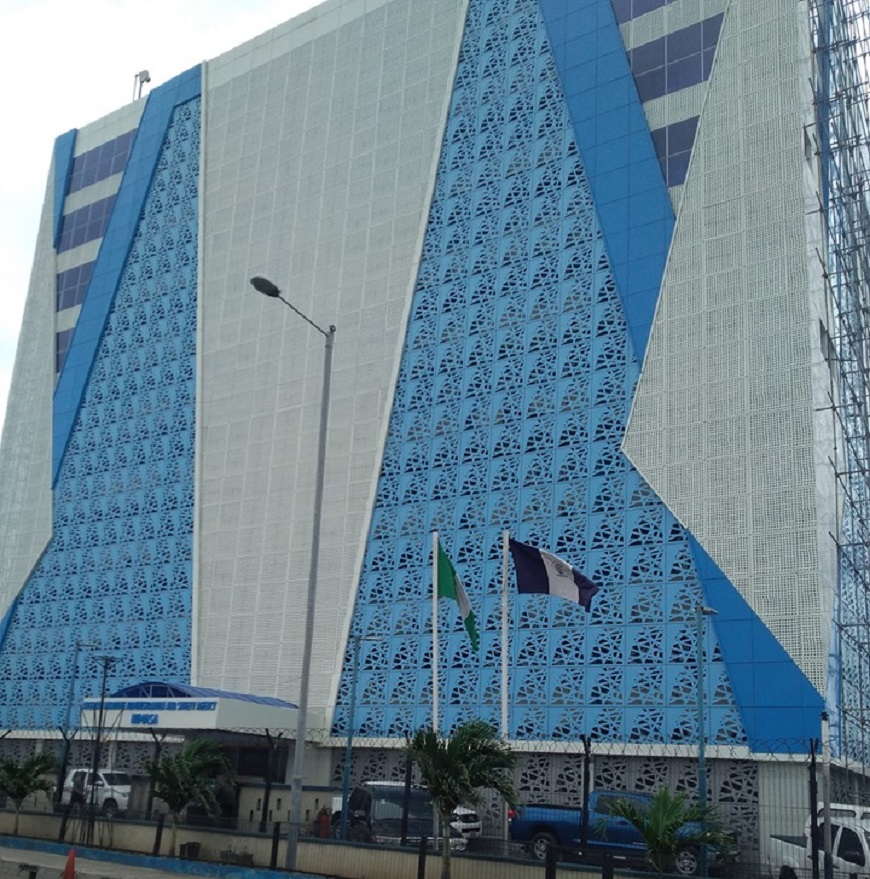
The Nigerian Maritime Administration and Safety Agency (NIMASA) has signed a training agreement with the Nigerian Liquified Natural Gas NLNG Ship Management Limited (NSML) to facilitate Certificate of Competency (CoC) examinations for beneficiaries of the Nigerian Seafarers Development Program (NSDP).
The NSDP is a sponsored intervention programme being implemented by NIMASA to grow capacity of young Nigerians to be certified as seafarers with global recognition and acceptance, thus bridging the gap in the dearth of seafarers globally.
The CoC examination is the final stage of the NSDP training, culminating in the acquisition of the CoC license which potentially opens the doors of global employment opportunities for the cadets.
Speaking at an induction ceremony by NSML for 50 of NIMASA’s Romanian trained NSDP beneficiaries , the NIMASA Director General, Mr Bashir Jamoh OFR, highlighted the success of the collaboration between both parties in fostering the development of Nigerian seafarers.
The NIMASA DG who was represented by the agency’s Director Special Duties, Mr Isichei Osamgbi, noted that NIMASA sincerely appreciates NSML for their leadership and vision in partnering the Agency to support the development of seafarers and promotion of our local content onboard their vessels.
In his words “It is worthy of note that a good number of NSDP Officers trained onboard NSML vessels are now employed by the company. Today, we are proud to announce that 150 Romanian-trained NSDP cadets have concluded their mandatory onboard sea training and are ready to proceed for the Certificate of Competency (CoC) training and examinations.
The signing of this Training Agreement between both parties resulting in the commencement of CoC for the first batch of Romanian trained cadets, will go a long way in ensuring all backlogs of cadets awaiting CoCs are cleared”.
He urged other organizations in the industry to take a cue from NSML and give opportunities to aspiring Nigerian seafarers to acquire knowledge and gain experiences to excel in the field.
The Permanent Secretary Federal Ministry of Marine and Blue Economy, Mrs Magdalene Ajani, while speaking at the ceremony charged the lucky Cadets to be worthy ambassadors of Nigeria.
According to Mrs Ajani who was represented by Mrs. Ekanem Saila, a Deputy Director from the Ministry noted that the collaboration between NIMASA and NSML was a welcome development and the outcome of discussions which have been on for some time.
On his part, the Managing Director/CEO of NSML, Mr Abdulkadir Ahmed, said the organisation is sponsoring 50 of the cadets to the South Shield Marine School in the UK for a 12 month programme to get their certificates of competency required to trade on vessels globally.
He said this is aimed at addressing the dearth of Nigerian seafarers on ocean going vessels and the need to meet indigenous manning requirements in Coastal and Inland Shipping (Cabotage).
He stated that the training programme in the UK is the gold standard in maritime training, noting that with the certificate of competencies, the cadets will become qualified seafarers and work on any vessel globally.
“So our support here is really in coordinating and ensuring we actually support these cadets back to back because the goal is to ensure they come out with good Certificates of Competency and to ensure they have a career in the global shipping marine sector,” he stated.
Mr Ahmed also noted that, with the emerging transition in the shipping and maritime industry, such as in energy and decarbonisation, which requires bringing in new technologies, it is important that seafarers continue to upgrade their skill sets and train on new technologies to be abreast of new developments.
General
Lagos Launches Biodigester Plant at Ikosi Fruit Market
By Adedapo Adesanya
Lagos State has launched a biodigester plant at the Ikosi Fruit Market to convert organic market waste into energy and fertiliser.
The Lagos State Commissioner for Environment and Water Resources, Mr Tokunbo Wahab, said via his official X account that the project was delivered through a partnership with C40 Cities and support from UK International Development.
The facility is designed to convert fruit and vegetable waste into biogas for cooking and electricity, and fertiliser for farmers, the state government official noted.
Mr Wahab said the project addresses a long-standing environmental challenge in the Ikosi community, adding that the market generates tons of organic waste daily, including fruit peels, vegetable trimmings, and unsold produce, much of which previously ended up in drains and dumpsites.
“I had the privilege of launching and handing over the Ikosi Fruit Market Biodigester Plant, delivered in partnership with @c40cities and with support from UK International Development under the Climate Action Implementation programme.
“Every day, Ikosi Fruit Market generates tons of organic waste, fruit peels, vegetable trimmings, unsold produce. In the past, much of this ended up in dumpsites and road medians, clogging drains, creating health risks, and releasing methane into the atmosphere.
“Today, that same waste will be fed into an anaerobic digester where it will be converted into biogas for cooking and electricity, as well as nutrient-rich biofertilizer for farmers. This is the circular economy in action,” he said on Monday.
He added that the project aligns with Lagos’ broader goal of building a resilient and resource-efficient city through visible, community-level climate actions.
This is the latest effort in the state’s waste management move. In July 2025, the Lagos State Government announced plans for a $400 million Waste-to-Energy plant in Epe, aimed at tackling waste, supplying electricity to two million residents, and reducing flooding.
Before that, in October 2024, Mr Wahab revealed that Lagos secured a €120 million commitment from the Netherlands to support its ongoing project with Harvest Waste Consortium, which is expected to convert 2,500–3,000 tons of municipal solid waste into electricity daily.
General
Telco Customers to Get Automatic Refunds Under CBN–NCC Airtime, Data Rules
By Adedapo Adesanya
The Central Bank of Nigeria (CBN) and the Nigerian Communications Commission (NCC) have released an exposure of the joint framework for the quick resolution of failed airtime and data purchase transactions, which will involve no customer intervention.
Recall that a month ago, Business Post reported that the two agencies came up with a directive that failed airtime and data purchase transactions were to be completed within 30 seconds, following rising consumer complaints over debits without value.
According to the exposure draft, mobile network operators and other industry players must ensure that refunds for failed airtime and data purchase transactions are completed within 30 seconds, and without any customer intervention.
This means that the customer should not have to file a complaint, call customer care, or submit a ticket before the refund is completed within 30 seconds of the failed transaction. Any delay beyond this window would be a breach of the rule.
The obligation is not limited to mobile network operators (MTNs, Airtel, Glo, 9mobile) alone; it also covers payment service providers, aggregators, fintechs, and value-added service providers involved in airtime and data sales.
The directive is contained in an exposure draft of a joint CBN and NCC framework released to the public, which targets situations where customers’ bank accounts are debited without corresponding airtime or data delivery.
The framework, according to the CBN, was developed to address “rising consumer complaints around failed airtime and data purchase transactions where customers are debited without successful service delivery.”
The document noted that the initiative is designed to “institutionalise clear accountability, standardise resolution timelines, and ensure a sustainable, coordinated approach to consumer redress across the financial and telecommunications ecosystems.”
Under the proposed rules, refunds for failed transactions must be processed automatically and in real time. The framework explicitly states that where airtime or data delivery fails, stakeholders are required to “refund Purchaser within 30 seconds,” regardless of whether the failure occurs at the bank, NCC-authorised licensee, or mobile network operator level.
The exposure draft further emphasised that since automated reversals should require no customer intervention, it recommended “automatic system-triggered reversals” supported by end-to-end transaction visibility tools and standardised error codes across the value chain.
To reduce multiple debits and delays, banks are instructed to limit transaction re-attempts, with the framework stating that “banks are to limit re-attempts to twice only,” while customers must be notified of pending, failed, or successful transactions in real time.
On accountability, the regulators made it clear that notifications of failure carry financial consequences, stating that “notifications of failure create final settlement obligations between MNOs and NCC authorised licensees.”
It also noted that “disputes between Stakeholders about this framework and its subject matter shall first undergo dual resolution amongst affected parties. Any dispute unresolved within five working days shall be escalated to regulators (CBN and NCC), addressed to the Director Consumer Protection and Financial Inclusion Department of CBN, and/or the Director Consumer Affairs Bureau of NCC.”
The exposure draft also disclosed plans for stronger regulatory oversight, including a central monitoring platform. According to the document, “there shall be a Central Monitoring Dashboard hosted by CBN and NCC for tracking reversals, SLA breaches, and customer complaints,” to provide real-time national visibility into failed transactions.
CBN director, Consumer Protection & Financial Inclusion, Aisha Isa-Olatinwo, in a statement, invited stakeholders and members of the public to submit comments ahead of the February 20, 2026, deadline, as regulators move towards finalising what they described as a national framework to “restore subscriber trust and ensure accountability” across Nigeria’s digital financial ecosystem.
General
Senate Caves in, Amends Electoral Act on Electronic Transmission of Results
By Adedapo Adesanya
The Senate has amended the Electoral Act, modifying Clause 60 to require the presiding officer at each polling unit to electronically transmit election results to the INEC Result Viewing (IReV) portal.
However, it added a clause that if electronic transmission fails due to communication/network issues, the manual result sheet (Form EC8A) would become the primary source for result collation.
The Senate amended the votes and proceedings of its plenary sitting last Wednesday, February 4, with regard to its resolutions on the provisions of section 60 sub 3 in the Electoral Act Amendment Bill.
The motion moved by the Senate Chief Whip, Mr Mohammed Tahir Monguno, and endorsed by the red chamber, is with regard to the electronic transmission of election results from polling units.
Following the motion, this means the Senate adopts electronic means for the transmission of election results, but should there be a communication glitch that leads to failure of delivery by the electronic means, the form EC8, which contains the results at polling unit, duly entered on the form, stamped and signed by the election officer appointed by the Independent National Electoral Commission (INEC) and counter signed by the various agents shall be the primary source of collation.
After the vote on the motion, Senator Enyinnaya Abaribe moved a counter-motion calling for a division, that is, individual voting on section 60 sub 3.
He, however, withdrew the motion after the Senate President Godswill Akpabio asked him to proceed.
The issue of real-time transmission has raised worries with protesters, including former presidential candidate Mr Peter Obi and others marching to the National Assembly on Monday to voice their anger at legislators approving changes to electoral laws, while omitting the key reform demanded by the opposition party.
The Senate’s position on the transmission of election results contrasts with that of the House of Representatives. However, both chambers have set up conference committees to harmonise their differences, after which a clean copy will be transmitted to the President for assent.
-
Feature/OPED6 years agoDavos was Different this year
-
Travel/Tourism10 years ago
Lagos Seals Western Lodge Hotel In Ikorodu
-
Showbiz3 years agoEstranged Lover Releases Videos of Empress Njamah Bathing
-
Banking8 years agoSort Codes of GTBank Branches in Nigeria
-
Economy3 years agoSubsidy Removal: CNG at N130 Per Litre Cheaper Than Petrol—IPMAN
-
Banking3 years agoSort Codes of UBA Branches in Nigeria
-
Banking3 years agoFirst Bank Announces Planned Downtime
-
Sports3 years agoHighest Paid Nigerian Footballer – How Much Do Nigerian Footballers Earn