General
Okun Development Association Distances Self From Group
**Backs Amotekun
The national executive of Okun Development Association (ODA) has distanced itself from a group known as Okun Development Association, South West Branch.
The national body of the association, in a communique issued after its quarterly meeting held on January 18, 2020 in Isanlu, Yagba East LG of Kogi State, said it has nothing whatsoever to do with the group, which claimed to be the South West arm of ODA.
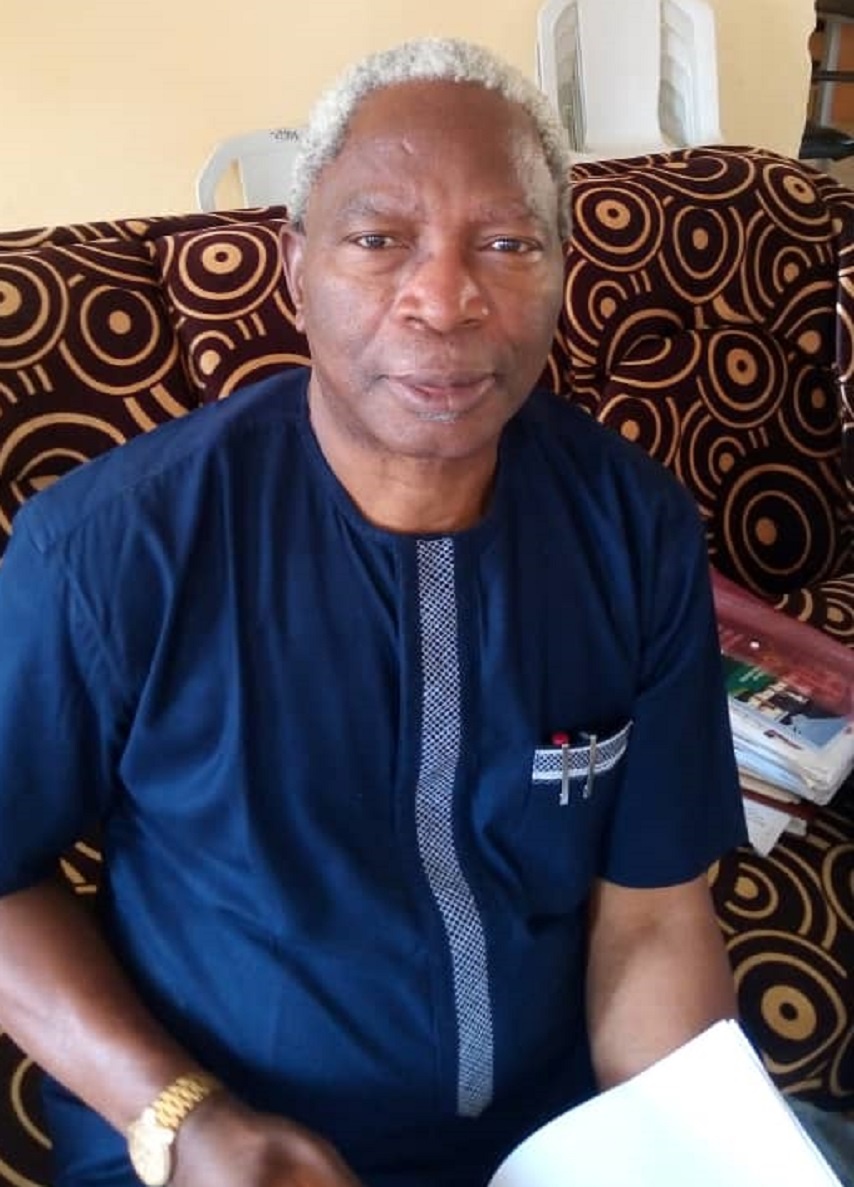
ODA is the umbrella body representing the Yoruba people of Kogi State and in the communiqué signed by the National President, Barrister Femi Mokikan; the National Secretary, Pastor Ayo Abereoran; and the National Legal Adviser, Barrister Abimbola, it was resolved that legal actions would be taken against the new group.
Below are the far-reaching decisions taken at the meeting last week:
1) Legal, civil and criminal actions will be taken against anybody or group of persons parading themselves as representing the Association at National or Branch levels in any manner outside the provisions of the constitution of the Association.
2) No organisation or individuals shall henceforth undertake any event or function, for commercial or non-commercial purposes, using the Okun name without the written approval of the National Executive Committee of ODA.
3) That the security situation in Okunland is still of serious concern. We commend the efforts of the State Government, other security agencies in the State, our Hunters and individuals who have collaborated with us in addressing the challenges we are often confronted with.
4) To further enhance the effectiveness of our efforts, we believe the time has come for us to set up our own Okun Security Trust Fund (OSTF). Towards this end, a committee is working on the details and other modalities and the outcome will be announced as soon as their report is approved.
5) We received with excitement the creation of the AMOTEKUN Security outfit at inter-governmental level to address the security challenges of the SW States. This provides us in ODA an opportunity to explore the possibility of raising our security collaboration with the SW Yorubas to another level. We shall not relent.
6) As part of possible measures to reduce unemployment, we appeal to Okun Sons and Daughters with means and the entrepreneurial profile to come home and establish businesses with potentials to absorb people into paid employment.
7) The presence of a Community Radio is a powerful means of social and cultural reengineering in any community. The ODA will explore every opportunity/possibility, through appropriate individuals, to ensure that Okun Radio becomes a reality.
8) To further give teeth to the ODA, the Okun Council of Elders is to be reconstituted within the shortest possible time. We, on behalf of all Okun people thank our fathers and mothers who have served meritoriously on the Council
9) We appeal to our politicians to stop meddling with the affairs of the National Association of Okun Students so as to permanently put an end to the divisive tendencies that continue to plague the body. What we need is unity at all levels.
10) That the Miss Okun Pageant is a proprietary asset of the Okun people.
Therefore, the process of selecting the successful candidate to wear the Miss Okun Crown will henceforth be under the umbrella of ODA. This is without prejudice to any groups or individuals that may wish to initiate, organize and own their own beauty pageants, provided the word Okun is not reflected in the appellation of such pageant.
11) Meanwhile, ODA has announced that election will be held into various offices of the Lagos branch of the association before the end of Februa 2020. The Executive offices to be filled shall be contested by individuals from Ijumu Local Government, Yagba West Local Government, Mopa Amuro Local Government, Yagba East Local Government, Oworo/Lokoja Local Government and Kabba/Bunu Local Government.
12) Ijumu Local Government will produce the Chairman of the Branch, while the Vice-Chairman will be produced by Oworo in Lokoja Local Government, the office of the Secretary has been zoned to Yagba West, while the Financial Secretary will be produced by Mopa Amuro. The post of Public Relation Officer (PRO) and Treasurer will come from Yagba East and Kabba/Bunu Local Government respectively.
Speaking further on the communique, the National President, Barrister Femi Mokikan, appealed to the Federal Government to urgently rebuild all the federal roads in Okunland that are in a deplorable condition. The association President said most Okun communities are now “landlocked”.
General
Afreximbank Now Africa’s Largest Oil, Gas Financier—Wale Tinubu
By Adedapo Adesanya
The chief executive of Oando Plc, Mr Wale Tinubu, says the African Export-Import Bank (Afreximbank) is now the largest financier of oil and gas projects on the African continent.
Mr Tinubu said the bank has committed over $25 billion in Africa’s oil and gas sector while speaking at the Royal African Society’s conference in London on the next 125 years of mining, oil and gas in Africa, according to a social media post on Wednesday.
“Afreximbank is now the largest financier of oil and gas on this continent, with more than twenty-five billion dollars committed,” he wrote on X.
Mr Tinubu said 20 years ago, when Oando wanted to list on the Johannesburg Stock Exchange, “we were told what would be required of us”.
He said the company was directed to adopt International Financial Reporting Standards (IFRS), while the board was also asked to appoint independent directors who could tell the founder “no”.
“Get on a plane and explain ourselves, quarter after quarter, to people who had never set foot in Lagos. It was uncomfortable. It was also the most valuable thing we ever did to ourselves,” he said.
“I returned to that experience in London at the Royal African Society’s (@royafrisoc) discussion on the next 125 years of mining, oil and gas in Africa, where I was asked what African companies need in order to scale.
“The answer begins at home. Much of African enterprise started out fractured; family-held, informally governed, structurally invisible to anyone underwriting a twenty-year risk. Global capital hesitates over what it cannot examine.”
The Oando CEO said governance is more than a compliance exercise, describing it as an instrument that makes a company legible to the world.
“The second half of the answer sits with the world. When European lenders withdrew from African hydrocarbons in pursuit of their own net zero commitments, they did not end demand for African energy,” he said.
“They ended their participation in it. African institutions stepped into that space.”
Mr Tinubu said African firms have done the harder work “of making ourselves investable”, noting that what does not get financed does not get built, and “there is still much to build in Africa for those willing to build it with African companies”.
In Nigeria, the bank has been a major financier of the 650,000 barrels-per-day Dangote Petroleum Refinery, including a $1.35 billion facility in 2025 to refinance construction costs and a further $2.5 billion underwriting commitment in 2026.
The bank has also supported the development of the 200,000 barrels-per-day Lobito Refinery in Angola, the 60,000 barrels-per-day Cabinda Refinery, and the refurbishment of Nigeria’s 210,000 barrels-per-day Port Harcourt Refinery. It has additionally approved financing for the BUA and Azikel refineries in Nigeria and supported Société Ivoirienne de Raffinage in Côte d’Ivoire.
Beyond refining, Afreximbank committed up to $400 million in guarantees and direct lending to Mozambique’s Area 1 LNG project, one of Africa’s largest LNG developments, to support the extraction, processing and liquefaction of offshore gas.
In Angola, the bank helped arrange a $1.75 billion syndicated facility for Sonangol to support the national oil company’s operating and capital expenditure requirements. It has also been mandated to advise on raising capital for Equatorial Guinea’s $4.5 billion EG-27 LNG project, which is expected to produce about 2.4 million tonnes of LNG annually. In the Democratic Republic of Congo, the lender is supporting preparations for a 200MW reservoir-based hydropower project along the Lufira River, designed to provide electricity to mining operations.
General
Oil Exploration Resumption: MOSOP Assures Ogoni People Good Deal
By Modupe Gbadeyanka
The Ogoni people have been assured of a good deal emanating from the ongoing dialogue with the federal government on the planned resumption of oil exploration in the area.
This assurance was given by the Movement for the Survival of the Ogoni People (MOSOP) through its leader, Mr Fegalo Nsuke, at the group’s steering committee meeting on Wednesday.
In a statement signed by the Secretary General of MOSOP, Mr Alex Akori, it was stressed that for over 30 years, the Ogoni people have sought a mutual dialogue with the central government, and that is now ongoing, with substantial progress being made on the part of community mobilisation and the dialogue process.
“For over 30 years, we have advocated for a peaceful resolution of the Ogoni conflicts. I am glad that the dialogue is ongoing and it is going well. I am also very optimistic that we will strike a good deal from the process,” Mr Nsuke stated.
He described the dialogue process as a reward for non-violence, urging other regions of the country to emulate the peaceful resistance of the Ogoni people rather than taking to armed struggle.
“The Ogoni dialogue process is significant for several reasons. First, it has gained overwhelming acceptance as a pathway to resolve the Ogoni problem, and that is very important. Secondly, it is an encouragement for non-violent struggles. Thirdly, it is people-centred and designed to accelerate development in Ogoni,” Mr Nsuke added.
He thanked the Ogoni people for giving peace a chance and for accepting to go into a dialogue describing the initiative as one of the best decisions ever taken in the direction of a three-decade search for peace, development and a new beginning for the Ogoni people.
In a related development, the MOSOP Steering Committee, the highest decision-making organ of the organisation, elected Mr Nwale Emereonwi, Mr Kpoobari Gbidum, and Lekue Zini as Deputy President, Assistant Secretary-General, and President of the National Youth Council of Ogoni People (NYCOP), respectively.
General
Nigerian Shippers’ Council Transitions into Nigeria Ports Economic Regulatory Agency
By Adedapo Adesanya
The Nigerian Shippers’ Council (NSC) has formally transitioned into the Nigeria Ports Economic Regulatory Agency (NPERA) following President Bola Tinubu’s assent to the Nigerian Ports Economic Regulatory Agency Act, 2026.
The Act establishes NPERA as the statutory authority responsible for the economic regulation of ports in the country.
Speaking at a press briefing in Lagos, Mr Ibrahim Shema, chairman of the NPERA governing board, described the development as a major institutional reform aimed at creating a more transparent, predictable, and competitive port environment.
Mr Shema said NPERA would be responsible for the economic regulation of port services and related activities, including tariffs and charges, licensing, service standards, fair competition, commercial dispute resolution, trade facilitation, and protection of port users.
He said the new framework is expected to provide greater regulatory certainty for shipping lines and terminal operators, while offering importers, exporters, freight forwarders, and clearing agents more predictable procedures, fairer charges, and improved mechanisms for resolving disputes.
The chairman clarified that the establishment of NPERA does not create a competing authority with the Nigerian Ports Authority (NPA).
“While the Nigerian Ports Authority will retain responsibility for port infrastructure and its landlord functions, NPERA will provide independent economic oversight within its statutory mandate,” Mr Shema said.
He said NPERA’s regulatory approach will be anchored on five principles: transparency, fairness, predictability, efficiency, and accountability.
The board’s chairman said the new agency would deploy technology and data to strengthen licensing, tariff administration, monitoring, compliance, reporting, and stakeholder engagement.
“The agency also plans to work with key maritime institutions, including the Nigerian Ports Authority, NIMASA and the Nigeria Customs Service, as well as terminal operators, shipping lines, freight forwarders, manufacturers, investors and other industry stakeholders,” he said.
Mr Shema said the immediate priority is to ensure an orderly transition from the NSC to NPERA, while maintaining continuity in essential regulatory functions and preserving institutional knowledge.
The chairman stressed that the success of the new agency would ultimately be measured by its impact on port users and the wider economy.
“Effective implementation of the Act should translate into better services, greater efficiency, lower uncertainty, fair competition, and stronger trade facilitation,” Shema added.
On his part, Mr Pius Akutah, executive secretary and chief executive of NPERA, expressed optimism that the new law would significantly clarify the regulatory environment governing Nigeria’s ports within the next one to two years.
Mr Akutah said the NPERA Act would give the agency stronger powers to improve commercial dispute resolution and protect the interests and welfare of port users and other stakeholders, adding that the new regulatory framework would enable the agency to deliver a more efficient, transparent, and competitive Nigerian port system.