
General
Oyo Warns Adesina to Stop Parading Self as Baale

By Dipo Olowookere
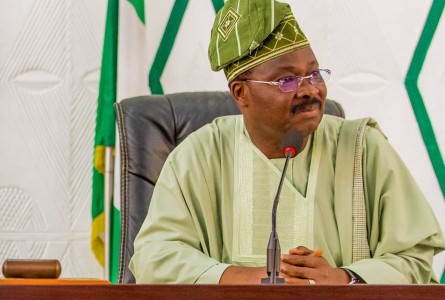
An alleged self-acclaimed Baale of Ejioku, Prince Bashiru Adesina, has been warned by the Oyo State government to desist from parading himself in such capacity, having failed to secure the approval of the Governor, Mr Abiola Ajimobi.
According to the provisions of Chiefs Law of Oyo State of Nigeria, 2000, CAP. 28, the Governor must give an approval for anyone to parade himself as traditional ruler or chief.
Speaking via a statement on Monday, the Commissioner for Local Government and Chieftaincy Matters, Mr Bimbo Kolade, conveyed the government’s displeasure at the development, which, he said, contravened laid down rules guiding the appointment of Part II recognized chiefs.
Although Section 20 (1, 2 and 3) regulates such appointment, Section 20 (1) specifically reads, “Subject to the provisions of this section, the governor may approve or set aside an appointment of a recognized chief,” the class under which the Baale of Ejioku falls.
Mr Kolade warned that the government would wield the big stick should the concerned chief remain adamant in order to protect the sanctity of the revered traditional institution of Ibadanland.
While acknowledging the existence of correspondence between the ministry and Lagelu Local Government in respect of the vacant Baale of Ejioku stool, he said that the process had remained inchoate, having been stalled at the LG level since October, last year.
The ministry said its October 17, 2016, letter to Lagelu LG, which was received by the Director, Administration and General Services, Mr Kolawole Popoola, mandating it to provide certain documents as proof that the due process had been followed, had yet to be complied with.
In the letter, the ministry had requested the LG to provide “public notice issued by the LG on the vacant stool; certificate of appointment issued by the kingmakers (in respect of the chosen candidate); as well as the attendance sheet stating those that attended the family and the kingmakers’ meetings.”
The letter by the ministry’s Director of Chieftaincy Matters, Mr Zaccheaus Jayeola, also mandated the LG to submit the letter written by the LG conveying the approval of the state government to the next ruling house to fill the vacant stool.
It reads further, “(You are requested to provide the) letter written to the kingmakers by the head of the ruling house, informing them of the candidate nominated for the vacant stool; and the consent letter of His Imperial Majesty, Oba Saliu Akanmu Adetunji, Aje Ogungunniso I, the Olubadan of Ibadanland.
“Please note that the required documents are to be presented before the approval of His Excellency, the Executive Governor (Mr Abiola Ajimobi), could be sought.”
With the benefit of hindsight, Mr Kolade said that the ministry would ensure that the due processes were followed to the letter to avert anarchy and litigations by the contenders, which, he said, was always at huge cost to the government.
The commissioner admonished those nursing the ambition of becoming traditional chiefs to adhere strictly to the legal process in pursuing such ambitions instead of cutting corners or resorting to self-help.
He said, “There are laid down rules and regulation guiding the emergence and installation of a traditional chief, as enshrined in the Chiefs Laws of Oyo State of Nigeria, 2000, CAP 28. This has been the guiding light for the ministry.
“It is therefore an attempt to cause anarchy in the land for anybody to start parading himself as a Baale without following the due process. We have in the recent past warned contenders to the traditional stools against flouting the extant laws.
“Experience has shown that such inordinate ambition is an invitation to breakdown of law and order, because of the acrimonious contentions among contenders to such stools. That is why laws were enshrined to guard against anarchy in the land.
“For the sake of emphasis, the state government does not recognize Prince Bashiru Adesina as the Baale of Ejioku. He is, therefore, warned to stop parading himself in such capacity till those concerned comply with due process.”



By Adedapo Adesanya
The Christian Association of Nigeria (CAN) has called for action over the recent attack in Plateau State, asking authorities to address and prosecute those behind the killing.
In a statement, CAN President, Mr Daniel Okoh, described the attack as “not just tragic” but also “unacceptable”.
“Nigerians are tired of mourning. Nigerians are tired of statements. Nigerians want to see action,” the cleric said in a statement issued late Monday.
“Those responsible for this atrocity must be found, arrested, and made to face justice; swiftly and decisively. Anything less will only deepen the sense that life in our country is no longer protected.”
The attack on Sunday in Angwan Rukuba, in Jos North Local Government Area, left 28 people dead and several others wounded.
Expectedly, the incident has sparked outrage among Nigerians and protests by angry residents of the area.
CAN called for a thorough investigation into the attack and called for proactive action before these attacks take place.
“Our security institutions must not only respond; they must stay ahead of these threats,” the Christian body said while acknowledging efforts by the Plateau State Government.
“But let it be said clearly: temporary measures are not enough. The people of Plateau, and indeed all Nigerians, deserve lasting security, not periodic reassurance,” Mr Okoh said.
CAN told Nigerians to be vigilant and calm, but maintained that the nation owes the dead justice.
“We owe the living protection. And we owe our future a country where no community wakes up to gunfire on a sacred day.”
Meanwhile, the Plateau State Governor, Mr Caleb Mutfwang, visited the affected area under heavy security and also those wounded on Monday, even as the state government imposed curfew on the affected place.
“This unfortunate event led to the loss of 28 innocent lives and left many others injured. I feel deeply the weight of the pain inflicted on our people,” the governor said in a state-wide broadcast.
He also vowed that Plateau State won’t succumb to fear or intimidation.
“We shall emerge stronger, united, and resolute in our faith and commitment to peace,” the governor assured.
“We must deploy every available resource to defend our people, protect lives and property, and safeguard the territorial integrity of our state. Plateau shall remain strong and peaceful.”

By Adedapo Adesanya
The Nigerian Ports Authority (NPA) is raising its financial and operational ambitions for 2026, unveiling a revenue target of N1.489 trillion alongside plans to overhaul two of the country’s busiest seaports, Apapa and Tin Can Island, in a push to boost efficiency and global competitiveness.
Speaking during the agency’s 2026 budget defence before the Senate Committee on Marine Transport, the ports regulator’s Managing Director, Mr Abubakar Dantsoho, said the new revenue projection reflects a strategic shift focused on strengthening resilience and driving sustainable growth across Nigeria’s port system.
The proposed figure represents an increase over the N1.468 trillion initially projected for 2025, a benchmark the authority not only met but exceeded, recording approximately N1.97 trillion in revenue collections.
A breakdown of the 2026 proposal shows a strong tilt toward infrastructure development, with N945 billion allocated to capital expenditure. Operating costs are projected at N447.5 billion, while N90.6 billion is expected to be remitted to the federal government’s Consolidated Revenue Fund.
Central to the NPA’s transformation agenda is the planned modernisation of Apapa Port and Tin Can Island Port, two critical gateways for Nigeria’s maritime trade. Dantsoho noted that both facilities, due to their age and outdated capacity, require urgent upgrades to meet the demands of modern shipping and logistics operations.
He disclosed that preliminary work on the projects is set to begin within weeks, marking a significant step toward repositioning Nigeria’s ports within the global maritime value chain.
On financial operations, the NPA boss reiterated that all revenues generated by the authority are remitted directly into the Treasury Single Account managed by the Central Bank of Nigeria, stressing that the agency operates without retaining independent revenue.
In his remarks, Chairman of the Senate Committee on Marine Transport, Mr Wasiu Eshinlokun, underscored the importance of collaboration between lawmakers and agencies. He noted that the committee’s oversight function is designed to improve efficiency, strengthen institutional performance, and ensure responsible use of public funds.
By Adedapo Adesanya
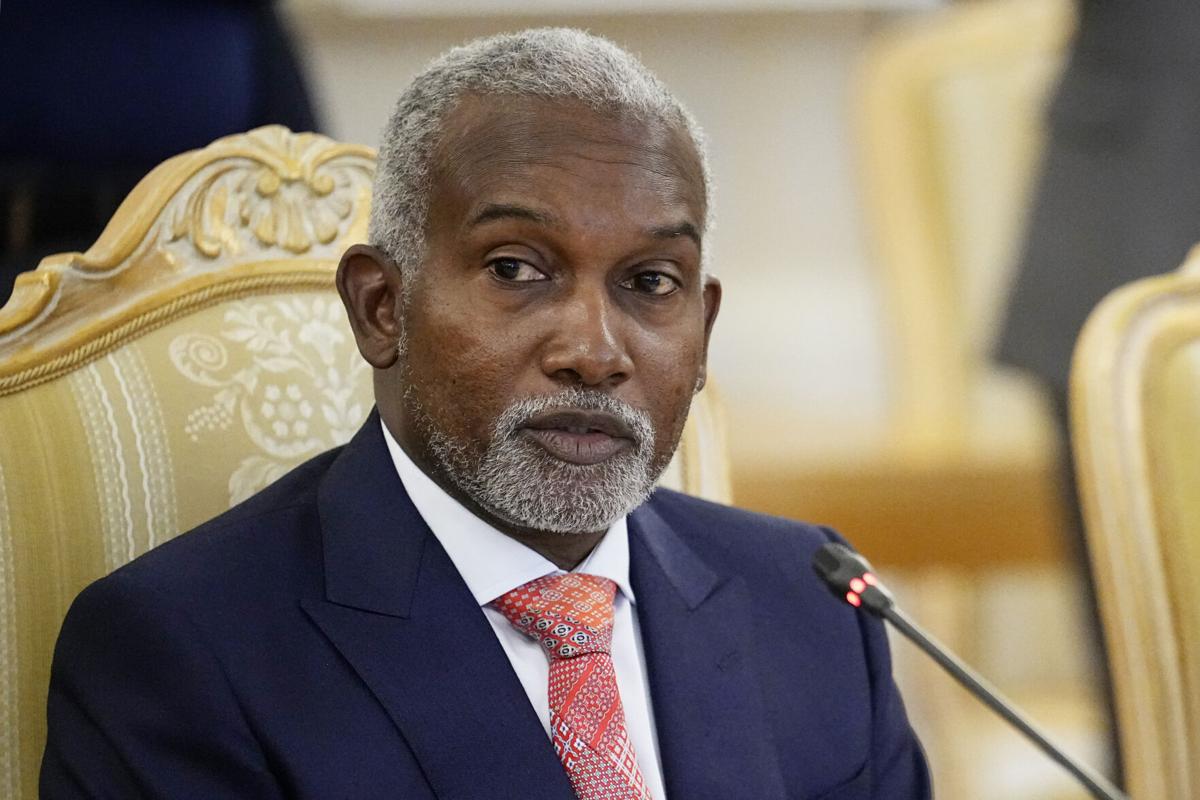
Nigeria’s Minister of Foreign Affairs, Mr Yusuf Tuggar, has resigned from his position, in line with the directive that government appointees seeking political offices must resign before March 31.
Business Post reports that the diplomat is eyeing a governorship ambition in Bauchi State ahead of the 2027 general elections.
Mr Tuggar’s resignation was confirmed in a statement by the ministry’s spokesperson, Mr Kimiebi Ebienfa, on Monday.
Mr Tuggar submitted his resignation letter on Monday, barely 24 hours before the deadline set by President Bola Tinubu, which directs all political appointees under his administration seeking to contest elective offices in the 2027 elections to resign before March 31.
The directive is in line with Section 88(1) of the Electoral Act, 2026, and the timetable released by the Independent National Electoral Commission for party primaries ahead of the 2027 polls.
With this development, more resignations are expected before the March 31 deadline as appointees seeking elective offices move to meet the stipulated deadline.
Earlier today, the Chairman of the Governing Board of the Federal Mortgage Bank of Nigeria (FMBN), Mr Nasiru Gawuna, formally resigned from his position to join the African Democratic Congress (ADC) with his sights on the Kano governorship ticket.
Mr Tuggar’s resignation comes amid the speculation of his interest in contesting the 2027 Bauchi State governorship election on the platform of the All Progressives Congress (APC).
The 59-year-old is a seasoned diplomat, policymaker, and political figure who was appointed as minister by President Bola Tinubu in August 2023.
Born on March 12, 1967, he has built a distinguished career spanning diplomacy, politics, energy, and strategic consulting.
He is widely regarded for his role in shaping Nigeria’s global engagement and advancing its foreign policy priorities.











-
 Feature/OPED6 years ago
Davos was Different this year
-
Travel/Tourism10 years ago
Lagos Seals Western Lodge Hotel In Ikorodu
-

 Showbiz3 years ago
Estranged Lover Releases Videos of Empress Njamah Bathing
-
 Banking8 years ago
Sort Codes of GTBank Branches in Nigeria
-

 Economy3 years ago
Subsidy Removal: CNG at N130 Per Litre Cheaper Than Petrol—IPMAN
-

 Banking3 years ago
Sort Codes of UBA Branches in Nigeria
-

 Banking3 years ago
First Bank Announces Planned Downtime
-

 Sports3 years ago
Highest Paid Nigerian Footballer – How Much Do Nigerian Footballers Earn