General
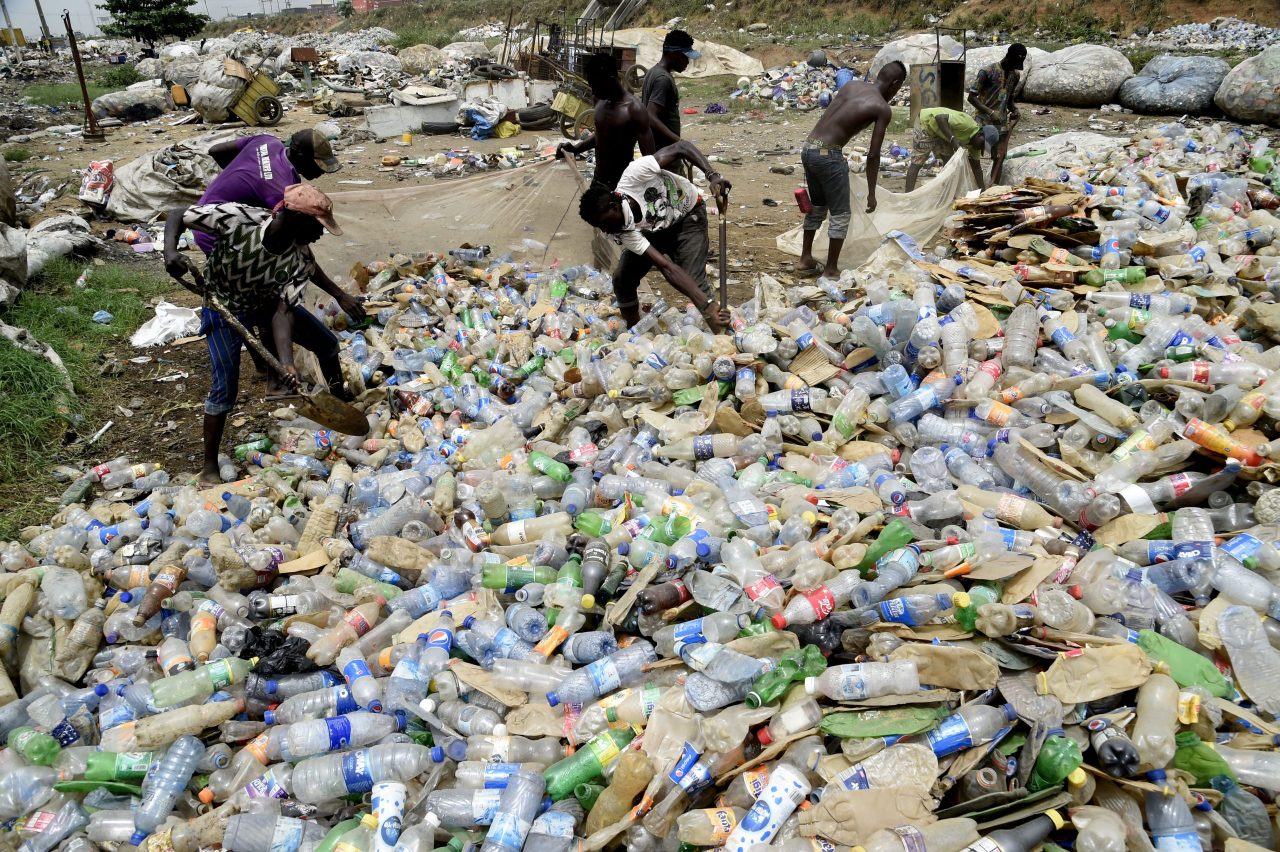
Poor Waste Management Culture Responsible for Nigeria’s Plastic Waste Crisis—Sholanke
By Modupe Gbadeyanka
The co-founder and chief executive of PETsPoint Recycling Nigeria, Mr Sunday Kolawole Sholanke, has blamed poor waste management culture for the country’s plastic waste crisis.
According to him, the volume of plastic waste in Nigeria is alarming, putting estimates on the country’s waste generation to about 596 million metric tonnes annually, with 88 per cent of it neither reclaimed nor recycled.
Speaking at an event hosted by Unity Bank Plc to mark 2025 World Environment Day recently, the climate activist said Nigeria remains one of the highest contributors to global plastic waste pollution.
“Nigeria ranks as the 9th highest contributor to global plastic pollution. Much of Nigeria’s plastic waste ends up in landfills, drainage systems, and water bodies, causing extensive environmental damage and posing serious health risks,” he explained.
“Over one million plastic bottles and 10 million plastic bags are produced every minute. In 2020 alone, eight million tons of plastic bottles were produced globally, with less than 30 per cent collected and under 10 per cent recycled. The rest is dumped, burned, or abandoned in the environment, worsening risks of flooding, climate disruption, and disease,” Mr Sholanke added.
He also identified low public awareness, and lack of community collection infrastructure as major factors aggravating the Nigeria’s plastic waste crisis.
Calling on the financial services sector to be more proactive, Mr Sholanke urged banks to invest in green financing by increasing access to affordable credit for green businesses and eco-friendly initiatives.
The Unity Bank webinar also had other guests like the co-founder and chief executive of Street Waste Company Limited, Omoh Alokwe, who emphasised the role of regulators in strengthening enforcement and updating policy frameworks to reduce harmful practices that fuel the global plastic crisis.
Further, the Head of Strategy and Innovation at Unity Bank, Mr Ibukun Coker, emphasized the lender’s commitment to sustainable practices and environmental protection, highlighting the role of the financial sector in driving meaningful change.
“Plastic pollution is not just an environmental issue, it is an economic and public health crisis,” said Mr Coker. “At Unity Bank, we believe that sustainability should be more than a policy; it must be embedded in how we operate, the projects we finance, and the partnerships we build.”
General
Edun, Dangiwa Not Sacked—Presidency
By Adedapo Adesanya
The presidency has refuted reports that Mr Wale Edun, former Finance Minister, and Mr Musa Dangiwa, Housing Minister, were sacked by President Bola Tinubu.
In a statement signed by the Special Adviser to the President on Information and Strategy, Mr Bayo Onanuga, it was emphasised that Mr Edun duly tendered his resignation from office, citing health reasons, before President Tinubu announced his replacement on Tuesday.
As for Mr Dangiwa, no reason was given beyond handing in his resignation to the President.
Mr Edun, who clocked 70 on Monday and has battled recent ill health, fittingly submitted his resignation letter on his birthday, thanking the President for the opportunity to serve Nigeria.
“It has been a pleasure and privilege to serve your administration and the Renewed Hope Agenda”, his letter read.
“Under your leadership, Nigeria has emerged stronger, more resilient and more internationally respected.
“I wish you and the administration every success in the future”, he wrote.
According to the presidency, before the Office of the Secretary of the Government of the Federation announced his departure from the cabinet on Tuesday, Mr Edun paid a valedictory visit to the President at the Villa. He held an hour-long discussion with Mr Tinubu and then left to focus on his private businesses.
Mr Dangiwa, an architect, previously served as the managing director of the Federal Mortgage Bank between 2015 and 2022, as well as Secretary to the Katsina State Government, before President Tinubu appointed him as housing minister in August 2023.
Mr Edun, an economist and investment banker, served as Lagos State commissioner for finance between 1999 and 2004, during the tenure of then Governor Bola Tinubu.
Before then, he worked from 1980 to 1986 at Chase Merchant Bank (later Continental) in Lagos. He joined the World Bank in September 1986 through the elite Young Professionals program, where he worked on economic and financial packages for several countries in Latin America and the Caribbean.
In 1989, he co-founded Investment Banking & Trust Company Limited (now Stanbic IBTC) and served as executive director. In 1994, he founded Denham Management Limited, which has since become the Chapelhill Denham Group. He served as chairman from 2008 to 2021.
President Tinubu has expressed deep appreciation to both men for their dedicated service and significant contributions to the administration’s economic reform programme and wished them continued success in their future endeavours.
Mr Edun has been replaced by Minister of State for Finance, Mr Taiwo Oyedele, to consolidate ongoing reforms and advance the administration’s fiscal and economic objectives with renewed focus, discipline, and innovation.
President Tinubu will shortly send the ministerial nominee for housing, Muttaqha Rabe Darma, also from Katsina, like Mr Dangiwa, to the Senate for confirmation.
General
Residents Must Obtain Permit to Install Solar Panels in Our Estates—Lagos
By Modupe Gbadeyanka
The Lagos State government has said residents of its housing estates across the state are not authorised to install solar panels without first obtaining approval from the appropriate quarters.
A statement issued on Wednesday by the Director of Public Affairs in the Lagos State Ministry of Housing, Mr Ganiu Lawal, gave this clarification.
This arose from a recent social media post by a resident who raised concerns over the Ministry’s Monitoring and Compliance Team’s demand for solar panel installation approval during a routine operation at the Lagos State Millennium Housing Estate, Ibeshe.
In the statement, the Permanent Secretary in the ministry, Mr Abdulhafis Toriola, explained that residents are not allowed to make alterations in government-owned housing schemes to protect shared assets, prevent fire incidents and structural damage.
“An allottee must obtain approval from the Ministry for any intended alteration to the flat allocated and the building, and this includes installation of solar panels,” he stated.
Mr Toriola, an Engineer, further explained that the requirement, which is contained in the Letter of Allocation and Allottees Guide issued to all beneficiaries at the point of purchase, also aims to prevent fire incidents linked to unprofessionally installed solar systems.
According to him, the ministry was compelled to develop specific guidelines after solar panel installations began to create more problems than benefits for both users and non-users within government estates.
“In recent times, the ministry had to intervene in fixing leaking rooftops and incessant fire outbreaks caused by solar panel installation by some residents,” he said.
The senior government official noted that government estates are social housing interventions designed with connected shared assets and facilities for residents, with blocks of flats housing between two and thirty-two families.
“In order to minimise risk that will affect the entire building structure, the Ministry made regulations to stipulate guidelines for installation, the quality of materials such as cables and panel configuration, and the technical know-how of the installation personnel,” he added.
The guidelines, he said, are designed to protect other flat owners, insulate the entire building with insurance against damages, and apportion appropriate roof space to all flat owners to prevent disputes when multiple occupants in a block seek to install solar panels on the same roof.
He disclosed that the ministry was open to feedback from residents always, urging all allottees to reach out to the ministry when in doubt and comply with the established process to ensure safety, structural integrity, and harmonious coexistence in all state-owned housing estates.
General
Egbin Power Wins Electricity Generation Company of the Year Award
By Modupe Gbadeyanka
For its unwavering commitment to operational excellence and resilience in the face of industry-wide challenges, a leading publication in the energy, oil and gas sector, Energy Times, has named Egbin Power Plc the winner of the Electricity Generation Company of the Year award.
The largest privately-owned thermal power generation company in Nigeria thanked the organisers for the honour, noting that recognition in Nigeria’s power industry is earned through consistent performance rather than visibility.
The energy firm emphasised that despite persistent structural constraints within the sector, its responsibility remains clear in delivering reliable megawatts to the national grid.
The Energy Times Awards took place recently in Ikeja, Lagos, with key stakeholders across the energy value chain in attendance to celebrate excellence and innovation within the industry.
Energy Times, in its citation, commended Egbin Power for its notable improvements in average hourly power generation in 2025, achieved despite industry-wide challenges.
It noted that the organisation sustained commendable output through enhanced operational efficiency, proactive asset management, and a firm commitment to national grid stability, further cementing its strategic importance in Nigeria’s power sector.
While receiving the accolade, Egbin Power said it has made “a deliberate choice to be reliable, disciplined, and performance-driven.”
“This recognition reflects the resilience of our people, the strength of our operations, and our unwavering commitment to powering Nigeria sustainably,” the company said in a statement.
It further highlighted that the award is rooted in measurable outcomes, while acknowledging that much work remains to be done in strengthening the sector.
Egbin Power also reiterated that sustainable power extends beyond generation, stressing the need for an efficient end-to-end electricity value chain where every megawatt generated translates into value delivered and revenue recovered, affirming its commitment to leading industry conversations and setting performance benchmarks through example.
Speaking on the recognition, the chief executive of Egbin Power Plc, Mr Mokhtar Bounour, dedicated the award to the company’s workforce.
“All the credit for this recognition goes to the team, whose dedication, discipline, and determination continue to translate into outstanding results,” he said.
He also acknowledged the board’s unwavering support, noting that strong alignment between governance and management has been critical in consistently raising performance standards.
Mr Bounour further highlighted the role of Sahara Group in driving innovation and sustainability across the business. According to him, the organisation remains focused on creating value for its stakeholders while contributing meaningfully to national development.
“We are not just generating power, we are powering the future. Technology will remain at the heart of this transformation, while sustainability and affordability are not ambitions, they are our standard,” he added.
Sahara Group Foundation, the CSR arm of Sahara Group (Egbin Power’s parent company), was also named the Social Impact Company of the Year for its significant contributions to sustainable development and socio-economic progress in Nigeria’s oil and gas sector and across Africa.
-
Feature/OPED6 years agoDavos was Different this year
-
Travel/Tourism10 years ago
Lagos Seals Western Lodge Hotel In Ikorodu
-
Showbiz3 years agoEstranged Lover Releases Videos of Empress Njamah Bathing
-
Banking8 years agoSort Codes of GTBank Branches in Nigeria
-
Economy3 years agoSubsidy Removal: CNG at N130 Per Litre Cheaper Than Petrol—IPMAN
-
Banking3 years agoSort Codes of UBA Branches in Nigeria
-
Banking3 years agoFirst Bank Announces Planned Downtime
-
Sports3 years agoHighest Paid Nigerian Footballer – How Much Do Nigerian Footballers Earn