Connect with us

General

Promoting Sustainable Nigerian Leather Products in the Global Market

Published

on

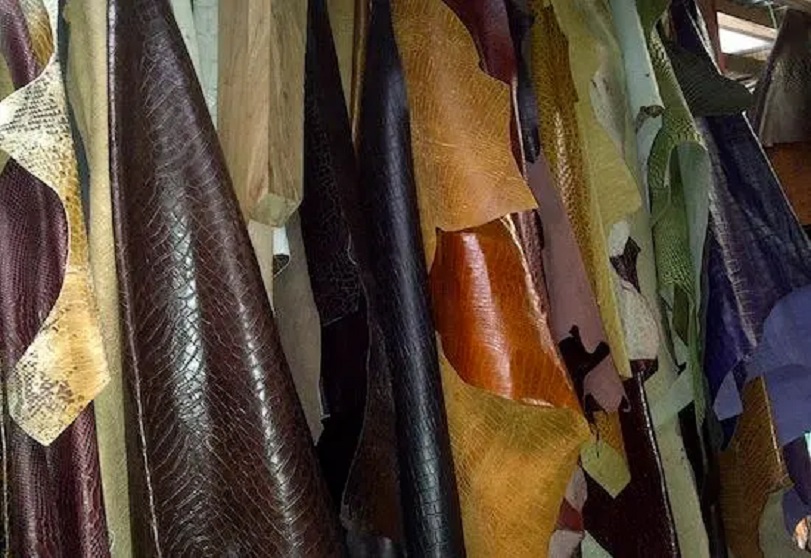
Nigerian leather products

The term “globalization” gained popularity in the early 1990s; with technological advancement, it has continued to shape modern everyday life, making it a global village whilst growing interdependence of the world’s economies, cultures, and populations. Countries have built economic partnerships to facilitate the continued surge in cross-border trade in goods and services, technology, and flows of investment, people, and information.

With a long history of producing high-quality leather products, Nigeria has a rich heritage of leather production, and to build a sustainable ‘Made-in-Nigeria’ brand, it is essential to promote Nigerian leather products in the global market.

Globalisation has made the global market indeed a global village through technology. To aid the balance of trade, countries must ensure it manufactures for local consumption and then produces with a mindset of exporting to foreign countries. To achieve this, its products must first meet global standards and receive acceptance from its local market. Nigeria is at a vantage point to promote African leather products in the global market, being one of the continent’s biggest producers and exporters of raw leather materials.

With advanced technology from developed economies to reduce the cost of production, coupled with their capacity to export, local consumers in developing economies have easy access to imported products which has adverse effects on the local economy, such as unemployment and a decrease in demand for locally produced goods. As the world continues to evolve, it is important to balance importing goods and supporting local businesses to improve GDP and the economy.

The benefits of manufacturing goods locally in a nation instead of importing should not be overlooked. It has a long-term value on a country’s economy than the latter. Any developing country seeking economic growth should endeavour to reduce importation to the bare minimum and utilize local resources, even if it does not have the required production capacity for export purposes. In the case where a country starts focusing on manufacturing its products locally, there will be an increase in the employment rate; the currency will be valuable and local culture will be strengthened. In Nigeria, for instance, products manufactured locally are referred to as “Made-in-Nigeria goods”.

The manufacturing sector in Nigeria has several sub-sectors, such as Petroleum and coal products, electrical equipment, appliances and components, printing and related support activities, textile apparel, leather and footwear, fabricated metal products, chemical and pharmaceutical products, food, beverage and tobacco products, paper products, furniture and related products, plastics and rubber products, and transportation equipment, among others continue to play a significant role in generating employment, increasing productivity, and driving economic growth for the nation. The sector has also contributed to the country’s quest to move away from oil dependency and lean towards the green economy.

One of the sub-sectors that has proven resourceful in contributing to the Made-in-Nigeria project and zero oil initiative is the Leather industry. With the total trade of leather products presently between $300 and $400 billion globally, experts believe that Nigeria could account for 15 to 20 per cent to hit $20 billion by 2025. According to recent statistics, the Nigerian leather industry is estimated to be worth over $1 billion and is expected to grow annually by 2.88% (Compound Annual Growth Range 2023-2028). As the third largest in Africa, after South Africa and Ethiopia, the Nigerian leather industry is also a vital source of employment and income for many Nigerians, especially those in rural areas. The industry provides employment to over 750,000 people, with many jobs in tanning, leather goods production, and especially the fashion industry.

Leather has continued to remain a versatile and essential material in the fashion industry, offering durability, luxury, and timeless style for both men and women. Due to its durability and luxurious appeal, it is widely used in various forms of fashionable items such as shoes, bags, jackets, belts, and other accessories.

In contributing to the growth of sustainable Made-In-Nigeria products, a game changer in the leather industry, Lagos Leather Fair, has consistently given leather designers the platform to showcase their expertise for six years now. Established and emerging designers now have the opportunity to showcase their designs and gain recognition in the Nigerian and African leather industries. The annual fair provides a much-needed and solution-based networking platform for leather designers and other players in Nigeria and other African countries to promote and showcase Made-in-Africa and local talent.

According to the founder of Lagos Leather Fair, Mr Femi Olayebi, “The annual celebration of the Lagos Leather Fair is a proof point of our unflinching commitment towards finding sustainable solutions to scale the African leather industry and ensure that the Made-in-Nigeria Project and Zero-Oil Initiative becomes a reality. For over five years, we have created an enabling environment for key players to maximise the potential of the leather industry. We are delighted about LLF2023 and look forward to its significant impact in Nigeria and across Africa.”

This year’s edition, themed Staying Ahead: Creativity, Collaboration, Commitment, is set to improve the narrative that encourages sustainable Made in Nigeria business. Through the proposed LLF Lab and Accelerator programme, leather designers will have access to mentorship and development programs from entrepreneurs who are already experts in the industry.

LLF 2023 will also feature a series of local and international speakers who will share insights on relevant conversations that affect the African leather industry and a well-curated series of workshops for up-and-coming designers willing to thrive as a manufacturer in Nigeria. The workshops for budding leather designers will feature branding workshops where the fundamentals of branding will be explored, a shoe-making workshop to provide a basic understanding of shoemaking techniques and a social media/marketing presentation using a case study review of different brands.

The Lagos Leather Fair is set to hold on June 17 and 18 at the Balmoral Convention Centre, Victoria Island, and just like the five editions done in the past, LLF 2023 is anticipated to continue from the previous years by strengthening the narrative that ensures the Made-in-Nigeria Project and Zero-Oil Initiative become a reality and fostering the nation’s talent and economic growth.


Adedapo Adesanya is a journalist, polymath, and connoisseur of everything art. When he is not writing, he has his nose buried in one of the many books or articles he has bookmarked or simply listening to good music with a bottle of beer or wine. He supports the greatest club in the world, Manchester United F.C.

1 Comment

Leave a Reply

Your email address will not be published. Required fields are marked *

General

UK Strengthens Ties With Kano, Jigawa on Sustainable Development

Published

on

UK Kano Jigawa

By Adedapo Adesanya

The United Kingdom has reaffirmed its development partnership with Kano and Jigawa States, as part of its long-term commitment to development and reform in northern Nigeria.

The Head of Development Cooperation at the British High Commission Abuja, Ms Cynthia Rowe, recently completed high-level engagements with governors of both states as well as senior government officials and civil society leaders.

The discussions underscored the UK’s modern approach to development as a genuine partnership with Nigeria, which prioritises state-led ownership and sustainable development that delivers lasting impact through strengthening systems and partnerships grounded in investment, trade, climate financing, technical expertise and joint accountability.

According to a statement, the Foreign Commonwealth and Development Office, via the British High Commission, said Nigeria remains one of the UK’s most significant development partners, adding that the engagements underlined the strength and ambition of the bilateral relationship reaffirmed during the recent UK-Nigeria State Visit.

In Kano, Ms Rowe met with Deputy Governor Alhaji Murtala Sule Garo and senior officials, including the newly confirmed Head of Civil Service and Secretary to the State Government. The visit recognised Kano’s progress on climate finance, health system reform and private sector investment supported through UK technical assistance.

In Jigawa, she met with Governor Umar Namadi and heads of key ministries, departments and agencies. The meeting celebrated more than 25 years of UK-Jigawa partnership, one of the most longstanding bilateral development relationships at the subnational level in Nigeria. Discussions covered the state’s continued progress on health systems reform, agriculture, and governance and the path forward under UK technical assistance.

Since 2022, PLANE has supported Kano, Kaduna and Jigawa to strengthen state-led education delivery systems, working through Ministries of Education, SUBEB and key agencies. Its RANA+ foundational learning packages have reached 1.4 million pupils across the three states, alongside wider system strengthening.

Speaking on this, Ms Rowe said, “For more than 25 years, we have worked side by side with state governments, including Jigawa and Kano states, their communities, and civil society to build stronger health systems, improve learning outcomes for millions of children, support farmers to grow their businesses, and help states attract the investment they need to thrive.

These visits have reinforced our confidence in what this partnership can achieve. We are working together to deliver lasting change, and deepening a relationship built on genuine mutual respect and shared ambition for Nigeria’s growth and development.”

Continue Reading

General

CBN Partners NiMet to Integrate Climate Data Into Economic Planning

Published

on

CBN Ways and Means

By Adedapo Adesanya

The Nigerian Meteorological Agency (NiMet) has signed a Memorandum of Understanding (MoU) with the Central Bank of Nigeria (CBN) on data sharing to enhance economic productivity.

This was done at a meeting at CBN Head Office in Abuja, where the weather body led by its Director General, Mr Charles Anosike, on Wednesday, highlighted the importance of integrating weather and climate data into economic research, especially in sectors such as agriculture, energy, and transportation.

He noted that extreme weather events can reduce agricultural productivity and threaten food security.

He added that the collaboration aligns with the Renewed Hope Agenda of President Bola Tinubu, which prioritises food security through major agricultural investment, including the cultivation of 10 million hectares of land and the distribution of mechanised equipment.

Mr Anosike cited a 2026 World Bank report that showed that extreme weather driven by climate change is significantly affecting global food security, with more than 87 million people facing hunger in East and Southern Africa and 52 million in West and Central Africa.

He also referenced the latest Berkeley Earth Report, which projects that 2026 is likely to be the fourth warmest year on record, a trend that continues to shape agricultural and energy market projections.

In his remarks, Mr Muhammad Sani Abdullahi, Deputy Governor, Economic Policy Directorate of the CBN, said the signing of the MoU marked an important step in strengthening the partnership between two key national institutions whose mandates intersect in data, research, and policy support.

He emphasised that, in an increasingly complex and dynamic economic environment, timely and reliable data remain essential for effective policy decisions.

According to him, the Economic Policy Directorate relies heavily on timely and credible statistical information from NiMet, saying that such data are critical for inflation monitoring, agricultural sector assessment, and broader economic policy advisory functions.

He described the initiative as both timely and important, adding that strong institutional partnerships are essential for strengthening evidence-based policymaking and improving the robustness of national data systems.

At the close of the event, Mr Anosike and Mr Sani Abdullahi signed the MoU on behalf of their respective institutions.

Continue Reading

General

POS Operators Barred Within 200 Metres of Police Stations

Published

on

IGP Tunji Disu

By Adedapo Adesanya

The Inspector-General of Police (IGP), Mr Tunji Disu, has ordered an immediate nationwide ban prohibiting Point-of-Sale (POS) operators from running their businesses within a 200-metre radius of any police station, divisional headquarters, or police formation across Nigeria.

This directive, released via an internal police wireless message, addresses critical systemic challenges regarding extortion and corrupt financial practices within law enforcement facilities.

The order is to be strictly enforced nationwide, with senior officers overseeing various formations to be held accountable for any breach of the directive.

The Nigeria Police Force stated that the measure is intended to strengthen transparency, accountability, and public confidence in the policing system.

The decision comes after an alarming proliferation of POS businesses near police facilities, with investigations and public complaints revealing that some operators were actively complicit in facilitating extortion, bribery, and illegal cash transfers forced upon civilians or suspects during police encounters.

Under the directive, Assistant Inspectors-General of Police (AIGs), State Commissioners of Police (CPs), and heads of formations will be held vicariously liable for any breach within their jurisdictions.

The IGP’s order states: “Any officer or POS merchant found flouting the 200-metre operational boundary or colluding in illicit transactions will face immediate disciplinary and criminal actions under extant laws.

“If you are a POS agent or looking into regulatory compliance for financial services in Nigeria, let me know. I can provide details on current Central Bank of Nigeria (CBN) radius registration guidelines or share methods to report officer misconduct directly to the Force Headquarters.”

Continue Reading

Trending