
General
QNET’s Global Reach in 100+ Countries: What International Access Means for Local Distributors


Global scale means market access and international supply chains. For individual distributors in direct selling, it can shape everything from product availability to income stability and long-term opportunity.
QNET, the multinational wellness and lifestyle direct selling company, positions its business model around that idea: connecting locally based independent distributors to an international operating platform. With activity spanning more than 100 countries, the company sits within a direct selling industry that, according to the World Federation of Direct Selling Associations (WFDSA), has stabilized after several relatively volatile post-pandemic years.
Global Reach Within a Stabilizing Industry
The WFDSA’s latest global report estimates worldwide direct selling retail sales at roughly $163.9 billion in 2024, essentially flat year over year. That flat performance, however, masks gradual improvement beneath the surface. Nearly half of reporting markets showed growth in 2024, and average market growth rates rebounded to positive territory.
The report estimates more than 104 million independent sales representatives globally in 2024, a figure that has remained largely stable year over year.
This stabilization sets a backdrop for companies like QNET. A global footprint is no longer about rapid expansion alone; it is increasingly tied to resilience: operating across regions with different economic cycles, consumer behaviors, and growth trajectories.
For distributors, this matters because opportunities extend beyond individual effort. They are often shaped by the health of the company’s broader channel and product reach.
A Platform Designed for Distributed Entrepreneurship
QNET’s model centers on local execution supported by centralized infrastructure. Products—ranging from nutritional supplements and wellness devices to home and lifestyle solutions—are sold through the company’s proprietary e-commerce platform. Independent distributors do not manage warehouses, shipment logistics, or customer service systems.
As Ramya Chandrasekaran, who heads communications at QNET, explained in a recent interview, the company views direct selling as a form of accessible “micro-entrepreneurship.” The idea is to reduce the operational burden typically associated with starting a business, allowing distributors to focus on product education, customer relationships, and market development.
Why Global Scale Changes the Distributor Equation
One practical benefit of international reach is product continuity. WFDSA data shows that wellness products account for roughly 29% of global direct selling sales, making it the largest category worldwide. In the Asia-Pacific region, the largest direct selling region by sales, wellness represents more than 40% of total category share.
QNET’s emphasis on wellness and lifestyle products places distributors in line with the strongest demand segments globally. Instead of relying on narrow local trends, distributors operate within product categories that have shown consistent global interest.
International scale also supports consistency in training, compensation structures, and digital tools. Distributors in different countries access identical back-end systems, tracking referrals, commissions, and orders through the same platform. This standardization reduces friction and uncertainty, particularly for individuals operating in markets where informal commerce is common.
Workforce Shifts
The WFDSA’s report highlights notable shifts in the global direct selling workforce. Women continue to make up more than 70% of participants worldwide, and representation among individuals aged 35 to 54 remains the largest cohort.
Independent Distributors increasingly value flexibility, long-term viability, and support systems that allow them to operate sustainably rather than aggressively scale. QNET’s emphasis on digital access, centralized operations, and gradual business building reflects those priorities.
For many participants, especially those balancing work with caregiving or other responsibilities, direct selling infrastructure offers a way to stay engaged at their own pace.
Training, Exposure, and Cross-Market Learning
QNET’s international conventions and training programs connect distributors across regions, creating informal networks for peer learning. Events that draw participants from dozens of countries expose distributors to varied approaches to sales, customer engagement, and market adaptation.
This mirrors one of WFDSA’s broader conclusions: direct selling increasingly functions as a global learning ecosystem, with companies providing tools and education that help individuals navigate uncertain economic conditions.
For distributors, exposure to cross-border experiences can recalibrate expectations, reinforcing that success often comes from steady engagement rather than rapid recruitment or short-term activity.
International Access, Interpreted Locally
Despite its global scale, QNET’s business ultimately plays out in local communities. Distributors adapt messaging around wellness, home quality, and lifestyle enhancement to cultural norms and household priorities. The international platform provides reach and structure, but relevance is built locally.
That balance, global systems supporting local relationships, defines much of modern direct selling. The WFDSA describes the industry not as a single growth story, but as a framework that can scale proportionally with economic conditions across regions.
For QNET distributors, international presence does not guarantee income or uniform outcomes. What it offers is access: to resilient product categories, standardized systems, training resources, and a global marketplace that extends beyond any single region. For local distributors navigating today’s uncertain global economic environment, that is an important foundation to maintain.



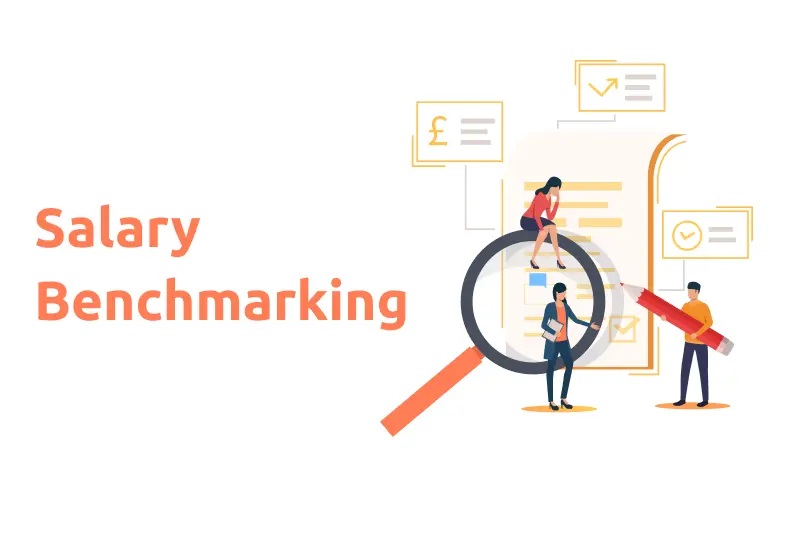
Salary benchmarking is the systematic process of comparing an organization’s pay rates, bonus programs, and total rewards against market standards. This article walks through why benchmarking matters, how to prepare and run an analysis, the best data sources and tools, and how to turn findings into defensible pay structures and ongoing processes.
Why Salary Benchmarking Matters For Online Businesses And Agencies
Without benchmarking, organizations risk three costly outcomes: underpaying (leading to high turnover and loss of institutional knowledge), overpaying (inflating fixed costs and reducing agility), or misallocating compensation across roles (creating internal inequities and morale problems).
For agencies that pitch retainer-driven services, predictable labor costs tied to market rates enable healthier margins and clearer pricing decisions. For in-house ecommerce teams, benchmarking supports workforce planning when launching new product lines or scaling paid acquisition efforts.
Finally, benchmarking is not only financial: it signals professionalism to candidates.
Key Data Sources And Tools For Accurate Benchmarks
High-quality benchmarking blends public data, commercial platforms, and human intelligence.
Public Government And Aggregated Salary Data
Bureau of Labor Statistics (BLS) or national equivalents provide reliable occupational wage ranges, useful for baseline comparisons and compliance checks.
Industry Surveys, Salary Platforms, And Niche Reports
Platforms such as Payscale, Glassdoor, LinkedIn Salary, and specialized reports for marketing and tech roles give role- and location-specific distributions.
Recruiter Intelligence And Peer Networks
Recruiters and hiring agencies provide real-time insight into candidate expectations and accepted offers. Professional networks, Slack communities, and agency owner peer groups can also offer current market anecdotes that databases miss.
Internal Payroll Data And Turnover Metrics
Historical payroll, hiring velocity, offer-acceptance rates, and exit interview themes help normalize market data against internal realities. Using multiple inputs helps find a defensible midpoint.
How To Conduct A Benchmark Analysis Step By Step
A repeatable process keeps benchmarking actionable and defensible.
- Gather data from at least three sources: one government/aggregate, one commercial salary platform, and one recruiter/peer input.
- Normalize data for location and experience. Convert salaries to equivalent cost-of-living or remote-adjusted values if the company has distributed teams.
- Adjust for total compensation. Include expected bonus, commissions, equity, and benefits to compare total rewards, not just base pay.
- Build a comparison table with target percentiles (25th, 50th, 75th) for each role and highlight gaps vs. current pay.
- Prioritize changes. Use a matrix that weighs business impact, retention risk, and budget feasibility to recommend immediate, near-term, and deferred adjustments.
This framework produces a clear narrative: where pay is behind, how much closing the gap will cost, and which adjustments will most protect revenue and client delivery.
Translating Benchmark Results Into Pay Structures And Budgets
Benchmark results must become predictable pay structures.
Normalize Data For Location, Experience, And Role Level
Apply consistent location multipliers and level definitions (junior, mid, senior, lead) so internal fairness stands up to scrutiny.
Build Pay Bands, Ranges, And Target Percentiles
Create bands with minimums, midpoints, and maximums tied to the chosen target percentiles. Bands help managers make consistent offer decisions and reduce bias.
Model Total Cost Of Hire And Budget Impact
Factor in employer taxes, benefits, onboarding costs, and ramp time. Present scenarios that show both absolute costs and return-on-investment when a higher-paid senior reduces client churn or improves campaign ROI.
Design Salary Bands, Bonus Structures, And Noncash Benefits
Consider sales- or performance-linked bonuses for account managers and revenue-attributed roles. Align Compensation To Performance, Retention, And Career Paths
Tie movements within bands to objective competency milestones (e.g., “strategic link acquisition that improves DR by X points” or “reduced time-to-rank for client cohort”), creating transparent merit progression that drives retention.
Communicating, Implementing, And Ensuring Pay Equity
Change management is as important as the numbers.
Gain Leadership Buy-In And Set Change Management Steps
Present benchmarking findings with clear ROI scenarios and phased implementation options. Leadership will respond to cost/benefit clarity, show how targeted raises stabilize revenue-generating roles.
Communicate Changes To Employees And Handle Pushback
Be transparent about methodology and timelines. Provide managers with scripts explaining why adjustments are happening and how employees can progress to higher bands.
Document Compliance, Pay Equity, And Recordkeeping Practices
Maintain audit-ready records of data sources, decision rationales, and salary matrices. Regularly run pay-equity checks by gender, race, and tenure to avoid legal and moral risks.
Thoughtful communication reduces rumors and ensures raises are seen as strategic investments, not arbitrary rewards.
Ongoing Monitoring: KPIs, Review Cadence, And Market Adjustments
Benchmarking isn’t a one-off. It requires monitoring and simple KPIs.
Track Competitive Positioning, Turnover, And Time To Fill
KPIs should include average comp vs. market percentile, voluntary turnover by role, offer-acceptance rate, and time-to-fill for critical positions. These metrics signal when the market has shifted.
Schedule Regular Reviews And Trigger-Based Market Rechecks
A typical cadence is an annual formal benchmark with quarterly spot checks for priority roles. Trigger-based rechecks, when turnover spikes, when offer-acceptance drops below a threshold, or when the market is disrupted, keep pay competitive between formal cycles.
With a small set of KPIs and a clear review cadence, agencies and online businesses can avoid reactive panic hires and keep compensation aligned with strategy and market reality.
Conclusion
Salary benchmarking equips online businesses and agencies to hire and retain the right talent without sacrificing profitability. When done well, benchmarking clarifies where to invest, makes offers defensible, and reduces turnover among roles that materially affect client outcomes and rankings.


By Adedapo Adesanya
The Bureau of Public Procurement(BPP) said the ongoing procurement reforms saved the federal government over N1.1 trillion between January and December 2025.
The Director-General of the bureau, Mr Adebowale Adedokun, revealed this while defending the agency’s 2026 budget before the Senate Committee on Public Procurement in Abuja on Thursday.
The bureau also reported reduced contract approval timelines, additional cost savings, and tougher sanctions imposed on erring contractors and non-compliant government officials.
Mr Adedokun appealed for increased budgetary allocation in 2026 to enhance service delivery, create jobs, and strengthen institutional capacity for procurement oversight.
He further revealed that the bureau received N4.032 billion in 2025 and sought higher funding to reinforce anti-corruption efforts under the administration of President Bola Tinubu.
Earlier, the Chairman of the Senate Committee, Mr Olajide Ipinsagba, a lawmaker from Ondo North, underscored the bureau’s strategic role in driving socioeconomic development and promoting fiscal discipline.
Mr Ipinsagba assured the agency of legislative support while urging strict accountability and prudent utilisation of public funds allocated for its operations.
BPP reforms were committed to deepening transparency, compliance, and efficiency in Nigeria’s public procurement system. Some of them include adherence to a 21-day timeline, as mandated by the Public Procurement Act 2007. Also, the BPP is required to review cases, issue a written decision within 21 working days of receiving the complaints, and state the corrective actions, reasons for rejection, or remedies granted.
There are also plans to streamline approval processes, standardise documentation, and automate workflows to ensure timely and transparent procurement decisions.

By Adedapo Adesanya
The Federal Capital Territory (FCT) Command of the Nigeria Police Force (NPF) has announced a 12-hour restriction on movement across Abuja and its environs ahead of the council elections scheduled for Saturday, February 21, 2026.
In a statement, the Police Public Relations Officer of the FCT Command, Mrs Josephine Adeh, said the movement will be restricted to ensure security and the smooth conduct of the polls.
“The Commissioner of Police, FCT Command, Miller G. Dantawaye, psc., has announced a restriction of movement across the Federal Capital Territory from 6:00 AM to 6:00 PM on Saturday, 21st February, 2026, in view of the scheduled Area Council Elections,” the statement read.
The police clarified that the restriction will apply to all residents, except essential service providers and duly accredited election officials.
The command also called on residents to remain peaceful and cooperate with security agencies.
“The FCT Police Command urges residents to remain peaceful, law-abiding, and cooperate with security agencies to ensure a safe, free, and credible electoral process,” the statement added.
Meanwhile, the FCT Minister, Mr Nyesom Wike, declared Friday a work-free day ahead of the council elections.
In a broadcast, Mr Wike said the decision, approved by President Bola Tinubu, is to enable residents to travel to their communities to vote.
In contrast to the police announcement, the minister declared a separate restriction of movement across the FCT from 8:00 p.m. on Friday to 6:00 p.m. on Saturday, directing security agencies to ensure compliance.
Mr Wike urged residents to turn out in large numbers and conduct themselves peacefully, expressing optimism that the polls would produce leaders who would promote development and stability in the territory.
In the meantime, the Independent National Electoral Commission (INEC) says preparations for the elections are at an advanced stage, with strong voter participation recorded during the PVC collection exercise.
INEC disclosed that 1,587,025 Permanent Voter Cards (PVCs) have been collected across the FCT, representing a 94.4 per cent collection rate out of the 1,680,315 registered voters.
Security agencies have assured residents of adequate deployment across the territory to maintain order, as authorities emphasise the need for a peaceful, free, and credible electoral process.












-
 Feature/OPED6 years ago
Davos was Different this year
-
Travel/Tourism10 years ago
Lagos Seals Western Lodge Hotel In Ikorodu
-

 Showbiz3 years ago
Estranged Lover Releases Videos of Empress Njamah Bathing
-
 Banking8 years ago
Sort Codes of GTBank Branches in Nigeria
-

 Economy3 years ago
Subsidy Removal: CNG at N130 Per Litre Cheaper Than Petrol—IPMAN
-

 Banking3 years ago
Sort Codes of UBA Branches in Nigeria
-

 Banking3 years ago
First Bank Announces Planned Downtime
-

 Sports3 years ago
Highest Paid Nigerian Footballer – How Much Do Nigerian Footballers Earn