General
Russia-Ukraine Conflict Hurting Too Many People—Buhari
By Modupe Gbadeyanka
President Muhammadu Buhari has expressed his displeasure over the ongoing Russia-Ukraine conflict, saying the crisis was lasting too long and was already hurting many people.
Mr Buhari gave his opinion on the issue when he had a meeting with members of the diplomatic corps in Abuja on Thursday, urging world leaders to quickly look for a way to bring the war to an end.
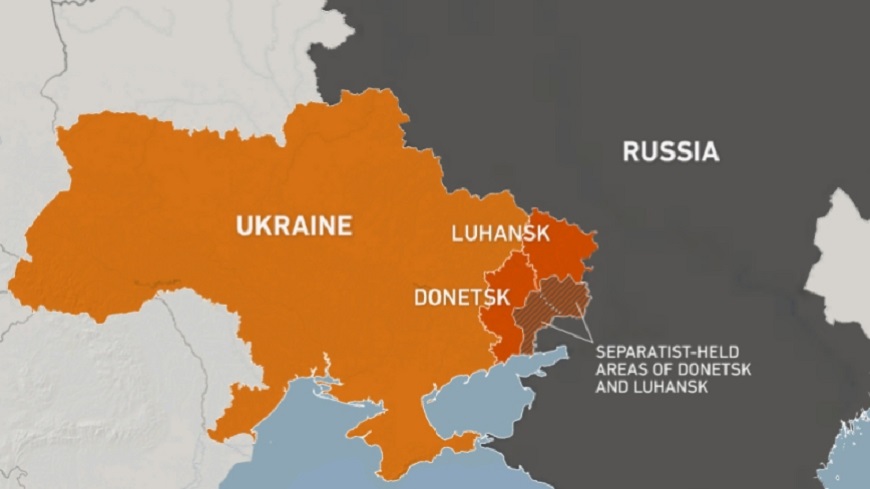
On February 24, 2022, Russia invaded its European neighbour after Ukraine failed to back down on its plans to join the North Atlantic Treaty Organization (NATO), with the United States as one of its members.
During yesterday’s gathering, the President called for greater consideration for humanitarian conditions in the affected areas in the ongoing crisis, warning that the conflict will get worse if an immediate resolution is not found.
“The war has lasted too long, cost so much and hurt too many people, well beyond the immediate theatres.
“The rest of the world is progressively facing the impact of the conflict and this will certainly get worse, if an immediate resolution is not found, not least in the area of food security,” he said.
President Buhari welcomed the recent initiative of UN Secretary-General, Mr Antonio Gutteres, of visiting Moscow and Kyiv, commending his efforts in search of a ceasefire, as a prelude to other enduring solutions.
“The United Nations must continue to actively lead the way for engagements that could ultimately unlock peace through diplomacy, Mr Buhari said.
He also used the occasion to caution against foreign interference in the forthcoming elections, saying, “As you are all aware, the tenure of this administration ends on May 29, 2023.
“Typical of election years all over the world, the tempo of political activities is often high. That is the nature of democracy. I am committed to bequeathing a stronger culture of credible elections to Nigeria than I met.
“As Nigeria goes through this trajectory, I urge our friends in the global community, represented by you the Diplomatic Corps, to adopt a positive role that reinforces the doctrine of respect for our internal affairs and respect for facts and devoid of preconceived notions and bias,” he said.
President Buhari also warned those planning to rig the 2023 general elections to perish the thought, vowing to use every legitimate means to protect the votes of Nigerians.
“Those planning to rig the forthcoming elections should think twice because I intend to resolutely protect and defend the sacred will of the Nigerian people, to be expressed through the ballot box,” he declared.
He also lamented the bitter impact of the Libyan crisis on the countries in the Sahel, Lake Chad Basin, and West and Central Africa is still enormous and catastrophic.
“The world needs to work together to combat these common challenges and I call on all your respective countries to reflect on this and collaborate with countries in these regions to combat this consequential spread of violence,” he said.
In his remarks, the Dean of the Diplomatic Corps and High Commissioner of Cameroon to Nigeria, Mr Ibrahima Salaheddine, pledged that the international community would continue to support Nigeria before, during and after the forthcoming general elections.
“As Nigeria enters another electoral year, we pray Almighty Allah to put the electoral process under divine guidance for peaceful, free and fair elections,” he said.
General
Nnaji Expresses Worry Over Lack of Power Plant Financing
By Adedapo Adesanya
Former Minister of Power, Mr Barth Nnaji, has run to the rooftop to declare that Nigeria has not secured financing for any major power plant in more than a decade, blaming policy reversals and weak government commitment for the prolonged investment drought.
Speaking at the Nigerian Association for Energy Economics conference in Lagos, Mr Nnaji said the country’s power sector lost momentum after a promising financing framework introduced under his watch was abandoned following a change in administration.
According to him, the partial risk guarantee instrument developed jointly with former Finance Minister, Mrs Ngozi Okonjo-Iweala, had begun attracting international investors by reducing the risks associated with power projects in Nigeria.
“The world was galloping to us to finance power plants because we were getting a service guarantee,” he said, noting that the framework helped secure funding for the Azura-Edo Power Station, one of Nigeria’s most significant independent power projects.
However, he said the policy was scrapped after the administration changed, abruptly halting investor interest.
“Till today, we have not financed any new major power plant in Nigeria. That’s about 11 years ago,” he said.
Mr Nnaji argued that policy inconsistency remains one of the biggest obstacles to power sector growth, without clear, stable and bankable policies.
He said Nigeria will continue to struggle to attract the long-term capital required for large-scale electricity projects.
He also urged Nigeria to adopt a pragmatic approach to energy transition, stressing that natural gas should remain the backbone of the country’s power strategy. With more than 210 trillion cubic feet of proven gas reserves, he said Nigeria is well-positioned to use gas as a bridge fuel for industrialisation and economic growth over the next two decades.
Yet, despite these vast reserves, inadequate infrastructure continues to constrain supply.
Mr Nnaji noted that the Nigeria LNG Limited is operating at only about 60 per cent of capacity due to insufficient gas availability, highlighting the urgent need for greater investment in gas production, processing and transportation.
He also cited the long-delayed Mambilla Hydroelectric Power Station as a symbol of Nigeria’s execution failures. Although technically viable, the project has remained on the drawing board for more than 40 years because of weak political will and inconsistent implementation.
He noted that Nigeria’s power challenge is not a lack of resources but a failure of execution. With an installed generation capacity of about 13,000 megawatts, the country still produces only 4,000 to 5,000 megawatts on average. Until policy becomes consistent and infrastructure investment accelerates, reliable electricity will remain frustratingly out of reach for millions of Nigerians.
General
Terra Industries Unveils Defence Drones, Robots to Support Nigerian Military
By Adedapo Adesanya
Nigeria-backed startup Terra Industries has launched drones and mine-clearing robots for the country’s military use to fight Islamic militants and reduce reliance on imported defence equipment.
The startup on Monday unveiled interceptor drones, mine-clearing unmanned vehicles and battlefield intelligence software that officials said could help troops confronting insurgents who have increasingly used roadside bombs and drones in recent attacks.
The launch shows a growing effort by Nigeria to reduce dependence on imported military hardware and build domestic defence manufacturing capacity, after years of buying aircraft, armoured vehicles and surveillance systems from countries including China, Turkey, Pakistan and the United States.
However, procurement delays, maintenance bottlenecks and rising foreign exchange costs have strengthened the case for local production, with Terra Industries among the first of such beneficiaries.
Terra Industries had previously focused on civilian drones and security technology before expanding into defence systems. In February, it signed a pact with Defence Industries Corporation of Nigeria (DICON) as part of efforts to boost the country’s defence industrial capacity and advance indigenous high-technology development.
“We are unveiling new defence systems such as our interceptor UAVs, our minesweepers, ground vehicles that can detect IEDs on the ground, and our battlefield intelligence software,” according to Mr Nathan Nwachukwu, the chief executive officer of the firm.
The need for security has risen in recent years, as groups such as Islamic State and al-Qaeda are gaining ground in Africa, converging along a swathe of territory that stretches from Mali to Nigeria, which is also battling with Boko Haram and other cells which remain active despite repeated military offensives.
Militants have stepped up attacks against army positions using improvised explosive devices (IEDs) and drones, forcing armies to invest in counter-drone systems, electronic warfare and autonomous ground equipment.
Major General Babatunde Alaya, head of the state-owned DICON, said collaboration with Terra Industries was necessary, given troop casualties caused by hidden explosives and roadside bombs.
DICON has long been central to Nigeria’s ambition to produce more of its own defence equipment, but progress has historically been slow. Partnerships with private firms are increasingly seen as a faster route to innovation and scale.
Terra Industries, which is valued at $100 million, has also announced plans to expand beyond Nigeria, including a manufacturing facility in Ghana, signalling ambitions to serve a wider African market and position itself in the region’s growing security technology industry.
General
Tinubu Tasks Ambassadors to Attract Foreign Investment
By Adedapo Adesanya
President Bola Tinubu has charged Nigeria’s newly appointed ambassadors and high commissioners to help pursue foreign investments from their designated countries, charging them to strengthen strategic partnerships and reposition the country’s global image in line with evolving diplomatic realities.
This is contained in a statement by Mr Yomi Odunuga, Special Adviser on Media and Publicity to the Secretary to the Government of the Federation (SGF), Mr George Akume.
According to Mr Odunuga, the President, represented by the SGF, gave the charge at the opening of an induction course for the envoys in Abuja.
The President said that the appointments of the envoys reflected the administration’s confidence in their capacity to advance Nigeria’s interests on the international stage.
He noted that the global system was undergoing rapid transformation driven by shifting geopolitical dynamics, economic uncertainties, technological disruptions, climate challenges and emerging security threats.
He added that the developments had made the role of diplomats more critical than ever.
”The international system is evolving rapidly. We must be prepared to meet these challenges by focusing on how best to protect and promote Nigeria’s national interest,” he said.
President Tinubu urged the envoys to adopt a modern, results-oriented approach to diplomacy by combining traditional methods with digital engagement, public diplomacy and strategic communication.
He underscored the importance of telling Nigeria’s story in a compelling and credible manner while projecting the achievements of his administration, also calling on them to be proactive and innovative in fostering partnerships, promoting trade and attracting foreign direct investment and technology to Nigeria.
According to him, safeguarding the welfare of Nigerians in the diaspora must remain a top priority.
He also announced a reordering of Nigeria’s foreign policy framework, known as the 4D Doctrine.
He said that the doctrine, originally anchored on Democracy, Development, Demography and Diaspora, had now been rearranged to Demography, Development, Diaspora and Democracy.
According to him, the adjustment places Nigerians at the centre of foreign policy and is aimed at ensuring that international engagements deliver tangible benefits to citizens.
The president further stressed the need for professionalism, integrity and patriotism in the conduct of diplomatic duties, reminding the envoys that they serve not only as government representatives, but also as custodians of the country’s image abroad.
He also emphasised accountability, urging missions to be result-driven, prudent in resource management and guided by clear, measurable goals that would contribute to economic growth and national development.
He encouraged the participants to fully engage in the induction programme, noting that it was designed to equip them with the knowledge and skills required for effective diplomatic service in a rapidly changing world.
He commended the National Assembly for the swift confirmation of the nominees and urged the envoys to justify the confidence reposed in them.” You have a special responsibility in helping to reposition Nigeria in global affairs. The world is watching,” he said.
-
Feature/OPED6 years agoDavos was Different this year
-
Travel/Tourism10 years ago
Lagos Seals Western Lodge Hotel In Ikorodu
-
Showbiz3 years agoEstranged Lover Releases Videos of Empress Njamah Bathing
-
Banking8 years agoSort Codes of GTBank Branches in Nigeria
-
Economy3 years agoSubsidy Removal: CNG at N130 Per Litre Cheaper Than Petrol—IPMAN
-
Banking3 years agoSort Codes of UBA Branches in Nigeria
-
Banking3 years agoFirst Bank Announces Planned Downtime
-
Sports3 years agoHighest Paid Nigerian Footballer – How Much Do Nigerian Footballers Earn