
General
SERAP Tells Tinubu to Probe Ecological Funds Collected Since 2001

By Adedapo Adesanya
The recent flood in Nigeria has once again spurred the Socio-Economic Rights and Accountability Project (SERAP) to call on President Bola Tinubu to investigate the spending of the billions of Naira of Ecological Fund collected by Borno State since 2001.
The group also demands the probe of the N816 million collected by the state between January 2024 and June 2024.
Business Post reports that in 2022, following the expiry of an ultimatum given to the administration of former President Muhammadu Buhari to probe the missing ecological funds at all levels, the group filed a lawsuit against the federal government.
Now, it is calling on President Tinubu to direct the Attorney General of the Federation and Minister of Justice, Mr Lateef Fagbemi and appropriate anti-corruption agencies to look into the matter.
SERAP said suspected perpetrators of allegations of corruption and mismanagement of ecological funds should face prosecution as appropriate, if there is sufficient admissible evidence, and any proceeds of corruption should be fully recovered.
In the letter signed by SERAP deputy director Kolawole Oluwadare, the organisation said: “Your government has a legal obligation to address the prevalence of flooding across the country and its effect on people, and to ensure that the money meant to stop the floods is not lost to corruption.”
The letter, read in part: “The devastation in Borno highlights your government’s obligation to promote and ensure transparency and accountability in the spending of ecological funds by all tiers of government and emergency management agencies.”
“We would be grateful if the recommended measures are taken within seven days of the receipt and/or publication of this letter.
“If we have not heard from you by then, SERAP shall consider appropriate legal actions to compel your government to comply with our request in the public interest.”
“Your government has legal obligations to ensure the protection of the rights of flood victims in Borno and elsewhere in the country.”



By Adedapo Adesanya
Justice Emeka Nwite of the Federal High Court in Abuja has affirmed the final forfeiture of $13 million linked to a Lagos socialite, Ms Aisha Achimugu, and her company, Oceangate Engineering Oil & Gas Limited, to the federal government of Nigeria.
Delivering judgment, Justice Nwite held that the Economic and Financial Crimes Commission (EFCC) established that the foreign currency was proceeds of fraud and unlawful activities.
The judge further held that Oceangate Engineering Oil & Gas Limited failed to establish how it came by the money, saying the anti-money laundering agency satisfied all requirements for the funds to be classified as proceeds of fraud and to be forfeited to the appropriate authority.
He dismissed the claims that the $13 million was gifts received into the Oceangate Engineering Company by Ms Achimugu, adding that the woman never came to the court to show cause why the huge amount of money should not be forfeited to the government.
He held that no single person who gave the monetary gift to Aisha Achimugu to the tune of $13 million was called to testify.
The judge further held that the burden to establish genuine ownership of the money was not established by the applicant to counter the claims of the anti- graft agency that the money was the proceeds of fraud based on its investigation.
According to the judge, Oceangate Engineering Company did not show the business it undertook that fetched it the money, nor did it show whether any payment was made to it by any of its customers.
Justice Nwite had, on August 22, 2025, granted the anti-graft agency’s motion ex parte for an interim order forfeiting the sum of $13 million linked to Oceangate Ltd to the Federal Government over allegations that the fund was proceeds of unlawful activity.
The judge had then directed the commission to publish the order in a national daily for interested people to show cause within 14 days why the fund should not be permanently forfeited to the federal government.
By Adedapo Adesanya
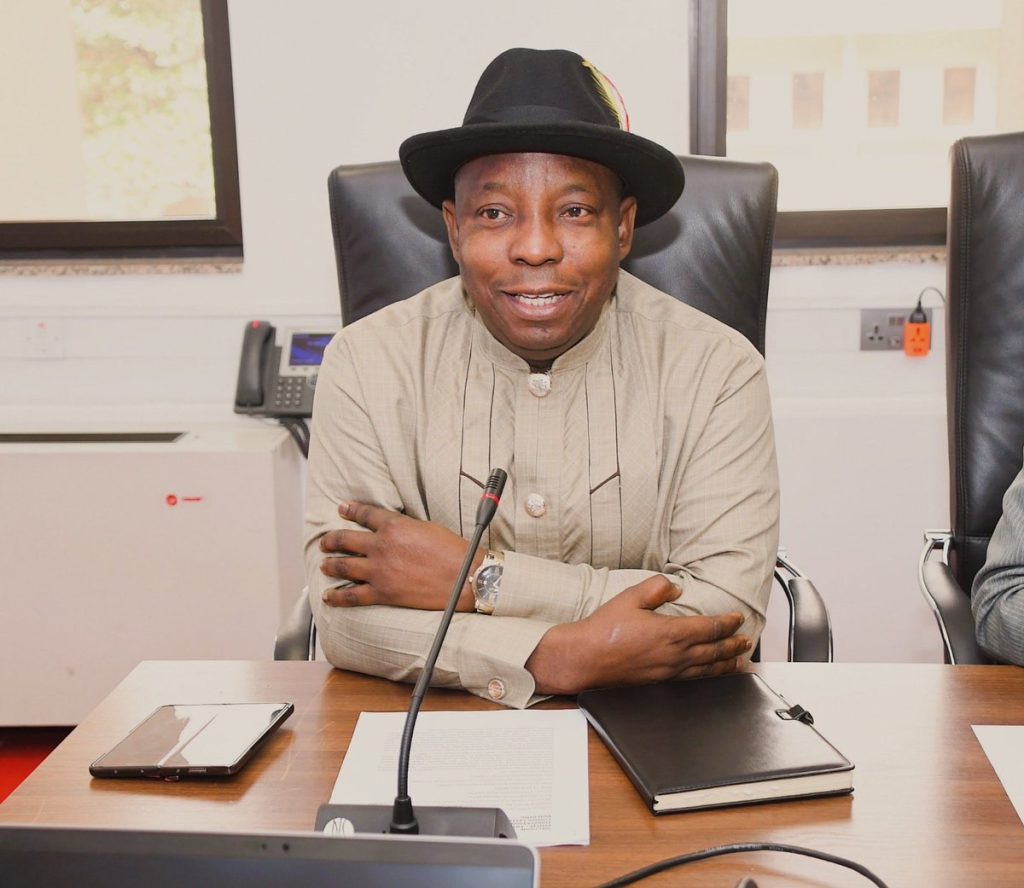
The federal government has inaugurated a 17-member Planning Committee to coordinate the National Flag-Off of the Energise Commercialisation Now (ECoN) Initiative, a flagship programme aimed at transforming research outputs into economic value.
Speaking at the inauguration in Abuja, the Permanent Secretary of the Ministry of Innovation, Science and Technology, Mr Philip Ndiomu Ebiogeh, described the initiative as a strategic intervention to convert Nigeria’s vast research and innovation outputs into market-ready products, scalable enterprises, and job-creating opportunities.
He noted that ECoN will mobilise stakeholders nationwide to identify bankable innovations and accelerate their transition from laboratories to the marketplace, stressing that the country must move beyond theoretical research to practical solutions that drive industrial growth and national prosperity.
The Permanent Secretary disclosed that the Minister of Innovation, Science and Technology, Mr Kingsley Tochukwu Udeh, had earlier briefed the First Lady, Mrs Oluremi Tinubu, on the initiative and proposed her as a champion of the programme, with the national flag-off scheduled for Kano State.
He explained that Kano was deliberately selected due to its historic role as a commercial and industrial hub, offering strong potential to attract investment, stimulate enterprise, and create jobs.
The Committee is chaired by the Minister, with the Permanent Secretary as Co-Chairman, while the Director-General, National Biotechnology Research and Development Agency, NBRDA, and the Director-General, Sheda Science and Technology Complex, SHESTCO, serve as Alternate Chairmen.
Members include Professor Nnayelugo Ike-Muonso, Dr Kazeem Kolawole Raji, Dr Jummai Adamu, Dr (Mrs) Obiageli Amadiobi, Dr Kabiru Mu’azu, Dr Anwal Mustapha, Engr Ibiam Oguejiofo, Mr Moses Fatogun, Mr Adamu Sulaiman (a representative of SMEDAN), Dr Prince Lawrence Eze, Mr Sani Garba, Dr Muhammad Mustapha, Dr Chioma Okeke, Mr Luther Onyemkpa, Mr Charles Egumgbe, and Dr Nwankwo Nnenna serving as Secretary.
The national flag-off is proposed for late April or early May 2026, subject to Presidential approval.
The Ministry reaffirmed its commitment to positioning innovation as a key driver of economic diversification and sustainable development, in line with President Bola Tinubu’s Renewed Hope Agenda.
By Adedapo Adesanya
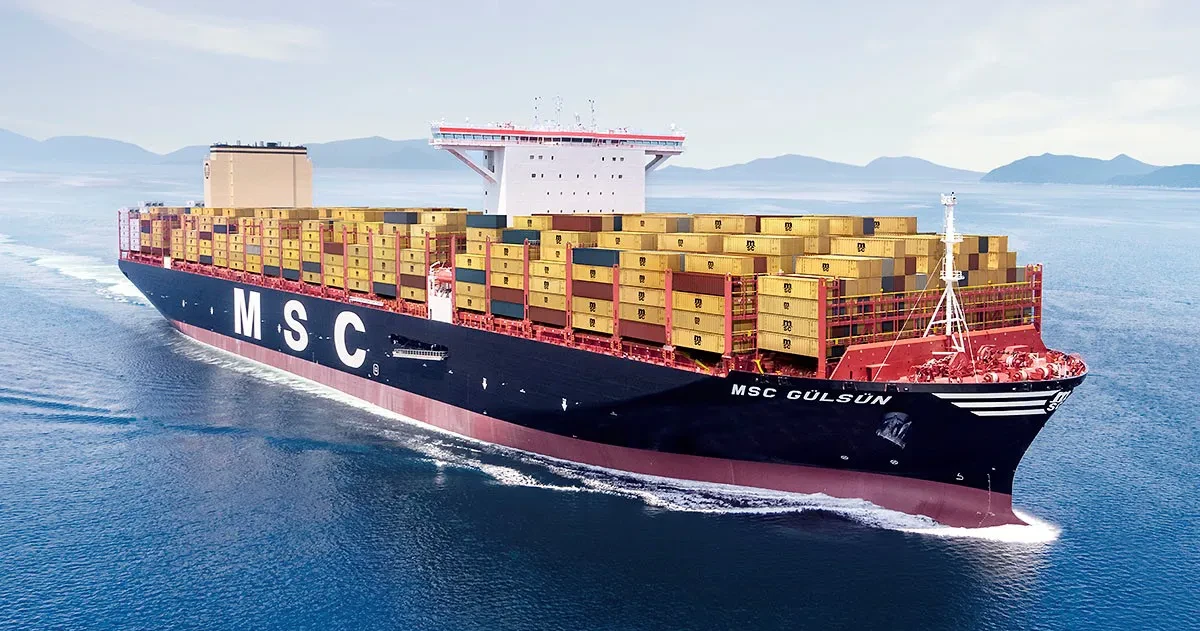
Switzerland-headquartered global shipping giant, Mediterranean Shipping Company (MSC), has complied with the directive of the Nigerian Shippers’ Council (NSC) to suspend the implementation of its new tariff pending consultations with stakeholders.
In a customer advisory titled Temporary Suspension of New Tariff Implementation, the shipping line stated that the tariff regime in place before the recent increase would remain effective until further notice.
Business Post reported a few days ago that freight forwarders picketed the offices of MSC, protesting the recent increase in shipping line tariffs. They blocked the regulators from accessing the MSC premises to address the matter.
Despite the protests, the council’s attempt to engage the aggrieved freight forwarders in discussions was resisted, as the protesters insisted that there was no basis for dialogue and vowed to continue the protest until the increased charges were immediately reversed.
In the latest directive, the shipping company said, “We wish to inform our esteemed customers that the recently implemented tariff adjustment has been temporarily suspended, following a directive from the NSC. This suspension is pending the conclusion of ongoing engagements and resolution with the regulator.”
“Accordingly, the tariff regime applicable prior to the recent increase will remain in force until further notice, as mandated.”
The company further assured customers that updates would be communicated once a final decision is reached by the Nigerian Shippers’ Council.
“We remain fully committed to regulatory compliance, transparency, and protecting the interests of our customers. Further updates will be communicated promptly once a definitive position is issued by the Nigerian Shippers’ Council. We appreciate your understanding and continued cooperation,” the advisory added.
NSC had warned that prolonged industrial disputes within the maritime sector could disrupt port operations and negatively impact trade and economic activities.





-
 Feature/OPED6 years ago
Davos was Different this year
-
Travel/Tourism10 years ago
Lagos Seals Western Lodge Hotel In Ikorodu
-

 Showbiz3 years ago
Estranged Lover Releases Videos of Empress Njamah Bathing
-
 Banking8 years ago
Sort Codes of GTBank Branches in Nigeria
-

 Economy3 years ago
Subsidy Removal: CNG at N130 Per Litre Cheaper Than Petrol—IPMAN
-

 Banking3 years ago
Sort Codes of UBA Branches in Nigeria
-

 Banking3 years ago
First Bank Announces Planned Downtime
-

 Sports3 years ago
Highest Paid Nigerian Footballer – How Much Do Nigerian Footballers Earn