
General
SERAP to Block Use of N17trn Pension Funds by Governors

By Modupe Gbadeyanka
The plan by the 36 state governors to borrow N17 trillion from the pension funds is not going down well with the Socio-Economic Rights and Accountability Project (SERAP).
The group has now written an open letter to President Muhammadu Buhari to block this move, arguing that this would be “detrimental to the interest of the beneficiaries of the funds, especially given the vulnerability of pension funds to corruption in Nigeria, and the transparency and accountability deficits in several states.”
In a letter dated December 5, 2020, SERAP, through its deputy director, Mr Kolawole Oluwadare, described this proposed plan by the governors as “patently unjust and contrary to the letter and spirit of the Nigerian Constitution 1999 [as amended] and the Pension Reform Act.
According to the organisation, “This proposed borrowing faces the risks of corruption and mismanagement, and would ultimately deny pensioners the right to an adequate standard of living and trap more pensioners in poverty.”
“Rather than devising ways to address pensioner poverty, governments at all levels would seem to be pushing to exacerbate it,” the letter said.
SERAP, which copied the Attorney General of the Federation and Minister of Justice, Mr Abubakar Malami, expressed “serious concerns that the proposed borrowing by the 36 state governors from the pension funds would lead to serious losses of retirement savings of millions of Nigerians.”
According to the group, “Many state governors have repeatedly failed to pay workers’ salaries and pensions; several states are failing to pay contributory pension.
“Therefore, allowing state governors to collect a windfall of pension funds at the expense of pensioners who continue to be denied the fruit of their labour would amount to double jeopardy.”
“Fiduciary duties require public officers to ensure that pension funds are managed solely and exclusively for the benefit of pensioners, and to consider the socio-economic and human rights impact of pension investment decisions on the intended beneficiaries,” it added.
SERAP said President Buhari must urgently instruct the Director-General and board of the National Pension Commission (NPC) to stop this move because “it would also be very difficult to hold state governors to account for the spending of pension funds, as states have persistently failed to account for the spending of public funds including security votes.”
“Transparency is a key instrument in the spending of any pension fund investment, as it is necessary to ensure the accountability of the funds. However, several states routinely claim that the Freedom of Information Act is not applicable within their states.”
“Pension funds should not be used to make up for the failure of governments at all levels to cut the cost of governance, and the persistent refusal to reduce wastage and corruption in MDAs, as well as failure to obey court orders to recover life pensions collected by former governors and their deputies, and public funds collected by corrupt electricity contractors who disappeared with the money without executing any power projects,” the group submitted.
Recall that recently, the Governor of Kaduna State, Mr Nasir el-Rufai, who is the Chairman of the National Economic Council Ad Hoc Committee on Leveraging Portion of Accumulated Pension Funds for Investment in the Nigeria Sovereign Investment Authority (NSIA), stated that N17 trillion could be sourced from the pension funds for projects in the states.






By Dipo Olowookere
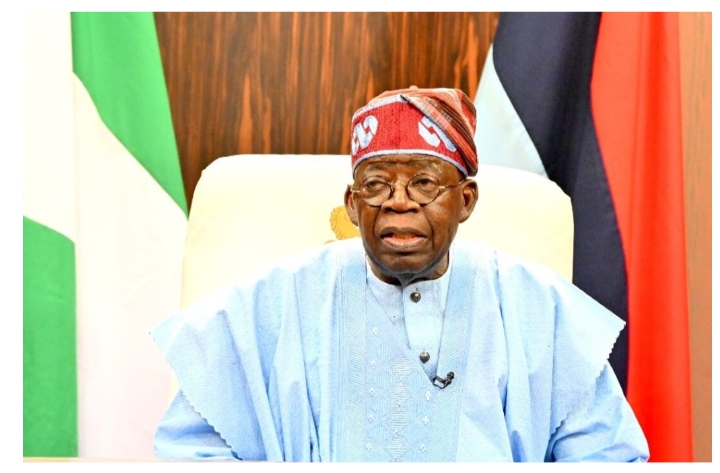
The Accountant-General of the Federation has been directed by President Bola Tinubu to create a special account for a support fund dedicated to members of Nigeria’s Armed Forces.
A statement on Sunday night by the Special Adviser to the President on Information and Strategy, Mr Bayo Onanuga, disclosed that funds from the account would be used to support those wounded in the line of duty, and the families of fallen heroes.
Already, as a personal commitment, Mr Tinubu has pledged to contribute all his salaries since assuming office as seed funding for the initiative, reinforcing his resolve to ensure that those who have borne the cost of Nigeria’s peace and security are not forgotten.
According to the statement last night, the establishment of this dedicated fund is to commemorate the 74th birthday of the President and to honour the courage, sacrifice, and service of the nation’s military personnel.
He urged state governors, members of the National Assembly, the private sector, his friends, and well-wishers to support the initiative, noting that details of the fund will be made available in due course.
President Tinubu noted that “supporting members of the Armed Forces and their families is not an act of charity, but a duty that all must fulfil.”
He stressed that the initiative was rooted in a solemn national obligation to care for those who stand in harm’s way and the families who carry the burden of their sacrifice, irrespective of insurance programmes available to members of the armed forces.
“The President reaffirmed his administration’s commitment to strengthening the welfare of military personnel and ensuring that their service to the nation is matched with dignity, care, and sustained support,” the statement concluded.

By Adedapo Adesanya
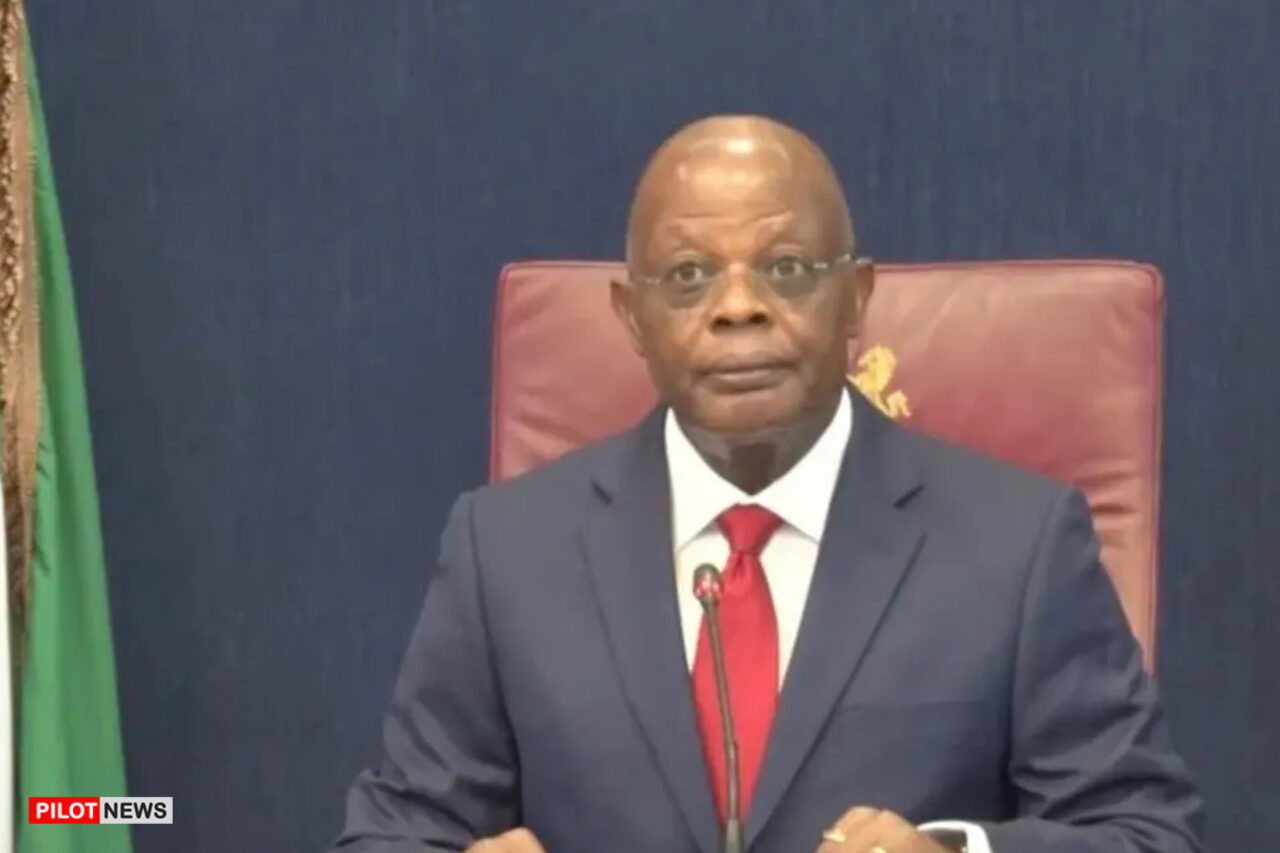
The Socio-Economic Rights and Accountability Project (SERAP) has demanded transparency and accountability regarding the six-month administration of the Rivers State sole administrator, Mr Ibok-Ete Ibas.
The group has asked questions regarding an alleged spending of over N302 billion received from the Federation Account Allocation Committee (FAAC) during the period. Rivers State was under an emergency rule from March to September 2025.
In a Sunday statement published on its official website, the group disclosed that the Rivers State Accountant-General and the Ministry of Budget and Economic Planning told the Rivers State High Court sitting in Port Harcourt how Mr Ibas allegedly spent over N302 billion received from the FAAC between March and August 2025.
The statement signed by SERAP deputy director, Mr Kolawole Oluwadare, disclosed that the allegation was contained in a lawsuit titled Freedom of Information, with suit number PHC/4153/CS/2025.
Mr Oludare further disclosed that the lawsuit was filed by SERAP on October 31, 2025, against the Accountant-General of Rivers State and Rivers State Ministry of Budget and Economic Planning, and is pending before Justice S.H. Aprioku of the Rivers State High Court.
In the counter-affidavit dated March 10, 2026 and filed in response to SERAP’s lawsuit, the Accountant-General and the Ministry of Budget and Economic Planning stated that “the FAAC allocations received by Rivers state between March and August 2025 were over N253 billion (N253,480,052,907.33)”
According to SERAP, Exhibit DT1, which is the bank statements, and Exhibit DT2, which is the capital pages of the Government House estimate, filed in support of the counter-affidavit and comprising 49 pages, provide some details of government expenditures exceeding N300 billion, including FAAC allocations and other funds.
The counter-affidavit, read in part, “Our records show that N28 billion was approved for the installation of Closed Circuit Television (CCTV) at the State House, but no expenditure was incurred in respect of the project. Therefore, no document evidencing such expenditure can be provided.”
“The Defendants/Respondents do not contest SERAP’s right to access information under the Freedom of Information Act and have no intention whatsoever of withholding the requested documents.”
“The Defendants/Respondents have now compiled and made available the requested information in accordance with the provisions of the Freedom of Information Act, and copies are herein attached as Exhibit DTI (bank statements) and Exhibit DT2 (capital pages of the Government House estimate).”
“By furnishing the documents requested, the Defendants/Respondents have substantially complied with SERAP’s demand.”
“While the Defendants/Respondents recognise the public interest in transparency and accountability, the delay in providing the requested information did not occasion any specific or proven injury to SERAP.”
According to the group, Rivers State received FAAC inflows of over N253.48 billion (N253,480,052,907.33) and other receipts totalling over N44.87 billion (N44,868,976,368.32) from March to August 2025, bringing the total funds received to approximately N298.35 billion (N298,349,029,275.65).”
“The two exhibits also show transfers to government entities, payments to individuals (NIP transfers), and repeated transfers to Government House during the period from March to August 2025. In total, over N302.35 billion was shown to have been spent during this period.”
“The exhibits reveal multiple payments to Government House ranging from N1.8 million to N4.27 billion, including transactions of N61.9 million, N122 million, N170 million, N389 million, N750 million, N850 million, and N900 million—with the N900 million payments occurring repeatedly. Notably, a single transfer of N4.27 billion was recorded in August.”
“Over N112.41 billion (N112,408,021,641.07) was reportedly spent on salaries, pensions, and overheads, while N163.44 billion (N163,441,654,922.70) was allocated to ministries, departments, and agencies (MDAs).”
“Over N106 billion of the N163.44 billion allocated to MDAs was disbursed in August alone, showing a significant concentration of spending within a single month.”
“Additionally, over N26.01 billion (N26,011,189,540.73) was reportedly spent to service loans, while over N491.59 million (N491,592,418.57) was spent on bank charges, bringing these to approximately N26.50 billion (N26,502,781,959.30) during the same period.”
“Over N2.5 billion was released for the construction of Government House quarters, but only about N1.1 billion is reflected in the exhibits as actual spending. The exhibits show a revised allocation of N2.67 billion for office building repairs, while about N404 million was spent.”
“N350 million is stated to be allocated for canteen and kitchen equipment. It is unclear from the exhibits how much was released for the project. Over N463 million was shown to be spent on rehabilitation projects. A project initially budgeted at N800 million appeared to be increased to N1.56 billion.”
“The closing balance in the account as at August 2025 was N19,929,707,462.66.”
In the lawsuit, SERAP is seeking the determination of the following question, “Whether, having regard to the combined provisions of Sections 13, 15(5), 16(2), and 39 of the Nigerian Constitution 1999 (as amended) and Sections 1(1), 2(3)(d)(v), 2(4), and 4(a) of the Freedom of Information Act, 2011, SERAP is not entitled to access and obtain the information sought from the Defendants/Respondents.”
The lawsuit has been adjourned to May 19, 2026, for further hearing.
By Modupe Gbadeyanka
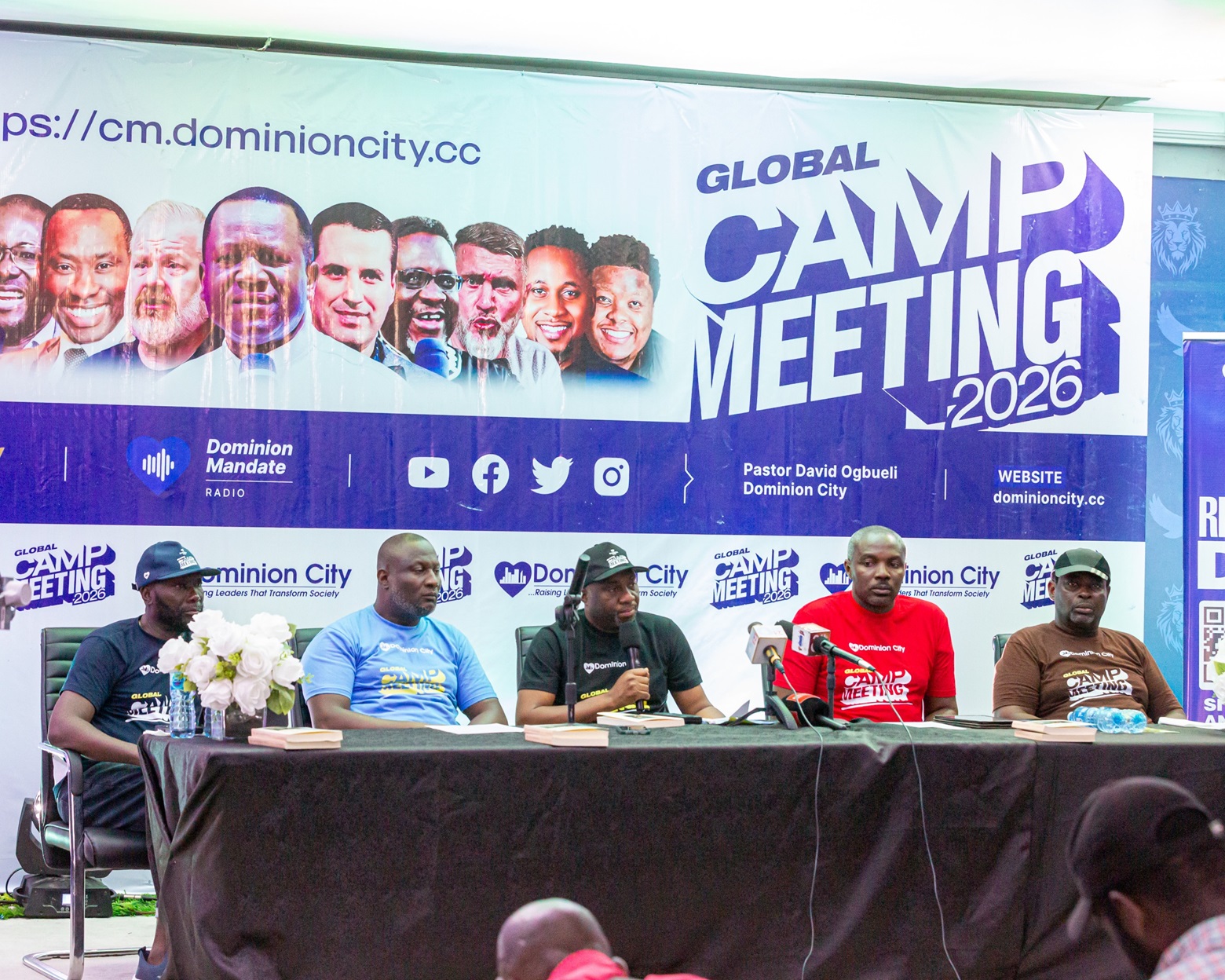
The 2026 Global Camp Meeting of Dominion City, tagged Redigging the Wells of Our Fathers, will commence on Wednesday, April 1 and end on Monday, April 6, with the daily sessions at 8 am and 5 pm.
A statement from the church disclosed that the spiritual programme will take place simultaneously in Lagos and Enugu, with over 30,000 persons expected to attend, with free transportation provided from designated locations across Lagos to ease access.
To ensure safety and order, more than 200 traffic marshals will be deployed in collaboration with relevant authorities.
In addition, free medical services will be offered daily, building on previous outreaches that benefited over 1,700 people.
It was further revealed that the 2 Nights of Glory would take place on Friday, April 3, and Saturday, April 4, at the Golden Heart Place on Km 22, Lekki-Epe Expressway, beside Lagos Business School, Ajah, Lagos.
The conference will centre on revival, spiritual renewal, and practical teachings by notable ministers of God, including Pastor David Ogbueli, Pastor Charles Ndifon, Pastor Andres Bisonni, Pastor Randy Mitchell, Apostle Ikechukwu Peter Nnajiofor, Dr Ferdinand Nweke, Apostle Ben Hanyani Ndobe, Evangelist Dan Scott, and Dr Chiefo Ejiofobiri.
Music ministrations will also be led by notable gospel artists such as Grace Idowu, Rhema Onuoha, Once More Six, David Nkennor, Anthony Kani, and GUC.
Speaking ahead of the event, the President of Golden Heart Foundation and Senior Pastor, DC Lagos and Europe, Nobbert Onaga, emphasised the need for moral reawakening as a pathway to national transformation, describing the church as “the pillar and foundation of truth,” noting that the conference aims to confront moral decline and restore core values within society.
“We are going back to foundational truths that established the Church. These truths will help repair societal damage and reposition the Church as a source of hope and light,” Onaga added.
Also speaking, the Senior Pastor of Dominion City Headquarters, Shola Olapade, highlighted the church’s role in addressing ethical and cultural challenges, particularly among young people.
He noted that the programme would go beyond spiritual teachings to include sessions on artificial intelligence, innovation, business, media, arts, and career development, stating that, “We are equipping people not just spiritually, but with relevant 21st-century skills to thrive in today’s world.”






-
 Feature/OPED6 years ago
Davos was Different this year
-
Travel/Tourism10 years ago
Lagos Seals Western Lodge Hotel In Ikorodu
-

 Showbiz3 years ago
Estranged Lover Releases Videos of Empress Njamah Bathing
-
 Banking8 years ago
Sort Codes of GTBank Branches in Nigeria
-

 Economy3 years ago
Subsidy Removal: CNG at N130 Per Litre Cheaper Than Petrol—IPMAN
-

 Banking3 years ago
Sort Codes of UBA Branches in Nigeria
-

 Banking3 years ago
First Bank Announces Planned Downtime
-

 Sports3 years ago
Highest Paid Nigerian Footballer – How Much Do Nigerian Footballers Earn