Connect with us

General

The Most Popular Luxury Safari Destinations in Africa

Published

on

Luxury Safari

Before venturing on their first African luxury safari, most people might wonder whether the trip is any different from a regular visit to a local zoo.

After all, seeing a lion, elephant or any other animal in captivity is the same as seeing it in the jungle right? Wrong.

There is an energy that can only be experienced when you witness these magnificent beasts in their natural environment.

As they roam the wilds, the animals are in their true element and their raw power is on display for all to see.

The best African luxury safaris are a chance to witness the cycle of life first-hand, as predator and prey engage in a life and death dance in the vast and picturesque savannah.

For instance, on an all-inclusive safari to the Maasai Mara, you get front-row seating to the eighth natural wonder of the modern world- the Maasai Mara annual wildebeest migration.

It is one of nature’s most awe-inspiring events, bringing together more than two million wild animals; as they make a dramatic exodus from the Serengeti in Tanzania to the Maasai Mara savannah in Kenya.

Luxury African vacations may also include walking safaris which bring you up close and personal with the wildlife. During the entire excursion, you will have a native tour guide directing you on which areas are safe to visit.

Below are some of the top African luxury safari destinations which offer you a chance to not only reconnect with nature but also learn more about some rare wildlife species.

  1. Maasai Mara Game Reserve

The Maasai Mara Game Reserve is an iconic park that gave rise to the modern African luxury safari as we know it.

The expansive reserve is renowned for its abundant wildlife populations, with more than 90 animal species and over 400 bird species calling the park home.

Among the popular attractions are the Big Five (African lion, elephant, Cape buffalo, leopard, and rhino).

These are complemented by affluent populations of other creatures such as cheetah, hyena, wildebeest, giraffe, crocodile, Thompson’s gazelle, giraffe, and grevy’s zebra.
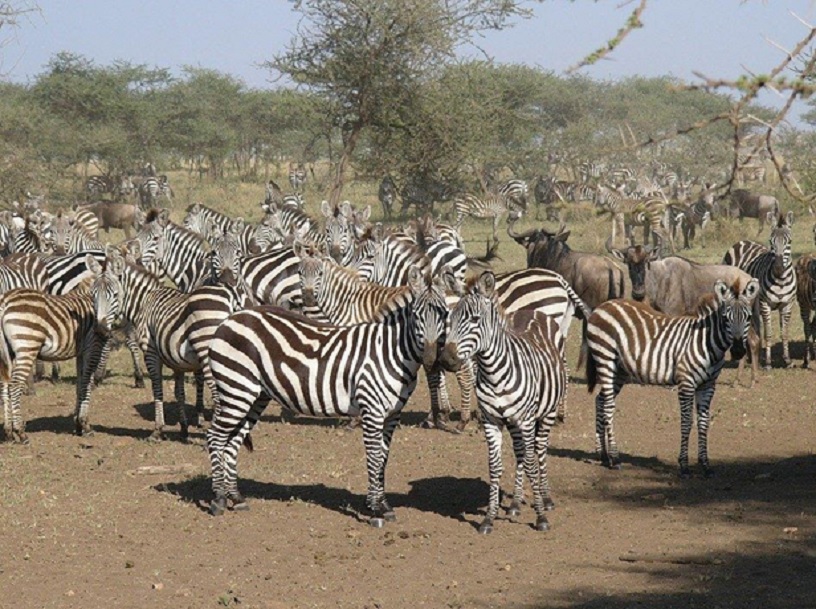
Luxury Safari Destinations

During your luxury African safari vacation, you may either opt to jet into the Mara from Kenya’s capital Nairobi, or take a 6-hour scenic road trip.

Save for visitors who wish to get to the Mara in a hurry, a road trip comes highly recommended, as you will be able to view the Great Rift Valley along the way.

As visitors on a luxury trip, you can rest assured that the safari vehicles you will be using are ultra-comfortable 4×4 Toyota Land Cruisers. Those on a budget can use off-road vehicles such as the Toyota Prado, Nisan X Trail, Toyota Rush, Mazda CX 5 and others.

Also, where accommodation is concerned, the Mara has some of the best hotels in African safari. These include luxury camps and lodges, ranging from 3-star to 5-star establishments.

Among the most exciting activities you will enjoy on this most luxurious African safari are hot air balloon rides, games drives, camping safaris, and walking safaris.

  1. Diani beach

Drop down and unwind at the Kenyan coast in style and soak up some sun on the sands of Diani beach.

It is one of the numerous beaches you find along Kenya’s magnificent coastline. Diani beach has won several international accolades, including some hard-won titles from the prestigious World Travel Awards.

As a result, it is one of the top beach destinations globally, with pristine waters, white sands, and plenty of interesting activities under its belt.

An all-inclusive safari to Diani beach opens up loads of fun opportunities for you and your loved ones.

These include sky diving tours, dolphin watching safaris, swimming with dolphins, deep-sea fishing, snorkelling, scuba diving, romantic dhow rides at sunset, swimming, and kitesurfing excursions.

  1. Lake Nakuru National park

For the discerning visitor seeking the best African luxury safari, Lake Nakuru National park is another excellent choice.

The park renders a perfect balance between wildlife viewing and scenic lake views.

That is because the alkaline lake is also a favourite feeding spot for flocks of flamingos throughout the year.

The shores of the lake are therefore always adorned in a beautiful pink colour owing to the presence of these gorgeous birds.
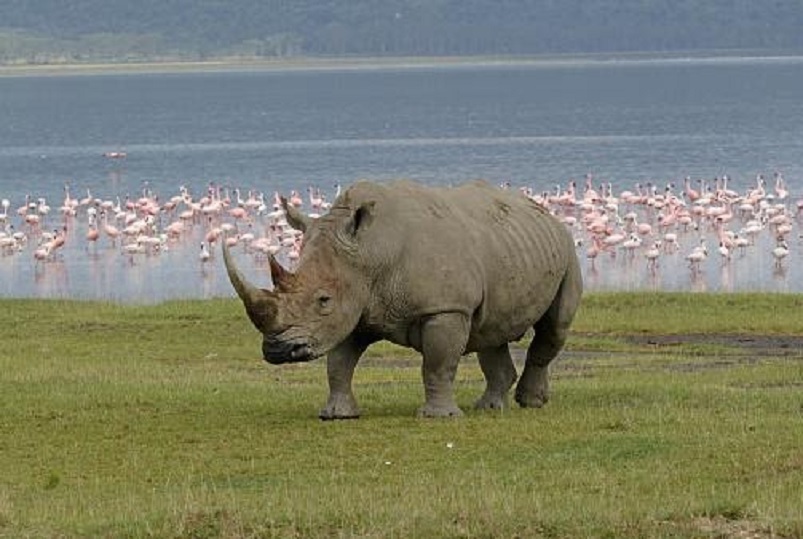
Luxury Safari Destinations in Africa

Several other avian species also abound at the park, including the greater Blue-eared starling, African grey woodpecker, blue-billed teal among others.

Besides the dozens of birds, the park also has significant mammal populations, such as hippos, black rhinos, zebras, Cape buffaloes, waterbucks, giraffes, elands, and lions.

  1. Kruger National park

The most luxurious African safari may also take the form of a visit to the Kruger National Park, which happens to be the largest wildlife park in Africa.

Due to its vastness, the park is popular with visitors seeking to enjoy long game drives as it occupies an area of 19,485Km2

However, for those seeking to see plenty of game within a small area, the Maasai Mara is a better bet, as it is relatively smaller in size, at just 1,510Km2

Kruger too has members of the Big Five as well as other species such as the spotted hyena, waterbuck, impala, warthog and antelope.

  1. Serengeti National park

Adjacent to the Maasai Mara Game Reserve is the Serengeti National park.

However, while the Mara is in Kenya, the Serengeti lies under the jurisdiction of Tanzania.

Nonetheless, on a luxury African safari vacation to the Serengeti, you will encounter large populations of zebra, wildebeests, and gazelles.

The park is an international tourist attraction with numerous top predators such as the African lion, leopards, cheetah, among others.

Extensive game drives around the park are just one of the hallmarks of a most luxurious African safari.


Click to comment

Leave a Reply

Your email address will not be published. Required fields are marked *

General

Surrogacy Laws in Ukraine: What Every International Parent Must Know Before Starting the Process

Published

on

surrogacy

One of the primary reasons international couples choose surrogacy in Ukraine is the country’s clear and well-defined legal framework. Unlike many nations where surrogacy exists in a legal gray area or is outright prohibited, Ukraine has codified the rights of intended parents, the obligations of surrogate mothers, and the procedures for establishing legal parenthood.

Understanding these laws is not just advisable but essential. Proper legal preparation ensures that your parental rights are protected, that the process runs smoothly, and that your child’s citizenship and documentation are handled correctly from day one.

The Legal Foundation of Surrogacy in Ukraine

Surrogacy in Ukraine is primarily regulated by two pieces of legislation: the Family Code of Ukraine and the Civil Code of Ukraine. The most significant provision is Article 123, Paragraph 2 of the Family Code, which states that when an embryo conceived through assisted reproductive technologies is transferred to another woman’s body, the married couple who initiated the procedure are recognized as the parents of the child.

This provision is remarkably protective of intended parents. It means that from the moment of embryo transfer, the intended parents are considered the legal parents. The surrogate mother has no legal claim to the child, and there is no requirement for an adoption process or court hearing to establish parenthood.

Additionally, Article 139 of the Family Code reinforces the principle that the surrogate cannot contest the parentage of a child born through a surrogacy arrangement. This dual-layer legal protection is one of the strongest in the world and is a major reason why surrogacy in Ukraine is so attractive to international couples.

Who Is Eligible for Surrogacy in Ukraine?

Ukrainian law sets specific eligibility criteria for intended parents. To qualify for a surrogacy program, you must meet the following requirements:

Marital status: Both partners must be legally married. Ukraine requires a valid marriage certificate, which must be translated into Ukrainian and apostilled.

Medical indication: There must be a documented medical reason why the intended mother cannot carry a pregnancy. This could include uterine abnormalities, repeated IVF failures, recurrent pregnancy loss, or other reproductive health conditions.

Heterosexual couple: Under current Ukrainian legislation, surrogacy is available only to heterosexual married couples. Single parents and same-sex couples are not eligible at this time.

Genetic connection: At least one of the intended parents must have a genetic connection to the child. This means that either the eggs or the sperm (or both) must come from the intended parents. Donor gametes may be used for one component if medically necessary.

The Surrogacy Agreement: Legal Protection for All Parties

Before any medical procedures begin, a comprehensive surrogacy agreement must be executed between the intended parents and the surrogate mother. This legally binding contract is a cornerstone of the process and covers several critical areas.

The agreement defines the rights and obligations of both parties, the compensation structure for the surrogate, medical care provisions during pregnancy, conditions under which the agreement may be terminated, and the procedures for establishing parenthood after birth. Ukrainian law requires this agreement to be notarized, and experienced agencies ensure that all legal requirements are met.

Working with an agency that has in-house legal expertise is essential for ensuring the agreement complies with Ukrainian law and addresses the specific needs of the intended parents. Agencies like Militta provide dedicated legal teams that handle all documentation, from the initial surrogacy agreement to the final birth registration.

For more details about how the legal and medical process works, visit Militta’s comprehensive surrogacy guide.

Birth Registration and Documentation Process

One of the most important moments in a surrogacy journey is the birth of the child and the subsequent documentation process. In Ukraine, this is remarkably straightforward compared to many other countries.

Immediately after the birth, the child’s birth certificate is issued by the local civil registration office (known as RAGS in Ukraine). The certificate lists the intended parents as the mother and father, with no mention of surrogacy or the surrogate mother. The surrogate’s consent is not required for this registration because Ukrainian law already recognizes the intended parents’ rights from the moment of embryo transfer.

After obtaining the birth certificate, the intended parents must proceed with several additional steps. The birth certificate must be apostilled and translated for use in their home country. They must then visit their home country’s embassy or consulate in Ukraine to register the child’s birth, obtain citizenship documentation, and apply for a passport or travel document for the newborn.

The timeline for this post-birth documentation process typically ranges from two to six weeks, depending on the home country’s embassy processing times. During this period, intended parents usually stay in Ukraine, and their agency provides accommodation assistance and logistical support.

Country-Specific Considerations for International Parents

While Ukrainian law is clear and protective, intended parents must also consider the legal requirements of their home country. Different nations have varying approaches to recognizing children born through international surrogacy.

Parents from countries within the European Union, for example, may need to go through additional recognition procedures depending on their specific national laws. Some EU countries, such as Spain and France, have historically been more complex in recognizing surrogacy-born children, while others, like Portugal, have clearer pathways.

Parents from the United States, the United Kingdom, Australia, and China each face their own specific documentation requirements. A knowledgeable surrogacy agency will be familiar with the requirements of your home country and can guide you through the specific steps needed to bring your child home.

Surrogate Rights and Protections in Ukraine

Ukrainian surrogacy law also establishes protections for surrogate mothers. To be eligible, a surrogate must be between 18 and 35 years of age, have at least one healthy child of her own, and pass comprehensive medical and psychological evaluations. These requirements ensure that surrogates are making informed, voluntary decisions.

Surrogates in Ukraine receive compensation that is contractually guaranteed, along with full medical care throughout the pregnancy and a reasonable recovery period after birth. Reputable agencies ensure that surrogates are treated with dignity and that their health and wellbeing are prioritized throughout the process.

Surrogacy in Ukraine in 2026: Current Status and Safety

As of 2026, surrogacy programs in Ukraine continue to operate with full legal backing. The legal framework governing surrogacy has remained stable, and clinics in central and western Ukraine, particularly in Kyiv and Lviv, maintain their operational capacity.

Reputable agencies have implemented comprehensive safety protocols to protect all parties. This includes careful selection of medical facilities in secure locations, contingency planning for logistics, and continuous communication with intended parents throughout the process. International travel to Ukraine is facilitated through European transit routes, and agencies assist with all travel arrangements.

Frequently Asked Questions About Surrogacy Law in Ukraine

Can the surrogate mother change her mind and keep the baby?

No. Under Ukrainian law, the surrogate has no legal rights to the child. The intended parents are recognized as the legal parents from the moment of embryo transfer, and the birth certificate is issued in their names.

Do I need to go through an adoption process after the surrogate gives birth?

No. Unlike many other countries, Ukraine does not require any adoption proceedings for surrogacy-born children. The intended parents’ names appear directly on the birth certificate.

What documents do I need to start a surrogacy program in Ukraine?

You will typically need a valid marriage certificate (apostilled and translated), passports for both intended parents, medical documentation confirming the need for surrogacy, and a notarized surrogacy agreement. Your agency will provide a complete document checklist.

How do I bring my surrogacy-born child back to my home country?

After obtaining the Ukrainian birth certificate, you must register the birth at your home country’s embassy in Ukraine, obtain citizenship documentation, and apply for a passport or travel document for the child. This process typically takes two to six weeks.

Is surrogacy in Ukraine safe in 2026?

Yes. Surrogacy programs operate successfully in central and western Ukraine, with established safety protocols. Leading agencies like Militta have extensive experience managing programs for international clients and ensure the safety and wellbeing of all parties involved.

Ensuring a Legally Secure Surrogacy Journey

The legal landscape of surrogacy in Ukraine is one of the most favorable in the world for intended parents. With clear legislation that protects parental rights from the very beginning, a straightforward birth registration process, and no need for adoption proceedings, Ukraine provides a secure foundation for building your family.

The key to a successful surrogacy journey lies in thorough preparation and partnership with experienced professionals. By choosing a reputable agency with proven legal expertise, you can navigate the process with confidence, knowing that every step is handled in compliance with Ukrainian law and with your family’s best interests at heart.

Continue Reading

General

ADC Lawmakers Oppose Tinubu’s $516m Loan Request for Highway

Published

on

badagry sokoto highway

By Adedapo Adesanya

The African Democratic Congress (ADC) Legislators’ Forum has condemned the latest move by President Bola Tinubu to secure Senate approval for an additional external loan of $516,333,070 for the Sokoto–Badagry Super Highway project.

Mr Tinubu requested Senate approval for a $516.3 million syndicated loan to finance key sections of the Sokoto–Badagry Superhighway, a major infrastructure project under his administration’s Renewed Hope Agenda from Deutsche Bank.

The request, contained in a letter read during plenary on Thursday by the Senate President, Mr Godswill Akpabio, seeks legislative authorisation in line with Sections 16 and 21 of the Debt Management Office (Establishment) Act, 2011.

However, the opposition lawmakers said it is not only alarming but becoming of the Tinubu administration to make borrowing its default economic policy, with little regard for sustainability, accountability, or the well-being of future generations.

The forum, in a statement jointly signed by its chairman, Mr Uko Ndukwe Nkole, as well as leaders from each geopolitical zone, noted that while no responsible opposition undermines the importance of infrastructure development, the cost and conditions of such projects must be queried.

According to the ADC lawmakers, Mr Tinubu’s government has failed to convincingly demonstrate that its endless appetite for loans is guided by a coherent, transparent and economically viable repayment strategy.

“Instead, Nigerians are witnessing a troubling pattern; one where debt accumulation is prioritised over prudent fiscal management, innovation, and domestic resource mobilisation.

“Nigeria is already weighed down by a crushing debt burden, with debt servicing swallowing a staggering proportion of national revenue. Yet, rather than confronting this reality with discipline and reform, the Tinubu administration continues to plunge the country deeper into what can only be described as a looming debt catastrophe.

“Each new loan tightens the noose around the nation’s economic sovereignty, leaving future generations to pay for today’s lack of foresight.

“Even more disturbing is the timing of this request. As the nation inches closer to a major general election cycle, Nigerians are right to question the motives behind this borrowing spree.

“Is this truly about development, or is it another attempt to create avenues for political patronage and electoral advantage? History has taught us to be wary of last-minute, large-scale financial commitments made under the guise of national interest,” the statement read in part.

The ADC Legislators’ Forum insisted that the National Assembly must not act as a rubber stamp or a pro-group of President Tinubu in this matter.

It said the Senate, in particular, must rise to its constitutional responsibility by demanding full disclosure of the project’s financial details, procurement processes, cost-benefit analysis, and a credible repayment plan, as anything short of this would amount to a betrayal of public trust.

The lawmakers called on the administration to redirect its focus toward policies that can genuinely strengthen Nigeria’s economy; policies that promote productivity, industrial growth, job creation, and the plugging of revenue leakages.

“We must clearly state that governance is not a free ride without consequences. Those who make decisions today that endanger the economic future of millions of Nigerians must understand that a day of reckoning will inevitably come.

“The Nigerian people will demand answers, accountability, and justice for policies that have deepened hardship and mortgaged the nation’s destiny. Nigeria stands at a critical crossroads.

“We can either choose the path of responsibility, discipline, and sustainable growth, or continue down this perilous road of debt dependency and economic vulnerability,” the statement added.

Continue Reading

General

RMAFC Kicks Off Data Verification for Revenue Allocation Framework

Published

on

RMAFC

By Modupe Gbadeyanka

A nationwide data verification exercise to review the factors and proxies used in the sharing of revenue among states and local governments has commenced.

The revenue allocation framework initiative is being conducted by the Revenue Mobilisation Allocation and Fiscal Commission (RMAFC).

The goal is to ensure that the distribution of national resources accurately reflects the current socio-economic realities across the federation, a statement signed by the organisation’s Head of Information and Public Relations Unit, Ms Maryam Umar Yusuf, stated.

In the statement issued on Thursday, the chairman of the commission, Mr Mohammed Bello Shehu, was said to have posited that the exercise would strengthen fiscal federalism and enhance national development planning across the country.

According to him, credible and verified data remains the foundation of a fair and sustainable revenue allocation system.

“The commission is committed to ensuring that Nigeria’s revenue allocation framework reflects the realities on the ground. Accurate data is the backbone of fairness, equity, and national cohesion.

“This nationwide exercise represents our determination to build a more transparent and responsive revenue distribution system that serves the interests of all Nigerians,” he noted.

Mr Shehu urged the state governments, local authorities, traditional institutions, civil society organisations, and community leaders to provide full cooperation to the agency’s verification teams, emphasising that the outcomes of the programme will have far-reaching implications for national planning, fiscal management, and balanced regional development across the federation.

As part of its nationwide rollout strategy, it has scheduled region-by-region data verification exercises across all states of the federation and the Federal Capital Territory (FCT), Abuja.

The exercise will involve systematic collection, validation, and reconciliation of critical socio-economic and infrastructural data used in determining revenue allocation indices for horizontal revenue sharing.

It was disclosed that the focus would be on key indicators like education and health provision, internal revenue generation capacity, and infrastructure development across the states and local government areas.

Stakeholder engagement sessions will also be conducted in each state to ensure transparency, build trust, and promote collaborative participation among government agencies and local communities.

Nigeria’s revenue allocation framework relies on specific indices, including those of population, landmass, infrastructure, and socio-economic development indicators, all of which must be periodically reviewed to reflect changing realities.

Continue Reading

Trending