
General
Tinubu Tasks Security Agencies to Crack Down On Illegal Mining


By Adedapo Adesanya
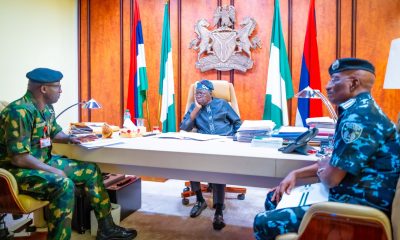
President Bola Tinubu has directed security agencies to intensify efforts to crack down on illegal mining in the country.
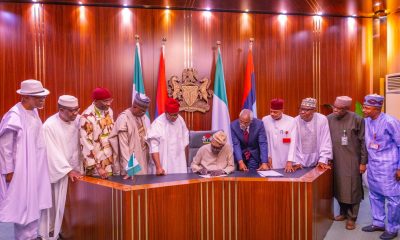
The order was given on Thursday in Abuja after he received a presentation titled, Harnessing the Mining Industry for Enhanced National Security and Development: Strategic Options for Nigeria by 2035, by Course 32 participants of the National Defence College (NDC).
He also said his administration would ensure that companies engaged in mineral exploration prioritise the health and safety of Nigerians and the host communities.
The course 32 participants were tasked by Tinubu, to use their findings during their 11-month study focused on the mining industry’s potential, to contribute to national security and development.
The President gave the order after the presentation delivered by Colonel Olajide Bello on behalf of the delegation, commending their work and reiterating the importance of diversifying Nigeria’s economy.
‘‘I have listened carefully to your presentation on the theme. Aside from your knowledge of war and security, I could see the intellectual depth of the work done to help the nation, and I must say thank you to all of you.
‘‘I recognise the need for the diversification of the economy, and we have been pushing hard on this. Your involvement will equally promote a better understanding of the issues.
‘‘We have challenges of scavengers and exploiters around the country. We must nip that in the bud, and you military officers understand this better than the civil society.
‘‘We expect that through your command, we will have more resources that we need to make sure we have a stable economic environment,” the President said.
President Tinubu assured the delegation that his administration would ensure the completion of the NDC headquarters in Abuja.
Addressing the health implications of exploration activities during an interactive session, the president expressed concern over the well-being of those living near mining areas.
‘‘We must pay attention to that at the outset by providing medical centres and other facilities that will protect the lives, property and health of Nigerians,’’ President Tinubu said.
In his remarks, Rear Admiral Olumuyiwa Olotu, Commandant, NDC, said the institution, established in 1992 as the National War College, has graduated 2,871 participants since inception.
He disclosed that besides participants from 30 African countries, the college has had participants from Bangladesh, Brazil, France, Germany, India, Nepal, and Pakistan.
Rear Admiral Olotu said through the President’s magnanimity, the college has embarked on unprecedented infrastructural upgrades, making the institution compete favourably with any other defence college in the world.
However, he appealed to President Tinubu to assist in the completion of the college’s permanent site in Abuja, noting that the institution currently operates from its temporary facility in the Central Business District owing to the non-completion of its permanent site since 2010.
The 111 participants of NDC Course 32 were drawn from the Nigerian Army, Navy, Air Force, Police, Ministries, Departments and Agencies (MDAs), as well as 19 international participants from Africa, Asia, Europe, and South America.
The college undertakes in-depth studies on all factors that affect national security and development.
The research centre in the college known as the Centre for Strategic Research and Studies is also designated as the ECOWAS Training Centre of Excellence for Peace Support Operations at the strategic level.









By Modupe Gbadeyanka
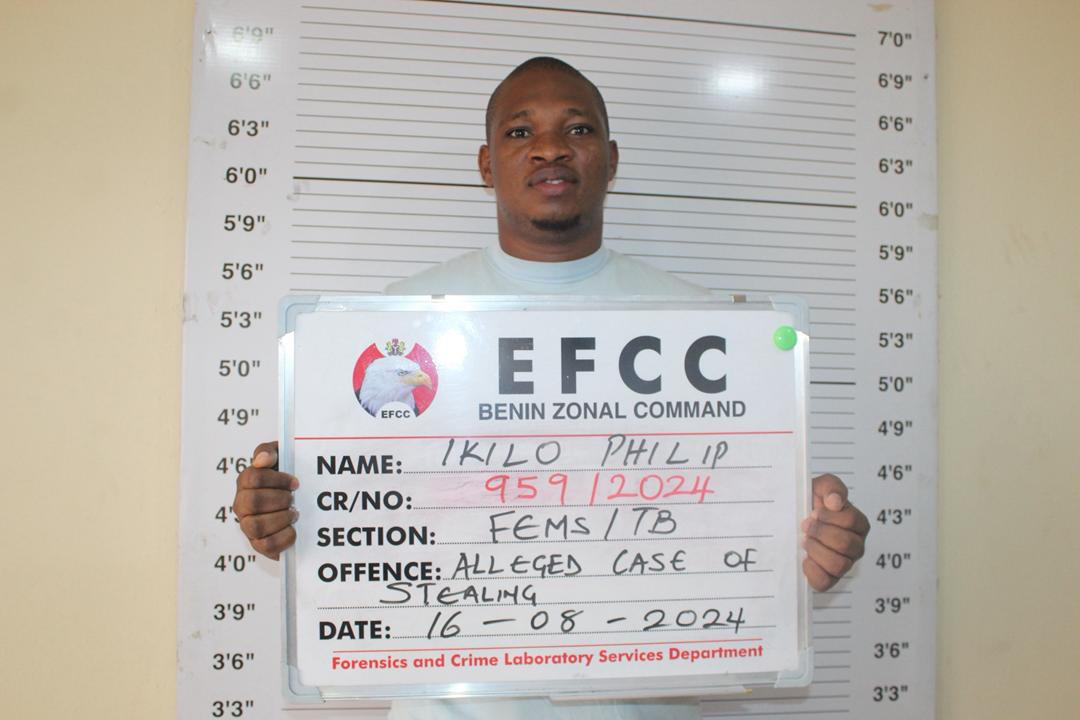
One Mr Osamudiamen Philip Ikilo has been handed a two-year imprisonment for a Bitcoin fraud to the tune of $19,400.
He was found guilty and convicted of the crime by Justice W.I. Aziegbemhin of the Edo State High Court sitting in Benin City, the state capital.
Delivering the judgment on Monday, March 23, 2026, the judge sentenced Mr Ikilo to two years’ imprisonment without an option of fine.
The convict got into trouble when he offered to assist his victim, Ms Cynthia Imade Alile, to convert her 0.52092582 Bitcoin worth $19,400, but failed to remit the money after the conversion.
Ms Alile petitioned the Economic and Financial Crimes Commission (EFCC), which looked into the matter and brought him before the court for prosecution on a one-count charge of stealing.
“That you Osamudiamen Philip Ikilo (m) sometime in March 2024 within the jurisdiction of this court did steal Bitcoin worth the sum of $19,400 belonging to one Cynthia Imade Alile by fraudulently converting the said sum to your use, and thereby committed an offence contrary to Section 287 of the Criminal Law of Edo State Law 2022 and punishable under Section 294 of the same Law,” the charge read.
When the charge was read to him during arraignment by the EFCC, the defendant pleaded not guilty, setting the stage for trial.
In the course of the trial, prosecution counsel, A. S. Bala-Ribah, called two witnesses and also tendered documents which were admitted by the court. On his part, the defendant called two witnesses, including himself.

By Adedapo Adesanya
Justice Emeka Nwite of the Federal High Court in Abuja has affirmed the final forfeiture of $13 million linked to a Lagos socialite, Ms Aisha Achimugu, and her company, Oceangate Engineering Oil & Gas Limited, to the federal government of Nigeria.
Delivering judgment, Justice Nwite held that the Economic and Financial Crimes Commission (EFCC) established that the foreign currency was proceeds of fraud and unlawful activities.
The judge further held that Oceangate Engineering Oil & Gas Limited failed to establish how it came by the money, saying the anti-money laundering agency satisfied all requirements for the funds to be classified as proceeds of fraud and to be forfeited to the appropriate authority.
He dismissed the claims that the $13 million was gifts received into the Oceangate Engineering Company by Ms Achimugu, adding that the woman never came to the court to show cause why the huge amount of money should not be forfeited to the government.
He held that no single person who gave the monetary gift to Aisha Achimugu to the tune of $13 million was called to testify.
The judge further held that the burden to establish genuine ownership of the money was not established by the applicant to counter the claims of the anti- graft agency that the money was the proceeds of fraud based on its investigation.
According to the judge, Oceangate Engineering Company did not show the business it undertook that fetched it the money, nor did it show whether any payment was made to it by any of its customers.
Justice Nwite had, on August 22, 2025, granted the anti-graft agency’s motion ex parte for an interim order forfeiting the sum of $13 million linked to Oceangate Ltd to the Federal Government over allegations that the fund was proceeds of unlawful activity.
The judge had then directed the commission to publish the order in a national daily for interested people to show cause within 14 days why the fund should not be permanently forfeited to the federal government.
By Adedapo Adesanya
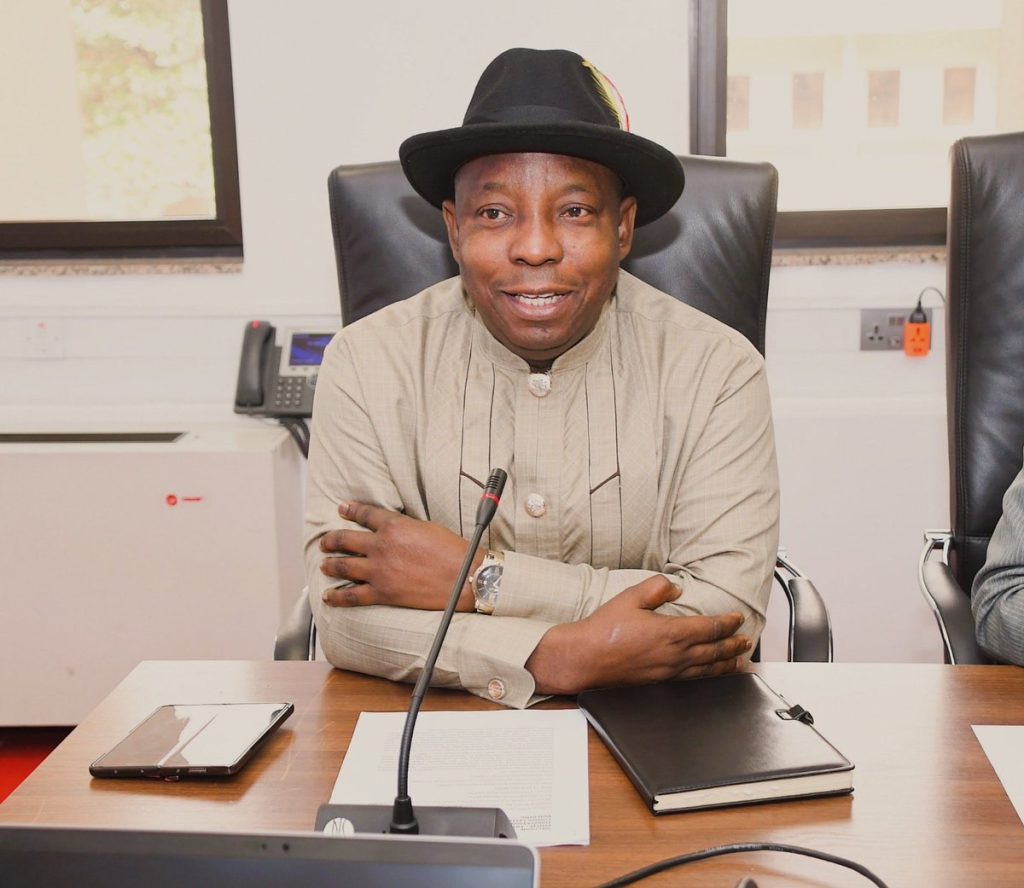
The federal government has inaugurated a 17-member Planning Committee to coordinate the National Flag-Off of the Energise Commercialisation Now (ECoN) Initiative, a flagship programme aimed at transforming research outputs into economic value.
Speaking at the inauguration in Abuja, the Permanent Secretary of the Ministry of Innovation, Science and Technology, Mr Philip Ndiomu Ebiogeh, described the initiative as a strategic intervention to convert Nigeria’s vast research and innovation outputs into market-ready products, scalable enterprises, and job-creating opportunities.
He noted that ECoN will mobilise stakeholders nationwide to identify bankable innovations and accelerate their transition from laboratories to the marketplace, stressing that the country must move beyond theoretical research to practical solutions that drive industrial growth and national prosperity.
The Permanent Secretary disclosed that the Minister of Innovation, Science and Technology, Mr Kingsley Tochukwu Udeh, had earlier briefed the First Lady, Mrs Oluremi Tinubu, on the initiative and proposed her as a champion of the programme, with the national flag-off scheduled for Kano State.
He explained that Kano was deliberately selected due to its historic role as a commercial and industrial hub, offering strong potential to attract investment, stimulate enterprise, and create jobs.
The Committee is chaired by the Minister, with the Permanent Secretary as Co-Chairman, while the Director-General, National Biotechnology Research and Development Agency, NBRDA, and the Director-General, Sheda Science and Technology Complex, SHESTCO, serve as Alternate Chairmen.
Members include Professor Nnayelugo Ike-Muonso, Dr Kazeem Kolawole Raji, Dr Jummai Adamu, Dr (Mrs) Obiageli Amadiobi, Dr Kabiru Mu’azu, Dr Anwal Mustapha, Engr Ibiam Oguejiofo, Mr Moses Fatogun, Mr Adamu Sulaiman (a representative of SMEDAN), Dr Prince Lawrence Eze, Mr Sani Garba, Dr Muhammad Mustapha, Dr Chioma Okeke, Mr Luther Onyemkpa, Mr Charles Egumgbe, and Dr Nwankwo Nnenna serving as Secretary.
The national flag-off is proposed for late April or early May 2026, subject to Presidential approval.
The Ministry reaffirmed its commitment to positioning innovation as a key driver of economic diversification and sustainable development, in line with President Bola Tinubu’s Renewed Hope Agenda.










-
 Feature/OPED6 years ago
Davos was Different this year
-
Travel/Tourism10 years ago
Lagos Seals Western Lodge Hotel In Ikorodu
-

 Showbiz3 years ago
Estranged Lover Releases Videos of Empress Njamah Bathing
-
 Banking8 years ago
Sort Codes of GTBank Branches in Nigeria
-

 Economy3 years ago
Subsidy Removal: CNG at N130 Per Litre Cheaper Than Petrol—IPMAN
-

 Banking3 years ago
Sort Codes of UBA Branches in Nigeria
-

 Banking3 years ago
First Bank Announces Planned Downtime
-

 Sports3 years ago
Highest Paid Nigerian Footballer – How Much Do Nigerian Footballers Earn