Connect with us

General

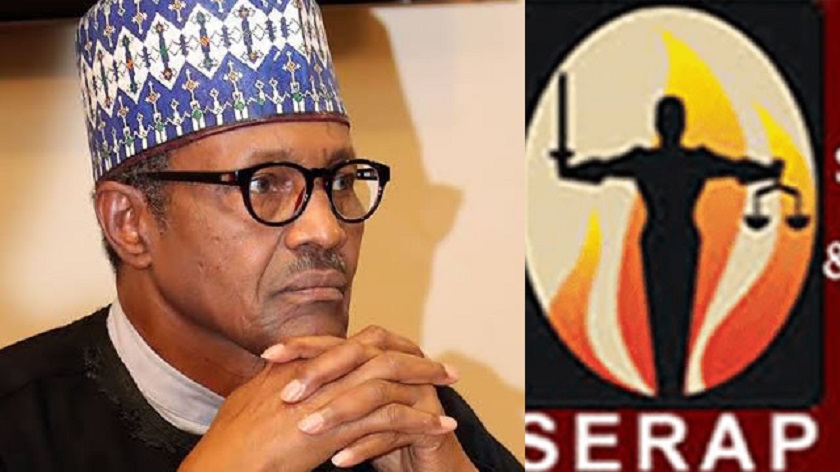
#TwitterBan: SERAP Drags Buhari to ECOWAS Court

Published

on

SERAP Buhari

By Adedapo Adesanya

The Socio-Economic Rights and Accountability Project (SERAP) and 176 concerned Nigerians have filed a lawsuit against the federal government led by President Muhammadu Buhari over “the unlawful suspension of Twitter in Nigeria, criminalization of Nigerians and other people using Twitter, and the escalating repression of human rights, particularly the rights to freedom of expression, access to information, and media freedom in the country.”

Following the deletion of President Muhammadu Buhari’s tweet, the Minister of Information and Culture, Mr Lai Mohammed, last week announced the suspension of Twitter in Nigeria.

The government has also threatened to arrest and prosecute anyone using Twitter in the country, while the National Broadcasting Commission (NBC) has asked all broadcast stations to suspend the patronage of Twitter.

In the suit No ECW/CCJ/APP/23/21 filed on Tuesday before the ECOWAS Community Court of Justice in Abuja, SERAP and the concerned Nigerians are seeking: “An order of interim injunction restraining the Federal Government from implementing its suspension of Twitter in Nigeria, and subjecting anyone including media houses, broadcast stations using Twitter in Nigeria, to harassment, intimidation, arrest and criminal prosecution, pending the hearing and determination of the substantive suit.”

In the suit filed by Solicitor to SERAP, Mr Femi Falana SAN, the Plaintiffs contend that “if this application is not urgently granted, the Federal Government will continue to arbitrarily suspend Twitter and threaten to impose criminal and other sanctions on Nigerians, telecommunication companies, media houses, broadcast stations and other people using Twitter in Nigeria, the perpetual order sought in this suit might be rendered nugatory.”

The suit, read in part: “The suspension of Twitter is aimed at intimidating and stopping Nigerians from using Twitter and other social media platforms to assess government policies, expose corruption, and criticize acts of official impunity by the agents of the Federal Government.”

“The free communication of information and ideas about public and political issues between citizens and elected representatives is essential. This implies a free press and other media able to comment on public issues without censor or restraints and to inform public opinion. The public also has a corresponding right to receive media output.

“Freedom of expression is a fundamental human right and the full enjoyment of this right is central to achieving individual freedom and to developing democracy. It is not only the cornerstone of democracy but indispensable to a thriving civil society.

“The arbitrary action by the Federal Government and its agents have negatively impacted millions of Nigerians who carry on their daily businesses and operational activities on Twitter. The suspension has also impeded the freedom of expression of millions of Nigerians, who criticize and influence government policies through the microblogging app.

“The suspension of Twitter is arbitrary, and there is no law in Nigeria today permitting the prosecution of people simply for peacefully exercising their human rights through Twitter and other social media platforms.

“The suspension and threat of prosecution by the Federal Government constitute a fundamental breach of the country’s international human rights obligations including under Article 9 of the African Charter on Human and Peoples’ Rights and Article 19 of International Covenant on Civil and Political Rights to which Nigeria is a state party.

“The suspension has seriously undermined the ability of Nigerians and other people in the country to freely express themselves in a democracy and undermined the ability of journalists, media houses, broadcast stations, and other people to freely carry out their professional duties.

“A lot of Nigerians at home and abroad rely on Twitter coverage of topical issues of public interest to access impartial, objective and critical information about ideas and views on how the Nigerian government is performing its constitutional and international human rights obligations.

“The implication of the decline in freedom of expression in Nigeria is that the country is today ranked alongside countries hostile to human rights and media freedom such as Afghanistan, Chad, the Philippines, Saudi Arabia, Zimbabwe and Colombia.”

SERAP and the concerned Nigerians are therefore asking the ECOWAS Court of Justice for the following reliefs:

A Declaration that the action of the Defendant and its agents in suspending the operation of Twitter or any other social media and microblogging application without an order of a competent court of jurisdiction is unlawful, inconsistent and incompatible with Article 9 of the African Charter on Human and Peoples’ Rights and Article 19 of International Covenant on Civil and Political Rights.

A Declaration that the act of the Defendant in mandating its agent to commence and continue to regulate the social media in Nigeria amounts to restriction and censorship, thus violating Nigeria’s obligations under the African Charter on Human and Peoples’ Rights and Article 19 of International Covenant on Civil and Political Rights.

A Declaration that the act of the Defendant and its agents in suspending the operation of Twitter or any other social media and microblogging application in Nigeria without any offence known to law is incompatible with Nigeria’s international human rights obligations, and are therefore null and void to the extent of their inconsistency and incompatibility.

A Declaration that the directive by the Defendant, through the National Broadcasting Commission, directing and ‘advising’ broadcast stations to deactivate their Twitter accounts and discontinue its use is a breach of the citizens’ right to freedom of expression, access to information as well as media freedom, and therefore, null and void.

A Declaration that the act of the Defendant to frequently threaten Nigerians and other people who use Twitter and/or other social microblogging applications in Nigeria with criminal prosecution and the actual act of suspending the operations of Twitter in Nigeria, violates the principle that there is no punishment without law, and the right to a fair hearing, and therefore, null and void.

An Order setting aside the suspension, ban, sanction or other punishments whatsoever imposed on Twitter, Nigerians, media houses, broadcast stations and any social media service providers by Defendant and its agents.

An Order directing the Defendant and its agents to immediately revoke, withdraw and/or rescind their suspension or ban of Twitter and/or any other social media service provider(s) in Nigeria in line with Nigeria’s obligations under the African Charter on Human and Peoples’ Rights, the International Covenant on Civil and Political Rights and the Revised ECOWAS Treaty 1993.

An order of perpetual injunction restraining the Defendant and its agents from unlawfully imposing sanctions and other punishment including criminal prosecution or doing anything whatsoever to harass Twitter, broadcast stations, Nigerians and other people and any social media service provider(s), and media houses who are Twitter users.

Such further orders the Honorable Court may deem fit to make in the circumstances of this suit.

No date has been fixed for the hearing of the interim application and the substantive suit.

Adedapo Adesanya is a journalist, polymath, and connoisseur of everything art. When he is not writing, he has his nose buried in one of the many books or articles he has bookmarked or simply listening to good music with a bottle of beer or wine. He supports the greatest club in the world, Manchester United F.C.

General

4th South Africa Focus Week Begins in Lagos to Strengthen Bilateral Ties

Published

on

South Africa Focus Week

By Adedapo Adesanya

The South African Consulate General in Lagos, in partnership with Brand South Africa and the Development Bank of Southern Africa (DBSA), is hosting the 4th edition of the South Africa Focus Week in Lagos, Nigeria, from April 22 – 26, 2026.

The annual platform continues to grow as a strategic initiative aimed at fostering social cohesion between South Africans and Nigerians while positioning South Africa as a preferred destination for business, tourism, and education. Since its inception in 2023, South Africa Focus Week has attracted over 1,500 participants, bringing together stakeholders from across sectors, including trade and investment, arts and culture, tourism, aviation, and the culinary industry.

The 2026 edition holds particular significance as it coincides with the 30th anniversary of South Africa’s democratic Constitution, enacted in 1996, as well as 32 years of unbroken diplomatic relations between South Africa and Nigeria, established in February 1994. These milestones underscore the enduring partnership between the two nations, rooted in shared history and strengthened through formal agreements and ongoing collaboration.

The 2025 economic relationship between South Africa and Nigeria reflects a strategically significant, multi-dimensional partnership anchored in trade, energy security, investment flows, and strong institutional cooperation. While bilateral trade remains structurally imbalanced – with South Africa exporting US$468.48 million and importing $1.69 billion, resulting in a $1.22 billion deficit – this dynamic is largely driven by South Africa’s reliance on Nigerian crude oil, positioning the relationship as one of strategic interdependence rather than imbalance alone.

This partnership is further elevated by the relative economic weight of both countries. According to IMF projections, South Africa’s economy is valued at approximately $443.6 billion, while Nigeria’s stands at around $334.3 billion in nominal terms for 2026. As two of the largest economies on the continent, their bilateral engagement constitutes a central axis of African economic activity, with disproportionate influence on the success of continental integration efforts.

Beyond trade, the relationship is reinforced by deep two-way investment linkages. South African firms -including MTN Group, Shoprite, and Standard Bank – maintain a strong presence in Nigeria, while Nigerian companies such as Access Bank and Paystack have established a growing footprint in South Africa. Although investment flows are asymmetrical and some Nigerian firms have faced operational challenges, these exchanges reflect an emerging bi-directional economic corridor that extends beyond goods trade into services, finance, and digital innovation.

Aligned with Brand South Africa’s mandate to build the country’s global reputation and competitiveness, the week-long programme will convene leaders from government, business, civil society, academia, and the media. Discussions will focus on leveraging the African Continental Free Trade Area (AfCFTA) as a tool for market access and global positioning, with Nigeria serving as a key focal point.

The South Africa Focus Week has features a series of high-level engagements and cultural activities designed to deepen economic ties and promote collaboration: South Africa–Nigeria Infrastructure Investment Conference (April 22, 2026) which was held under the theme South Africa–Nigeria Partnership: Unlocking Infrastructure Opportunities,” the conference will bring together key stakeholders in infrastructure development to explore collaborative projects in road, rail, and transportation systems.

The forum also examined the role of Public–Private Partnerships (PPPs) and facilitated discussions on project financing and implementation with institutions such as the DBSA and Nigeria’s Infrastructure Concession Regulatory Commission (ICRC).

This was followed by the 2nd Economic Diplomacy Roundtable (Thursday, April 23, 2026), which was hosted in partnership with MTN Nigeria under the theme Role of Technology in Infrastructure Development, the roundtable will convene senior government officials, private sector leaders, and industry experts to identify investment opportunities and strengthen strategic partnerships.

Friday, April 24, was for Arts and Culture Experience, which is a dedicated cultural day will showcase Lagos’ creative spaces and features a panel discussion on South Africa’s arts, film, music, and culture. The programme includes a South African film screening, engagements with filmmakers, and a networking reception aimed at fostering collaboration between the creative industries of both countries.

The event continues on Thursday, April 25, with Freedom Day Celebration and Closing Ceremony. This commemorative event will celebrate 30 years of South Africa’s Constitution, 32 years of freedom and democracy, and the enduring diplomatic relations between South Africa and Nigeria. The ceremony will also provide an opportunity to reflect on outcomes from the week and outline future areas of cooperation.

The celebration forms part of Brand South Africa’s Global South Africans Programme, which recognises and connects South Africans in the diaspora as ambassadors of the nation’s values and identity.

The week climaxes with the 4th edition of the South Africa Golf Tournament at Ikoyi Golf Club on Saturday, April 26, 2026, which will be done in partnership with Crossflex International.

According to a statement, the event aims to strengthen people-to-people relations through sports diplomacy, bringing together South African and Nigerian golfers in a spirit of camaraderie and collaboration.

Continue Reading

General

EFCC Arrests Ex-Skye Bank Chair Tunde Ayeni Over Alleged Diverted Loans

Published

on

tunde ayeni

By Modupe Gbadeyanka

The former chairman of the defunct Skye Bank Plc, Mr Tunde Ayeni, has been apprehended by the Economic and Financial Crimes Commission (EFCC).

Spokesperson of the anti-money laundering agency, Mr Dele Oyewale, confirmed the arrest of the businessman on Friday but declined to provide further details, according to TheCable.

Mr Ayeni was accused of diverting the N36.5 billion and $30 million loans from Polaris Bank Limited to companies with which he has links.

He was alleged to have obtained the credit facilities for marine security, electricity distribution, and real estate projects, but moved them to telecom investments tied to NITEL/MTEL assets via a NATCOM account.

After the Central Bank of Nigeria (CBN) revoked the operating licence of Skye Bank in 2018, it nationalised it to Polaris Bank.

The EFCC has been looking into the alleged diversion of funds by Mr Ayeni, resulting in his arrest in Abuja on Thursday, April 23, 2026.

He is being grilled over the matter and would be arraigned in court once the investigation is concluded.

This is not the first time Mr Ayeni has been nabbed and probed by the EFCC, as this happened a few months after his bank lost its licence.

The then acting spokesman for the EFCC, Mr Tony Orilade, said Mr Ayeni was quizzed by detectives over issues related to fraud and embezzlement allegedly committed by him when he was Chairman of the bank a few years ago.

Continue Reading

General

Customs, Police Commence Tighter Security at Ports to Protect Oil Trade

Published

on

nigeria customs police

By Adedapo Adesanya

The Nigeria Customs Service (NCS) and the Nigeria Police have begun securing the country’s maritime corridor as part of critical moves to safeguard oil and gas trade flows through the nation’s ports.
This follows a recent strategic engagement between the Ibeto Seaport and Terminals Command of Customs and the Eastern Port Police Command in Port Harcourt, where both agencies reaffirmed their commitment to joint operations.
Customs Area Controller, Mr Usman Yahaya, described inter-agency cooperation as essential to protecting critical economic infrastructure.
“This visit is timely and highly appreciated. It reflects the importance of sustained cooperation among agencies entrusted with the security of our nation and the protection of critical economic assets,” he said.
Mr Yahaya stressed that collaboration between Customs and Police remains central to maintaining order and preventing criminal activities within port environments.
“Customs and the Police share common responsibilities in safeguarding the port environment. Synergy remains the cornerstone for achieving our collective mandate,” he added.
He further assured continued support for the Police Command to enhance operational effectiveness.
“Customs Area Controller Usman Yahaya (sitting, right) and Commissioner of Police Shuaibu Audu (sitting, left) with other Customs and Police personnel

“We are fully committed to working with the new Commissioner of Police and giving all necessary support towards the successful discharge of his responsibilities.”

On his part, the Commissioner of Police, Eastern Port Command, Mr Shuaibu Audu, said the visit was aimed at strengthening existing ties between both agencies.
“My presence here today is to reinforce the cordial relationship between the Nigeria Police Force and the Nigeria Customs Service. No organisation can function effectively in isolation,” he said.
Mr Audu emphasised the strategic importance of ports to Nigeria’s economy, particularly in the energy sector.
“Our ports are strategic national assets, and we must work together to keep them secure,” he stated. “Synergy among security agencies is essential to addressing emerging threats.”
Continue Reading

Trending