

General
UN to Cut Food Rations in North-East Nigeria

By Adedapo Adesanya
*Internally Displaced Persons Hit 2 million in September
*Needs $55m
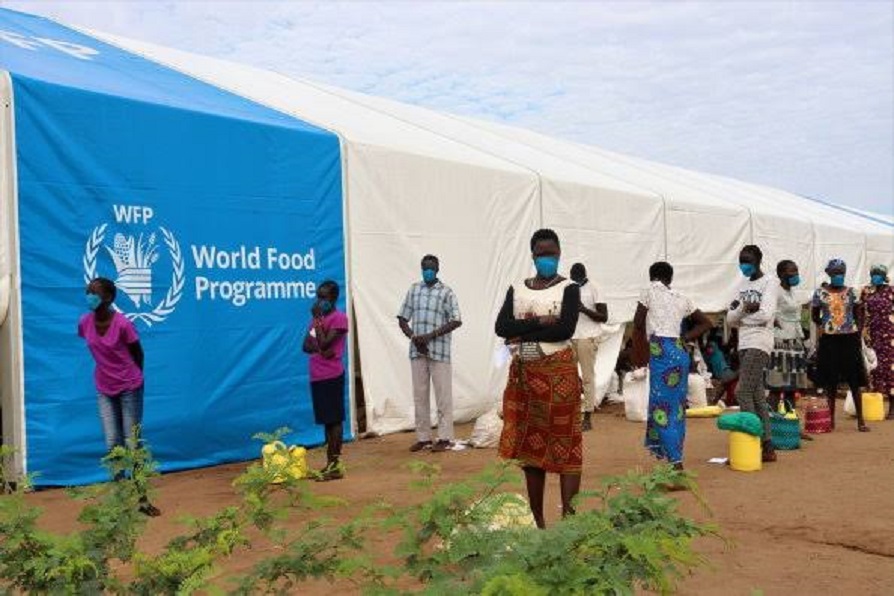
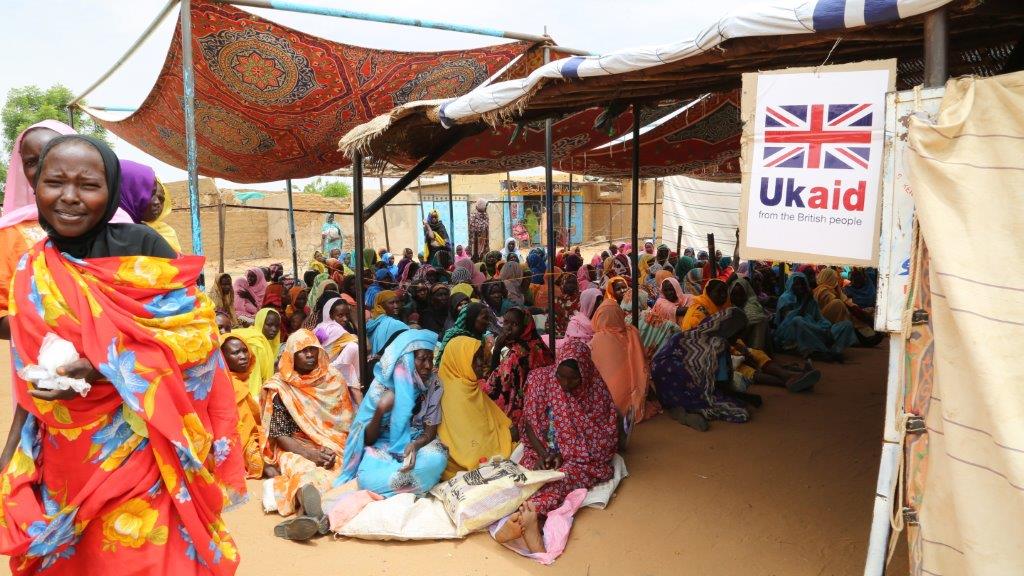
The United Nations through its World Food Programme (WFP) has warned that it may soon be forced to cut food rations to more than half a million women, men and children in north-eastern Nigeria.
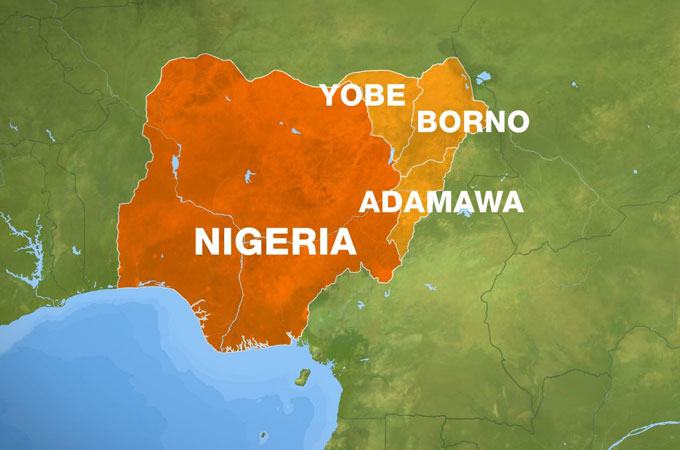
This was disclosed by WFP’s Regional Director for West Africa, Mr Chris Nikoi, in a statement over the weekend, explaining that there was a need for urgent funding to continue life-saving operations in crisis-ridden Borno, Yobe and Adamawa States.
The WFP director stated that the cuts would come just as severe hunger reached a five-year high in the country, in the wake of years of conflict and insecurity, noting that the situation had been worsened by the socio-economic fallout from COVID-19, high food prices and limited food supply.
“Cutting rations means choosing who gets to eat and who goes to bed hungry. We are seeing funding for our life-saving humanitarian work dry up just at the time when hunger is at its most severe,” the director stated.
Mr Nikoi warned that if at least $55 million was not received in a matter of weeks, WFP would have no choice but to cut food rations and reduce the number of people it serves, where assistance is already prioritised for the most vulnerable as early as November.
“Our food assistance is a lifeline for millions whose lives have been upended by conflict and have almost nothing to survive on. “We must act now to save lives and avoid disruptions to this lifeline,” Mr Nikoi added.
He said that the number of Internally Displaced People (IDP) forced to flee their homes in search of safety in northeast Nigeria had been rising steadily, reaching a new all-time high of over 2 million in September 2021.
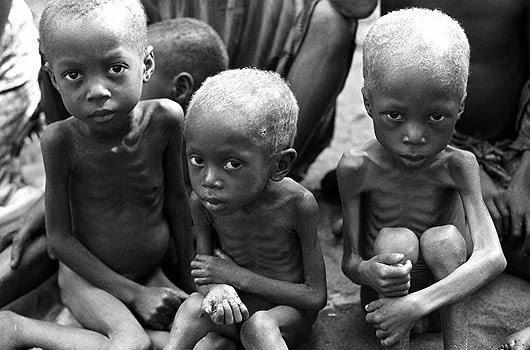
The WFP director said that current food security analyses showed that 4.4 million people in northeast Nigeria did not know where their next meal would come from, and over 1 million children are already malnourished.
He cited continued attacks on communities by non-state armed groups, harsh lean season conditions amid an economy dealing with the fallout from the COVID-19, as portending great danger for the people.
Mr Nikoi added that high food prices and a severe reduction in household purchasing power had also contributed to a bleak outlook for the most vulnerable people in northeast Nigeria, warning that despite increasing needs, WFP may soon be unable to sustain life-saving operations in the conflict-riddled north-east.







By Adedapo Adesanya
The Federal Competition and Consumer Protection Commission (FCCPC) has unsealed the headquarters of Ikeja Electric Plc in the Lagos State capital after a week under lock and key.
According to a statement on Friday, the electricity distribution company committed to a binding undertaking to comply with the remedial process following consumer rights violations.
The statement signed by Mr Ondaje Ijagwu, Director of Corporate Affairs at the commission, Ikeja Electric undertook to resolve all consumer complaints referred to it by the FCCPC within agreed timelines
The headquarters was earlier sealed on December 11, 2025, because Ikeja Electric allegedly failed to comply with a directive by the Nigerian Electricity Regulatory Commission (NERC) to unbundle a Maximum Demand account into 20 individual accounts for a customer who had been without power for over two and half years.
The FCCPC noted that following the resolution, any breach of the undertaking would expose it to renewed and escalated enforcement action under the Federal Competition and Consumer Protection Act.
Reacting, the Executive Vice Chairman and Chief Executive Officer of the FCCPC, Mr Tunji Bello, said the Commission’s intervention was necessary to enforce the provisions of the FCCPA (2018).
“Our responsibility is to ensure that consumers are treated fairly and that service providers comply with lawful decisions and directives. Enforcement is not an end in itself. Where compliance is achieved and credible commitments are made, the Commission will respond appropriately,” he said.
Clarifying further, Mr Bello said the outcome reflects the commission’s balanced approach to regulation.
“We intervene decisively where consumer harm persists, and we de-escalate where enforceable compliance is secured. What remains constant is our duty to protect consumers and uphold regulatory accountability,” he said.


By Modupe Gbadeyanka
The decision by a leading impact investment company focused on expanding clean energy access, All On, to support over 50 clean energy businesses and provide grants and technical assistance to more than 80 enterprises in Nigeria is already yielding positive results.
This is because the organisation’s Impact Evaluation Report indicated that more than one million lives have been transformed through clean energy access.
The report covered from 2018 t0 2024 and it was discovered that the interventions of All On enabled the connection of over 230,000 households, businesses, and public facilities to reliable energy solutions, while strengthening the operational capacity of energy providers and improving affordability and service reliability for end users.
Prior to the commencement of All On’s operations in 2016, nearly half of Nigeria’s population lacked access to electricity, and the sector faced an estimated 92 per cent annual funding gap.
In response, the group adopted a bold, risk-tolerant strategy—deploying catalytic capital, innovative financing instruments, and ecosystem-building initiatives to unlock private sector participation and drive progress toward universal energy access.
Central to these achievements is All On’s holistic support model, which combines rigorous, tailored due diligence, deep sector expertise, and active ecosystem engagement.
This approach has positioned All On as a trusted partner capable of delivering both commercial viability and systemic impact.
Flagship initiatives such as the Demand Aggregation for Renewable Technology (DART) programme have further amplified results by reducing procurement costs for supported businesses by up to 50 per cent, enabling developers to scale faster and pass cost savings on to consumers due to access to reliable, affordable, and sustainable energy solutions.
In the report, it was revealed that half of supported households reported improved air quality, enhanced safety, and reduced noise pollution, contributing to better health outcomes and improved quality of life, alongside measurable environmental benefits.
“This report confirms that our approach is delivering real results. By combining patient capital, technical assistance, and ecosystem support, we are enabling scalable and sustainable energy solutions for Nigeria’s unserved and underserved communities,” the chief executive of All On, Ms Caroline Eboumbou.
The company plans plans to scale proven models, strengthen local capacity, and expand its reach—particularly in underserved regions such as the Niger Delta.
“While the progress to date is encouraging, our work is far from done. As we look toward 2030, we remain committed to deepening our impact and creating even more meaningful connections across Nigeria,” Ms Eboumbou added.

By Modupe Gbadeyanka
A Federal High Court in Lagos has been urged to stop the federal government from further extending the moratorium on the ban on sachet alcohol in the country.
This request came from the Socio-Economic Rights and Accountability Project (SERAP), which asked the court for injunctive orders restraining the Federal Ministry of Health and Social Welfare and the Attorney-General of the Federation who represents the Federal Government, including the Office of the Secretary to the Government of the Federation (SGF), from further extending the deadline and interfering with the statutory powers of the National Agency for Food and Drug Administration and Control (NAFDAC) to enforce the ban.
The federal government intends to prohibit the production, distribution, and sale of alcohol in sachet format but manufacturers are lobbying to alter this.
A few days ago, the federal government suspended the policy due to concerns raised by the House of Representatives Committee on Food and Drugs Administration and Control.
This action was applauded by the Nigeria Employers’ Consultative Association (NECA), which noted that the sachet and PET segment of the alcoholic beverage industry accounts for a significant portion of the estimated N800 billion invested in the sector and supports thousands of direct and indirect jobs in manufacturing, packaging, logistics, wholesale and retail.
But SERAP seems not to be impressed with this as it, in a suit marked FHC/L/CS/2568/25, prayed for a perpetual injunction restraining the government from directing, preventing, blocking, or stopping NAFDAC from enforcing the prohibition, in line with its statutory functions under Sections 5 and 30(c) of the NAFDAC Act, the Spirits Drink Regulation, and the Memorandum of Resolution executed on December 19, 2018.
The civil rights group argues that the continued delay by the relevant federal authorities in enforcing the ban amounts to a failure to implement long-standing public health regulations designed to curb alcohol abuse, protect public safety, and safeguard citizens’ well-being.
In an originating summons dated December 15, 2025, SERAP contends that the ongoing circulation of sachet alcohol violates the National Health Act, 2014, the NAFDAC Act, the Spirits Drink Regulation, 2021, and the Memorandum of Resolution of December 19, 2018, which collectively mandate a nationwide ban on sachet alcohol.
The organisation wants the court to determine whether the Minister of Health can lawfully refuse or fail to enforce the prohibition, and whether any federal authority has the power to interfere with or delay NAFDAC’s statutory duty to enforce the ban.
It also wants the court to decide whether, given the acknowledged dangers of alcohol abuse, judicial intervention is required in the interest of public health, public safety, and public order.
According to SERAP, sachet alcohol, often cheap, highly potent, and widely accessible, has been linked to rising cases of alcohol abuse, particularly among young people and low-income communities. It argues that the 2018 Memorandum of Resolution and subsequent regulations were adopted precisely to address these risks.
Among the reliefs sought are declarations that the sachet alcohol ban is a valid regulation under the NAFDAC Act; that the Minister of Health has no legal authority to grant or extend any moratorium on its enforcement; and that it is unlawful for any federal authority to interfere with NAFDAC’s enforcement responsibilities.
SERAP is also asking the court, in the suit filed on its behalf by Mofesomo Tayo-Oyetibo (SAN), alongside a team of lawyers from Tayo Oyetibo LP, to affirm that the defendants have a duty to ensure the full implementation of the ban nationwide.
The court is expected to fix a hearing date in a few days time.








-
 Feature/OPED6 years ago
Davos was Different this year
-
Travel/Tourism9 years ago
Lagos Seals Western Lodge Hotel In Ikorodu
-

 Showbiz3 years ago
Estranged Lover Releases Videos of Empress Njamah Bathing
-
 Banking7 years ago
Sort Codes of GTBank Branches in Nigeria
-

 Economy3 years ago
Subsidy Removal: CNG at N130 Per Litre Cheaper Than Petrol—IPMAN
-

 Banking3 years ago
First Bank Announces Planned Downtime
-

 Banking3 years ago
Sort Codes of UBA Branches in Nigeria
-

 Sports3 years ago
Highest Paid Nigerian Footballer – How Much Do Nigerian Footballers Earn