Connect with us

Health

Dangote, GBCHealth Partner to Boost Wellbeing of Africans

Published

on

By Dipo Olowookere

Dangote Foundation has partnered with GBCHealth to forge a new model of partnership, African Business Coalition on Health (ABCHealth) in Africa.

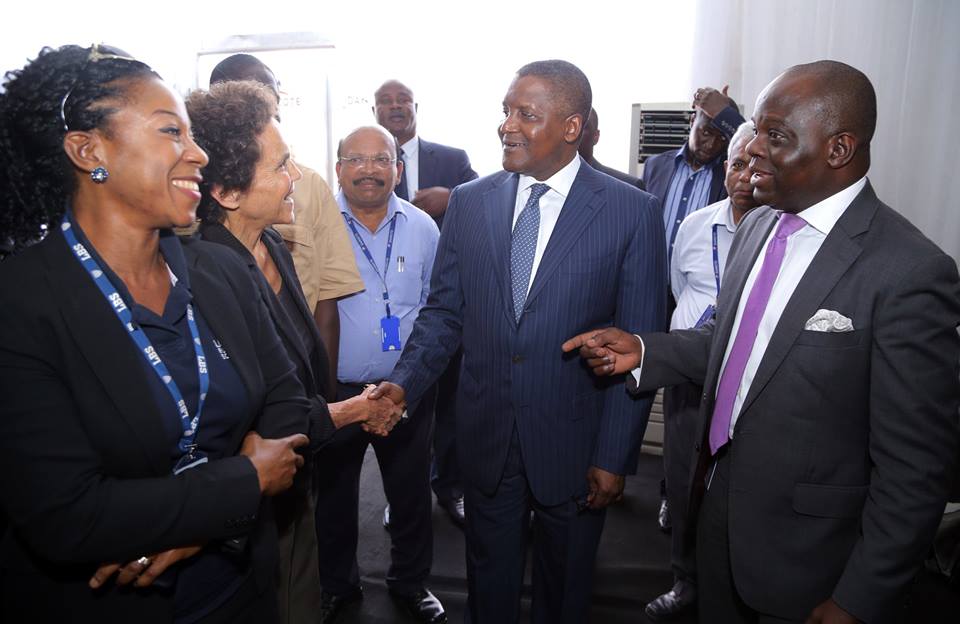
Chairman of Dangote Foundation, Mr Aliko Dangote, shared plans to build ABCHealth during the Bloomberg Global Business Forum, he was co-hosting, and which took place alongside the United Nations General Assembly this week in New York.

According to him, the African-led coalition of companies and philanthropists, will seek to improve the health and wellbeing of Africans, both within the workplace and within the broader communities.

He stated that the partnership will develop and deploy impactful health programs across Africa, deepening knowledge, building evidence for future investment and strengthening coordination among African philanthropists, business leaders, companies and local business networks.

The Coalition is building on the leadership, reputation and convening power of the Aliko Dangote Foundation and the experience, reputation and global reach of GBCHealth. Critical issues that will be the focus of the partnership ranges from nutrition to malaria, with priorities identified and agreed by local leadership.

Through his Foundation, Dangote has made an unprecedented grant and seed contribution to GBCHealth of US$ 1.5 million over three years as a call to action and a signal to the African business community of the importance of working together and investing in health.

“The time is ripe for the private sector to proactively demonstrate its value in partnering to lead a new era in development,” said Mr Dangote. “The coalition can provide much needed guidance to ensure activities and investments are driving results in areas where the private sector can have real impact, focusing on holistic and integrated solutions that cross borders. We look forward to working with other business leaders as partners in development to drive this impact.”

Co-chair of GBCHealth’s Board of Directors, Aigboje Aig-Imoukhuede said, “This coalition brings together two heavyweights in the health and development arena”.

“Together we have an opportunity to demonstrate how investing in health and creating healthier populations, can help business maximize shareholder value, accelerate economic growth and make entry into new markets more feasible.”

The coalition will have five primary objectives over its first three years incubate partnerships on priority health programs to enhance and accelerate results; work directly with companies to optimize workplace and community health programs; advocate for policies and initiatives that drive system-level changes; create a hub of data and insights specific to Africa and African business; and curate leadership events to convene and drive action around common health issues, across sectors.

The program will kick off in Nigeria and roll out through business regions in Africa and beyond over the next three years.

The continent currently has 400 companies with revenue of more than $1 billion per year, and these companies are growing faster, and are more profitable in general, than their global peers. Coupled with these fast-moving regional leaders, small and growing businesses create 80% of the continent’s employment and are stoking the engines of growth.

Against this backdrop, according to Dangote, there’s a new cadre of responsible business leaders and philanthropists who understand the value and promise of sustainable large-scale investments in African countries, and are poised to make an even bigger impact on the continent’s people and economies.

Investments in better training, healthcare and supply chain accountability have demonstrated direct financial return through gains in productivity and efficiency, while sup­port for social programs has accelerated economic growth and raised incomes which in turn unlocks a wider con­sumer base and makes entry into new markets more feasible.

In her comments, CEO of the Dangote Foundation, Zouera Youssoufou, said “GBCHealth has a strong track record of bringing diverse groups together to improve the health wellbeing of communities. We look forward to collaborating to build an African business community united as a force for healthier and more inclusive development.”

“What is needed now is an approach that combines the value of local insights and trusted networks with the leverage of a global platform and expertise to support the more coordinated and impactful involvement of the African private sector across the continent and within the global development community,” commented Mr Aig-Imoukhuede.

“The coalition builds on the local-to-global business approach we have developed in Nigeria through our work with the Corporate Alliance on Malaria in Africa (CAMA). The Aliko Dangote Foundation has demonstrated expertise in implementing result-oriented health programs in Nigeria and across Africa. We look forward to our collaboration to bring insights from this work to a global audience,” said Nancy Wildfeir-Field, President of GBCHealth.

Immediate plans include hiring an African based CEO for ABCHealth, and building a support base for the coalition working towards a launch in early 2018.

The foundation is generously providing office space and support for coalition staff over the first three years of development.

“It’s an ambitious and bold project,” said Dangote, “but the only way to move Africa forward is to take bold moves, to think big, dream big and do big things together – breaking down silos, working across borders and working across sectors– with government and with each other.”


Dipo Olowookere is a journalist based in Nigeria that has passion for reporting business news stories. At his leisure time, he watches football and supports 3SC of Ibadan. Mr Olowookere can be reached via [email protected]

Health

Ebola: NCAA Directs Enhanced Surveillance Across Nigerian Airports

Published

on

ebola

By Adedapo Adesanya

The Nigeria Civil Aviation Authority (NCAA) has directed airlines, airport operators and other aviation stakeholders to intensify public health surveillance measures following the outbreak of Ebola Virus Disease (EVD) in parts of the Democratic Republic of Congo (DRC) and Uganda.

In a circular dated May 18, 2026, the NCAA said the directive became necessary due to growing concerns over the spread of the disease and the critical role of the aviation sector in preventing cross-border transmission.

The authority noted that although no confirmed case linked to the outbreak has been recorded in Nigeria, it is collaborating with the Federal Ministry of Health, the Nigeria Centre for Disease Control (NCDC), Port Health Services and international health organisations to closely monitor the situation.

According to the NCAA, health authorities in the DRC recently identified a cluster of severe illnesses among healthcare workers in the Bunia Health Zone in the northeastern part of the country.

Recall that Nigeria also said it would tighten surveillance after the World Health Organisation (WHO) declared a public health emergency after Ebola killed over 80 people in Congo and Uganda.

Laboratory investigations later confirmed the presence of the Bundibugyo virus, a strain of the Ebola virus family known to cause severe viral haemorrhagic disease in humans.

The authority stated that there is currently no licensed vaccine specifically approved for the Bundibugyo strain, while treatment remains largely supportive and symptom-based.

The NCAA listed symptoms associated with Ebola Virus Disease to include sudden fever, severe fatigue, persistent headache, vomiting, abdominal pain and bleeding manifestations such as nosebleeds or vomiting blood.

It stressed that early detection and immediate reporting remain critical to preventing the international spread of the disease.

As part of preventive measures, the authority said disease surveillance systems at airports have been strengthened, while contact tracing, case reporting mechanisms and border health screening procedures are also being reinforced.

The NCAA further directed pilots to notify Air Traffic Control of any suspected communicable disease cases onboard aircraft, in line with the Nigeria Civil Aviation Regulations.

It also instructed flight crew members to complete and submit Aircraft General Declaration forms for all suspected cases and mandated airlines to ensure passenger locator forms are completed and handed over to Port Health Services upon arrival.

The authority added that airlines must ensure aircraft are properly equipped with first aid kits, universal precaution kits and emergency medical kits.

It also urged operators to reinforce crew training on the identification and management of communicable diseases and ensure strict adherence to infection prevention and control guidelines.

The NCAA called on all aviation stakeholders to remain vigilant and comply fully with established public health protocols to safeguard passengers, crew members and the general public from potential health threats.

Continue Reading

Health

Nigeria on High Alert as WHO Declares Ebola Emergency of International Concern

Published

on

ebola dr congo

By Adedapo Adesanya

The Nigeria Centre for Disease Control and Prevention (NCDC) has said that although the country currently has no confirmed case of Ebola Virus Disease (EVD), it is, nevertheless, actively strengthening surveillance.

This comes as the World Health Organisation (WHO) declared the Ebola outbreak in Congo and Uganda a public health emergency of international concern, after 80 deaths were attributed to the disease.

The WHO, however, stopped short of declaring a pandemic, saying it did not meet the necessary criteria. The United Nations agency advised countries against closing borders or restricting trade.

Early symptoms include fever, muscle pain, fatigue, headache, and sore throat, and are followed by vomiting, diarrhoea, a rash, and bleeding.

In a statement by its Director General, Mr Jide Idris, on Sunday, the NCDC noted that it is also ramping up laboratory readiness, infection prevention, and public awareness efforts across the country.

He said the centre was closely monitoring the situation due to increasing regional movement across African countries and was working with relevant stakeholders, including the Port Health Services under the Federal Ministry of Health and Social Welfare, to strengthen preparedness within Nigeria’s public health system.

“NCDC is closely monitoring the situation and working with relevant stakeholders, including the Port Health Services, to ensure continued vigilance and preparedness within the public health system,” he stated.

The NCDC boss described Ebola virus disease as a severe viral illness transmitted through direct contact with the blood, bodily fluids, secretions, or contaminated materials of infected persons or animals.

He noted that the disease has an incubation period ranging from two to 21 days, while symptoms include fever, weakness, headache, muscle pain, sore throat, vomiting, diarrhoea, and, in severe cases, unexplained bleeding.

Recall that Nigeria gained international recognition for successfully containing an Ebola outbreak in 2014 after an infected traveller arrived in Lagos from Liberia.

Healthcare workers were advised to maintain a high index of suspicion for Ebola, especially in patients presenting symptoms compatible with the disease alongside relevant travel or exposure history.

Idris stressed the importance of strict adherence to infection prevention and control measures, including early identification and isolation of suspected cases, proper use of personal protective equipment, hand hygiene, and prompt reporting through established channels.

“NCDC will continue to monitor the situation closely and provide updates as necessary,” he added.

NCDC advised Nigerians to remain calm, maintain good hand hygiene, avoid misinformation, and report unusual illnesses promptly.

Continue Reading

Health

NNPC Donates MRI Machine, Others to Nnewi Teaching Hospital

Published

on

NNPC MRI Machine Nnewi teaching hospital

By Modupe Gbadeyanka

A 1.5 Tesla Magnetic Resonance Imaging (MRI) machine has been donated to the Nnamdi Azikiwe University Teaching Hospital (NAUTH), Nnewi, Anambra State, by the corporate social responsibility arm of the Nigerian National Petroleum Company (NNPC) Limited, NNPC Foundation.

In a statement on Sunday by its Chief Corporate Communications Officer, Mr Andy Odeh, the state-owned oil organisation said the medical item was given to the healthcare institution as part of its commitment to improving healthcare access and strengthening medical infrastructure across Nigeria.

The MRI system is expected to significantly improve access to advanced diagnostic imaging services for millions of Nigerians across the South-East (Anambra, Enugu, Imo, Abia and Ebonyi States) as well as neighbouring Delta State.

The foundation also provided critical supporting infrastructure, including RF shielding systems, chillers, backup UPS systems, electrical installations, specialised imaging accessories, ventilation systems, CCTV and oxygen monitoring systems, intercom communication facilities, and other patient comfort technologies designed to ensure optimal operation of the facility.

Before now, patients requiring advanced MRI diagnostic services often faced prolonged waiting periods, exorbitant costs, and the burden of travelling long distances in search of functional imaging centres.

But it is believed that the intervention of the NNPC Foundation would provide succour to patients.

At the presentation of the items to the institution over the weekend, the chief executive of the NNPC, Mr Bashir Bayo Ojulari, represented by the Managing Director of NNPC Foundation, Mrs Emmanuella Arukwe, described the intervention as a strategic investment in healthcare access, diagnostic precision, and improved patient outcomes, noting that the facility aligns with the company’s commitment to building sustainable systems and impactful national institutions.

“The installation of the MRI in NAUTH exemplifies our commitment, as our intent is to build enduring institutions, sustainable systems and legacies. This intervention aligns with our conviction that access to quality healthcare underpins human dignity, longevity and economic productivity,” Mr Ojulari stated.

‎He described the company’s social investments as viable currencies that strengthen the relationship between the Company’s core mandate of providing and managing energy for Nigerians and meeting stakeholders’ expectations.

‎In his remarks, the Governor of Anambra State, Mr Charles Soludo, who was represented by the Commissioner for Health, Dr Afam Obidike, said the intervention would enhance safe and precise diagnosis and treatment for patients across the South-East region.

He also commended NNPC Foundation for donating the MRI facility to the state, noting that the intervention would significantly improve access to quality healthcare services for the people.

The Chief Medical Director of NAUTH, Prof Joseph Ugboaja, thanked the donor for the items, saying NNPC Foundation has demonstrated that corporate social responsibility is not just a policy statement but a lifeline for institutions like ours.

“For too long, patients in our catchment area have had to travel long distances to access this level of diagnostic precision, often at prohibitive costs. With this installation, we will eliminate that burden,” he enthused.

Continue Reading

Trending