Health
NRC Seeks Urgent Need to Avert Spread of Deadly Cholera in Nigeria
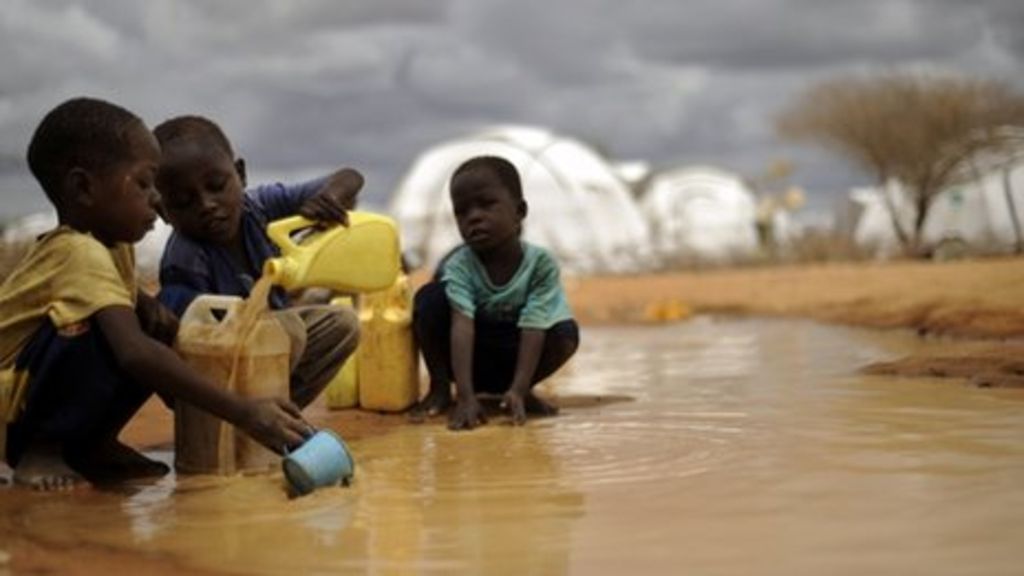
The urgent need to address the colossal humanitarian needs and to prevent the spread of deadly cholera in temporary displacement camps in northeast Nigeria has been stressed by the Norwegian Refugee Council (NRC).
A statement issued by the agency said in recent times, torrential rain has destroyed makeshift tents in the camps, causing severe flooding and leaving vulnerable families homeless.
“Displaced people are suffering due to relentless rains and wind battering their homes the last few days. Large numbers of families, who fled from conflict months ago, are left homeless while others are forced to share overcrowded tents with neighbours or relatives,” said Eric Batonon, Country Director for NRC in Nigeria.
According to NRC’s assessments, over 6,800 people living in displacement camps in Maiduguri have been impacted by floods in recent weeks. In Dikwa, 500 people have been rendered homeless due to flooding and have set up home in disused registration centres.
“They are essentially displaced within a displacement camp,” Batonon added.
“My home is completely destroyed. My floor has turned to mud and water is everywhere. The rain keeps coming and we do not have any choice but to wait for it to stop or share with others,” said displaced mother-of-four Fatima Mohammed.
The Adamawa State Government officially declared an outbreak of cholera in three local government areas during the rainy season. The total number of cases reported as of August 16 stands at 633. Four people have so far lost their lives to the disease. Due to recent heavy rain and flooding, more cases could be confirmed over the coming weeks.
“Displaced people are living in sub-human conditions across the region. There are no sanitation or drainage facilities in most camps. People are going to the toilet in open spaces because there are no facilities for them to use and now that the camps are filled with stagnant flood water, water-borne diseases like cholera quickly spread,” Batonon added.
The United Nations and partners have appealed for $848 million to address the needs in northeast Nigeria this year. About eight months into the year, less than 40 per cent has been received.
“Additional financial support is urgently needed to reach the 6.2 million people targeted for humanitarian aid in 2019. People will die if they don´t receive urgent assistance now,” Batonon said.
Furthermore, heavy rain periods present opportunities by armed groups to infiltrate and target displacement camps. On Tuesday night (August 20) in Dikwa, a female suicide bomber detonated a bomb, killing herself and injuring four civilians. This was the first attack of its kind in the area since December 2018.
Health
Over 1.5 million Nigerian Children Living With Sickle Cell Disease—Report
By Modupe Gbadeyanka
More than 1.5 million children under the age of 15 are living with sickle cell disease in Nigeria, a new international study published in The Lancet Child & Adolescent Health, one of the world’s leading medical journals, has revealed.
In the report made available to Business Post, it was disclosed that Nigeria carries the highest burden of disease globally, far exceeding other high-burden countries such as the Democratic Republic of the Congo and Ethiopia.
The findings highlight both the scale of the challenge in Nigeria and the opportunity for the country to lead Africa in tackling one of the most preventable causes of childhood illness and death.
The study shows that nearly nine million children across sub-Saharan Africa are living with sickle cell disease in 2023, including around 1.17 million infants and 2.75 million children under five, who face the highest risk of early death without treatment.
Sickle cell disease is an inherited blood disorder present at birth. With early diagnosis and access to simple, low-cost interventions such as newborn screening, penicillin prophylaxis, routine vaccinations, malaria prevention, and hydroxyurea, most complications and deaths can be prevented.
However, in Nigeria, access to these essential services remains limited. Many children are only diagnosed after severe and avoidable complications, while others are never diagnosed at all, contributing to high levels of preventable illness and early childhood deaths.
The researchers emphasise that strengthening Nigeria’s health system response will be critical. This includes expanding newborn screening programmes, improving access to essential medicines, and integrating sickle cell care into primary healthcare services.
They called for urgent and coordinated action across government, health institutions, and development partners, including expanding newborn screening programmes, improving access to essential medicines and vaccines, and embedding sickle cell care within primary healthcare services.
The researchers, led by Professor Davies Adeloye, Professor of Public Health at Teesside University, United Kingdom, and Director of the International Society of Global Health (ISoGH), also called for increased domestic investment, supported by international partnerships, as well as stronger data systems to improve surveillance and guide policy decisions.
They concluded that even modest improvements in early-life screening and treatment in high-burden countries like Nigeria could transform child survival and significantly reduce preventable deaths.
“Nigeria now stands at the centre of the global sickle cell crisis. With over 1.5 million children affected, the scale is enormous, but so is the opportunity to act. We already know what works. Newborn screening and early treatment are effective, affordable, and can be delivered through existing health systems.
“If Nigeria prioritises sickle cell disease within its national health agenda and integrates care into routine maternal and child health services, we could save hundreds of thousands of young lives and significantly reduce avoidable deaths.” Professor Adeloye noted.
It was learned that the study analysed data from 40 studies across 22 African countries to produce the most comprehensive country-level estimates of childhood sickle cell disease to date.
Health
Helical Secures $10m Funding Package for Expansion
By Dipo Olowookere
A $10 million capital has been raised by Helical to support expansion across more top-20 pharma programmes and growth of its deployed science engineering team.
The firm will also use the money to build the compounding evidence layer that improves performance across diseases, as its mission is to make every scientist able to test hypotheses at the speed of inference and to turn in-silico discovery into a reliable engine for R&D throughput.
The funding package was from redalpine, Gradient, BoxGroup, Frst and notable angels, including Aidan Gomez (CEO Cohere), Clement Delangue (CEO HuggingFace) and Mario Goetze (pro soccer player).
Helical has a product known as the virtual AI lab for pharma, an application layer that turns biological foundation models into decision-ready, reproducible in-silico discovery workflows.
The platform has two product surfaces — the Virtual Lab for biologists and translational scientists, and the Model Factory for ML engineers and data scientists — built on the same data, the same models, and the same results.
By putting both sides in the same system, Helical closes the gap between computational predictions and biological decision-making, so teams that traditionally worked in silos can collaborate on the same evidence.
Helical was founded in early 2024. It was created by three school friends who took different paths to the same problem.
Rick Schneider built tech at Amazon and later helped the German enterprise Celonis scale in France and Japan. Maxime Allard led data science teams at IBM before pursuing a PhD focused on reinforcement learning and robotics. Mathieu Klop became a cardiologist and genomics researcher.
When bio foundation models emerged, the trio saw the chance to build the missing application layer that would let pharma teams move from model experimentation to reproducible, production discovery.
“The models alone don’t discover drugs. The system does. Pharma teams need a system that turns foundation models into workflows scientists can run, validate, and defend.
“We built Helical to make in-silico science reproducible at pharma scale, so teams can go from hypothesis to decision in days instead of months,” the co-founder of Helical, Mr Rick Schneider, said.
“We are at a unique point in time where biological foundation models and general language reasoning models are converging.
“We backed Helical because we strongly believe they have what it takes to build the pharma AI orchestration platform that will drive this transition from siloed AI models to integrated virtual AI labs,” the General Partner at redalpine, Mr Daniel Graf, stated.
Health
NARD Suspends Indefinite Strike, Gives FG Fresh Two-Week Ultimatum
By Adedapo Adesanya
The Nigerian Association of Resident Doctors (NARD) has suspended its planned nationwide indefinite strike, granting the federal government a two-week ultimatum to address lingering welfare issues affecting resident doctors across the country.
The decision was taken after an emergency meeting of the association’s National Executive Council on Tuesday, where members reviewed assurances from government representatives and resolved to give dialogue another chance.
NARD said the suspension was informed by “progress made” in negotiations, particularly commitments on the prompt payment of salary arrears, hazard allowances, and steps toward resolving issues surrounding the Medical Residency Training Fund.
The association did not declare a full resolution of the dispute. It noted that the government had shown “renewed willingness” to address the concerns that triggered the strike threat.
The association noted that while these engagements signalled a willingness by the government to resolve the dispute, several critical issues remain outstanding, particularly the delayed payment of promotion arrears, salary arrears, the 2026 Medical Residency Training Fund (MRTF), and the backlog of 19 months’ professional allowance arrears owed to resident doctors.
It also expressed concern over the Federal Government’s decision to halt the implementation of the reviewed PAT, which had earlier triggered widespread dissatisfaction among its members and raised fears of disruption to healthcare services nationwide.
Despite these unresolved issues, NARD said it opted to suspend the strike as a demonstration of goodwill and commitment to ongoing dialogue, while giving the government a two-week window to take concrete, measurable and verifiable steps to meet its demands.
The association insisted on the immediate reversal of the decision affecting the PAT, payment of all outstanding arrears, prompt disbursement of the MRTF, and full settlement of the accumulated professional allowance backlog.
It warned that it would reconvene at the expiration of the ultimatum to assess the level of compliance and determine its next course of action, adding that failure by the government to meet its demands within the stipulated timeframe would result in the resumption of the suspended strike without further notice.
NARD also called on its members nationwide to remain calm, united and resolute, while urging the Federal Government to act swiftly to prevent a potential crisis in the health sector.
The association further appreciated the interventions of the Vice President and other stakeholders, expressing hope that their involvement would lead to the timely resolution of the dispute and help sustain healthcare delivery across the country.
-
Feature/OPED6 years agoDavos was Different this year
-
Travel/Tourism10 years ago
Lagos Seals Western Lodge Hotel In Ikorodu
-
Showbiz3 years agoEstranged Lover Releases Videos of Empress Njamah Bathing
-
Banking8 years agoSort Codes of GTBank Branches in Nigeria
-
Economy3 years agoSubsidy Removal: CNG at N130 Per Litre Cheaper Than Petrol—IPMAN
-
Banking3 years agoSort Codes of UBA Branches in Nigeria
-
Banking3 years agoFirst Bank Announces Planned Downtime
-
Sports3 years agoHighest Paid Nigerian Footballer – How Much Do Nigerian Footballers Earn