Connect with us

Jobs/Appointments

Buhari Okays N30,000 as New National Minimum Wage

Published

on

By Modupe Gbadeyanka

President Muhammadu Buhari on Tuesday approved N30,000 as the new national minimum wage in Nigeria.

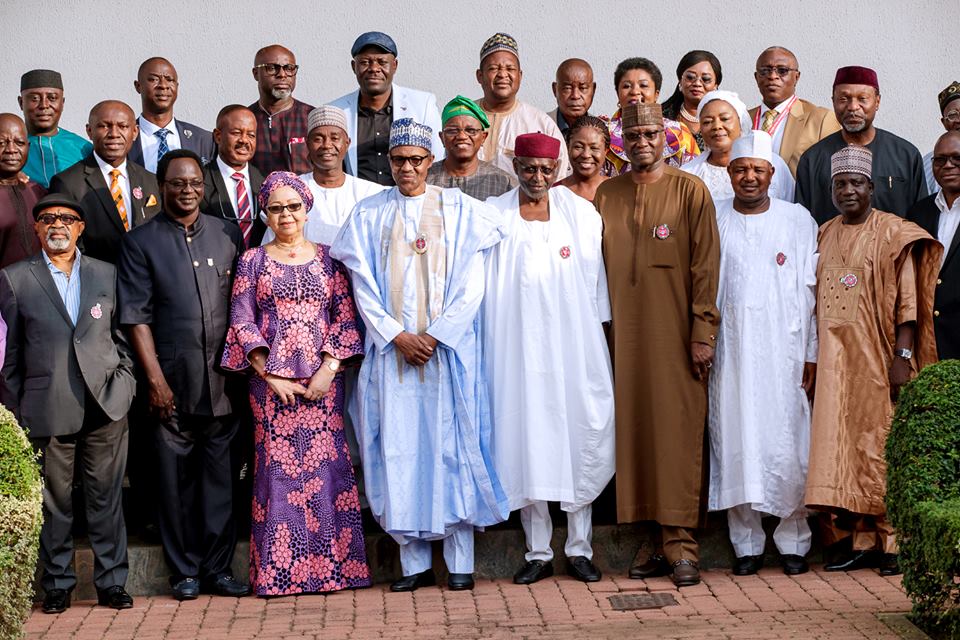
On Tuesday evening, the President received report of the tripartite committee he set up in November 2017 to look into the minimum wage, which is presently at N18,000.

At a meeting held on Monday in Abuja, the committee, which comprises labour unions, organised private sector and the government, it was agreed that N30,000 will be the new wage.

Receiving the report today, Mr Buhari thanked leadership of the organized labour and private sector as well as representatives of state and federal governments for the hard work, describing the agreement as a “notable achievement.”

The President, who urged workers and their leaders not to allow themselves to be used as political weapons, promised to “transmit the Executive Bill to the National Assembly for passage within the shortest possible time,” adding that he was “fully committed to having a new National Minimum Wage Act in the very near future.”

Mr Buhari said he “will continue to engage you all in closing any open areas presented in this report. I therefore would like to ask for your patience and understanding in the coming weeks.”

According to him, the review of the minimum wage “became necessary for many reasons. The last review took place in 2011. We all know since then, the prices of key consumables have increased and the most vulnerable of our workers are struggling to make ends meet.”

“Since 2011, many changes have taken place. Nigeria rebased its GDP to become the largest economy in Africa. We reported very strong GDP growth rates and exceptional performance of our capital markets. However, these reported successes did not flow into the pockets and homes of majority of Nigerians.

“In the last three years, we focused on correcting this deficiency. We are working to create a diversified and inclusive economy.

“We are pushing to clear pension arrears owed to our retired workers with the limited resources available to us.

“We supported state governments to pay workers salary. And of course, we set up a committee in order to review the minimum wage of workers,” he said further.

President Buhari said, “The Committee Chairman highlighted some of the challenges encountered during your deliberations, especially as it relates to having a consensus position acceptable by all parties.

“I understand, on the government side, the concerns raised were around affordability – that today many states struggle to meet their existing salary requirements.

“On the side of labour, the points raised focused on the need for any increase to be meaningful.

“In a way, both arguments are valid. I want to assure you all that we will immediately put in place the necessary machinery that will close out these open areas.”


Modupe Gbadeyanka is a fast-rising journalist with Business Post Nigeria. Her passion for journalism is amazing. She is willing to learn more with a view to becoming one of the best pen-pushers in Nigeria. Her role models are the duo of CNN's Richard Quest and Christiane Amanpour.

Click to comment

Leave a Reply

Your email address will not be published. Required fields are marked *

Jobs/Appointments

UNIZIK Appoints Nicholas Okoye Visiting Senior Lecturer, to Strengthen Digital Assets Education

Published

on

Nicholas Okoye

Nnamdi Azikiwe University (UNIZIK) has appointed veteran investment banker and capital markets expert, Nicholas “Nicky” Okoye, as a Visiting Senior Lecturer in a move aimed at strengthening its capital markets and digital assets curriculum amid the growing global adoption of virtual assets and blockchain-based finance.

The appointment, which takes immediate effect, is expected to deepen the university’s capacity to train enterprise executives, entrepreneurs and policymakers in emerging areas such as cryptocurrencies, stablecoins, Central Bank Digital Currencies (CBDCs), tokenisation of real-world assets and other digital financial innovations.

UNIZIK, which hosts one of Africa’s few dedicated Capital Markets faculties, said the appointment aligns with its strategy of equipping students and professionals with the knowledge and practical skills required to navigate the rapidly evolving financial ecosystem.

The university, in its statement, described the appointment as a significant milestone for the institution.

“Securing someone of Nicky Okoye’s calibre is a game-changer. As global finance evolves, we must equip enterprise executives, entrepreneurs and policymakers with the technical knowledge required to build long-term capital formation strategies. His real-world experience is invaluable.”

Okoye brings decades of experience across global and Nigerian financial institutions. His career includes serving as a Financial Consultant at Merrill Lynch in the United States, Chief Strategy Officer at the Nigerian Exchange Group, and Founding Group Executive Director of Operations and Strategy at Transcorp Group Plc, where he led fundraising initiatives that collectively exceeded $1 billion.

He currently leads the Global Investment Advisory Community (GIAC), a coalition of local and international banks, asset managers and fintech firms working to develop a digital assets ecosystem across Africa and the Caribbean.

Beyond the private sector, Okoye has contributed to public policy, providing advisory support to the Central Bank of Nigeria (CBN) and the Securities and Exchange Commission (SEC) on capital market regulatory frameworks.

Stakeholders in the financial services sector have welcomed the appointment, expressing optimism that his academic engagement would help build capacity among investors and professionals as Nigeria expands its digital finance ecosystem.

Okoye also holds an honorary Doctor of Business Administration from Enugu State University of Technology, awarded in recognition of his contributions to enterprise development and business excellence.

He previously served on the Presidential Jobs Board and the National Council of Small and Medium Scale Enterprises, where he provided strategic advice on economic development. Between 2014 and 2018, he advised the Nigeria Content Development and Monitoring Board (NCDMB) on Project Triple E, an initiative designed to strengthen indigenous participation in the upstream oil and gas value chain by integrating community-based contractors.

The appointment comes as Nigeria intensifies efforts to establish a robust regulatory framework for digital assets. The Federal Government recently inaugurated a National Virtual Assets Council to coordinate the oversight and regulation of virtual and digital assets in the country.

The council is chaired by the Central Bank of Nigeria, with support from the Securities and Exchange Commission and the Nigeria Revenue Service, as part of broader efforts to promote innovation while ensuring investor protection and financial system stability.

Continue Reading

Jobs/Appointments

Tinubu Appoints Fayose Rural Electrification Agency Chairman

Published

on

ayo fayose rea chairman

By Modupe Gbadeyanka

The former Governor of Ekiti State, Mr Ayodele Fayose, has been appointed by President Bola Tinubu as the chairman of the Rural Electrification Agency (REA), with immediate effect.

A statement signed by the Special Adviser to the President on Information and Strategy, Mr Bayo Onanuga, on Monday night said Mr Tinubu also made 25 other new appointments into 10 federal government agencies and commissions.

Also appointed was Major General Junaid Bindawa as chairman of the National Salary and Wages Commission.

On the board of REA are Mr Ahmadu Abubakar and Engineer Ilyasu Ibrahim Makinta as members and non-executive directors. The incumbent DG of the agency, Abba Abubakar Aliyu, and three executive directors previously appointed make up the remaining board members.

President Tinubu made eight other appointments to the Wages Commission, along with Mr Bindawa. Former member of the House of Representatives from Lagos, Olajumoke Okoya-Thomas, is the new secretary of the commission.  Dr Ogbole Ene Lilian, Oladele Olatubosun, and Yakubu Umar Barde, representing Benue, Oyo and Kaduna, were appointed as commissioners.

Dr Mai Adamu Yau, from Borno, Ginika Florence Tor (Enugu), Engineer Lawrence Okoh (Edo) and Bello Morenike Iyabode (Kogi) were appointed as members of the commission.

Tosin Johnson Adeyanju, who was previously appointed as the Executive Secretary of the National Lottery Trust Fund (NLTF), has now been moved to the Revenue Mobilisation and Fiscal Commission as Secretary.

Mr Tinubu also appointed Dr Abuh Mohammed as the DG of the National Population Commission, Dr Akinola Odeyemi as Managing Director of the Nigerian Bulk Electricity Trading (NBET), and Dr Anthony Inalegwu Godwin as chairman/CEO of the Nigeria Atomic Energy Commission. Engineer Julius Oloro, a former council chairman, is the new CEO of the Kwara-based National Centre for Agricultural Mechanisation (NCAM), replacing Dr A.R. Kamal, who died last January.

The President constituted the board of the Fiscal Responsibility Commission, with Dr Abdullahi Maikano Saidu as chairman. Members include Mohammed Asmau, Mohammed Aliyu Makama, Dr Suleiman Gidado, Louis O. Ndukwe, Amaechi Ugwele and Olaniyi Idowu Onikola.

Shuni Muhammad Dahiru is the new executive secretary of the National Commission for Mass Literacy, Adult and Non-Formal Education, replacing Professor Shu’aibu Shehu Aliyu, who was reassigned to the Petroleum Trust Development Fund (PTDF) in April.

To replace Mathias Byuan, the former executive director, finance of the Federal Housing Authority, who resigned to contest the governorship election in Benue, President Tinubu named Gisaor Vincent Iorja. The new occupier of the position is an economist, legal scholar, and academic currently serving as the secretary of the Benue State Independent Electoral Commission (BSIEC).

Continue Reading

Jobs/Appointments

Elumelu Quits as UBA Chairman, Nnorom Takes Over

Published

on

tony elumelu and emmanuel nnorom

By Aduragbemi Omiyale

In line with the 12-year tenure prescribed for non-executive directors of banks by the Central Bank of Nigeria (CBN), Mr Tony Elumelu will on August 21, 2026, cease to be chairman of United Bank for Africa (UBA) Plc.

The board of the financial institution at its meeting on July 6, 2026, has elected Mr Emmanuel Nnorom as the new chairman.

In a notice to the Nigerian Exchange (NGX) Limited, the lender said Mr Elumelu’s successor, a non-executive director of the company, will assume the new role on August 21, 2026.

Mr Nnorom is a chartered accountant with over 40 years of experience in banking, finance and audit. He brings to the role extensive leadership experience and deep institutional knowledge of UBA.

“I am honoured by the trust the Board has placed in me and deeply conscious of the legacy I inherit.

“I look forward to working with my colleagues on the board, management and our staff across all our markets to sustain UBA’s momentum and continue delivering long-term value to our shareholders, customers and stakeholders,” Mr Nnorom stated.

Commenting on his retirement, Mr Elumelu said, “Serving United Bank for Africa has been one of the great privileges of my career.

“UBA has a unique competitive position, across Africa and globally, and I leave the Board with great confidence in UBA’s future.

“Emmanuel Nnorom is a leader of integrity, experience and sound judgement, and I am confident that the Bank will continue to thrive under his leadership.”

The board thanked him for his visionary leadership and exceptional contribution to the growth, transformation and institutional strength of the UBA Group.

Continue Reading