
Jobs/Appointments
Businesses Need to be Concerned About Employee Privacy as Much as Consumer Privacy


By Andrew Bourne
Of late, there have been a lot of headlines around major technology players putting customer privacy first and making data privacy one of their core values.
The business landscape is hurriedly re-orienting itself to provide the digital consumer with a safe space where their data is protected round the clock.
Meanwhile, there’s another important stakeholder whose privacy equally matters. Employees have just as much right to privacy in the workplace.
Recent trends like remote working and hybrid models have heightened the importance of employee privacy
Forced to switch overnight to remote work, organisations turned to digital collaboration and productivity tools to enable their workforce to continue their day-to-day operations. With little to no time to vet third-party vendors, organisations had to purchase and implement technology quickly or use free applications without weighing vulnerabilities.
But this hasty transition was not without its risks, especially for employees. For instance, the steep rise in user base for video conferencing tools caught the hackers’ attention and live meetings were invaded in some cases.
Moreover, audio/video calls while working from home means that varied details of employees’ personal lives are archived in vendors’ data records, at risk of being compromised unless the vendor has a stringent data protection program.
Many companies introducing remote monitoring software when their employees began working from home also raised a lot of privacy concerns.
According to Gartner, more than one out of four companies purchased technology during the pandemic to passively track and monitor their employees.
Another area where the delicate balance between privacy and necessity worried employees was the interim health data collection (like vaccination proof, medical records, household surveys, status updates, etc.) carried out to ensure a safe return to the office.
Workers want their employers to be transparent and upfront with their data practices
Employee data collection is not new. Employers have been long studying workplace patterns, engagement survey responses, and team dynamics to foster a productive work environment.
Employees are usually willing to work together with their employer on this, provided the data gathered directly serves an internal business goal as well as the latter inform beforehand about what the data will be used for, how it will be stored, and who will have access to it. The same goes for employee monitoring. A 2018 Gartner study reported that more than 50% of the respondents were comfortable with monitoring on grounds of valid reasons from the employer.
To put things in perspective, employees willingly trust employers to keep their data safe and use it responsibly. But this trust is broken when employers keep employees in the dark about what purpose their data serves or cross a line with tracking by going to lengths like uninformed surveillance or camera monitoring. The moment employees feel their employer is invading their privacy, it will reflect in the organisation’s attrition rate.
Shaky legal ground
Businesses may also be placing themselves on a shaky legal ground when it comes to employee privacy. In terms of the Protection of Personal Information Act (POPIA), employers have to make employees aware that their productivity and performance is being monitored and should provide reasons for doing so. The Regulation of Interception of Communications and Provision of Communication-Related Information Act (RICA), meanwhile, restricts the interception of communication except under very specific circumstances.
Businesses may also be placing themselves on a shaky legal ground when it comes to employee privacy. In terms of the Nigeria Data Protection Regulation (NDPR) employers are required to display a simple and conspicuous policy regarding personal information data. To avoid any legal complications, employers should obtain employees’ consent as well as buy-in before implementing monitoring tools.
Rather than trying to evade these legal minefields, employers should look to build trust between themselves and employees, and build a safe and compliant environment where privacy is assured.
Commitment from the top
Ultimately, employee privacy is as much a leadership prerogative as anything else. It requires organisational commitment on an ongoing basis. Employee data, like customer data, is of critical importance and warrants the same level of protective measures like robust encryption both at rest and in transit, clear data handling statements, and informed consent. In the case of third-party services, the safe choice for businesses is to work with vendors who espouse an ethical approach to data privacy protection, are compliant with local regulations, and would never monetize data.
When privacy is assured, the trust relationship grows stronger. You build more loyal employees who are willing to go the extra mile for customers, ultimately resulting in a positive impact on your bottom line. As such, employee privacy shouldn’t be treated as a feature but as a non-negotiable given.
Andrew Bourne is the Regional Manager – MEA, Zoho Corporation



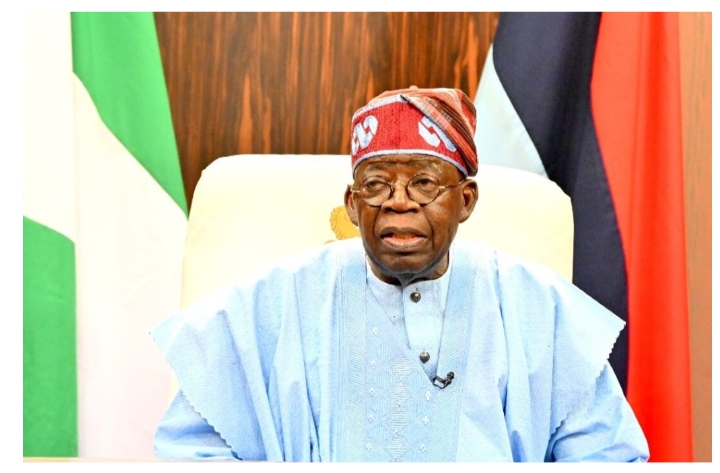
By Adedapo Adesanya
President Bola Tinubu has approved the appointment of Mr Shu’aibu Shehu Aliyu as the Executive Secretary of the Petroleum Technology Development Fund (PTDF).
Mr Aliyu, a professor, is to replace Mr Ahmed Galadima Aminu, who recently resigned to participate in the 2027 governorship election in Adamawa State.
In a statement by a spokesperson to the President, Mr Bayo Onanuga, on Thursday, it was disclosed that the appointment of Mr Sule Ahmed Abdulaziz as the chief executive of the Transmission Company of Nigeria (TCN) has been renewed for a second and final term.
These appointments are said to take effect immediately.
Professor Aliyu, the new PTDF helmsman, is a distinguished academic and seasoned administrator with extensive experience in research, education, and institutional leadership. His appointment underscores the President’s commitment to strengthening key institutions in the petroleum sector and advancing capacity development for Nigeria’s energy industry.
“The President expects him to leverage his wealth of experience to reposition the PTDF for greater impact in human capital development, innovation, and strategic support for the oil and gas sector in line with national priorities.
“President Tinubu renewed Engineer Abdulaziz’s appointment following a comprehensive assessment of his performance and leadership of the nation’s transmission network.
“Under his stewardship, TCN has recorded notable improvements in grid stability, transmission capacity expansion, and system modernisation, reinforcing its critical role in Nigeria’s electricity value chain.
“Engr. Abdulaziz brings over three decades of experience in the power sector and has also strengthened regional electricity integration through his leadership in the West African Power Pool (WAPP).
“President Tinubu urges both appointees to discharge their responsibilities with diligence, integrity, and a strong sense of national service,” the statement said.

By Adedapo Adesanya
The Nigerian National Petroleum Company (NNPC) Limited saw its workforce rise by 12.2 per cent to 6,247 at the end of 2025 from 5,566 in the corresponding period of 2024, according to its latest employee data.
The state oil firm stated that its employees increased by 14.3 per cent from 5,495 recorded at the end of the first quarter of 2025 to 6,280 at the end of the second quarter of 2025.
Its staff strength, however, dropped by 0.11 per cent to 6,273 workers in the third quarter of 2025 and further shrank by 0.41 per cent to 6,247 in the last quarter of the year under review.
Giving a breakdown of its workforce in terms of gender, the NNPC disclosed that at the end of the fourth quarter, 5,044 employees, representing 80.7 per cent of its workforce, were males, while 1,203 employees, representing 19.3 per cent of its total workforce, were females.
Further breakdown revealed that Junior Staff 2 (JS 2) and Junior Staff 1 (JS1) cadres had one staff member and 175 staff members, respectively, at the end of the fourth quarter of 2025, as against one staff and 187 staff members, respectively, recorded in the third quarter of 2025.
In addition, the Senior Staff Seven (SS7) cadre had 31 employees, remaining the same as in the previous quarter, while the SS6 cadre dropped to 1,010 staff, from 1,012 staff recorded at the end of the third quarter of 2025.
The SS5, SS4, SS3, SS2 and SS1 staff cadre recorded 1,076 staff, 164 staff, 389 staff, 471 staff and 1,829 staff, respectively, in the quarter under review, compared with 1,076 staff, 164 staff, 391 staff, 478 staff and 1,835 staff, respectively, recorded in the third quarter of 2025.
Management Six (M6) cadre had 695 staff in the second quarter of 2025, compared with 699 staff in the same category in the previous quarter, while M5, M4, M3, M2 and M1 cadres had 237 staff, 117 staff, 47 staff, seven staff and one staff respectively, compared with 243 staff, 116 staff, 44 staff, seven staff and one staff in the corresponding cadres in the third quarter of 2025.
Further analysis of the NNPC workforce across different cadres showed that JS2 and JS1 accounted for 0.02 per cent and 2.75 per cent of its total workforce, respectively, while SS7, SS6, SS5, SS4, SS3, SS2 and SS1 cadres accounted for 0.50 per cent, 16.17 per cent, 17.22 per cent, 2.63 per cent, 6.23 per cent, 7.54 per cent and 29.28 per cent of the state oil company’s total workforce, respectively.
In addition, NNPC’s M6, M5, M4, M3, M2 and M1 cadres accounted for 11.13 per cent, 3.79 per cent, 1.87 per cent, 0.75 per cent, 0.11 per cent and 0.02 per cent, respectively.
In general, the NNPC Limited noted that it had 173 employees in its junior staff category; 4,970 employees in its senior staff category, and 1,104 employees in its management category.
It also reported that in its middle management cadre, it has 932 employees, accounting for 14.92 per cent of its total workforce, while the top management cadre had 172 employees, accounting for 2.75 per cent of its total workforce.

By Adedapo Adesanya
President Bola Tinubu has appointed Mr Ibrahim Ida as Chairman of the Corporate Affairs Commission (CAC).
Mr Ida holds an MSc in Banking and Finance from the University of Ibadan (1983) and an LLB from the University of Abuja (2003). Before being elected to the Senate in 2017 to represent Katsina Central, he served as the Commissioner of Finance for Katsina State and as the Permanent Secretary of the Federal Civil Service.
His appointment comes as the CAC faces legislative scrutiny over its books. The commission is part of a group of agencies that the House of Representatives Public Accounts Committee (PAC) recommended zero allocation for the year 2026, for allegedly failing to account for public funds appropriated to them.
The committee, at an investigative hearing held in February, accused CAC and some other ministries, departments and agencies (MDAs) of shunning invitations to respond to audit queries contained in the Auditor-General for the Federation’s annual reports for 2020, 2021 and 2022.
It asked the National Assembly not to continue to appropriate public funds to institutions that disregard accountability mechanisms.
President Tinubu also nominated seven people to fill vacant commissioner positions at the National Population Commission (NPC) as Federal Commissioners to represent their respective states in the National Population Commission. The nominees are;
1. Kolawole Oladipupo Alabi – Ekiti State
2. Nasiru Mu’azu – Zamfara State
3. Usman Abubakar Tuggar – Bauchi State
4. Dr Isaka Alada Yahaya – Kwara State
5. Prof. Sadiq Isah Radda – Katsina State
6. Suleiman Umar – Jigawa State
7. Hon. Chiso Abdullahi Dattijo – Sokoto State
The appointments, which complement other Federal Commissioners already sworn in, are subject to confirmation by the National Assembly.
The President also appointed Mr Yusuf Mohammed of Kano State as Chairman of the Federal Polytechnic, Kaltungo, and confirmed the appointment of Mr Bala Mohammed Bello as his Special Adviser on Political Economy.
Mr Bello, from Kebbi State, holds a Bachelor’s Degree in Accounting and an MBA from Ahmadu Bello University, Zaria. Before this appointment, he was a Deputy Governor at the Central Bank of Nigeria (CBN). He also served as Executive Director (Corporate Services) at the Nigerian Export-Import Bank (NEXIM) from 2017 to 2022.
-
 Feature/OPED6 years ago
Davos was Different this year
-
Travel/Tourism10 years ago
Lagos Seals Western Lodge Hotel In Ikorodu
-

 Showbiz3 years ago
Estranged Lover Releases Videos of Empress Njamah Bathing
-
 Banking8 years ago
Sort Codes of GTBank Branches in Nigeria
-

 Economy3 years ago
Subsidy Removal: CNG at N130 Per Litre Cheaper Than Petrol—IPMAN
-

 Banking3 years ago
Sort Codes of UBA Branches in Nigeria
-

 Banking3 years ago
First Bank Announces Planned Downtime
-

 Sports3 years ago
Highest Paid Nigerian Footballer – How Much Do Nigerian Footballers Earn