
Jobs/Appointments
Dele Alake Re-elected as Chairman of Africa Minerals Strategy Group


By Adedapo Adesanya
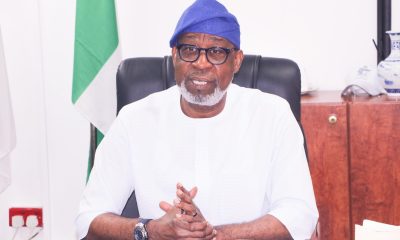
Nigeria’s Minister of Solid Minerals Development, Mr Dele Alake, has been re-elected as the Chairman of Africa Minerals Strategy Group (AMSG).
Mr Alake was first unanimously elected as the pioneer Chairman of AMSG in 2024 on the sidelines of Future Minerals Forum (FMF).
He was re-elected at the 2026 Annual General Meeting (AGM) of the group, held on the sidelines of the same conference in Riyadh, Saudi Arabia.
The continental ministerial forum of African ministers is responsible for minerals and mining, committed to coordinated action aimed at maximising value addition and beneficiation from Africa’s vast mineral resources.
A statement issued on Sunday in Abuja by the Special Assistant on Media to the Minister of Solid Minerals Development, Mr Segun Tomori, noted that the move is part of efforts to strengthen its institutional framework.
AMSG approved the creation of additional leadership positions, including Vice Chairman, Deputy Secretary-General, and Financial Secretary.
The forum further resolved that those positions be equitably distributed across Africa’s sub-regions to promote inclusion and regional balance.
While the positions of Chairman and Vice Chairman are elective and reserved for serving ministers, other positions are appointed by member states to which they are zoned.
Under the new leadership structure, Mr Alake continued as Chairman of the 24-member forum, representing West Africa.
The Minister of Mines of the Democratic Republic of Congo (DRC), Mr Louis Watum Kabamba, was elected Vice Chairman, representing Central Africa.
The position of Secretary-General remained with Uganda (East Africa), Mauritania was appointed Deputy Secretary-General (North Africa), while South Africa was assigned the position of Financial Secretary.
The AGM also ratified a two-year tenure for the newly elected executive committee and agreed that zoned positions belong to member countries, such that where a serving minister is replaced, the successor automatically assumes the role.
In his acceptance speech, Alake expressed gratitude to his colleagues for the renewed confidence reposed in him, stressing the urgent need for African nations to work collaboratively to unlock the continent’s economic potential through solid minerals development.
He called on member states to agree on minimum financial contributions and to refine the group’s budgeting framework to strengthen its operational effectiveness.
“Once member states contribute, accountability will naturally follow. This will enhance transparency and strengthen the credibility of the AMSG before the global community,” Mr Alake stated.
The AGM further resolved to hold quarterly ministerial meetings and ratified the establishment of standing committees, including those for Legal, Institutional Affairs and Human Resources; Sustainability and Responsible Mining; Finance, Budget and Resource Mobilisation, among others.
It was also agreed that steps be taken towards hosting a global minerals conference in Africa, similar to FMF.
Speaking earlier at a Leadership Roundtable, Mr Alake emphasised that mineral production alone could not deliver lasting economic transformation without reliable infrastructure, coordinated policies, and deliberate value-addition strategies.
Mr Alake cited the Lobito Corridor as a model of what was achievable when rail, ports, energy systems, and policy alignment worked in synergy. He stated that similar opportunities existed across the continent, including the Lagos–Abidjan Corridor linking Nigeria, Benin, Togo, Ghana, and Côte d’Ivoire; Walvis Bay Corridor connecting Southern Africa’s mining regions to global markets; Dar es Salaam and Central Corridors serving East and Central Africa, among others.
“The real question is not whether Africa has corridors, but whether these corridors are being financed, governed and structured to support industrial growth, regional integration and long-term stability.
“What matters is how financing is designed to reduce risk, attract private capital, and sustain commercial viability while advancing national and regional development objectives,” he said.
Mr Alake emphasised that unlocking capital required addressing issues, such as bankable and enforceable offtake arrangements; predictable and harmonised cross-border regulatory frameworks; alignment of rail, port, power, and industrial planning; and clear pathways for processing, smelting, logistics services, and industrial clusters along the corridors.
He added that the broader vision of AMSG was to ensure that Africa’s mineral infrastructure was strategically designed, responsibly financed, and efficiently managed in a rapidly evolving global environment, not to discourage investment, but to ensure it aligned with long-term stability, transparency, and shared economic prosperity.








By Aduragbemi Omiyale
The chairman of Creditville Limited, Mr Michael Uwakwe, has been appointed to the board of Chams Holding Company Plc as a non-executive director.
His appointment, according to a statement from the organisation, was effective Wednesday, April 1, 2026.
The board expressed confidence in his dynamic leadership, saying it will foster collaboration, inspire teams, and deliver transformative results for stakeholders.
Mr Uwakwe, who retired from TotalEnergies after 30 years of active service, chairs Creditville Limited, a financial services company involved in consumer lending, equipment leasing, capital market operations and real estate.
He is a Human Resources professional by qualification, training and experience with a deep interest in analysing financial markets around the globe. He is also well-versed in all aspects of investment analysis, asset allocation, and risk management and is a PENCOM-approved member of the Investment Strategy Committee of the Total Closed Pension Fund.
Mr Uwakwe sits on the board of Redwood Asset Management Company Limited, a SEC-approved Fund & Portfolio Manager.
He is a Fellow of the National Institute of Credit Administration of Nigeria, a member of the Chartered Institute of Personnel & Development (UK), a member of the British Psychological Society (London), and an Associate Member of the Nigeria Institute of Management.
By Adedapo Adesanya
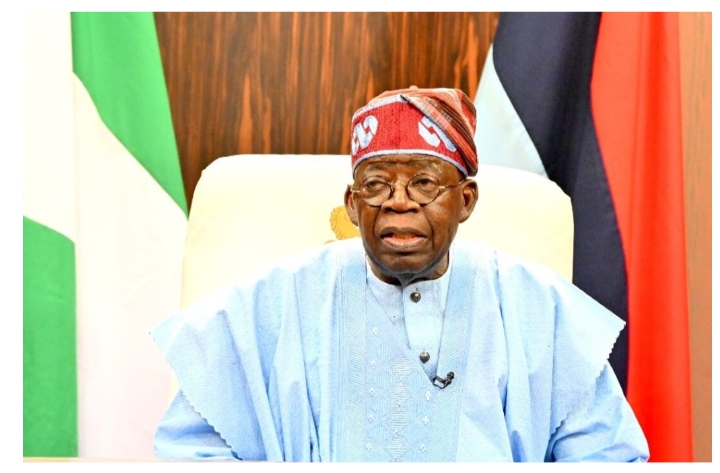
President Bola Tinubu has approved the appointment of Mr Shu’aibu Shehu Aliyu as the Executive Secretary of the Petroleum Technology Development Fund (PTDF).
Mr Aliyu, a professor, is to replace Mr Ahmed Galadima Aminu, who recently resigned to participate in the 2027 governorship election in Adamawa State.
In a statement by a spokesperson to the President, Mr Bayo Onanuga, on Thursday, it was disclosed that the appointment of Mr Sule Ahmed Abdulaziz as the chief executive of the Transmission Company of Nigeria (TCN) has been renewed for a second and final term.
These appointments are said to take effect immediately.
Professor Aliyu, the new PTDF helmsman, is a distinguished academic and seasoned administrator with extensive experience in research, education, and institutional leadership. His appointment underscores the President’s commitment to strengthening key institutions in the petroleum sector and advancing capacity development for Nigeria’s energy industry.
“The President expects him to leverage his wealth of experience to reposition the PTDF for greater impact in human capital development, innovation, and strategic support for the oil and gas sector in line with national priorities.
“President Tinubu renewed Engineer Abdulaziz’s appointment following a comprehensive assessment of his performance and leadership of the nation’s transmission network.
“Under his stewardship, TCN has recorded notable improvements in grid stability, transmission capacity expansion, and system modernisation, reinforcing its critical role in Nigeria’s electricity value chain.
“Engr. Abdulaziz brings over three decades of experience in the power sector and has also strengthened regional electricity integration through his leadership in the West African Power Pool (WAPP).
“President Tinubu urges both appointees to discharge their responsibilities with diligence, integrity, and a strong sense of national service,” the statement said.

By Adedapo Adesanya
The Nigerian National Petroleum Company (NNPC) Limited saw its workforce rise by 12.2 per cent to 6,247 at the end of 2025 from 5,566 in the corresponding period of 2024, according to its latest employee data.
The state oil firm stated that its employees increased by 14.3 per cent from 5,495 recorded at the end of the first quarter of 2025 to 6,280 at the end of the second quarter of 2025.
Its staff strength, however, dropped by 0.11 per cent to 6,273 workers in the third quarter of 2025 and further shrank by 0.41 per cent to 6,247 in the last quarter of the year under review.
Giving a breakdown of its workforce in terms of gender, the NNPC disclosed that at the end of the fourth quarter, 5,044 employees, representing 80.7 per cent of its workforce, were males, while 1,203 employees, representing 19.3 per cent of its total workforce, were females.
Further breakdown revealed that Junior Staff 2 (JS 2) and Junior Staff 1 (JS1) cadres had one staff member and 175 staff members, respectively, at the end of the fourth quarter of 2025, as against one staff and 187 staff members, respectively, recorded in the third quarter of 2025.
In addition, the Senior Staff Seven (SS7) cadre had 31 employees, remaining the same as in the previous quarter, while the SS6 cadre dropped to 1,010 staff, from 1,012 staff recorded at the end of the third quarter of 2025.
The SS5, SS4, SS3, SS2 and SS1 staff cadre recorded 1,076 staff, 164 staff, 389 staff, 471 staff and 1,829 staff, respectively, in the quarter under review, compared with 1,076 staff, 164 staff, 391 staff, 478 staff and 1,835 staff, respectively, recorded in the third quarter of 2025.
Management Six (M6) cadre had 695 staff in the second quarter of 2025, compared with 699 staff in the same category in the previous quarter, while M5, M4, M3, M2 and M1 cadres had 237 staff, 117 staff, 47 staff, seven staff and one staff respectively, compared with 243 staff, 116 staff, 44 staff, seven staff and one staff in the corresponding cadres in the third quarter of 2025.
Further analysis of the NNPC workforce across different cadres showed that JS2 and JS1 accounted for 0.02 per cent and 2.75 per cent of its total workforce, respectively, while SS7, SS6, SS5, SS4, SS3, SS2 and SS1 cadres accounted for 0.50 per cent, 16.17 per cent, 17.22 per cent, 2.63 per cent, 6.23 per cent, 7.54 per cent and 29.28 per cent of the state oil company’s total workforce, respectively.
In addition, NNPC’s M6, M5, M4, M3, M2 and M1 cadres accounted for 11.13 per cent, 3.79 per cent, 1.87 per cent, 0.75 per cent, 0.11 per cent and 0.02 per cent, respectively.
In general, the NNPC Limited noted that it had 173 employees in its junior staff category; 4,970 employees in its senior staff category, and 1,104 employees in its management category.
It also reported that in its middle management cadre, it has 932 employees, accounting for 14.92 per cent of its total workforce, while the top management cadre had 172 employees, accounting for 2.75 per cent of its total workforce.
-
 Feature/OPED6 years ago
Davos was Different this year
-
Travel/Tourism10 years ago
Lagos Seals Western Lodge Hotel In Ikorodu
-

 Showbiz3 years ago
Estranged Lover Releases Videos of Empress Njamah Bathing
-
 Banking8 years ago
Sort Codes of GTBank Branches in Nigeria
-

 Economy3 years ago
Subsidy Removal: CNG at N130 Per Litre Cheaper Than Petrol—IPMAN
-

 Banking3 years ago
Sort Codes of UBA Branches in Nigeria
-

 Banking3 years ago
First Bank Announces Planned Downtime
-

 Sports3 years ago
Highest Paid Nigerian Footballer – How Much Do Nigerian Footballers Earn