

Connect with us

Jobs/Appointments

Dele Alake Re-elected as Chairman of Africa Minerals Strategy Group

Published

on

dele alake

By Adedapo Adesanya

Nigeria’s Minister of Solid Minerals Development, Mr Dele Alake, has been re-elected as the Chairman of Africa Minerals Strategy Group (AMSG).
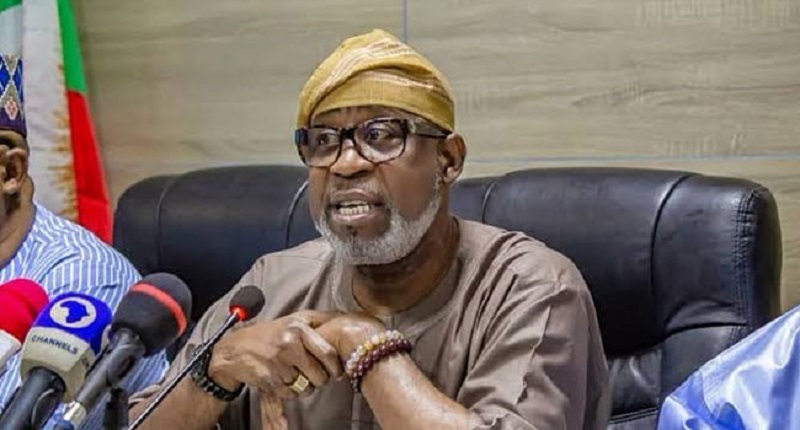
Mr Alake was first unanimously elected as the pioneer Chairman of AMSG in 2024 on the sidelines of Future Minerals Forum (FMF).

He was re-elected at the 2026 Annual General Meeting (AGM) of the group, held on the sidelines of the same conference in Riyadh, Saudi Arabia.

The continental ministerial forum of African ministers is responsible for minerals and mining, committed to coordinated action aimed at maximising value addition and beneficiation from Africa’s vast mineral resources.

A statement issued on Sunday in Abuja by the Special Assistant on Media to the Minister of Solid Minerals Development, Mr Segun Tomori, noted that the move is part of efforts to strengthen its institutional framework.

AMSG approved the creation of additional leadership positions, including Vice Chairman, Deputy Secretary-General, and Financial Secretary.

The forum further resolved that those positions be equitably distributed across Africa’s sub-regions to promote inclusion and regional balance.

While the positions of Chairman and Vice Chairman are elective and reserved for serving ministers, other positions are appointed by member states to which they are zoned.

Under the new leadership structure, Mr Alake continued as Chairman of the 24-member forum, representing West Africa.

The Minister of Mines of the Democratic Republic of Congo (DRC), Mr Louis Watum Kabamba, was elected Vice Chairman, representing Central Africa.

The position of Secretary-General remained with Uganda (East Africa), Mauritania was appointed Deputy Secretary-General (North Africa), while South Africa was assigned the position of Financial Secretary.

The AGM also ratified a two-year tenure for the newly elected executive committee and agreed that zoned positions belong to member countries, such that where a serving minister is replaced, the successor automatically assumes the role.

In his acceptance speech, Alake expressed gratitude to his colleagues for the renewed confidence reposed in him, stressing the urgent need for African nations to work collaboratively to unlock the continent’s economic potential through solid minerals development.

He called on member states to agree on minimum financial contributions and to refine the group’s budgeting framework to strengthen its operational effectiveness.

“Once member states contribute, accountability will naturally follow. This will enhance transparency and strengthen the credibility of the AMSG before the global community,” Mr Alake stated.

The AGM further resolved to hold quarterly ministerial meetings and ratified the establishment of standing committees, including those for Legal, Institutional Affairs and Human Resources; Sustainability and Responsible Mining; Finance, Budget and Resource Mobilisation, among others.

It was also agreed that steps be taken towards hosting a global minerals conference in Africa, similar to FMF.

Speaking earlier at a Leadership Roundtable, Mr Alake emphasised that mineral production alone could not deliver lasting economic transformation without reliable infrastructure, coordinated policies, and deliberate value-addition strategies.

Mr Alake cited the Lobito Corridor as a model of what was achievable when rail, ports, energy systems, and policy alignment worked in synergy. He stated that similar opportunities existed across the continent, including the Lagos–Abidjan Corridor linking Nigeria, Benin, Togo, Ghana, and Côte d’Ivoire; Walvis Bay Corridor connecting Southern Africa’s mining regions to global markets; Dar es Salaam and Central Corridors serving East and Central Africa, among others.

“The real question is not whether Africa has corridors, but whether these corridors are being financed, governed and structured to support industrial growth, regional integration and long-term stability.

“What matters is how financing is designed to reduce risk, attract private capital, and sustain commercial viability while advancing national and regional development objectives,” he said.

Mr Alake emphasised that unlocking capital required addressing issues, such as bankable and enforceable offtake arrangements; predictable and harmonised cross-border regulatory frameworks; alignment of rail, port, power, and industrial planning; and clear pathways for processing, smelting, logistics services, and industrial clusters along the corridors.

He added that the broader vision of AMSG was to ensure that Africa’s mineral infrastructure was strategically designed, responsibly financed, and efficiently managed in a rapidly evolving global environment, not to discourage investment, but to ensure it aligned with long-term stability, transparency, and shared economic prosperity.


Adedapo Adesanya is a journalist, polymath, and connoisseur of everything art. When he is not writing, he has his nose buried in one of the many books or articles he has bookmarked or simply listening to good music with a bottle of beer or wine. He supports the greatest club in the world, Manchester United F.C.

Jobs/Appointments

Tinubu Picks Joseph Tegbe to Replace Adelabu as Power Minister

Published

on

Joseph Tegbe

By Modupe Gbadeyanka

Following the resignation of Mr Adebayo Adelabu as the Minister of Power a few days ago, President Bola Tinubu has nominated Mr Joseph Tegbe as his replacement.

A statement by the Special Adviser to the President on Information and Strategy, Mr Bayo Onanuga, disclosed on Thursday that Mr Tegbe’s name has been forwarded to the Senate for confirmation.

His nomination is expected to strengthen further ongoing efforts to reform the power sector, enhance grid stability, and attract sustainable investment in line with the Renewed Hope Agenda.

Upon confirmation, he is expected to bring his extensive expertise to bear to advance critical reforms and deliver improved outcomes for Nigerians in the power sector.

Mr Adelabu, a former Deputy Governor of the Central Bank of Nigeria (CBN), resigned last week to pursue his dream of becoming the Governor of Oyo State.

His replacement is also from Oyo State. He is a fiscal and economic reform expert with over 35 years of experience spanning the public and private sectors, according to the statement today.

He is a former Senior Partner and Head of Advisory Services at KPMG Africa, where he led wide-ranging initiatives in fiscal policy reform, institutional transformation, and governance. He has also advised key government institutions and private sector organisations on strategic reforms, regulatory frameworks, and investment structuring.

He is at present the Director General and Global Liaison for the Nigeria-China Strategic Partnership (NCSP), where he is responsible for strengthening bilateral development cooperation between Nigeria and the People’s Republic of China.

The NCSP also coordinates engagements with public sector stakeholders to advance economic and social development in line with FOCAC objectives.

Mr Tegbe’s experience includes significant engagements within the power sector, particularly in regulatory and institutional reform involving agencies such as the Nigerian Electricity Regulatory Commission (NERC) and the Nigerian Bulk Electricity Trading Company (NBET).

Continue Reading

Jobs/Appointments

Tinubu Elevates Bianca Ojukwu to Foreign Affairs Minister

Published

on

Bianca Ojukwu

By Adedapo Adesanya

President Bola Tinubu has named Mrs Bianca Odumegwu-Ojukwu as Nigeria’s new Minister of Foreign Affairs, the latest in the cabinet reshufflement.

Mrs Odumegwu-Ojukwu replaces Mr Yusuf Tuggar, who recently resigned to pursue the Bauchi governorship election ambition in 2027 under the All Progressives Congress (APC).

Mr Sola Enikanolaiye has been appointed as the new Minister of State for Foreign Affairs, the position previously occupied by Mrs Odumegwu-Ojukwu.

In a statement on Wednesday night, the Special Adviser to the President on Information and Strategy, Mr Bayo Onanuga, disclosed that until his nomination, Mr Enikanolaiye, from Kogi State, served as senior Special Assistant to the President on Foreign Affairs and International Relations.

He is a career diplomat with over three decades of service in Nigeria’s foreign service.

He has previously served as permanent secretary in the Ministry of Foreign Affairs and held diplomatic postings in Addis Ababa, Ethiopia, Belgrade, Ottawa, London and New Delhi.

President Tinubu said the appointments are part of efforts to strengthen Nigeria’s foreign policy architecture, improve efficiency and deepen global engagement.

He urged the appointees to promote Nigeria’s national interest, advance economic diplomacy, strengthen regional stability and ensure the welfare of Nigerians abroad.

“The President noted that these appointments are part of ongoing efforts to reposition Nigeria’s foreign policy architecture for greater efficiency, strategic engagement, and stronger global partnerships,” the statement read.

Recent ministerial changes under President Tinubu reflect a cautious but deliberate attempt to recalibrate governance and strengthen economic management. In a minor cabinet reshuffle approved in April 2026, key portfolios were affected, most notably the removal of Finance Minister, Mr Wale Edun; and the Housing Minister, Mr Ahmed Musa Dangiwa.

Their exits paved the way for new appointments, including the elevation of Mr Taiwo Oyedele to oversee the critical finance ministry, a move widely interpreted as an effort to inject fresh direction into the country’s economic policy framework.

Beyond the cabinet reshuffle, the administration has also undertaken broader leadership adjustments across strategic sectors, particularly in energy and regulation, signalling a pattern of continuous review within government ranks, including the replacement of Mr Saidu Mohammed with Mr Rabiu Umar as the chief executive of the Nigerian Midstream and Downstream Petroleum Regulatory Authority (NMDPRA).

Continue Reading

Jobs/Appointments

Tinubu Sacks Saidu Mohammed, Appoints Dangote Cement’s Rabiu Umar as NMDPRA CEO

Published

on

NMDPRA fee regulations

By Adedapo Adesanya

President Bola Tinubu has nominated Mr Rabiu Abdullahi Umar as the new chief executive of the Nigerian Midstream and Downstream Petroleum Regulatory Authority (NMDPRA), replacing Mr Saidu Mohammed.

This decision follows ongoing efforts to restructure the regulatory framework of Nigeria’s midstream and downstream oil sector.

The appointment was announced by Mr Bayo Onanuga, Special Adviser to the President on Information and Strategy, with the nomination subject to Senate confirmation.

The NMDPRA is responsible for the technical and commercial regulation of petroleum operations, including gas processing, transportation, and retail.

Mr Abdullahi, until his appointment, was the Group Sales and Marketing Director at Dangote Cement, part of the Dangote Group, which has interests in food, cement, energy, and other ventures.

He started his career in Oando Plc and rapidly rose to hold different management roles within the marketing business, and led the Sales and Marketing Transformation plan successfully.

In 2014, he moved to Lafarge Africa as the Energy and Power Director and subsequently managed the Strategy and Business Development portfolio for West Africa, where he led the development and execution of critical projects within Nigeria, Ghana and Cameroon. In 2016, he became the Managing Director/Chief Executive Officer of Ashaka Cement Plc and spearheaded the turnaround of the business until his departure in 2019 to join Dangote Industries Ltd as Group Chief Commercial Officer.

A graduate of Accounting from Bayero University, Kano and an Alumnus of Harvard Business School. He is also a member of the Institute of Directors.

According to the Presidency, Mr Abdullahi’s appointment was made pursuant to the Petroleum Industry Act 2021, aimed at strengthening regulatory effectiveness in the midstream and downstream petroleum sector, in line with the Renewed Hope Agenda.

Pending Senate confirmation of the new nominee, the most senior official of the NMDPRA will oversee operations in an acting capacity.

“President Tinubu thanks the outgoing Authority Chief Executive for his service and wishes him well in his future endeavours.

“The President remains committed to ensuring capable leadership in key regulatory institutions to advance energy security, sector reform, and sustainable economic growth,” the statement added.

Continue Reading

Trending
