
Jobs/Appointments
Ericsson Sacks 160 Nigerian Workers, Employs Indians


By Dipo Olowookere
Not less than 160 Nigerians working with Ericson Nigeria have been disengaged by the company. Out of the number, 55 of them are full-time workers, while the rest are on contract jobs.
According to Punch, the sack will take effect from Sunday, December 4, 2016.
A copy of the disengagement letter to the permanent workers signed by the Managing Director of the company, Mr Johan Jemdahi, reads, “Please be informed that effective December 4, 2016, your position has been declared redundant.
“We thank you for all your past services to Ericsson. Further information about the redundancy benefits will be communicated to you before the actual termination date.”
It was gathered that the outsourced workers were employed through Network Operating Centre.
Punch, relying on information from sources in the company, reports that some workers were laid off in July when the offshoring (the practice of a company in one country arranging for people in another country to do work for it) of jobs to India began.
It said findings show that foreign workers had been recruited to replace the disengaged workers, and knowledge transfer by Nigerian engineers to the new workers was ongoing in the company’s office in India.
The knowledge transfer had been going on since last year when some Indians were brought into the country to study the management of telecommunications infrastructure in the country.
It further said in the last two and half years, Ericsson Nigeria had managed the MTN network majorly from its pool of local workers, some of who were former MTN employees, as well as other contracted workers.
One of the affected workers said that the company was offering the jobs, which involved the monitoring of MTN masts and networks in the country, to Indians at reduced costs.
The workers expressed fears that this would be a continuous trend in the telecommunications industry if it was not addressed by the government.
The employee, who spoke on condition of anonymity, said, “The company said it was cheaper for the work to be done in India than in Nigeria. The monitoring of those masts can be done from anywhere. We monitor Abuja, Enugu, Asaba, and Port Harcourt sites from the Lagos office. What they are now proposing is that instead of monitoring from Lagos, they want to monitor from India.
“They have taken the Airtel NOC office to India. They brought about 30 Indians to Nigeria last year to come and understudy the MTN network and after a month, they went back and started monitoring from there. There are no plans to pay compensation to the outsourced workers in the company.”
The Public Relations Manager, Sub-Saharan Africa, Ericsson, Toju Egbebi, who confirmed the development to the newspaper, said the move was part of the company’s global cost and efficiency programme to achieve a net annual cost savings of Swedish Krona 9bn, adding that the programme would continue till 2017.
According to her, the redundancy is being carried out across 180 countries where the company operates.
She explained that on July 19, the company announced actions to further save costs as well as intensify reductions in cost of sales activities and adapt its operations to a weaker mobile broadband market.
Egbebi added, “This means employees will be affected. The decision to offshore our service is in keeping with our global delivery strategy; certain work may be centralised into global delivery centres. This is to enable improved network availability and quality for consumers, and cost efficient network operations for operators.”




By Adedapo Adesanya
Cascador, a Nigeria-based initiative supporting growth-stage, mission-driven founders building scalable and impactful businesses, has appointed Ms Oyin Solebo as its Chief Operating Officer (COO).
According to a statement, Ms Solebo’s appointment signals a strategic shift toward strengthening the systems, discipline, and infrastructure required to help growth-stage companies scale sustainably.
The ex-Managing Director of the ARM Labs Lagos Techstars Accelerator is regarded as a seasoned investor and ecosystem builder with deep experience across venture capital, startup acceleration, and corporate innovation in Africa. Her appointment underscores Cascador’s ambition to become a central engine for entrepreneurial scale in Africa, where leadership, capital, and execution come together to unlock lasting impact.
At ARM Labs Lagos Techstars Accelerator, she led investments in and supported high-growth startups across multiple sectors. Across her career, she has built a reputation for translating bold vision into disciplined execution, helping companies move from traction to true scale.
Cascador, in the statement shared with Business Post, noted that her appointment marks a critical step in Cascador’s evolution as it moves from a leadership-focused programme into a platform designed to scale high-impact companies systematically.
“Oyin is a force multiplier,” said Ms Trish Thomas, CEO of Cascador. “She understands what it takes to build and run organisations that endure. As we expand our focus from developing founders to scaling companies, her operational expertise will be instrumental in helping us deliver on that vision.”
She fits perfectly into Cascador’s model, which backs founders who can multiply the value they receive, turning education into execution and capital into lasting economic and social impact.
Through its ScaleUp Program, Cascador equips growth-stage entrepreneurs with the leadership skills, strategic clarity, and access to catalytic capital required to scale sustainably.
The programme is designed for founders with proven traction—those capable of absorbing significant investment and deploying it effectively to drive growth, job creation, and long-term resilience.
Speaking on this, Ms Solebo noted that, “In Africa, we don’t have a shortage of founders, we have a shortage of companies that successfully scale.
“The difference lies in systems, discipline, and the ability to deploy capital effectively. Cascador has built a powerful foundation by investing in people. The opportunity now is to extend that into building stronger companies that can absorb capital, institutionalise operations, and grow sustainably,” she added.
Ms Solebo, as COO, will focus on strengthening Cascador’s operational infrastructure and scaling its platform capabilities. This includes optimising programme delivery, deepening alumni support, and building systems that enable founders to transition from learning to execution and from execution to scale.
Her role will be particularly critical in advancing Cascador’s ScaleUp Program and Catalytic Fund, which deploys $2–$5 million annually in tailored financing to high-performing alumni. The fund is designed not simply to extend their runway, but to back ventures that can transform capital into durable financial performance and measurable impact.
“What makes Cascador different is its focus on multipliers—founders who can take what they learn and amplify it across their companies, teams, and markets,” she said. “If we can consistently support those founders with the right combination of education, networks, and capital, the ripple effects are enormous—more jobs, stronger industries, and a more resilient economy.”
On his part, Mr Dave DeLucia, Founder of Cascador, emphasised the strategic importance of the appointment.
“Cascador has always been about multiplying impact through entrepreneurship. With Oyin, we are strengthening our ability to ensure that the hard work of our team and the deployment of capital ultimately translates into scaled, enduring businesses. She brings the operational discipline and ecosystem insight needed to take us to the next level.”
Looking ahead, Ms Solebo aims to position Cascador as a long-term scaling partner for its entrepreneurs. “We are building more than a program. We are building a platform,” she said.
“A platform that identifies high-potential founders, equips them to lead, and then supports them with the financial and non-financial resources required to scale. If we do this well, we won’t just transform individual companies—we’ll shape the future of the African economy.”

By Aduragbemi Omiyale
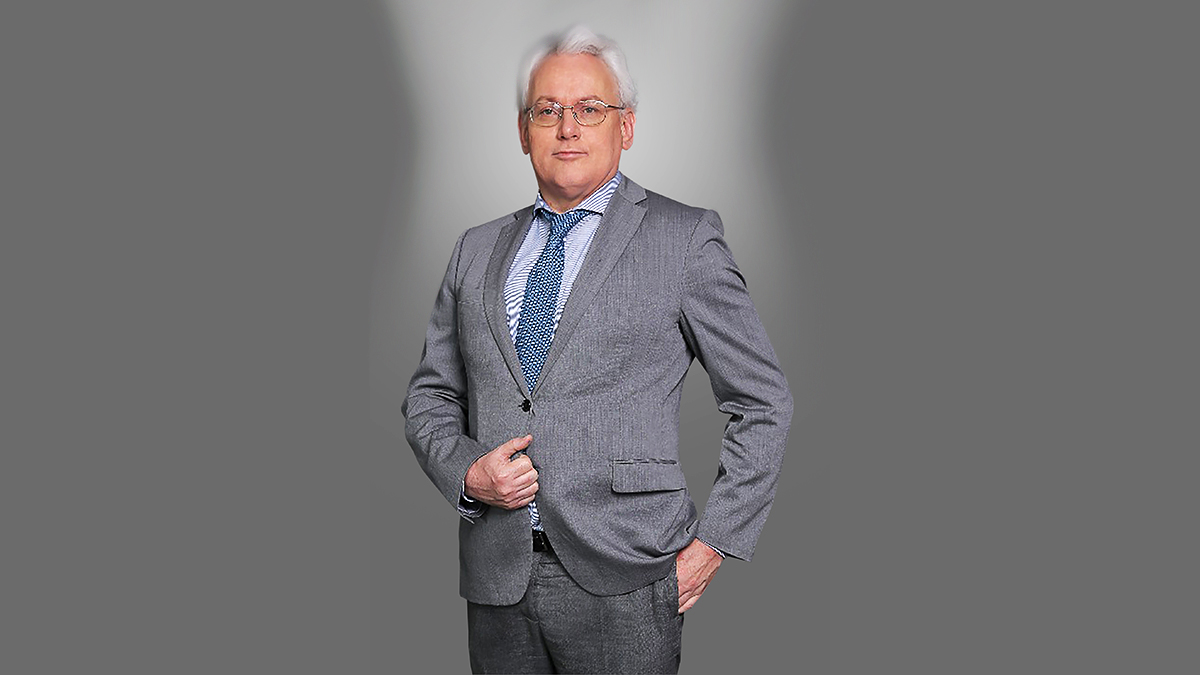
A globally respected expert in commodity markets, structured commodity finance, and exchange development, Mr Lamon Rutten, has been appointed as the new chairman of the board of Deap Capital Management and Trust Plc.
Mr Rutten’s appointment is to further strengthen Deap Capital’s leadership as the company advances its mission of mobilising capital and building financial solutions to unlock Africa’s critical minerals potential, positioning it as a strategic bridge between global investors and Africa’s emerging resource economy.
The Dutch national brings to the board over three decades of international experience across Europe, Asia, the Middle East, and Africa.
Mr Rutten described his appointment as a “new dawn for the African metals and minerals financing space,” applauding the decision to make him the chairman of the board, which was newly reconstituted.
The president of Deap Capital, Mr Israel Ovirih, welcomed the new chairman to the fold, noting that his extensive global experience in commodity markets and financial infrastructure development will be instrumental in guiding the company as it builds a world-class platform to finance and support the growth of the critical minerals sector across continental Africa.
“The new chairman and his global experience should enable the unleashing of new possibilities in the African metals and minerals space, including bringing new thoughts on how to modernise and formalise artisanal mining, specifically in Nigeria,” he stated.
Mr Rutten is widely reputed as a pioneer in the development of modern commodity trading and financing infrastructure worldwide, having served at Chie of Energy at the United Nations.
He previously served as the pioneering chief executive of the Multi-Commodity Exchange of India (MCX), also known as the Mumbai Commodity Exchange, where he led the exchange through a period of significant growth and quantum leap, establishing it as the world’s second-largest commodity exchange. Under his leadership, MCX achieved a landmark public listing valued at approximately $1.5 billion and a revenue of over $2.5 trillion by 2012.
He has also held several high-profile leadership and advisory roles globally, including serving as the founding CEO of the Indonesia Commodity and Derivatives Exchange (ICDX) and playing a key role in the development of the Saudi Mining Exchange initiative.
Earlier in his career, he worked with the United Nations Conference on Trade and Development (UNCTAD), where he led an international programme focused on commodity risk management and structured trade finance.
Mr Rutten is also a prolific author and policy expert, having published numerous research papers and policy works on commodity markets, trade finance, and risk management, and has advised governments, multilateral institutions, and financial organisations on commodity market development.

By Adedapo Adesanya
Mouka Limited has announced a significant leadership transition, with the appointment of Mr Oladimeji Osingunwa as its new managing director, effective March 17, 2026.
This follows the resignation of Mr Femi Fapohunda, whose exit became effective on March 16, 2026, after a period of mutual agreement with the board of the mattress maker.
The board expressed deep appreciation for Mr Fapohunda’s impactful leadership and unwavering commitment to the organisation.
During his tenure, Mouka successfully navigated one of the most challenging economic periods in Nigeria’s recent history, demonstrating resilience, operational excellence, and sustained growth.
Under his guidance, the company strengthened its market leadership, expanded its market share, and reinforced its reputation as a trusted household brand.
“Femi’s steady and strategic leadership ensured that Mouka not only weathered economic headwinds but emerged stronger and more competitive,” the board noted, thanking “him for his invaluable contributions and wish him continued success in his future endeavours.”
Mr Osingunwa, a seasoned commercial leader and a respected figure within Nigeria’s manufacturing and FMCG landscape, has since stepped into the role for the next phase of the mattress maker.
He joined Mouka in 2016 as Chief Commercial Officer, where Mr Osingunwa has played a pivotal role in shaping the company’s growth trajectory and strengthening its market dominance.
Mr Osingunwa brings to his new role a wealth of experience spanning leading multinational organisations, including Cadbury Nigeria Plc (now Mondelez), SC Johnson, and Twinning Ovaltine.
His expertise cuts across commercial strategy, route-to-market development, brand building, and sales leadership, consistently delivering strong business performance and sustainable growth.
Mouka Limited traces its origins to 1959, when the Faiz Moukarim family established the Moukarim Metalwood factory in Kano, focusing on the production of furniture and iron beds. As part of a broader strategy to achieve backward integration and supply raw materials to the furniture and bedding industry, Mouka Limited was later founded in Lagos in 1972, specialising in the manufacture of flexible foam products.










-
 Feature/OPED6 years ago
Davos was Different this year
-
Travel/Tourism10 years ago
Lagos Seals Western Lodge Hotel In Ikorodu
-

 Showbiz3 years ago
Estranged Lover Releases Videos of Empress Njamah Bathing
-
 Banking8 years ago
Sort Codes of GTBank Branches in Nigeria
-

 Economy3 years ago
Subsidy Removal: CNG at N130 Per Litre Cheaper Than Petrol—IPMAN
-

 Banking3 years ago
Sort Codes of UBA Branches in Nigeria
-

 Banking3 years ago
First Bank Announces Planned Downtime
-

 Sports3 years ago
Highest Paid Nigerian Footballer – How Much Do Nigerian Footballers Earn