
Jobs/Appointments
Gebeya Targets Chunk of $1.5trn Freelancer Economy Industry


By Aduragbemi Omiyale
Though the global freelancer economy industry is estimated to worth $1.5 trillion, Africa only controls 1.4 per cent and according to data, North America accounts for over half of the total freelancers in the world, about 78 million, with $486 million going to tech freelancers.
But this is about to change as a pan-African source for freelance professional talent, Gebeya, is target a fair chunk of the pie.
In 2020, the company raised a $2 million seed investment co-led by Partech and Orange Ventures and followed by Consonance Investment Managers, to set up the machine for scale, fully automated and digitized.
On Monday, June 14, 2021, the firm announced the launch of its revamped marketplace, the first of its kind in terms of reach in Africa. Prior to investment, Gebeya operated mostly a manual non-scalable marketplace model.
As experts project, freelancers will constitute 80 per cent of the workforce by 2030 andGebeya’s vision is to unlock the power of the skilled workforce on the continent and increase the number of innovative startups leading the helm of digital transformation.
The Gebeya Marketplace boasts of an intelligent matching algorithm that considers location, language, and budget, an automated matching for a seamless experience on a single dashboard and the ability to create a profile and request talent at no cost.
Also, the platform has an option to hire individual talent with specialized skills or build a core team, a dedicated Account Representative, a smooth handling of administrative and finance processes, and an access to a diverse pool, ready to work remotely.
Visitors to the Gebeya Marketplace are matched with freelancers from a carefully curated pool, trusted by multinational telecommunications companies like Orange, as well as e-commerce startups such as Limestart, and logistics startup Paps.
“It’s time for businesses to leverage the sharp skills and fresh perspective that freelancers infuse into a permanent workforce,” said Amadou Daffe, CEO and Co-founder of Gebeya.
“Africa doesn’t have a talent deficiency, it has a matching problem and that is what Gebeya is seeking to address through the deployment of a true Pan-African freelance marketplace,” he added.
“Freelancers are part of a smart, agile hiring strategy. We plan to expand our pool of skilled freelance talent to 15,000 within the next 3 years,” noted Amadou.
Since its inception, Gebeya has played an integral role in aggressively moving the needle forward, bringing Africa’s competitiveness to the forefront of the global digital and technical landscape. New features on the platform will connect businesses with talent in minutes.
Demand for African talent on the Gebeya platform is Pan-African, from East to West Africa – and reaches as far as the EU and the US, as its quality and calibre is comparable to freelancers in those markets. Clients are only matched with talents who have successfully passed vetting, testing, and an interview. Freelance talents possess experience in exploding sectors like fintech, healtech, agritech, and logistics & supply chains, meaning individual entrepreneurs, startups, and large enterprises alike will benefit.





By Adedapo Adesanya
Mouka Limited has announced a significant leadership transition, with the appointment of Mr Oladimeji Osingunwa as its new managing director, effective March 17, 2026.
This follows the resignation of Mr Femi Fapohunda, whose exit became effective on March 16, 2026, after a period of mutual agreement with the board of the mattress maker.
The board expressed deep appreciation for Mr Fapohunda’s impactful leadership and unwavering commitment to the organisation.
During his tenure, Mouka successfully navigated one of the most challenging economic periods in Nigeria’s recent history, demonstrating resilience, operational excellence, and sustained growth.
Under his guidance, the company strengthened its market leadership, expanded its market share, and reinforced its reputation as a trusted household brand.
“Femi’s steady and strategic leadership ensured that Mouka not only weathered economic headwinds but emerged stronger and more competitive,” the board noted, thanking “him for his invaluable contributions and wish him continued success in his future endeavours.”
Mr Osingunwa, a seasoned commercial leader and a respected figure within Nigeria’s manufacturing and FMCG landscape, has since stepped into the role for the next phase of the mattress maker.
He joined Mouka in 2016 as Chief Commercial Officer, where Mr Osingunwa has played a pivotal role in shaping the company’s growth trajectory and strengthening its market dominance.
Mr Osingunwa brings to his new role a wealth of experience spanning leading multinational organisations, including Cadbury Nigeria Plc (now Mondelez), SC Johnson, and Twinning Ovaltine.
His expertise cuts across commercial strategy, route-to-market development, brand building, and sales leadership, consistently delivering strong business performance and sustainable growth.
Mouka Limited traces its origins to 1959, when the Faiz Moukarim family established the Moukarim Metalwood factory in Kano, focusing on the production of furniture and iron beds. As part of a broader strategy to achieve backward integration and supply raw materials to the furniture and bedding industry, Mouka Limited was later founded in Lagos in 1972, specialising in the manufacture of flexible foam products.
By Adedapo Adesanya
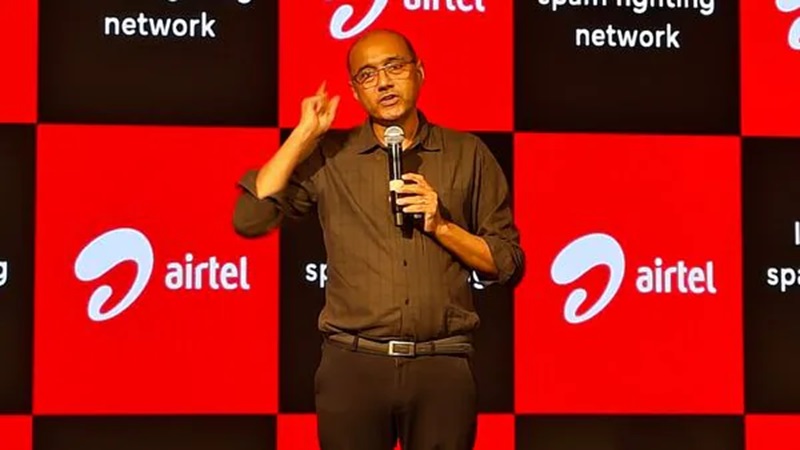
Telecoms giant, Airtel Africa Plc, has said Mr Gopal Vittal would replace its chairman, Mr Sunil Bharti Mittal, who will step down after the company’s annual general meeting in July.
This development is part of the company’s succession plans, the telco said on Wednesday.
Airtel Africa is the continent’s subsidiary of India’s second-largest carrier, Bharti Airtel, where it operates in 14 countries on the continent, including Nigeria, its biggest market.
Mr Sunil Mittal has been the chairman of Airtel Africa since its listing on the London Stock Exchange (LSE) in 2019. The telco entered the African market by acquiring Zain Telecom in June 2010.
Mr Vittal, who is an executive vice-chairman of Bharti Airtel and a non-executive director of Airtel Africa, will become non-executive chairman of the subsidiary. Sunil Mittal’s son, Mr Shravin Bharti Mittal, will take on the role of deputy chairman.
“As deputy chair, [Shravin] Mittal will ensure continuity with the founding family and significant shareholder, and will be the board’s conduit with the Airtel Money Board, on which he serves, and with Airtel Africa’s headquarters in Dubai, where he is based,” said Airtel Africa in a statement to the exchanges.
Mr Vittal’s appointment is by nomination of the controlling shareholder pursuant to the terms of the relationship agreement dated June 17, 2019, between the company, Bharti Airtel, Airtel Africa Mauritius Limited, the majority shareholder and an indirect subsidiary of Bharti Airtel, and Bharti Telecom.
Airtel Africa hailed Mr Vittal as “an established telecoms leader who led Bharti Airtel to a lifetime high revenue market share in an intensely competitive market”.
The outgoing chairman noted that Ms Annika Poutiainen is stepping down as a non-executive director, and thanked her for her time at the company as “a strong advocate of high standards of governance and financial reporting.”
“At the same time, I want to extend my thanks to the board of Airtel Africa for their support to me as chairman,” Mr Mittal said.
“Airtel Africa has a solid strategy and an outstanding leadership team in place, the strength of which is evident in recent results, so I am confident that now is the time for me to step aside as chair. It has been an honour to lead Airtel Africa in this capacity, and I know the company will continue to prosper… I have offered my services and will be available to support the company as requested by the chair,” he said.
By Adedapo Adesanya
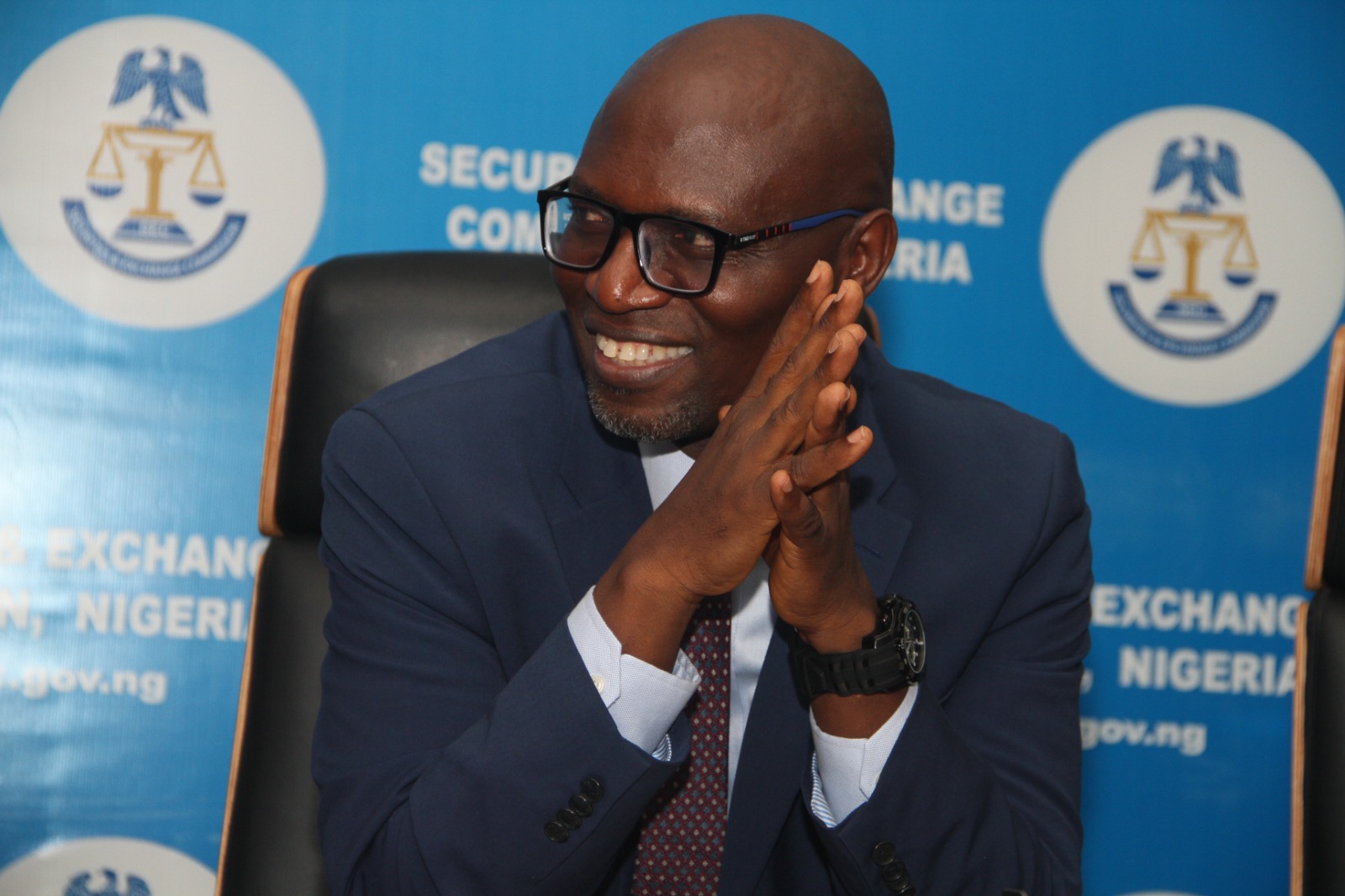
The Director General of the Securities and Exchange Commission (SEC) of Nigeria, Mr Emomotimi Agama, has been re-elected as the Vice Chair of the Africa/Middle-East Regional Committee (AMERC) of the International Organisation of Securities Commissions (IOSCO) for a second term spanning 2026–2028.
IOSCO was established in 1983 to serve as the global standard-setter for the securities industry and is recognised as the leading international policy forum for securities regulators.
Its members regulate more than 95 per cent of the world’s securities markets across over 100 jurisdictions.
This appointment, confirmed by IOSCO, reflects the growing recognition of Nigeria’s capital market and its strategic importance within the Africa and Middle East region.
According to a statement, the re-election of its DG reflects the confidence of peer regulators in Nigeria’s leadership, regulatory progress, and continued commitment to strengthening capital market systems.
The re-election also presents a significant opportunity for SEC Nigeria to deepen its engagement at the highest level of global securities regulation.
As AMERC Vice Chair, Nigeria will maintain a seat on the IOSCO Board, the organisation’s highest policy-making body, where critical decisions shaping global capital market standards, regulatory frameworks, and cross-border cooperation are made.
This position ensures the country’s perspectives, experiences, and priorities are represented in key discussions that influence the direction of international financial markets.
According to Mr Agama, “Beyond representation, this development enhances Nigeria’s ability to contribute meaningfully to global regulatory dialogue, particularly in areas such as enforcement cooperation, market integrity, and investor protection.”
It creates a stronger platform for collaboration with other jurisdictions on cross-border regulatory issues, including tackling illicit financial flows and strengthening supervisory frameworks.
The role further supports ongoing efforts to align Nigeria’s capital market with international best practices, fostering greater investor confidence and facilitating increased participation in global financial markets.
“Ultimately, this milestone reinforces Nigeria’s position as a leading voice in regional and global capital market development. It is expected to contribute to building a more resilient, transparent, and robust capital market ecosystem, not only within Nigeria but across the broader Africa and Middle East region. SEC Nigeria remains committed to leveraging this opportunity to advance regulatory excellence, deepen market integration, and support sustainable economic growth.”











-
 Feature/OPED6 years ago
Davos was Different this year
-
Travel/Tourism10 years ago
Lagos Seals Western Lodge Hotel In Ikorodu
-

 Showbiz3 years ago
Estranged Lover Releases Videos of Empress Njamah Bathing
-
 Banking8 years ago
Sort Codes of GTBank Branches in Nigeria
-

 Economy3 years ago
Subsidy Removal: CNG at N130 Per Litre Cheaper Than Petrol—IPMAN
-

 Banking3 years ago
Sort Codes of UBA Branches in Nigeria
-

 Banking3 years ago
First Bank Announces Planned Downtime
-

 Sports3 years ago
Highest Paid Nigerian Footballer – How Much Do Nigerian Footballers Earn