
Jobs/Appointments
Kreek Africa: Finding Meaningful Work Through Freelancing


By Adedapo Adesanya
Over the years, the method of working has experienced various changes, and so have the reasons for doing so.
Finding and engaging in meaningful work has also become popular as many different employment options are springing up; freelancing is one of them. Meaningful work simply explains having a genuine connection between the work you do and your life’s purpose, and with freelancing platforms like Kreek Africa, it is possible.
Very often, it is assumed that one has to be a part of an organization for them to engage in meaningful work. But for those interested in having full control of their careers, or those who aren’t ‘fortunate’ enough to be a part of a company, freelancing can still be rewarding with the right platform. According to the Harvard business review, there are six drivers that made work meaningful for freelancers, and Kreek Africa offers these.
The first driver of meaningful work is balance, and this refers to freelancers having the time for other things outside of work. And a freelance website like Kreek Africa means freelancers can work from any location and at any time. It also gives them the liberty to schedule their work life and their personal life. Right next to balance comes autonomy, where freelancers have control over their careers.
On the Kreek Africa platform, you decide what work to participate in based on reviews of clients that have already gone through a rigorous authentication process as a way of ensuring safety. That means freelancers can participate in online jobs that add value to their work while earning an income. There is nothing like office politics to get in the way, and professionals can give off their best with no interference.
Apart from these two, advancement is another important driver of meaningful work. And with a wide pool of projects with different levels, freelancers have the opportunity to engage in those that challenge them and put their qualifications to good use. It allows them to take more responsibly in their work as there will be no red tape processes. The accountability for their work is also a great way to gain some credibility, independence, and status in their field. Freelancers can also benefit from the variety of projects on the platform as well, which will help them grow in their chosen fields.
The last two drivers, service and affiliation, also make work more meaningful for freelancers as it gives a sense of being part of something bigger. Kreek Africa is dedicated to projecting the talent that Africa has by creating a platform for its citizens. With foreign or Western platforms, many African freelancers may face one form of discrimination or the other, which makes work challenging and slow. Kreek Africa eliminates this and, in the process, redefines the African economy. The platform makes it easier for those who prefer working for themselves, which is a large portion of Africans to achieve their goals and dreams.
Meaningful work isn’t only good for freelancers, and companies that use the platform can also benefit. They can choose their freelancers, pay for work that they are satisfied with, and get things done the smart way. This saves money and time, and in times like these, where human contact is quite challenging yet important to business, gives organizations a way out.
So, why is meaningful work important? The long and short of it all is that engaging in meaningful work provides a sense of fulfilment that promotes giving off your best and going the extra mile. It positively affects the way you go about things and improves overall satisfaction with work. And while finding meaningful work by yourself is great as a freelancer, it will be even better to have a platform that makes this simpler, and that is where Kreek Africa comes in.




By Aduragbemi Omiyale
The chairman of Creditville Limited, Mr Michael Uwakwe, has been appointed to the board of Chams Holding Company Plc as a non-executive director.
His appointment, according to a statement from the organisation, was effective Wednesday, April 1, 2026.
The board expressed confidence in his dynamic leadership, saying it will foster collaboration, inspire teams, and deliver transformative results for stakeholders.
Mr Uwakwe, who retired from TotalEnergies after 30 years of active service, chairs Creditville Limited, a financial services company involved in consumer lending, equipment leasing, capital market operations and real estate.
He is a Human Resources professional by qualification, training and experience with a deep interest in analysing financial markets around the globe. He is also well-versed in all aspects of investment analysis, asset allocation, and risk management and is a PENCOM-approved member of the Investment Strategy Committee of the Total Closed Pension Fund.
Mr Uwakwe sits on the board of Redwood Asset Management Company Limited, a SEC-approved Fund & Portfolio Manager.
He is a Fellow of the National Institute of Credit Administration of Nigeria, a member of the Chartered Institute of Personnel & Development (UK), a member of the British Psychological Society (London), and an Associate Member of the Nigeria Institute of Management.
By Adedapo Adesanya
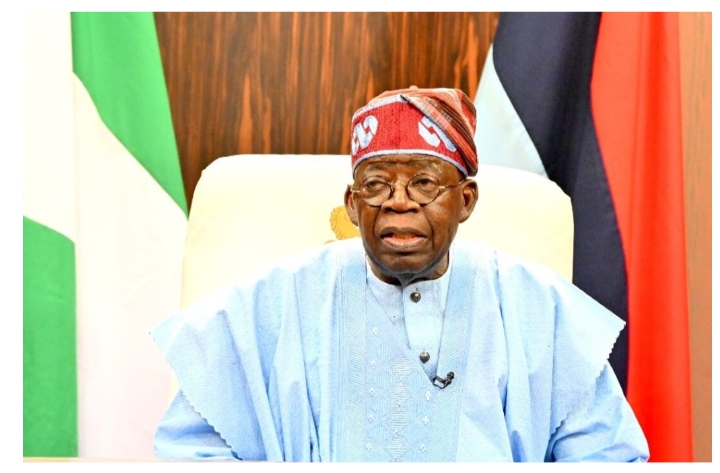
President Bola Tinubu has approved the appointment of Mr Shu’aibu Shehu Aliyu as the Executive Secretary of the Petroleum Technology Development Fund (PTDF).
Mr Aliyu, a professor, is to replace Mr Ahmed Galadima Aminu, who recently resigned to participate in the 2027 governorship election in Adamawa State.
In a statement by a spokesperson to the President, Mr Bayo Onanuga, on Thursday, it was disclosed that the appointment of Mr Sule Ahmed Abdulaziz as the chief executive of the Transmission Company of Nigeria (TCN) has been renewed for a second and final term.
These appointments are said to take effect immediately.
Professor Aliyu, the new PTDF helmsman, is a distinguished academic and seasoned administrator with extensive experience in research, education, and institutional leadership. His appointment underscores the President’s commitment to strengthening key institutions in the petroleum sector and advancing capacity development for Nigeria’s energy industry.
“The President expects him to leverage his wealth of experience to reposition the PTDF for greater impact in human capital development, innovation, and strategic support for the oil and gas sector in line with national priorities.
“President Tinubu renewed Engineer Abdulaziz’s appointment following a comprehensive assessment of his performance and leadership of the nation’s transmission network.
“Under his stewardship, TCN has recorded notable improvements in grid stability, transmission capacity expansion, and system modernisation, reinforcing its critical role in Nigeria’s electricity value chain.
“Engr. Abdulaziz brings over three decades of experience in the power sector and has also strengthened regional electricity integration through his leadership in the West African Power Pool (WAPP).
“President Tinubu urges both appointees to discharge their responsibilities with diligence, integrity, and a strong sense of national service,” the statement said.
By Adedapo Adesanya
The Nigerian National Petroleum Company (NNPC) Limited saw its workforce rise by 12.2 per cent to 6,247 at the end of 2025 from 5,566 in the corresponding period of 2024, according to its latest employee data.
The state oil firm stated that its employees increased by 14.3 per cent from 5,495 recorded at the end of the first quarter of 2025 to 6,280 at the end of the second quarter of 2025.
Its staff strength, however, dropped by 0.11 per cent to 6,273 workers in the third quarter of 2025 and further shrank by 0.41 per cent to 6,247 in the last quarter of the year under review.
Giving a breakdown of its workforce in terms of gender, the NNPC disclosed that at the end of the fourth quarter, 5,044 employees, representing 80.7 per cent of its workforce, were males, while 1,203 employees, representing 19.3 per cent of its total workforce, were females.
Further breakdown revealed that Junior Staff 2 (JS 2) and Junior Staff 1 (JS1) cadres had one staff member and 175 staff members, respectively, at the end of the fourth quarter of 2025, as against one staff and 187 staff members, respectively, recorded in the third quarter of 2025.
In addition, the Senior Staff Seven (SS7) cadre had 31 employees, remaining the same as in the previous quarter, while the SS6 cadre dropped to 1,010 staff, from 1,012 staff recorded at the end of the third quarter of 2025.
The SS5, SS4, SS3, SS2 and SS1 staff cadre recorded 1,076 staff, 164 staff, 389 staff, 471 staff and 1,829 staff, respectively, in the quarter under review, compared with 1,076 staff, 164 staff, 391 staff, 478 staff and 1,835 staff, respectively, recorded in the third quarter of 2025.
Management Six (M6) cadre had 695 staff in the second quarter of 2025, compared with 699 staff in the same category in the previous quarter, while M5, M4, M3, M2 and M1 cadres had 237 staff, 117 staff, 47 staff, seven staff and one staff respectively, compared with 243 staff, 116 staff, 44 staff, seven staff and one staff in the corresponding cadres in the third quarter of 2025.
Further analysis of the NNPC workforce across different cadres showed that JS2 and JS1 accounted for 0.02 per cent and 2.75 per cent of its total workforce, respectively, while SS7, SS6, SS5, SS4, SS3, SS2 and SS1 cadres accounted for 0.50 per cent, 16.17 per cent, 17.22 per cent, 2.63 per cent, 6.23 per cent, 7.54 per cent and 29.28 per cent of the state oil company’s total workforce, respectively.
In addition, NNPC’s M6, M5, M4, M3, M2 and M1 cadres accounted for 11.13 per cent, 3.79 per cent, 1.87 per cent, 0.75 per cent, 0.11 per cent and 0.02 per cent, respectively.
In general, the NNPC Limited noted that it had 173 employees in its junior staff category; 4,970 employees in its senior staff category, and 1,104 employees in its management category.
It also reported that in its middle management cadre, it has 932 employees, accounting for 14.92 per cent of its total workforce, while the top management cadre had 172 employees, accounting for 2.75 per cent of its total workforce.
-
 Feature/OPED6 years ago
Davos was Different this year
-
Travel/Tourism10 years ago
Lagos Seals Western Lodge Hotel In Ikorodu
-

 Showbiz3 years ago
Estranged Lover Releases Videos of Empress Njamah Bathing
-
 Banking8 years ago
Sort Codes of GTBank Branches in Nigeria
-

 Economy3 years ago
Subsidy Removal: CNG at N130 Per Litre Cheaper Than Petrol—IPMAN
-

 Banking3 years ago
Sort Codes of UBA Branches in Nigeria
-

 Banking3 years ago
First Bank Announces Planned Downtime
-

 Sports3 years ago
Highest Paid Nigerian Footballer – How Much Do Nigerian Footballers Earn