Connect with us

Media OutReach

Malaysia and WEF Drive ASEAN’s Next Leap in AI Governance and Industrial Innovation

Published

on

Powering the Intelligent Age Summit announced the ASEAN AI Safety Network and Sustainable AI White Paper, aligning regional collaboration with sustainability and trust

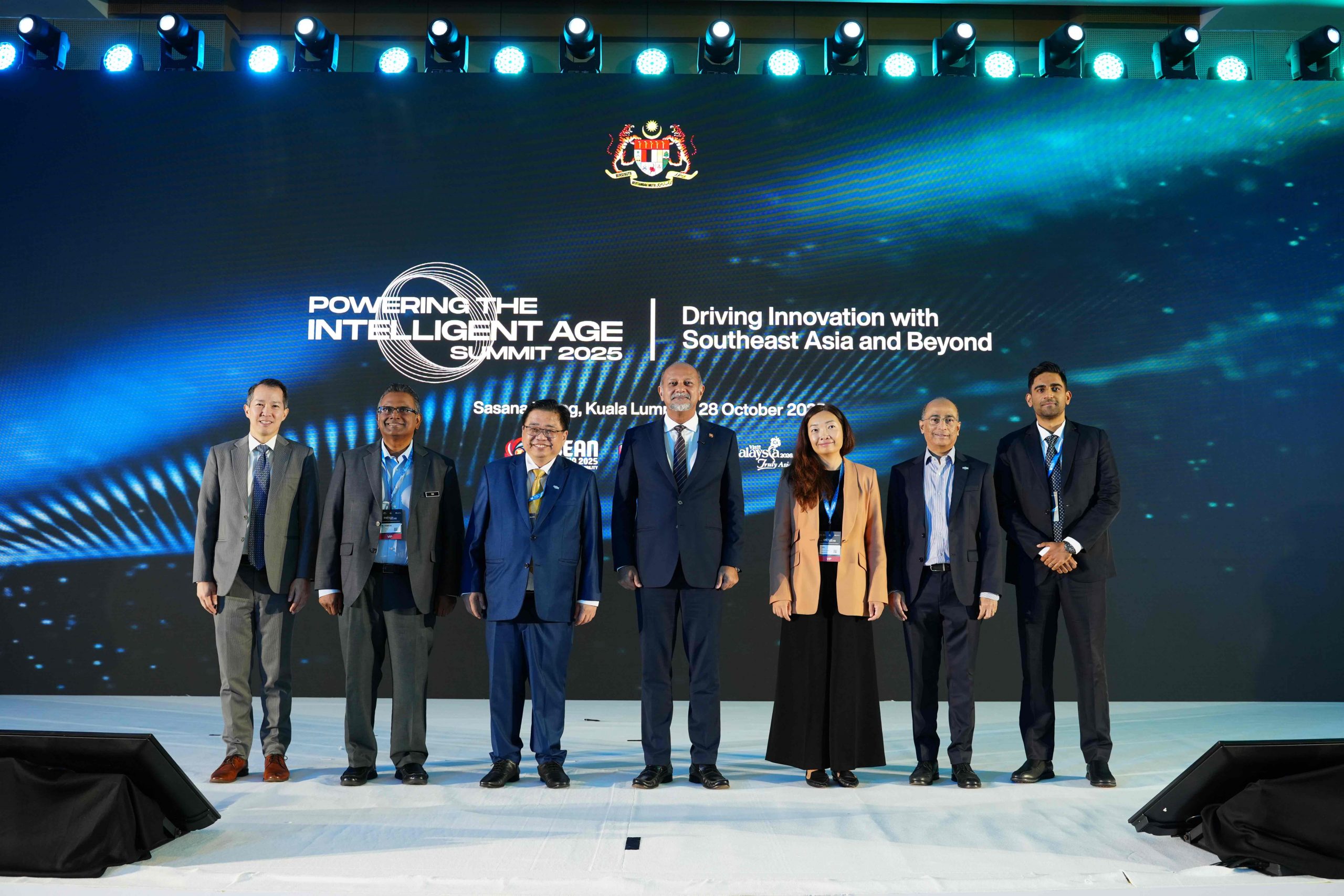
KUALA LUMPUR, MALAYSIA – Media OutReach Newswire – 28 October 2025 – The Ministry of Digital, through the Malaysia Centre for the Fourth Industrial Revolution (MYCentre4IR), in collaboration with the World Economic Forum (WEF), today hosted the Powering the Intelligent Age: Driving Innovation with Southeast Asia and Beyond Summit at Sasana Kijang. The event aimed to deepen collaboration on artificial intelligence (AI), digitalisation and clean industrial transformation. The event also marked a key milestone in Malaysia’s ASEAN Chairmanship, positioning the country as a convener of regional dialogue on technology governance and innovation, with a strong focus on digital transformation, and the region’s broader energy transition agenda.

The summit drew over 400 delegates from 14 countries and was attended by senior policymakers, corporate figures, researchers and startup founders. The wide representation from ASEAN’s digital and energy sectors, together with development partners and industry experts reflected strong collaboration across public, private and international sectors in advancing responsible and sustainable technology adoption across ASEAN.

A major highlight of the summit was the announcement on the ASEAN AI Safety Network (ASEAN AI Safe), a Priority Economic Deliverable for Malaysia’s ASEAN Chairmanship. Envisioned to be anchored in Kuala Lumpur, the Network connects policymakers, researchers and industry players to advance safe and inclusive AI adoption. The initiative forms part of Malaysia’s wider effort to position ASEAN as a globally trusted hub for responsible innovation and digital transformation.

YB Gobind Singh Deo, Minister of Digital said, “Malaysia wants to become an AI Nation by 2030, supported by trusted governance, inclusive talent development and investments that drive real economic impact. As ASEAN Chair, we are focused on building collaborative frameworks that ensure technology is deployed safely, transparently and for the benefit of all communities. The ASEAN AI Safe marks an important step forward, but it is only one part of our broader mission to create an ecosystem where innovation and accountability move together.”

Reflecting these priorities, the summit’s agenda was designed to move from policy to implementation, focusing on practical collaboration and measurable outcomes. Discussions centred on establishing a common baseline for AI governance across ASEAN, aligning sustainability with technology adoption and accelerating industrial transformation through innovation partnerships. Another key milestone was the announcement of the Sustainable AI White Paper, developed in partnership between MYCentre4IR and ERM, in consultation with Microsoft , to guide responsible and energy-efficient AI deployment across the region.

A Leader’s Dialogue between YB Gobind Singh Deo and Cathy Li, Head of the Centre for AI Excellence and Executive Committee Member at the World Economic Forum, examined ASEAN’s framework for responsible AI development and discussed strategies to enhance the region’s access to AI capabilities in support of economic growth. The session focused on how regional collaboration can promote responsible AI, and build public trust in technology.

“The potential for successful transformation of Southeast Asia’s economy through AI is still largely untapped, and the region has a unique chance to shape the global AI standards of tomorrow”, said Cathy Li. “But this requires alignment across the region, to create a shared governance framework that fosters trust, transparency and sustainability into the fabric of innovation, and joint strategies for building sustainable and inclusive resilient AI ecosystems”.

The World Economic Forum is committed to supporting the region in realising a successful AI journey, by convening and partnering with Governments and all actors of the AI value chain.

The summit also featured a special address by Deputy Secretary-General of ASEAN for ASEAN Economic Community H.E. Satvinder Singh, who highlighted that regional collaboration is central to ensuring technology becomes a driver of shared prosperity and inclusion. He emphasised ASEAN’s role in developing policies that strengthen cross-border collaboration, support digital economy growth and build institutional readiness for the Intelligent Age.

At the industry level, the Transitioning Industrial Clusters (TIC) dialogue showcased how data platforms, advanced automation and clean-energy integration can help ASEAN industries strengthen competitiveness while reducing emissions. The summit’s focus on regional transition highlighted how ASEAN is aligning industrial policy, technology, and innovation to build a cleaner and more resilient future. Dialogue on cross-border green-electron trade under the ASEAN Power Grid, industrial decarbonisation and nuclear energy readiness reflected the region’s determination to strengthen energy security while advancing sustainability goals.

The summit highlighted the growing convergence between artificial intelligence and industrial sustainability as the drivers of ASEAN’s future competitiveness. It demonstrated how cross-border collaboration between governments, industry leaders, academia, and innovators is essential to harness technology responsibly while advancing shared regional goals. The Ministry of Digital is committed to ensuring that Malaysia’s national digital ambitions remain aligned with ASEAN’s themes of sustainability and inclusivity. The collaboration with industry and Microsoft as one of the trusted partners in establishing Malaysia as a sustainable digital hub and a secure location for digital assets across the region reflects the Ministry’s vision of a future where innovation, inclusivity, and environmental responsibility move in tandem – positioning ASEAN as a global hub for safe, trusted, and sustainable digital transformation.

Hashtag: #MyDIGITAL #WEF #MYCentre4IR

The issuer is solely responsible for the content of this announcement.

About MyDIGITAL Corporation

MyDIGITAL Corporation is a monitoring agency and operates as a Strategic Change Management Office under the Ministry of Digital, overseeing the implementation of the Malaysia Digital Economy Blueprint (MDEB) and the National 4IR Policy. It serves as the secretariat to the National Digital Economy and 4IR Council, chaired by the Prime Minister, and hosts the Malaysia Centre for the Fourth Industrial Revolution (MYCentre4IR) in collaboration with the World Economic Forum. MyDIGITAL Corporation is a dynamic platform aimed at accelerating the digital transformation and adoption of 4IR technologies and fostering innovation.

Website : | Follow us at | | |

About World Economic Forum

The World Economic Forum (WEF) is the International Organisation for Public-Private Cooperation. It engages leaders from government, business, academia, and civil society to shape global, regional, and industry agendas. Headquartered in Geneva, Switzerland, the Forum is committed to improving the state of the world by fostering dialogue, driving systems change, and advancing solutions on critical global issues including energy transition, climate action, technology governance, and inclusive economic development.

About Malaysia Centre for the Fourth Industrial Revolution (MYCentre4IR)

Hosted by MyDIGITAL Corporation, the Malaysia Centre for the Fourth Industrial Revolution (MYCentre4IR) is part of the World Economic Forum (WEF) global network of Centre 4IR. It is the 1st centre in Southeast Asia and 19th in WEF’s global network of Centre for Fourth Industrial Revolution. It is a dynamic and forward-thinking platform designed to ignite innovation, facilitate policy development, and drive collaboration on a global scale. The partnership with the Forum provides access and connection to a vast pool of knowledge, best practices, and global insights from a network of like-minded organisations and countries, enabling learning and collaboration on cutting-edge projects.

Website : | Follow us at | |

Media OutReach

StarCharge Releases Industry White Papers: From Infrastructure to Network Systems, Microgrids Moving from Customization to Scaling Up Development

Published

on

CHANG ZHOU, CHINA – Media OutReach Newswire – 7 July 2026 – The global new energy vehicle market has seen rapid growth in recent years. With continued strong expectations for new energy vehicle exports, the global electric vehicle (EV) charging market is entering a new stage of rapid expansion. Recently, StarCharge, the global leading brand of EV Charging equipment and smart energy systems, held a major industry seminar in Hong Kong and released two new white papers at the event, exploring two major transformative trends in the industry that are worth paying attention to.

Charging stations are becoming a key connection of smart energy systems

According to the ‘Technical White Paper’ by StarCharge, for years, EV charging infrastructure has mainly been seen as support for vehicle sales expansion: building more chargers, expanding coverage, and speeding up charging.

However, this role is starting to change.

As electrification scales up, charging networks are becoming a part of the energy system itself. They are no longer just places for vehicles to top up; they are evolving into smart energy nodes connecting vehicles, the grid, distributed energy, storage, and digital management.

This shift from charging infrastructure to charging network systems shows that the industry is moving from basic access to integrated value: from charging services to energy services, from standalone stations to PV-storage-charging systems, from equipment deployment to scenario-based infrastructure.

StarCharge believes that the future charging network ecosystem will go through four major turning points.

Four Key Points Reshaping the Ecosystem

1. Charging Networks Are Becoming Energy Infrastructure

Charging infrastructure is going beyond its original role as just a support for EVs. As EV adoption grows, charging networks are becoming strategic energy infrastructure: they connect mobility demand with the grid, distributed energy, storage, digital platforms, and future energy services.

2. Defining the Scenarios for the Network

The future charging network won’t be shaped by hardware alone. Policies determine whether infrastructure should be built, technology determines the speed of construction, but real-world scenarios determine what the charging network actually needs to look like.

Urban commuting, highway trips, ride-hailing, logistics fleets, county and rural coverage, holiday peak demand, heavy trucks, mining areas, ports, airports, and autonomous driving all create different charging needs. Therefore, a mature charging network can’t be ‘one-size-fits-all’; it has to be designed around different vehicle types, operating hours, power requirements, reliability needs, and grid conditions.

3. Digital platforms turn charging networks into operable assets

A large charging network only truly has value when it can be scaled, optimized, and managed. This is exactly the core role of cloud platforms. They turn millions of charging points, users, stations, transactions, and energy flows into a measurable, controllable, and continuously optimized operating system.

StarCharge’s platform capabilities cover site selection, pricing, marketing, station operations, smart maintenance, charging safety, station robots, AI-based smart charging, fleet management, energy optimization, and ESG reporting. In other words, digital platforms are the key to transforming charging infrastructure from a heavy-asset network into smart, operable, and scalable assets.

4. Charging stations are becoming grid-friendly energy resources

The next-generation charging infrastructure won’t be defined by any single technology. It will be built on a complete tech stack, combining high-power charging, liquid cooling, integrated PV-storage-charging, DC bus architecture, V2G, automated charging, and AI-driven operations. In other words, future charging stations shouldn’t just be passive electricity consumers that add stress to the grid. Through energy storage, renewable energy integration, V2G, smart scheduling, and AI-based energy optimization, charging stations can become grid-friendly energy resources.

This means that aside from charging vehicles, a charging station can absorb renewable energy, buffer peak loads, respond to demand-side signals, support peak shaving and valley filling, regulate frequency, and provide carbon-neutral ESG data for fleet operators. Its business model will also go beyond charging fees, creating new value through energy services, data services, carbon-related benefits, and grid interaction capabilities.

Microgrids Have Emerged at the Right Time

At the same time, with the continuous development of distributed energy and photovoltaic energy, microgrids have emerged at the right time. They are not just a product, but a local energy system built around real-world scenarios.

In the latest “White Paper” on scenario-based microgrid technology, StarCharge points out that microgrids are moving from customized engineering projects toward scalable, replicable energy systems.

ccbf02df9240f8cc4939b451e3f48568.jpg

A microgrid is a scenario-based local energy system

According to StarCharge, a microgrid is not a single device, nor is it just an energy storage product. It’s a local energy system designed around the needs of a specific scenario, coordinating local generation, loads, storage, control, and operational strategies within a defined electrical boundary.

Moreover, depending on the scenario—such as data centers, individual charging stations, zero-carbon industrial parks, or green mines—the energy challenges are completely different. The right microgrid is defined by the scenario it serves.

The white paper also highlights four high-value paths: electricity-computing synergy, independent power supply, zero-carbon parks, and green mines. In areas with weak grids or limited grid access, microgrids ensure the operation of critical loads. In emerging load scenarios like data centers and industrial parks, microgrids support renewable energy integration, energy resilience, and cost optimization. In high-tech-demand scenarios like mines, microgrids become the foundation for ensuring production continuity, energy transition, and ESG competitiveness.

The three-stage evolution of microgrids

As power sources and loads become increasingly DC, microgrid architectures are evolving from AC-dominated systems to AC-DC hybrid systems, and eventually toward microgrids with a higher proportion of DC.

Microgrid 1.0 — dominated by AC architecture. It integrates renewable energy into the existing AC grid framework, but its control heavily relies on grid-following management and support from the external grid.

Microgrid 2.0 — the AC-DC hybrid stage. AC and DC buses coexist, allowing PV, storage, and DC loads to connect more directly. Bidirectional power hubs, solid-state transformers (SST), and energy routers become important bridges between AC and DC systems. This stage balances strong AC compatibility with higher DC efficiency and is expected to remain mainstream in the next 10-15 years.

Microgrid 3.0—it’s the era of DC microgrids. As solar PV, wind power, battery storage, data centers, LED lighting, and EV charging increasingly move toward DC, DC microgrids can reduce repeated AC-DC conversion losses, simplify control, and support millisecond-level responses.

This evolution is closely linked to the mission of microgrids: breaking through energy access bottlenecks, enabling sustainable development, connecting technology, industry, policy, market, and community needs, and unlocking the integrated value of local energy systems.

In the future, StarCharge will steadily expand into the growing global markets for new EVs and renewable energy, building on its smart energy systems that have been widely validated in the Chinese market.

Hashtag: #StarCharge

The issuer is solely responsible for the content of this announcement.

Continue Reading

Media OutReach

China Hong Kong Motorsports Centre Launches HK Youth Karting Championship 2026

Published

on

Creating a More Accessible Racing Pathway for Young Hong Kong Drivers to Progress Towards the Asian and International Motorsport Stage

Event to be Held at Guangzhou Conghua International Circuit on 15 (Sat) – 16 (Sun) August 2026

HONG KONG SAR – Media OutReach Newswire – 7 July 2026 – China Hong Kong Motorsports Centre (“CHKMC”) is pleased to announce the launch of HK Youth Karting Championship 2026, a new karting championship scheduled to take place on 15 (Sat) – 16 (Sun) August 2026 at Guangzhou Conghua International Circuit.

The championship is designed for Cadet (age 8-12, 60cc) and Junior (age 12-17, 125cc) Racer holding Competition License (Karting) issued by HKAA. Through this initiative, CHKMC aims to provide young drivers with a structured, professional and more accessible racing platform, allowing them to gain valuable race experience and build a stronger foundation for future participation in Asian and international-level competitions.

HK Youth Karting Championship 2026 represents an important step in CHKMC’s long-term vision to support the development of youth motorsport in Hong Kong and the Greater Bay Area. Led by Head Coach Chester Lam, he has previously trained three young drivers who went on to become overall champions in Asian racing series, together with CHKMC’s owners and management team, the centre is committed to creating a more sustainable pathway for young drivers who aspire to progress in motorsport.

CHKMC recognises that the cost of actual racing training, equipment, track practice and race participation can often be a significant barrier for young talents and their families. Through the HK Youth Karting Championship, CHKMC hopes to make competitive karting more achievable by offering a high-quality race experience at a fair and more affordable entry cost, while maintaining professional standards in training, preparation and competition.

The championship will be held at Guangzhou Conghua International Circuit, which features a 1.2km main track with 14 corners. The venue provides a challenging and professional environment for young drivers to develop essential racing skills, including race craft, cornering techniques, overtaking judgement, track awareness, decision-making and mental resilience under real race conditions.

HK Youth Karting Championship 2026 is supported by IAME Series Asia, further strengthening the event’s professional credibility and regional development pathway. The champion of each Cadet and Junior category may receive an entry ticket / support for IAME Asia Final 2026 in Macau, offering young Hong Kong drivers a valuable opportunity to progress from local training and championship racing towards the wider Asian motorsport stage.

A representative of China Hong Kong Motorsports Centre said:

“HK Youth Karting Championship 2026 is more than just a race event. It is part of our commitment to building a clear and realistic development pathway for young drivers in Hong Kong. Under the guidance of our Head Coach Chester Lam, and with the support of our owners and management team, CHKMC hopes to provide young talents with professional training, real race experience and a more accessible route towards higher-level motorsport competition. We believe Hong Kong has many young drivers with great potential, and our mission is to help them take the next step towards Asia and beyond.”

Early Bird Registration Now Open

Early bird registration for HK Youth Karting Championship 2026 is now open. Places are limited and available on a first-come, first-served basis.

Early Bird Fee*: HK$16,380 Cadet (age 8-12, 60cc) / HK$18,380 Junior (age 12-17, 125cc)
Original Fee*: HK$17,880 Cadet (age 8-12, 60cc) / HK$19,880 Junior (age 12-17, 125cc)
Early Bird Deadline: 26 July 2026
Event Period: 15-16 August 2026
Venue: Guangzhou Conghua International Circuit
Eligibility: HKAA Competition License (Karting) Holders

Event Highlights

Professional Race Experience
The championship will be hosted at Guangzhou Conghua International Circuit, featuring a 1.2km main track with 14 corners.

Supported by IAME Series Asia
HK Youth Karting Championship 2026 is supported by IAME Series Asia, providing a stronger connection to regional motorsport development.

IAME Asia Final 2026 Macau Opportunity
The champion of each Cadet and Junior category may receive an entry ticket / support for IAME Asia Final 2026 in Macau.

Designed for Young Drivers
The championship is designed for HKAA competition permit holders in the Cadet and Junior categories who are ready to gain real racing experience.

More Accessible Racing Platform
CHKMC aims to offer a fair, more affordable and sustainable competition platform for young drivers and their families.

Pathway Towards Asia and Beyond
The event supports young Hong Kong drivers in building the experience, confidence and race discipline required for higher-level competition.Hashtag: #ChinaHongKongMotorsportsCentre

The issuer is solely responsible for the content of this announcement.

About China Hong Kong Motorsports Centre

China Hong Kong Motorsports Centre is committed to promoting karting and motorsport development in Hong Kong and the Greater Bay Area. The centre provides a structured pathway for children, teenagers and motorsport enthusiasts, covering basic training, simulator training, real track practice and race development.

Through professional coaching, systematic training programmes and competitive race platforms, CHKMC aims to nurture the next generation of young racing talent and support the long-term development of youth motorsport in Hong Kong.

Remarks: Eligibility, event arrangements, IAME Asia Final 2026 Macau entry ticket / support and related benefits are subject to the latest requirements, terms and approval procedures of the organizer CHKMC, HKAA, IAME Series Asia and relevant race authorities.

*The charges do not include transportation and accommodation arrangements.

Continue Reading

Media OutReach

From Race Circuit to Global Supply Chains: DHL Powers Formula E’s Boldest Season Yet in Shanghai

Published

on

  • Formula E Season 12 accelerates global expansion and sustainability milestones as DHL delivers precision logistics behind one of the world’s most complex sporting championships
  • Battery logistics takes center stage off track as electrification drives new supply chain demands

SHANGHAI, CHINA – Media OutReach Newswire – 7 July 2026 – As the ABB FIA Formula E World Championship returns to Shanghai for the 2025/2026 Season, the world’s premier all-electric racing Championship accelerates into its most ambitious chapter yet with a record 17 races across 11 global cities, including new circuits in Madrid and Miami.

ABB FIA Formula E World Championship returns to Shanghai for the 2025/2026 Season

Underscoring its commitment to sustainability and transparency, Formula E has also recently become the first global sport to achieve B Corp Certification, a globally recognised designation awarded to companies that meet high standards of social and environmental performance, accountability, and transparency. “Achieving B Corp Certification is a defining milestone for Formula E and reinforces our mission to drive sustainable innovation both on and off the track,” said Barry Mortimer, Paddock and Logistics Director, Formula E. “It reflects our commitment to operating responsibly as we continue to push the boundaries of electric mobility and sustainable sport on a global stage.”

DHL Powers the Global Movement of Formula E

Behind the high-speed action lies a complex global logistics operation. DHL, the Official Founding and Official Logistics Partner of the ABB FIA Formula E World Championship since 2013, plays a critical role in moving the Championship seamlessly across continents, ensuring that every race is delivered with precision, efficiency and sustainability.

Each race in this season requires the transport of approximately 400 metric tons of freight, including 21 electric race cars, charging infrastructure, broadcast equipment, and critical power systems, all orchestrated through tightly coordinated multimodal solutions spanning air, ocean, rail and road.

In the lead-up to the 2026 Shanghai E-Prix, DHL executed a three-day multimodal journey from Sanya, combining ferry and road transport. This required extensive planning and documentation to ensure full compliance across multiple transport regulations, highlighting the precision and intricate choreography required to meet unmovable race-day deadlines.

Battery Logistics at the Heart of Electrified Racing

Beyond motorsport, this partnership shines a spotlight on one of the fastest-growing and most complex areas of global trade: battery logistics. As electrification accelerates worldwide, the safe and compliant transport of lithium-ion batteries has become mission-critical and increasingly challenging.

Formula E offers a vivid real-world example. Each race involves transporting approximately 31 high-performance batteries, each weighing around 400kg—far exceeding typical consumer battery thresholds and classified as regulated dangerous goods. Their transport requires strict adherence to international regulations, including IATA and ICAO standards, covering specialized packaging, state-of-charge restrictions, certified handling procedures, and multiple layers of regulatory approvals from airlines and authorities.

The complexity is further amplified by varying customs requirements of different countries and cities, and stringent transport conditions across different modes. From certified aluminum containment units and non-stackable packaging to detailed documentation and risk classification requirements, every step demands precision and deep expertise.

“Every Formula E race may look seamless on track, but behind the scenes it is a highly complex logistics operation—especially when it comes to transporting lithium-ion batteries safely across borders,” said Federico Cavani, Head of Motorsports Italy, DHL Global Forwarding. “These are regulated dangerous goods that require meticulous planning, strict compliance with global standards, and specialized handling at every stage. Our partnership with Formula E showcases how advanced battery logistics can be executed safely at scale, and reflects the same challenges DHL customers face as electrification accelerates globally.”

China: The Engine Driving Global Battery Supply Chains

China has emerged as the undisputed hub of the global battery ecosystem, underpinning the rapid growth of electrification worldwide. In 2025, global electric vehicle battery deployment reached 1.2 terawatt-hours (TWh), with China accounting for around 60% of the total, reinforcing its position as the largest and most dynamic market. Beyond demand, China also leads across the manufacturing value chain. The country produces over 70% of the world’s lithium-ion batteries, with some estimates placing its share at more than three-quarters of global output in 2025.

The ability to move batteries safely, compliantly, and efficiently—both within China and across international markets—has thus become a critical differentiator.

“DHL Global Forwarding China partners with several of the world’s leading battery manufacturers, providing end-to-end battery transportation solutions across the entire logistics value chain. The company also supports the rapidly growing energy storage logistics sector, helping customers better manage and optimize their energy storage supply chains. Each year, we handle more than 10,000 TEUs of batteries and battery-related materials exported from China, with shipments destined for major markets such as the United States and Europe,” said Stephen Zhang, Vice President, Ocean Freight, Greater China, DHL Global Forwarding.

As global supply chains evolve alongside the energy transition, DHL’s role extends far beyond the racetrack. From supporting EV and battery ecosystems to enabling resilient, compliant and sustainable logistics solutions, the company continues to power the shift toward a low-carbon future—one race, and one shipment at a time.

DHL Group has made significant investments in its New Energy capabilities under its Strategy 2030: Accelerating Sustainable Growth. Through DHL New Energy Logistics, a sector brand driving electrification and the energy transition, the company delivers end-to-end solutions across the full value chain, spanning wind, solar, EVs and batteries, BESS, charging, grid infrastructure, alternative fuels, and hydrogen. Leveraging a global network covering more than 220 countries and territories and supported by over 20 DHL EV Centers of Excellence and a dedicated team of trained dangerous goods specialists, DHL ensures high-sensitivity cargo moves safely, compliantly, and on time.
Hashtag: #DHL

The issuer is solely responsible for the content of this announcement.

DHL – The logistics company for the world


DHL
is the leading global brand in the logistics industry. Our DHL divisions offer an unrivalled portfolio of logistics services ranging from national and international parcel delivery, e-commerce shipping and fulfillment solutions, international express, road, air and ocean transport to industrial supply chain management. With approximately 389,000 employees in more than 220 countries and territories worldwide, DHL connects people and businesses securely and reliably, enabling global sustainable trade flows. With specialized solutions for growth markets and industries including technology, life sciences and healthcare, engineering, manufacturing & energy, auto-mobility and retail, DHL is decisively positioned as “The logistics company for the world”.

DHL is part of DHL Group. The Group generated revenues of approximately 82.9 billion euros in 2025. With sustainable business practices and a commitment to society and the environment, the Group makes a positive contribution to the world. DHL Group aims to achieve net-zero emissions logistics by 2050.

Continue Reading

Trending