
Media OutReach
Results of the IX Digital Asset Industry Classification System (“DAICS®”) 2H 2025 Review


- DAICS® coin coverage: As of 3rd December, the top 50 coins by average market capitalization across the past 90 days
- DAICS® market capitalization coverage: 96.98%*
- The % coverage of market capitalization of the 50th ranked coin: 0.048%**
- Member changes within the Top 50 Coins in DAICS®: eight coins added and nine coins deleted
- Additions: Zcash (ZEC), World Liberty Financial USD (WUSD), PayPalUSD (PYUSD), Memecore (M), Worldcoin (WLD), Story (IP), Arbitrum (ARB), KuCoin (KCS)
- Deletions: Mantra (OM), GateToken (GT), Official Trump (TRUMP), VeChain (VET), Render (RENDER), First Digital USD (FDUSD), Filecoin (FIL), Cosmos (ATOM), Algorand (ALGO)
- 9 Green Coins labelled: Cronos (CRO), Pi (PI), Internet Computer (ICP), Hedera, Sui (SUI), Toncoin (TON), Arbitrum (ARB), Mantle (MNT), Tron (TRX)
Note:
*Special currency treatment of DAICS® applies, where any wrapped or second-level cryptocurrency is not considered in the calculation for the market capitalization of DAICS®
**Based on 3rd December 2025
G: Green Coin
The rankings of additions and deletions for the DAICS® top 50 cryptocurrencies are listed in Appendix 1. All classification changes, including the ixCrypto Infrastructure Index and ixCrypto Stablecoin index, will take effect on 23rd January 2026, with market capitalization, rankings, and weightings available at www.ix-index.com.
1. Cryptocurrencies
1.1. Structure and Definitions
Tier 1: Industry Changes
The industry groups remain unchanged, with 5 industries and the respective weightings as follows:
| Industry | Weighting (%) |
| Payment (110) | 73.87% |
| Infrastructure (120) | 19.89% |
| Financial Services (130) | 4.82% |
| Tech & Data (140) | 0.22% |
| Media & Entertainment (150) | 1.20% |
Tier 2: Sector Changes
The number of sectors has increased from 17 to 18. There is one new sector added under the industry group “Tech & Data (140)”:
Identification (14040)
Definition: Cryptocurrencies that facilitate decentralized identity authentication and/or blockchain-based validation of digital intellectual property rights. The classification emphasizes trust, data consent, and privacy as core architectural features while the crypto by itself is not an identity token.
1.2. Reclassification Changes
This review doesn’t have any reclassification of the existing coins. The DAICS® 2H 2025 cryptocurrencies classification is available in Appendix 2.
1.3. Green Coin Label
This review identifies 9 Green Coins, classified based on their energy-per-unit-transaction, which is defined as the amount of energy consumed for a successful single unit transaction of the coin in the blockchain network. The coins selected rank in the top 20 percentile of the least energy-consuming cryptocurrencies out of the 50 DAICS® constituents. The top 20 percentile’s threshold in this review is ≤ 0.150 Wh. The table below lists these low-energy coins.
| Industry | Low Energy-per-transaction (≤ 0.150 Wh) | |
| Payment (110) | CROG PIG |
|
| Infrastructure (120) | ICPG SUIG ARBG TRXG |
HBARG TONG MNTG |
| Financial Services (130) | NIL | |
| Tech & Data (140) | NIL | |
| Media & Entertainment (150) | NIL | |
Note: G as ‘Green Coin‘ labelling for cryptocurrencies that adhere to the principles of sustainability
2. Asset Backed Tokens (ABT)
2.1. Structure and Definitions
Tier 1: Asset Type Changes
The asset types remain unchanged at 6 as follows:
1) Culture (205),
2) Real Estate (215),
3) Financials (235),
4) Entertainment (255),
5) Natural Resources (265), and
6) Green Economy (275)
Tier 2: Branch Changes
The number of branches has increased from 31 to 32, with a new branch added under Financials (235): Tokenized funds (23540).
2.2. Classification Changes
This review doesn’t have any reclassification of the existing assets.
2.3. Coverage of DAICS®
A classification summary and definition table of both cryptocurrencies and ABTs are available in Appendices 3 and 4. For further information regarding the methodology of the DAICS®, please refer to the “IX Digital Asset Industry Classification System”- principle and guiding methodology on the company website https://ix-index.com/daics.html.
For more details on DAICS® qualification criteria, please email da***@*****ex.com.
Appendix 1
Additions
| Current Rank | Cryptocurrencies |
| 28 | Zcash (ZEC) |
| 31 | World Liberty Financial USD (WUSD) |
| 41 | PayPal USD (PYUSD) |
| 45 | MemeCore (M) |
| 46 | Worldcoin (WLD) |
| 49 | Story (IP) |
| 50 | Arbitrum (ARBG) |
| 51 | KuCoin (KCS) |
| Prev. Rank | Cryptocurrencies | Current Rank |
| 34 | Mantra (OM) | 300+ |
| 41 | GateToken (GT) | 67 |
| 43 | OFFICIAL TRUMP | 56 |
| 45 | VeChain (VET) | 55 |
| 46 | Render (RNDR) | 58 |
| 47 | First Digital USD (FDUSDG) | 71 |
| 48 | Filecoin (FIL) | 61 |
| 50 | Cosmos (ATOM) | 54 |
| 51 | Algorand (ALGO) | 52 |
G: Green Coin
Appendix 2
| Category
|
Industry | Sector | Cryptocurrencies | |
| Cryptocurrencies (1) | Payment:
Blockchain based money, designed for transactional purposes. This includes daily transactions usage and stablecoins. |
Transaction & Payment | BTC XRP BCH XLM LTC |
XMR CROG ZEC PIG KAS |
| Stablecoin | USDT USDC USDe |
DAI WUSD PYUSD |
||
| Infrastructure:
Bedrock blockchain that facilitates the operation of other decentralised applications. This includes the creation and running of dedicated blockchain platforms, achieving interoperability between networks, increasing the amount or speed of transactions etc |
Application Development Protocol & Smart Contract | ETH SOL TRXG ADA HYPE SUIG AVAX |
HBARG TONG NEAR ETC APT ICPG |
|
| Interoperability | LINK DOT |
ATOM | ||
| Scaling & Sharding | MNTG ARBG |
POL | ||
| Supporting System | NIL | |||
| Financial services:
Tokens that provide on-chain asset management services, crypto-exchange services, funding, lending and other capital markets related services |
Exchange Tokens | BNB LEO BGB |
UNI OKB KCS |
|
| Lending & Borrowing | AAVE | |||
| Staking | ENA | |||
| Financial Asset Tokenization | ONDO | |||
| Tech & Data:
Provision of data management and storage, and development of innovative crypto technology |
Storage & Sharing | NIL | ||
| Data Management | NIL | |||
| Artificial Intelligence | TAO | |||
| Identification (NEW) |
WLD | IP | ||
| Media & Entertainment:
Recreational and media services. Including content creation and distribution, advertising through crypto-asset incentive mechanisms, gaming and collectibles |
Social Media & Community | DOGE SHIB |
PEPE M |
|
| Streaming | NIL | |||
| Gaming | NIL | |||
| Metaverse | NIL | |||
Note:
G as ‘Green Coin‘ for cryptocurrencies that adhere to the principles of sustainability
NEW for newly added sector
Appendix 3
| Category | Industry | Sector | Sector definition |
| Cryptocurrencies (1) | Payment: (110)
Definition |
Transaction & Payment (11010) |
Cryptocurrencies that are used for store of value, unit of account, medium of exchange |
| Stablecoin (11020) |
Cryptocurrencies where price is pegged to a / a basket of, reference asset | ||
| Infrastructure: (120)
Definition |
Application Development Protocol & Smart Contract (12010) |
layer-1 blockchain network that facilitates DApp creation and smart contract execution and smart contract | |
| Interoperability (12020) |
Network that increases inter-connectivity and integration of the fragmented cryptocurrency ecosystem | ||
| Scaling & Sharding (12030) |
Networks that increase the ability to cope with the influx of many transactions at a time and blockchain network that can be split into smaller partitions, to improve scalability and process transactions quicker | ||
| Supporting System (12040) |
Networks/sidechains that improve functionality of layer-1 network | ||
| Financial services: (130)
Definition |
Exchange Tokens (13010) |
Cryptocurrencies that represent the stable coin in the exchange ecosystem and allow users to covert from digital asset on decentralised or centralised system int fiat currencies | |
| Lending & Borrowing (13020) |
Borrowing and lending crypto assets with interest in return and other secondary financial tools derived from primary underlying asset, such as crypto futures and options | ||
| Staking (13030) |
Holding and “staking” of certain amount of cryptocurrency in a wallet to facilitate network operations | ||
| Financial Asset Tokenization (13040)
|
Cryptocurrencies/protocols that focus on the tokenized issuance and management of financial assets | ||
| Tech & Data: (140)
Definition |
Storage & Sharing (14010) |
Crypto protocols that provide decentralized storage and/or sharing of data filing and resources. | |
| Data Management (14020) |
Networks/Protocols that facilitate the indexing and querying of data from blockchain(s), enabling efficient data retrieval and management for decentralized applications | ||
| Artificial Intelligence (14030) |
Cryptos/Protocols that facilitate the use of AI powered apps or projects directly using blockchain platform. | ||
| Identification (14040) (NEW) |
Cryptocurrencies that facilitate decentralized identity authentication and/or blockchain-based validation of digital intellectual property rights. The classification emphasizes trust, data consent, and privacy as core architectural features while the crypto by itself is not an identity token. | ||
| Media & Entertainment: (150)
Definition |
Social Media & Community (15010) |
Cryptos that provides mast social community and followers without a close secondary industry sector | |
| Streaming (15020) |
Cryptos that provides rights to access decentralised video-streaming sites | ||
| Gaming (15030) |
Cryptos which mainly used in gaming or gaming supporting industry | ||
| Metaverse (15040) |
Cryptos that is commonly used in collective virtual open space, created by the convergence of virtually enhanced physical and digital reality. This includes the use of VR and/or AR and/or 3D. |
Note: NEW for newly added sector
Appendix 4
| Category
|
Asset Type | Branch | Sub -branch |
| Asset-Backed Tokens (2) | Culture: (205)
Definition |
Art (20510) |
This shall be further developed in the future with more digital assets available in the market |
| Sports (20520) |
|||
| Festive Collectibles (20530) |
|||
| Design IPs (20540) |
|||
| Drama and Play IPs (20550) |
|||
| Real Estate:(215)
Definition |
Commercial Property (21510) |
||
| Residential Property (21520) |
|||
| Governmental Property (21530) |
|||
| Residential and Commercial Land (21540) |
|||
| Financials: (235)
Definition |
Tokenised Securities (Company Securities, ETF) (23510) |
||
| Tokenised Debts (23520) |
|||
| Tokenised REITs (23530) |
|||
| Tokenised Funds(NEW) (23540) |
|||
| Entertainment: (255)
Definition |
Movies (25510) |
This shall be further developed in the future with more digital assets available in the market |
|
| Songs (25520) |
|||
| Concerts (25530) |
|||
| Gaming (25540) |
|||
| All Other Entertainment Events and Collectibles (25550) |
|||
| Natural Resources: (265)
Definition |
Precious Metals (26510) |
||
| Agricultural (26520) |
|||
| Energy (26530) |
|||
| Metals (26540) |
|||
| Green Economy (275)
Definition |
No Poverty & Zero Hunger (27510) |
Following definition of the United Nations |
|
| Good Health and Well-Being (27520) |
|||
| Quality Education (27530) |
|||
| Gender Equality (27540) |
|||
| Clean Water and Sanitation/Affordable and Clean Energy (27550) |
|||
| Decent Work and Economic Growth/ Industry, Innovation, and Infrastructure/ Partnerships for the Goals (27560) |
|||
| Reduced inequalities/ Peace, Justice and Strong Institutions (27570) |
|||
| Sustainable Cities and Communities/Responsible Consumption and Production (27580) |
|||
| Climate Action (27590) |
|||
| Life Below Water & Life on Land (27500) |
Note: NEW for newly added branch
² United Nations 17 sustainable development goals covering 1) No Poverty 2) Zero Hunger 3) Good Health and Well-Being 4) Quality Education 5) Gender Equality 6) Clean Water and Sanitation 7) Affordable And Clean Energy 8) Decent Work and Economic Growth 9) Industry, Innovation and Infrastructure 10) Reduced inequalities 11) Sustainable Cities and Communities 12) Responsible Consumption and Production 13) Climate Action 14) Life Below Water 15) Life on Land 16) Peace, Justice and Strong Institutions and 17) Partnerships for the Goals https://sdgs.un.org/goals
The issuer is solely responsible for the content of this announcement.
About DAICS®
DAICS® covers both cryptocurrencies and asset-backed tokens (“ABTs”), to be reviewed semi-annually at the end of June and December. On the cryptocurrency side, it is a three-tier system that groups cryptocurrencies into 5 main industries: 1) Payment, 2) Infrastructure, 3) Financial services, 4) Technology & Data, and 5) Media & Entertainment. These industries are further divided into sectors and sub-sectors to be introduced in the future. Under asset-backed tokens, there are 6 asset types: 1) Culture, 2) Real Estate, 3) Financials, 4) Entertainment, 5) Natural Resources, 6) Green Economy. These asset types are further divided into branches and sub-branches to be introduced in the future.
About the IX Asia Tokenization Advisory Committee and Working Group
The establishment of the IX Asia Tokenization Advisory Committee (“Advisory Committee”) is to pursue the goal and vision of formulating a standard for a global tokenization framework in a compliant and transparent way. The key role of the Advisory Committee is to formulate the guidelines and references for tokenization in terms of infrastructure, business, financial stability, sustainability, internal control, and classification. The Advisory Committee is comprised of industry-recognised leaders from blockchain consultancy, sustainable projects, and the field of the Art industry.
The establishment of the Working Group is to identify, evaluate and recommend key directions and founding principles according to their specific industry knowledge and expertise in relating to the creation of the specified token. It will examine and propose improvements to the guidelines and references for tokenization. The working group is formed of a diverse group of market experts representing relevant sectors and markets, to provide input and discuss case studies for creation of tokenization framework, best practices and development of real-world projects.
For more information about IX Asia Tokenization Advisory Committee & Working Group, please visit https://ix-index.com/tokenization-committee.html.



Media OutReach
CUKTECH Officially Launches Its Online Store in Indonesia, Expanding Charging Technology Presence in Southeast Asia
CUKTECH focuses on the development of power and charging solutions, with a product portfolio that includes power banks, charging cables, wall chargers, and car chargers. Product development emphasizes charging efficiency, safety standards, and long-term reliability, addressing everyday usage scenarios involving smartphones, tablets, laptops, and other connected devices. The brand’s solutions are designed to support increasingly common multi-device lifestyles, including mobile work and frequent travel.
Prior to the launch of the official online store, CUKTECH operated in Indonesia mainly through third-party distribution channels, resulting in limited product availability. With the establishment of an official channel, the company is gradually introducing a more complete product lineup to the Indonesian market, aligning local availability with that of other Southeast Asian markets such as Vietnam, Malaysia, and the Philippines.
According to the company, the official online store serves as a centralized platform for presenting product specifications, technical features, and launch updates in a consistent manner. This approach is intended to improve transparency and accessibility for consumers while supporting a more structured, long-term market strategy in Indonesia.
Looking ahead, CUKTECH plans to continue expanding its product portfolio in Indonesia, introducing additional products to address evolving local usage needs. Future launches will focus on scenarios such as multi-device charging, mobile productivity, and daily commuting, reflecting changing consumer behavior.
This market-oriented approach aligns with CUKTECH’s brand philosophy, “In somewhere, For somewhere,” which emphasizes adapting products and solutions to the specific needs of each market rather than applying a uniform global model.
Updates on product launches, brand developments, and the official online store can be found through CUKTECH’s official social media channels on Instagram and TikTok:cuktech_id
https://www.tokopedia.com/cuktech-official-store
https://shopee.co.id/shop/1748675224
Hashtag: #CUKTECH
The issuer is solely responsible for the content of this announcement.
Under the partnership structure, Green SM provides the technology platform, all-electric vehicle fleet, operational standards, and driver development system, while Taksi Komotra contributes its established local expertise and network across Bali. The collaboration integrates electric mobility technology with on-the-ground operational capabilities to deliver a scalable, governance-driven transportation model.
Operations in Bali are implemented under Green SM’s “5 Green Promises” service commitment framework. Established as a foundational operating standard since the company’s inception, the framework ensures that each ride delivers an excellent customer experience, professional drivers, high-quality and safe vehicles, fair and transparent pricing, and a meaningful contribution to environmental sustainability.
The service operates an all-electric fleet that produces no exhaust emissions or fuel combustion. All vehicles are maintained under strict technical and safety protocols to ensure consistent service performance while contributing to cleaner air and quieter urban environments.
A central pillar of the launch is the Green SM Driver ecosystem. Drivers are positioned as professional green mobility ambassadors guided by five core values: Respect, Professionalism, Dedication, Discipline, and Competitive Income with Stable Career Pathways. Structured training, transparent earnings mechanisms, and disciplined service governance aim to elevate driving into a respected profession while maintaining safety and reliability as foundational standards. This framework aligns income stability with environmental responsibility, reinforcing the role of drivers in supporting Bali’s sustainable tourism trajectory.
The launch comes amid rising mobility demand driven by tourism growth and daily transportation needs across the island. The Indonesia Tourism Outlook 2025 report notes a sustained shift toward environmentally responsible travel, underscoring the relevance of electric mobility in long-term development planning. According to projections from Indonesia’s National Development Planning Agency (Bappenas), green employment nationwide is expected to reach 4.8-5.3 million by 2029, reflecting the broader economic potential of sustainable industries.

Mr. Deny Tjia, Managing Director of Green SM Indonesia, said: “The partnership with Taksi Komotra reflects our long-term commitment to building a high-quality, well-governed mobility ecosystem in Indonesia. By combining electric vehicles with professional driver development and clear operational standards, we aim to support Bali’s sustainable tourism ambitions while delivering safe, reliable, and comfortable rides for the community.”
H. Hasbi, Chairman of Koperasi Komotra, said: “We are proud to partner with Green SM to introduce electric taxis in Bali. Electric mobility will become part of the new standard for tourism and daily transportation on the island, and this collaboration helps us better serve local residents and visitors while preparing for the future of sustainable transport.”
The Bali launch marks another strategic milestone in Green SM’s expansion in Indonesia, following earlier operations in key markets including Jakarta, Makassar, Bekasi, and Surabaya. In these cities, the service has been positively received by local residents and international visitors alike, who value its clean electric fleet, professional drivers, and structured safety standards that enhance travel confidence.
With its growing presence across the country, Green SM continues to build a scalable electric mobility ecosystem that balances environmental responsibility, service excellence, and inclusive economic growth.
Hashtag: #GreenSM
The issuer is solely responsible for the content of this announcement.
About GSM and Green SM
GSM (Green Smart Mobility) is the world’s first company to operate a fully electric ride-hailing service across multiple platforms. As a pioneer in sustainable transportation, GSM has laid the foundation for a cleaner, smarter, and more responsible mobility model powered entirely by VinFast electric vehicles. Founded by Vingroup Chairman Pham Nhat Vuong, GSM is committed to building a future-ready mobility ecosystem while promoting more environmentally conscious lifestyles in markets that are rapidly embracing sustainability.
Green SM is GSM’s official global brand, representing the company’s vision and values in every market it serves. In Southeast Asia, the brand operates as Green SM in Indonesia, Xanh SM in Vietnam and Laos, and Green GSM in the Philippines. Across all markets, the service consistently delivers a modern travel experience through VinFast electric vehicles, professional drivers, and a service culture that prioritizes safety and passenger comfort.
Green SM symbolizes progress toward a future where technology, people, and the environment move forward in harmony. Beyond providing zero-emission transportation, the brand is also committed to fostering environmentally aware communities in every market where it operates.
About Taxi Komotra
Taksi Komotra Bali is part of the Koperasi Mobil Transport Bali, which was established in 1993 under its original name, KOMITRA Bali. In 1996, the cooperative officially changed its name to KOMOTRA Bali and has continued to grow as one of Bali’s local transportation operators.
Today, Taksi Komotra Bali manages two core transportation services: rural bus services and taxi operations. For more than three decades, Komotra Bali has remained committed to providing safe and reliable transportation while supporting local mobility and the tourism sector across the Island of the Gods.

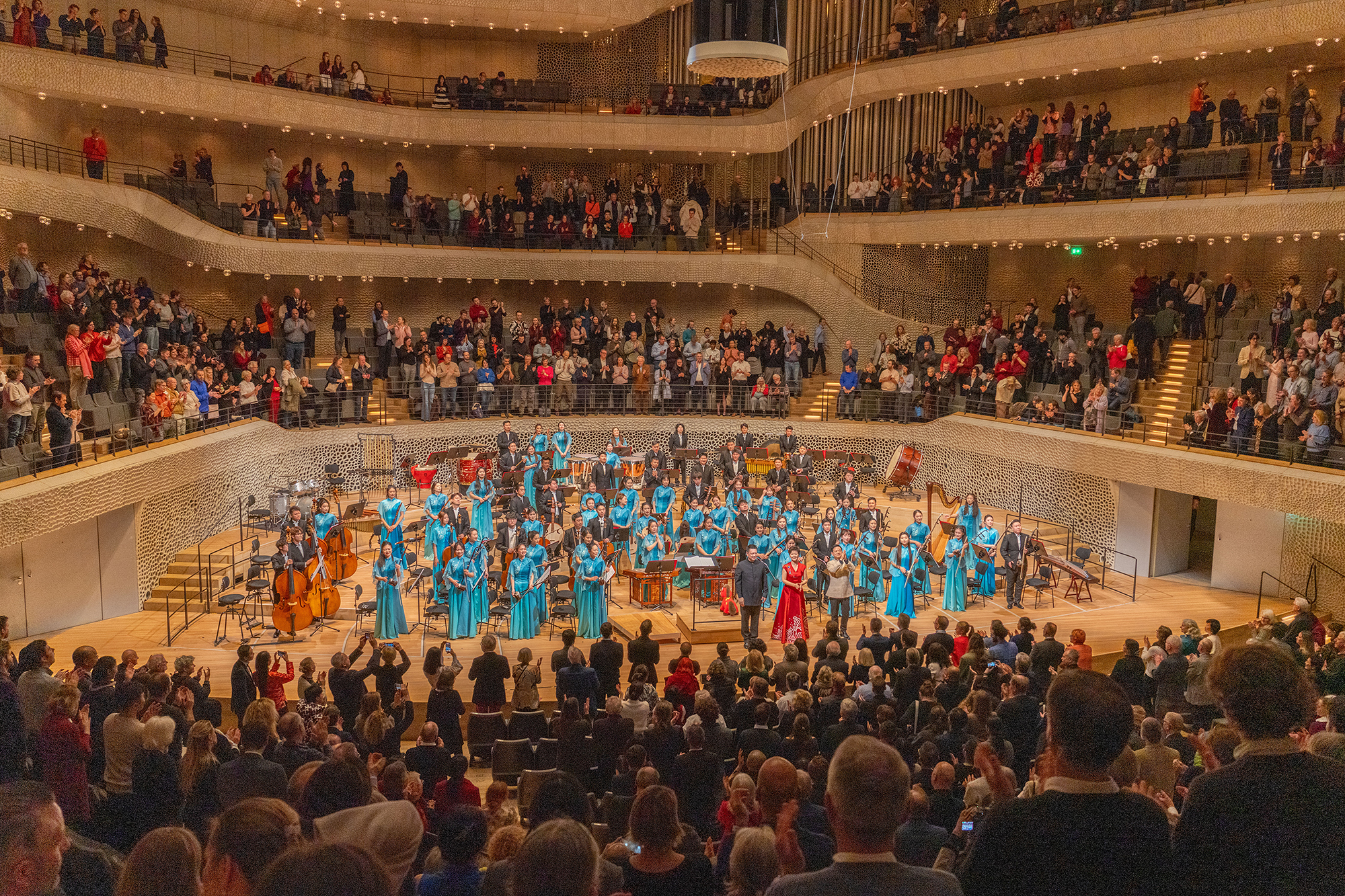
Launched on February 14, the “Chinese Folk Music Odyssey” featured seven major concerts alongside a series of academic and grassroots cultural exchanges. The tour served as a high-level dialogue between the traditional heritage of China’s Jiangnan region and the classical musical heartlands of Europe.
The tour opened at the Centre for Fine Arts in Brussels, where a capacity crowd of 2,000 experienced the vibrant Spring Festival Overture. The ensemble presented a “Chinese Music Feast,” using traditional instruments to paint an auditory “Jiangnan Scroll” of southern Chinese life. In a poignant finale, Chinese fiddles joined forces with local keyed violins to perform the classic Horse Racing. The fusion of Eastern and Western strings brought tears to the eyes of the Chinese diaspora and earned standing ovations from local attendees.
“The melodies possess both natural charm and profound cultural heritage,” noted Belgian music critic Philippe, following six curtain calls. “It is a truly borderless musical exchange.”
Beyond the concert halls, the group engaged with European pop culture in the heart of Brussels’ Comic Strip district. A “flash mob” titled Tintin’s Encounter with Jiangnan Music saw musicians performing alongside iconic murals of Tintin, engaging local youth and residents through social media-friendly cultural interaction.
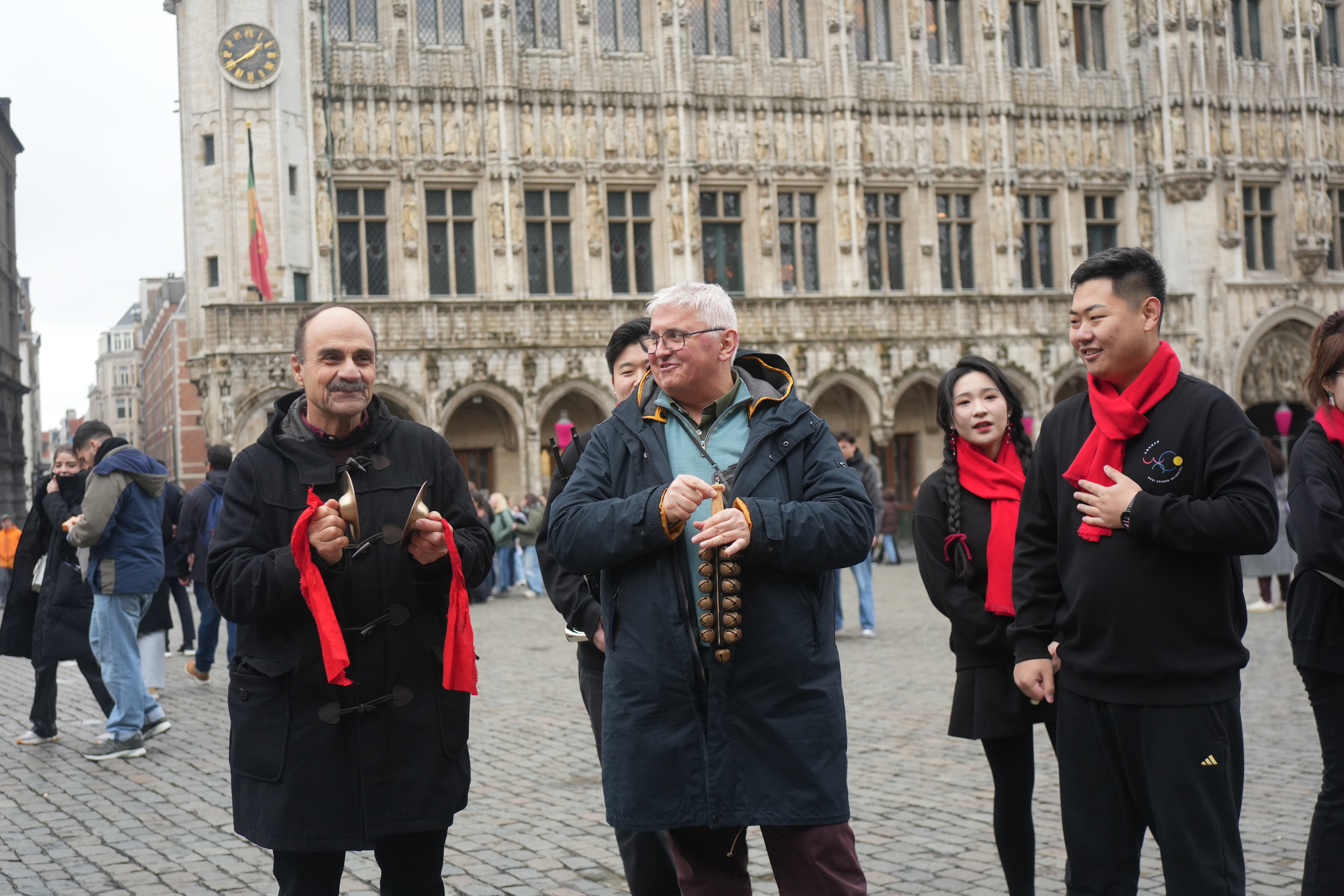
The journey continued through Germany’s elite venues, including Hamburg’s Elbphilharmonie and the Tonhalle Düsseldorf, showcasing the technical precision of Chinese folk orchestration. In the Austrian Tyrol, the tour took an improvisational turn as Wuxi musicians performed alongside local artists against the backdrop of the Alps, a live demonstration of the “beauty without borders”.
The tour concluded on February 26 in Vienna, where the ensemble hosted the “Dreamy Jiangnan” cultural salon at the Wiener Konzerthaus. The event paired musical performances with an interactive exhibition of Wuxi’s intangible cultural heritage, featuring traditional embroidery and clay figurines. The delegation also visited the University of Music and Performing Arts Vienna for the “Jiangnan Charm, Harmonious Resonance” China-Austria Music Exchange event. Through a series of academic dialogues with faculty and students, both sides engaged in a meaningful cultural encounter. These interactions went beyond simple performances, significantly deepening mutual understanding and strengthening the musical ties between East and West.
By integrating the “Voice of China” into the “World Symphony,” the Wuxi Cultural Exchange Group has opened a new chapter in Wuxi’s enduring musical engagement with the world.
Hashtag: #WuxiInformationOffice
The issuer is solely responsible for the content of this announcement.












-
 Feature/OPED6 years ago
Davos was Different this year
-
Travel/Tourism10 years ago
Lagos Seals Western Lodge Hotel In Ikorodu
-

 Showbiz3 years ago
Estranged Lover Releases Videos of Empress Njamah Bathing
-
 Banking8 years ago
Sort Codes of GTBank Branches in Nigeria
-

 Economy3 years ago
Subsidy Removal: CNG at N130 Per Litre Cheaper Than Petrol—IPMAN
-

 Banking3 years ago
Sort Codes of UBA Branches in Nigeria
-

 Banking3 years ago
First Bank Announces Planned Downtime
-

 Sports3 years ago
Highest Paid Nigerian Footballer – How Much Do Nigerian Footballers Earn