
Media OutReach
The new report ‘The State of Hong Kong Biodiversity 2025’ reveals over 25% of species in Hong Kong are at risk of local extinction

Thanks to its complex topography, diverse habitats, and the extensive Country Park system, Hong Kong is home to an impressive range of biodiversity. However, as our protected areas are concentrated in hillsides and coastal wetlands, many of the most vulnerable species and habitat types lack adequate protection.
Leveraging the expertise of 24 local ecologists and specialists, the study assessed the conservation status of 886 species across eight animal groups, including mammals, birds, reptiles, amphibians, freshwater fishes, butterflies, dragonflies and freshwater crustaceans. Alarmingly, the report reveals that 21 of the 886 assessed species have already disappeared from Hong Kong and over 25% (232 out of 886) are at risk of local extinction. Among the assessed fauna, birds and freshwater fishes are the most at risk groups, with almost half facing moderate to high risk of local extinction. Species dependent on lowland habitats, such as freshwater marsh, river, farmland and other open country habitats, are experiencing the most serious decline, necessitating urgent conservation intervention. Habitat loss and degradation, poaching and the spread of invasive species are major drivers for their decline.
The report is accompanied by the Hong Kong Terrestrial Biodiversity Hotspot Map 2025, which highlights 27 critical biodiversity hotspots outside the protected-area system. These hotspots, which cover merely 6% of Hong Kong’s land area, are home to about 95% of at-risk species. Yet, nearly 80% of the hotspots have suffered from eco-vandalism and nearly 50% overlap with planned/committed development. This underscores both the conservation significance of these areas and the need of immediate conservation efforts at these vulnerable hotspots to prevent further species decline or extinction.
The report serves as a key reference for government officials, statutory bodies, researchers, environmental consultants, and conservationists, highlighting the areas requiring attention to improve relevant policies, laws and regulations, and to conduct research and projects. It also calls on public to engage in conservation efforts of at-risk species and biodiversity hotspots. An immediate, collective effort, and societal commitment are imperative to prevent these at-risk species from local extinction.
Dr. Bosco Chan, Director, Conservation of WWF-Hong Kong said: “Our aim in publishing this report and the biodiversity hotspot map is to inform strategic conservation actions, elicit interest in the conservation of overlooked fauna and their habitats, and help the Government to enhance relevant policies, laws and regulations. The findings of this report underscore the urgent need for collective actions to protect at-risk species and habitats, which are concentrated in the unprotected lowlands. We must make and invest in concrete plans to protect Hong Kong’s most threatened biodiversity and wildlife habitats before it is too late.”
Dr. Carmen Or, Manager, Wetlands Research of WWF-Hong Kong highlighted that: “The last comprehensive species status assessment and biodiversity hotspot map for Hong Kong were produced over two decades ago. It is high time for us to reassess the state of biodiversity in Hong Kong to reflect changes in the environment and ensure our conservation actions align with species and habitats in the most urgent needs.”
Mr. Yu Yat Tung, Director, The Hong Kong Bird Watching Society added that: “Birds are among the most seriously threatened faunal groups in Hong Kong. The loss of lowland wetlands and farmland, along with habitat changes resulting from vegetation succession, significantly impacts both breeding and visiting birds, as illustrated by the habitats required by at-risk birds.
Dr. Michael Lau, renowned herpetologist in Hong Kong shared that: “Other than habitat loss, which impacts both reptiles and amphibians and has led to the extinction of Chinese Floating Frog, all native turtles are facing risk of local extinction, and poaching is the most serious threat to their survival.”
Dr. Alphonse Tsang, Research Assistant Professor of Lingnan University stated that: “With nearly half of the native freshwater fish species at risk of local extinction, threats such as channelisation and water pollution, and the invasion of non-native species must be tackled.”
To access the full report: : https://wwfhk.awsassets.panda.org/downloads/the-state-of-hong-kong-biodiversity-2025.pdf
To access the hotspot map: https://wwfhk.awsassets.panda.org/downloads/hong-kong-terrestrial-biodiversity-hotspot-map-2025.pdf
High resolution photos are available at: https://wwf.hk/biodiversity2025
Experts attending
Dr Bosco Chan, Director, Conservation of WWF-Hong Kong
Dr. Carmen Or, Manager, Wetlands Research of WWF-Hong Kong
Mr. Yu Yat Tung, Director, The Hong Kong Bird Watching Society
Dr. Michael Lau, renowned herpetologist in Hong Kong
Dr. Alphonse Tsang, Research Assistant Professor of Lingnan University
Mr. Tommy Hui, Manager, Conservation of WWF-Hong Kong
Mr. Jianhuan Yang, Conservation Manager, Kadoorie Farm and Botanic Garden
Mr. Philip Lo, Senior Conservation Officer, Kadoorie Farm and Botanic Garden
Dr. Ken So, Education and Research Manager, Outdoor Wildlife Learning Hong Kong
Hashtag: #WWF
The issuer is solely responsible for the content of this announcement.
WWF-Hong Kong
WWF is a leading global conservation organisation, with a network active in more than 100 countries. WWF’s mission is to build a future in which humans live in harmony with nature. WWF-Hong Kong has been working since 1981 to deliver solutions for a living planet through conservation, footprint and education programmes, with the aim of transforming Hong Kong into Asia’s most sustainable city.


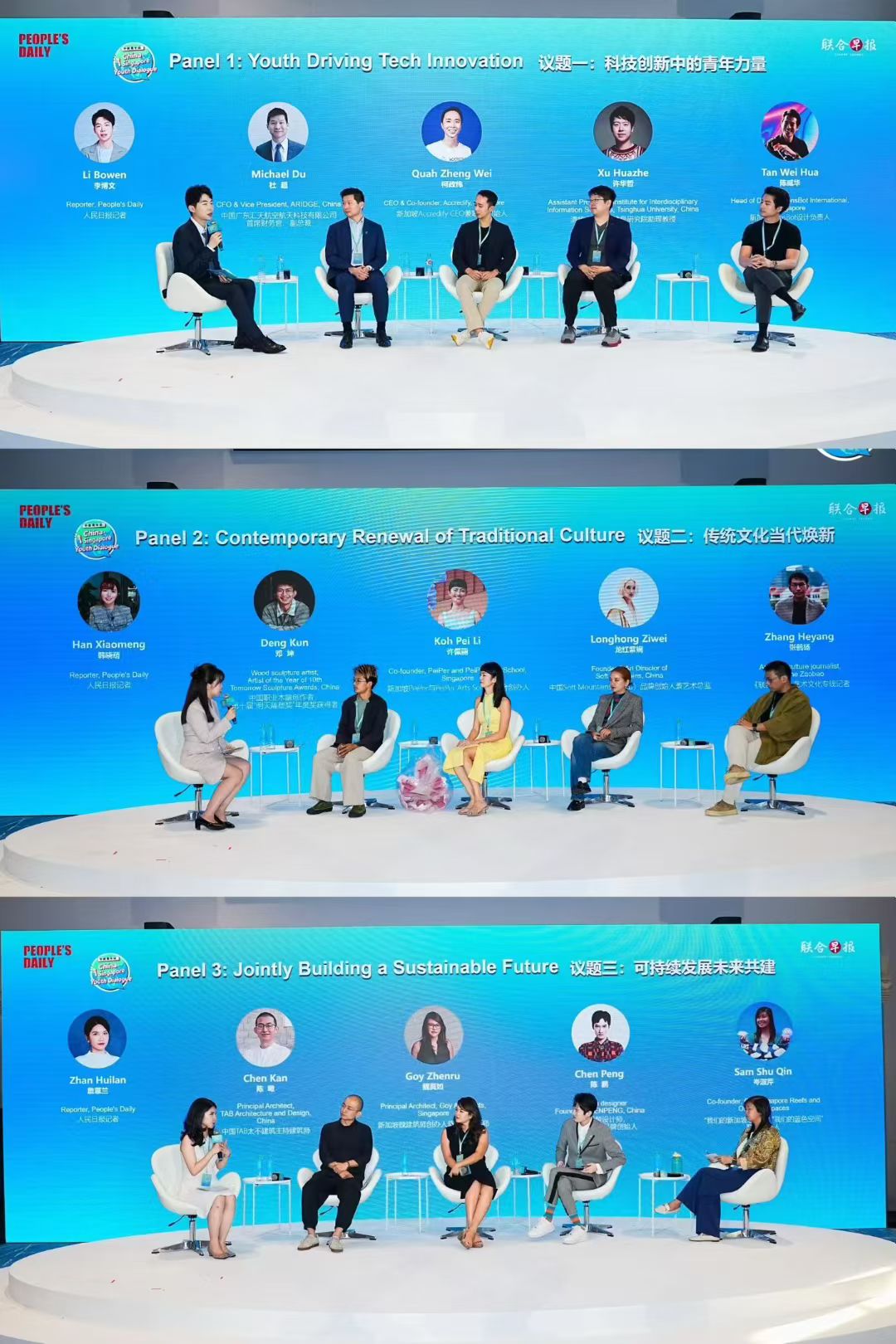
Co-organized by the People’s Daily and Lianhe Zaobao, the two-day event featured 12 young representatives who explored how their generation is shaping the future through innovation, cultural renewal and cross-border collaboration.
In the first panel, “Youth Driving Tech Innovation,” participants working in robotics, flying cars and data verification discussed both the opportunities and challenges of the AI era.
Tan Wei Hua, head of design at Singapore-based LionsBot International, addressed concerns over “AI anxiety” and its impact on jobs. “New jobs are going to be created. The next generation will be doing something entirely different,” he said, pointing to robotics as a growing field of opportunity.
Quah Zheng Wei, CEO and co-founder of Accredify, encouraged aspiring entrepreneurs to take the first step. With the tech industry evolving rapidly, he stressed that “nothing is holding you back.”
From an industry perspective, Michael Du, CFO and vice president of ARIDGE, said emerging technologies are expanding possibilities in everyday life. Meanwhile, Xu Huazhe, assistant professor at the Institute for Interdisciplinary Information Sciences at Tsinghua University, highlighted the strengths of younger generations: “With the correct taste, they will build the most meaningful things.”
The second panel, “Contemporary Renewal of Traditional Culture,” shifted focus from innovation to heritage. Artists and cultural practitioners in wood sculpture, paper art, jewelry design and journalism explored how tradition can be revitalized in modern contexts.

Wood sculpture artist Deng Kun emphasized the importance of cultivating an eye for beauty, while Lianhe Zaobao arts and culture journalist Zhang Heyang described traditional culture as “a place of spiritual haven for today’s youth.”
Designer Longhong Ziwei, founder and art director of the accessory brand Soft Mountains, said engaging with Yi heritage has inspired her work and resonated with international audiences.
Singaporean paper and mixed media artist Koh Pei Li, drawing inspiration from everyday urban life, highlighted the value of noticing overlooked details. Through her work, she hopes to reconnect people with the subtle beauty around them.
In the final panel, “Jointly Building a Sustainable Future,” speakers from architecture, fashion, and marine conservation offered interdisciplinary perspectives on sustainability.
Chen Kan, principal architect of TAB Architecture and Design, spoke about the philosophy of “being-with” as a guiding principle. “We need a deeper capacity to coexist with others,” he said.
Goy Zhenru, principal architect of Goy Architects in Singapore, emphasized designing in harmony with nature. She highlighted the importance of connecting living spaces with natural elements such as breeze and sunlight to create comfort and environmental awareness.
Sam Shu Qin, co-founder of Our Singapore Reefs and Our Blue Spaces, who describes herself as “a gardener underwater,” expressed hope that younger generations will recognize their ability to give back to the ocean.
For fashion designer Chen Peng, founder of brand CHENPENG, sustainability is both cultural and practical. “It should be culture-based and do no harm to the earth. It’s not a choice, but a natural extension of philosophy,” he said.
The dialogue marked a step forward in media cooperation and people-to-people exchanges between China and Singapore. By amplifying youth perspectives, it showcased the innovative energy and collaborative potential of both countries, while helping to build a long-term platform for bilateral engagement and shared progress.
The issuer is solely responsible for the content of this announcement.

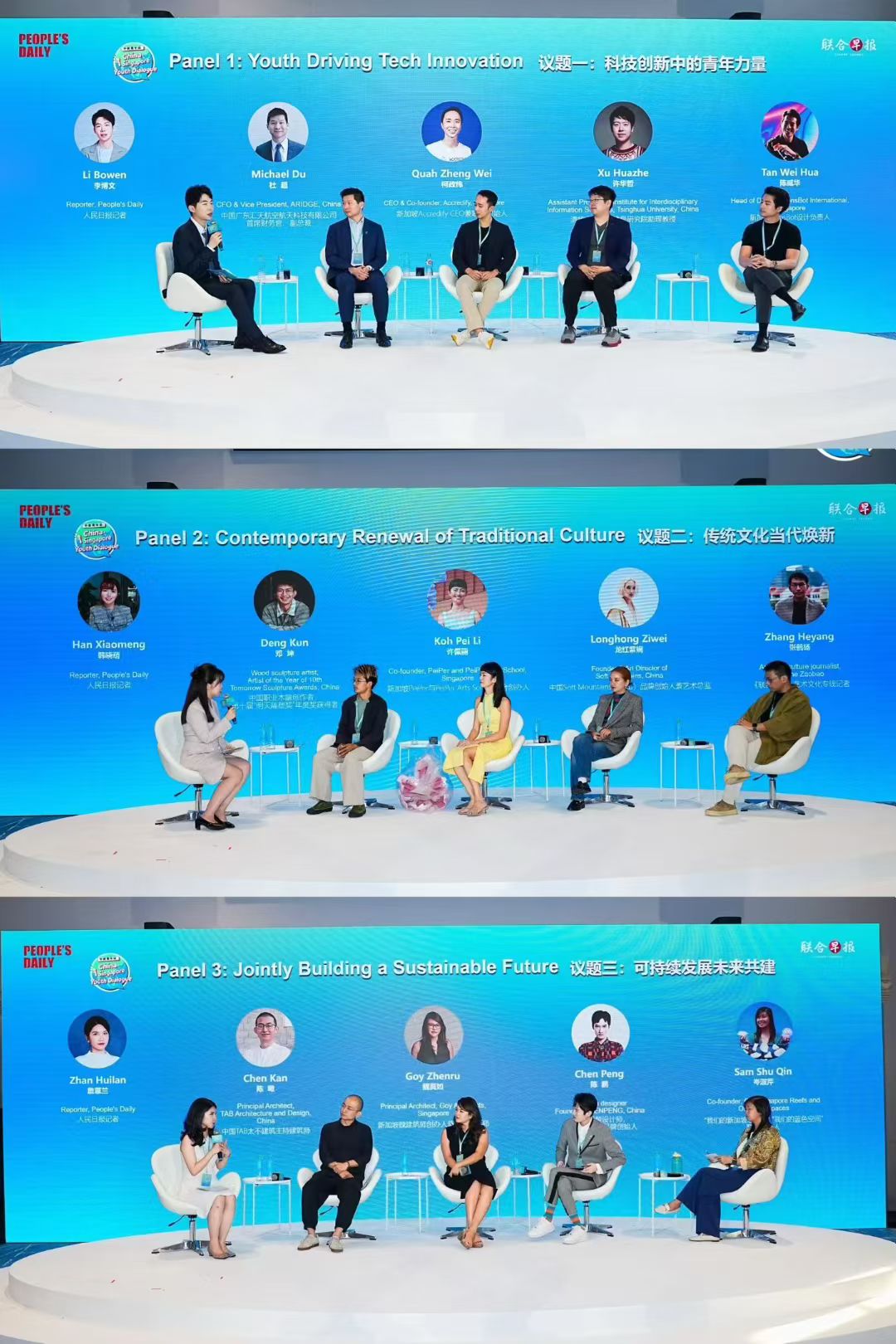
Co-organized by the People’s Daily and Lianhe Zaobao, the two-day event featured 12 young representatives who explored how their generation is shaping the future through innovation, cultural renewal and cross-border collaboration.
In the first panel, “Youth Driving Tech Innovation,” participants working in robotics, flying cars and data verification discussed both the opportunities and challenges of the AI era.
Tan Wei Hua, head of design at Singapore-based LionsBot International, addressed concerns over “AI anxiety” and its impact on jobs. “New jobs are going to be created. The next generation will be doing something entirely different,” he said, pointing to robotics as a growing field of opportunity.
Quah Zheng Wei, CEO and co-founder of Accredify, encouraged aspiring entrepreneurs to take the first step. With the tech industry evolving rapidly, he stressed that “nothing is holding you back.”
From an industry perspective, Michael Du, CFO and vice president of ARIDGE, said emerging technologies are expanding possibilities in everyday life. Meanwhile, Xu Huazhe, assistant professor at the Institute for Interdisciplinary Information Sciences at Tsinghua University, highlighted the strengths of younger generations: “With the correct taste, they will build the most meaningful things.”
The second panel, “Contemporary Renewal of Traditional Culture,” shifted focus from innovation to heritage. Artists and cultural practitioners in wood sculpture, paper art, jewelry design and journalism explored how tradition can be revitalized in modern contexts.

Wood sculpture artist Deng Kun emphasized the importance of cultivating an eye for beauty, while Lianhe Zaobao arts and culture journalist Zhang Heyang described traditional culture as “a place of spiritual haven for today’s youth.”
Designer Longhong Ziwei, founder and art director of the accessory brand Soft Mountains, said engaging with Yi heritage has inspired her work and resonated with international audiences.
Singaporean paper and mixed media artist Koh Pei Li, drawing inspiration from everyday urban life, highlighted the value of noticing overlooked details. Through her work, she hopes to reconnect people with the subtle beauty around them.
In the final panel, “Jointly Building a Sustainable Future,” speakers from architecture, fashion, and marine conservation offered interdisciplinary perspectives on sustainability.
Chen Kan, principal architect of TAB Architecture and Design, spoke about the philosophy of “being-with” as a guiding principle. “We need a deeper capacity to coexist with others,” he said.
Goy Zhenru, principal architect of Goy Architects in Singapore, emphasized designing in harmony with nature. She highlighted the importance of connecting living spaces with natural elements such as breeze and sunlight to create comfort and environmental awareness.
Sam Shu Qin, co-founder of Our Singapore Reefs and Our Blue Spaces, who describes herself as “a gardener underwater,” expressed hope that younger generations will recognize their ability to give back to the ocean.
For fashion designer Chen Peng, founder of brand CHENPENG, sustainability is both cultural and practical. “It should be culture-based and do no harm to the earth. It’s not a choice, but a natural extension of philosophy,” he said.
The dialogue marked a step forward in media cooperation and people-to-people exchanges between China and Singapore. By amplifying youth perspectives, it showcased the innovative energy and collaborative potential of both countries, while helping to build a long-term platform for bilateral engagement and shared progress.
The issuer is solely responsible for the content of this announcement.
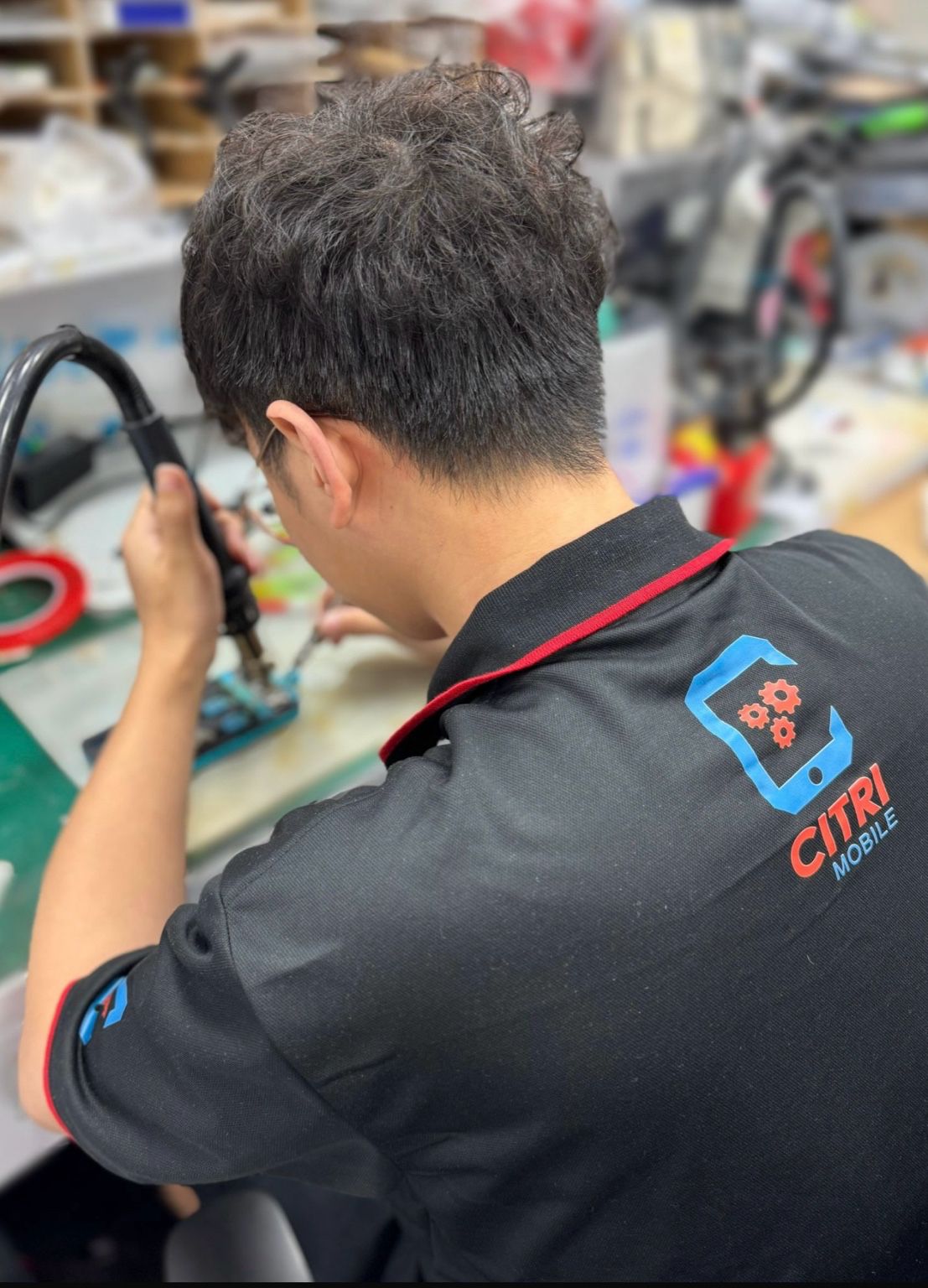
Expansion strengthens access to fast, reliable device repair services across Jurong, Yishun, Tampines and Chinatown as demand for urgent technical support rises
What often begins as a minor inconvenience can quickly escalate. A phone may take longer to charge, a screen may flicker briefly before stabilising, or a laptop may run hotter than usual during routine use. These early signs are often ignored until the device stops functioning at a critical moment.
Hashtag: #CitriMobile #SingaporeRepair #Jurong #Yishun
 https://citrimobile.com/
 https://x.com/CitriMobile
 https://www.facebook.com/CitriSG/
 https://www.instagram.com/citrimobilesghttps://www.carousell.sg/u/citrimobilesg/
The issuer is solely responsible for the content of this announcement.
C3 Smart Repair By Citri Mobile













-
 Feature/OPED6 years ago
Davos was Different this year
-
Travel/Tourism10 years ago
Lagos Seals Western Lodge Hotel In Ikorodu
-

 Showbiz3 years ago
Estranged Lover Releases Videos of Empress Njamah Bathing
-
 Banking8 years ago
Sort Codes of GTBank Branches in Nigeria
-

 Economy3 years ago
Subsidy Removal: CNG at N130 Per Litre Cheaper Than Petrol—IPMAN
-

 Banking3 years ago
Sort Codes of UBA Branches in Nigeria
-

 Banking3 years ago
First Bank Announces Planned Downtime
-

 Sports3 years ago
Highest Paid Nigerian Footballer – How Much Do Nigerian Footballers Earn