Connect with us

Showbiz

Muslim Group MURIC Spits Fire over ‘This is Nigeria’ Video by Falz

Published

on

By Dipo Olowookere

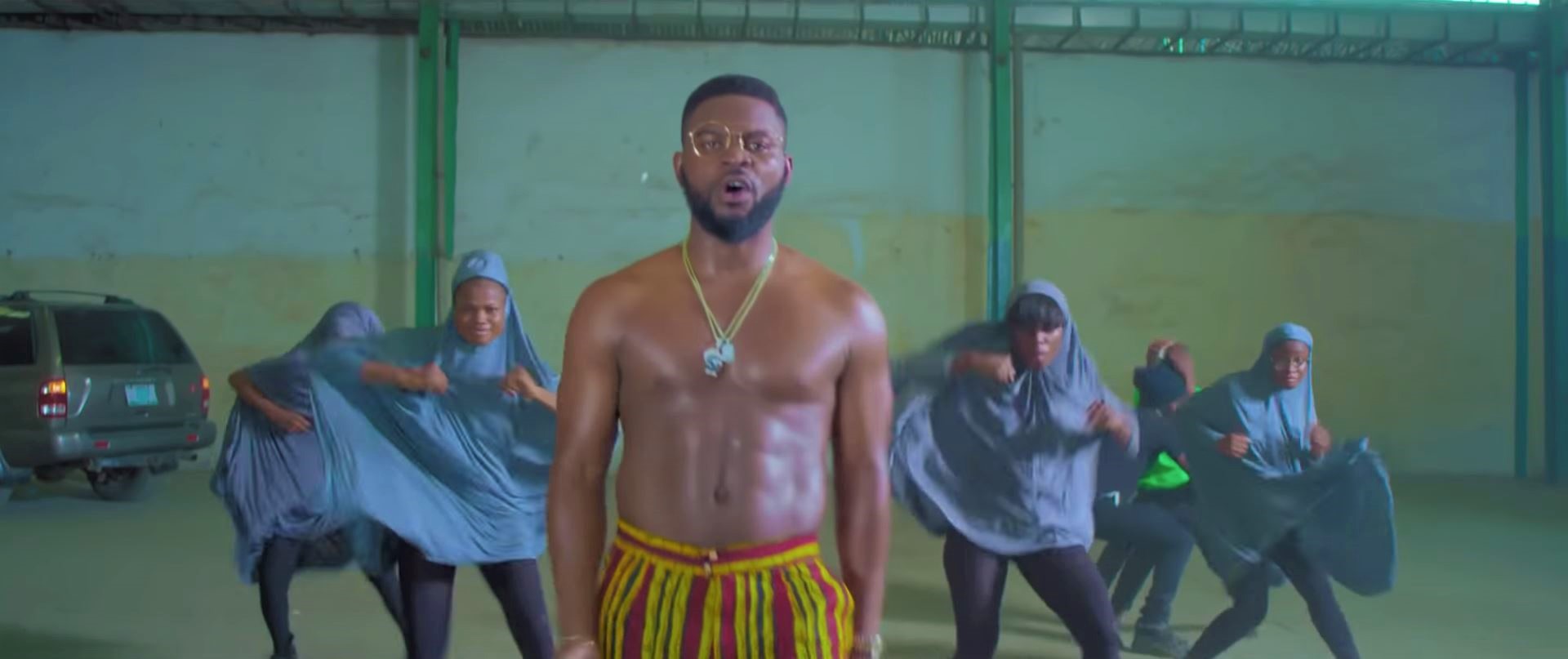
A Muslim group known as Muslim Rights Concern (MURIC) has directed Nigerian rapper, Folarin Falana, otherwise known as Falz, to withdraw a music video he released about a week ago entitled ‘This is Nigeria.’

The group, in a statement issued by its leader, Prof Ishaq Akintola, alleged that the artiste “denigrated Islam, demonized Nigerian Muslims and subjected them to public opprobrium” in video by portraying women in hijab (Islamic veil) as choreographers dancing the ‘shaku-shaku’, a dance he said is “associated with a drug-related song.”

MURIC said Falz has seven days to withdraw the music, threatening a legal action if he fails to adhere to the ultimatum.

Also in the video, the singer, who is the son of a human rights lawyer, Mr Femi Falana, featured a character that dressed like a Fulani man, who suddenly abandoned his traditional guitar and beheaded a man.

MURIC described these as “thoughtless, insensitive and highly provocative, adding that it is a hate video, “Islamophobia nulli secundus.”

It said the video has the potential of causing religious crisis of unprecedented dimension.

“We therefore demand its withdrawal and an apology to Nigerian Muslims within seven days or the authors and their agents will face legal action if they fail to comply,” the group warned.

“The video manifests ethnic bias against Fulanis while it ignored the criminal activities of ethnic militia of the Middle Belt who have also massacred Fulanis and rustled their cattles in their thousands. This video has denigrated Islam, demonized Nigerian Muslims and subjected them to public opprobium.

“MURIC rejects Falz’ explanation that the the girls in hijab in his ‘Shaku Shaku’ dance symbolize the Chibok girls because nothing in the video indicates that the girls represent the Chibok girls. At least none of the Chibok girls have been seen dancing like a drunkard. They are always in pensive mood. Do they have any cause to be dancing? Are they happy? This video is the most detestable, odious and insidious Islam-bashing in recent time.

“Only the scenes portraying police brutality and the money-swallowing snake in the video are near the truth. Falz’ ‘Shaku Shaku’ video is nothing but a hate-induced production. It is a most unpatriotic handiwork of a Nigerian youth in 2018. Here is the work of a youth working towards turning Nigerians against each other; a youth inciting Nigerian Christians to hate their Muslim neighbours; a youth instigating Muslims to religious violence. This video is in bad taste. It is a hate video. It is an assault on the self-dignity of every Muslim. It is freedom of expression gone haywire.

“We call the attention of security agencies to this hate action. The tragedy facing modern societies all over the world is their criminal complicity in Islam-bashing and their hypocritical accusation of Muslims of terrorism and religious violence. On the contrary, terrorism is mere smoke. Provocation, derision and injustice are the fires which cause terrorism. We reiterate our pontification that it is naïve for a fire fighter to ignore the fire and turn his hose at the smoke. The world is treating symptoms, leaving the real ailment to fester.

“We remind Nigerians of the outcome of similar provocative actions in the past and their unpalatable outcomes. The violent reaction of Nigerian Muslims to Fun Times magazine’s blasphemous story of December 1990 in which it was alleged that “Muhammad had an illicit affair with a woman of easy virtue according to the Qur’an and later married her” shook the country to its foundation. Isioma Daniel’s article, “The World at Their Feet” published in ThisDay newspaper on Saturday, 16th November, 2002, drew the ire of Muslims across the length and breadth of Nigeria.

“Violent demonstrations broke out in 2005 when the Danish newspaper Jyllands-Posten’s published a cartoon in which Prophet Muhammad (peace be upon him) was depicted as a terrorist wearing a bomb-laden turban. In January 2015, Charlie Ebdo, the French satirical magazine used cartoons that were considered provocative by Muslims. Blood flowed on the streets of Paris.

“We condemn violence and all acts of terrorism. But we do not share the opinion that freedom of expression can go to any length. Even Pope Francis has warned people not to insult the faith of others. He said, ‘It is normal. You cannot provoke. You cannot insult the faiths of others. You cannot make fun of the faiths of others. Freedom of speech and expression are fundamental human rights. However, there should be a limit to offending and ridiculing the faiths and beliefs of others.’

“But has this advice been taken seriously? Nigerian Artistes have consistently proved that they are most willing to ignore the Pope’s advice. They provoke Muslims at the slightest opportunity. They have this habit of giving Muslim names to characters who play devilish, immoral and lowly roles in their films, e.g. Sikiratu Sindodo, Jelili Oniso, Basira Baseje, Osanle Modinat, Aminatu Pa-pa-pa are a few examples. Of recent, Muniru and Ambali play despicable roles of idiocy.

“The idea behind this is to make Muslims feel ashamed of the ordinary Muslim name. It is inhuman, despicable and bully-motivated. MURIC will defend the Muslim name with every legitimate tool at its disposal.

“There is no gainsaying the fact that a culture of impunity pervades the arts in Nigeria. The National Film And Video Censors Board (NFVCB), a regulatory agency set up by Act No. 85 of 1993 to regulate films and the video industry has a case to answer. ‘Shaku Shaku’ video was shot and released under its watch. What is its alucutus. What will it say if Muslims elect to go violent over this primitive, irresponsible and reckless production? What will it say if hundreds of lives and properties worth billions of dollars are lost in the ensuing violence due to its negligence?

“As we round up, MURIC warns Nigerian artists to stop giving Muslim names to devilish and lowly characters. We appeal to Muslims all over the country to simmer down. Let us adopt a civilized approach to ‘Shaku Shaku’ and teach agents provocateur some lessons in respect for human feelings. Instead of going violent, Nigerian Muslims should take those behind the ‘Shaku Shaku’ video to court in order to serve as a deterrent to others.

“We therefore give notice of impending legal action against the artist behind the ‘Shaku Shaku’ video unless the latter is withdrawn and an apology is widely published within seven days,” MURIC said in the statement.


Dipo Olowookere is a journalist based in Nigeria that has passion for reporting business news stories. At his leisure time, he watches football and supports 3SC of Ibadan. Mr Olowookere can be reached via [email protected]

Click to comment

Leave a Reply

Your email address will not be published. Required fields are marked *

Showbiz

Facebook 2026 ‘Made by Africa’ Campaign Features Kehinde Bankole, Others

Published

on

Facebook Made by Africa Campaign

By Aduragbemi Omiyale

Social media giant, Facebook, is celebrating the 2026 Africa Day on May 25 in a bid way through the launch of the sixth edition of its pan-African campaign, ‘Made by Africa, loved by the world: Where stories spark community.’

This year’s focus is on African cinema, and it features five talents from the sector, who are Kehinde Bankole (Nigeria), Linda Mtoba (South Africa), Nomzamo Mbatha (South Africa), Osas Ighodaro (Nigeria), and Tobi Bakre (Nigeria).

The campaign features a five-part vodcast series profiling these five internationally acclaimed actors and filmmakers, hosted by leading African podcasters, I Said What I Said (Nigeria), and Because We Said So (South Africa).

Each episode explores the talent’s creative journey, global impact, and how they use Facebook to build communities and connect with fans worldwide.

Vodcast snippets will be available on the Meta Africa Facebook page, with full episodes on the I Said What I Said and Because We Said So podcasts and talent profiles.

Speaking about the campaign, Kezia Anim-Addo, Communications Director, Africa, Middle East & Turkey at Meta, said: “For six years, Made by Africa has spotlighted talent from across the continent making a mark globally. This year, film takes centre stage. From Nollywood to South African cinema, African stories are reaching audiences worldwide, and Facebook is at the heart of how people come together around cultural moments like these. This campaign backs the filmmakers driving that momentum.”

Also, the hosts of I Said What I Said, FK Abudu & Jola Ayeye, said, “We’re excited about this partnership and the chance to collaborate with Facebook in celebrating Africa Day with other brilliant African creatives. Being able to spotlight creators with global impact feels incredibly special to us, and we look forward to more partnerships and opportunities to champion African creativity.”

Also, the anchors of Because We Said So, Zama Marubelela & Landzy Gama, said, “As young African content creators, we’re passionate about celebrating African excellence, identity, and culture through honest and relatable conversations. Having Nomzamo Mbatha and Linda Mtoba on Because We Said So made this collaboration with Meta even more special, as they both continue to represent Africa on a global stage while sharing authentic African stories with the world. We’re excited to amplify these voices and be part of a campaign that celebrates African talent, creativity, and storytelling on a global scale.”

Continue Reading

Showbiz

MasterChef Nigeria surprise: From Nightmare to Dream Come True, Fads is Back and On Fire

Published

on

MasterChef Nigeria

The MasterChef Nigeria kitchen is no stranger to unexpected twists — and this week delivered one of its biggest surprises yet. 

In a dramatic turn of events, previously eliminated home cooks Fads, Pearl and Margaret were given an extraordinary second chance: a shot at redemption and an opportunity to fight their way back into the competition.

With a place back in the MasterChef kitchen — and a chance to compete for the life-changing 73 million prize on the line, the trio faced a high-pressure Redemption Challenge centred around one deceptively simple ingredient: eggs.

Tasked with mastering three culinary fundamentals in just 10 minutes, the contestants had to deliver the perfect poached egg, boiled egg and omelette — a challenge designed to test precision, timing and technical skill under immense pressure.

In a dramatic cook-off, it was Fads who rose to the occasion, impressing the judges with her execution and earning her place back in the MasterChef kitchen. For Pearl and Margaret, however, the challenge marked the end of their MasterChef journey, as they bid farewell to the competition for good.

True to the spirit of MasterChef Nigeria, the competition was far from over. The Top 8 immediately faced another challenge — a celebration of the Staples of Success — where culinary skill met high stakes. With an impressive 2 million up for grabs, the home cooks had yet another opportunity to prove themselves in the MasterChef kitchen.

The arrival of the white apron cook was met with excitement in the MasterChef Nigeria kitchen, as the home cooks embraced the moment with enthusiasm and ambition.

However, while some rose to the occasion, others struggled to meet the judges’ exacting standards.

Derry’s dish was dealt a major setback when her chicken was found to be undercooked. David’s red chilli starter and roasted chicken main failed to deliver the impact the judges had hoped for and overwhelmed by emotion, Favy faced a challenge of her own when her panna cotta refused to set, forcing her to rethink her dish under pressure.

Demilade impressed the judges with a standout combination of Potato Crisps and a creative Plantain Split, showcasing both confidence and flair in the kitchen. Fads, meanwhile, delivered a remarkable comeback with her comforting yet elevated take on Yam Chips and Potato Soup — a dish that earned high praise from the judges. Clearly impressed, Chef Eros described Fads’ creation as “restaurant ready.”

Demilade and Fads rose above the competition to secure coveted spots in the Top 2, earning themselves a shot at the 2 million prize.

In the end, it was Fads who claimed Dish of the Day, completing an impressive comeback story as she walked away with 2 million and renewed confidence in the MasterChef Nigeria kitchen.

Next week, tensions rise as the Top 8 take on a high-pressure Fashion Challenge, with the MasterChef kitchen also welcoming special guest judge Ezinne Chinkata.

Produced by Primedia Group, MasterChef Nigeria is supported by a strong coalition of leading Nigerian brands, including headline sponsor Power Oil, alongside Indomie, Dano Milk, Malta Guinness, Sonia Tomato, Kiara Rice, Golden Penny Flour, Golden Penny Sugar, Golden Penny Garri, Golden Penny Semolina, Golden Penny Chocolate Spread, and Golden Penny Wheat.

The show airs weekly on Sundays at 7 pm on Africa Magic Showcase and Africa Magic Family, with rebroadcasts on Wednesdays at 6 pm on Africa Magic Showcase and Thursdays at 12 pm on Africa Magic Family.

Continue Reading

Showbiz

Netflix Spends $135bn on Films, TV Shows in 10 Years

Published

on

nnetflix

By Adedapo Adesanya

Data from Netflix reveals that more than $325 billion was contributed to the global economy over the past decade, creating more than 425,000 jobs in over 50 countries, including Nigeria.

A decade ago, Netflix expanded into almost every country in the world in a single day, and since then, it has been “a champion of local stories”, spotlighting them on a global stage.

Netflix signalled its Nigeria ambitions with the acquisition of Lionheart, a film produced in 2018 by industry veteran, Genevieve Nnaji, as its first original film in the country.

The streamer has since commissioned and co-produced multiple original series and films in the years since.

However, in late 2024, it was reported that Netflix was exiting the Nigerian market; it denied the reports, but has since cut back on original productions.

Viewing of non-English language titles represented less than a tenth of total viewing on Netflix ten years ago, while today it’s more than a third.

Netflix says the data underscores its continued commitment to supporting creative communities everywhere.

In Nigeria, some Netflix-affiliated films have amassed hit followings and series, such as Gingerrr, King of Boys, The Black Book, Anikulapo, Sugar Rush, Hijack ’93, among others.

Speaking on the development, Mr Ted Sarandos, co-CEO of Netflix, commented: “[…] what really matters are the people behind those numbers — the writers, directors, carpenters and electricians, the small business owners and community members and of course, the fans who make everything possible.”

This data is revealed as Netflix launches The Netflix Effect, designed to bring together stories from around the world that explore the economic and cultural impact Netflix has had on the entertainment industry.

“Over the last decade, Netflix shows and movies have consistently shaped what people read, buy, listen to, eat, wear and play. We’ve pushed old songs back up the musical charts, helped niche sports go mainstream, and boosted sales of everything from chess sets to Halloween costumes, to home storage.” Mr Sarandos added.

“Now we have a responsibility to keep that flywheel going. That’s why, while other entertainment companies pull back, we’re leaning in — spending tens of billions of dollars on content every year, investing in production facilities from Spain to New Jersey, and growing the entertainment industry through training programmes that have reached over 90,000 people across more than 75 countries.”

Continue Reading

Trending