Connect with us

Showbiz

V Bank Supports Metal Art Exhibition in Lagos

Published

on

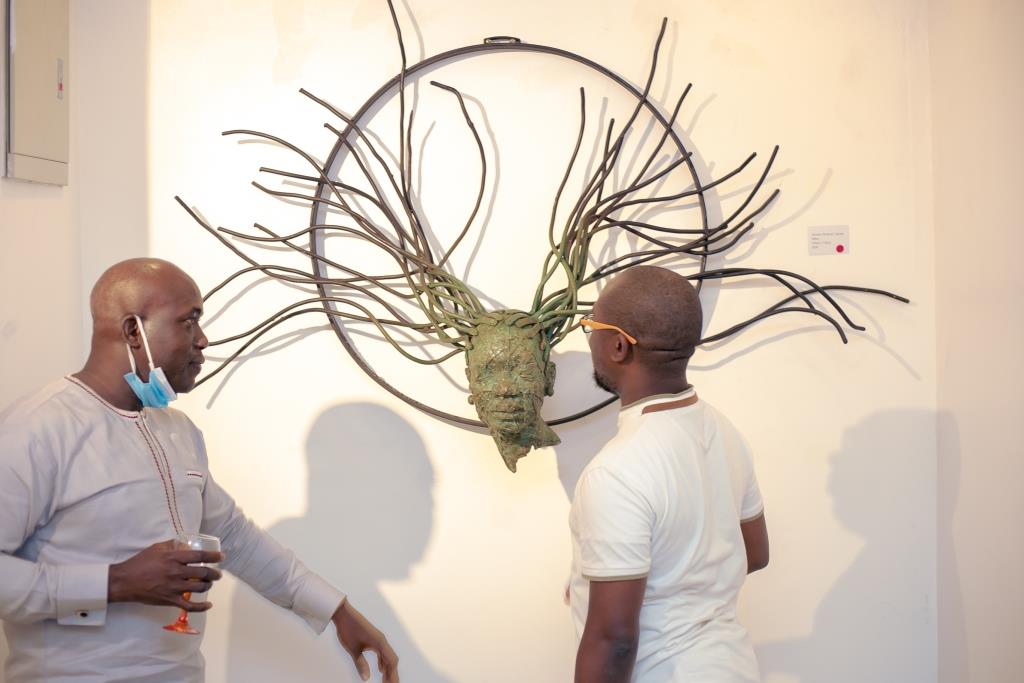
Metal Art Exhibition

By Ahmed Rahma

To celebrate and support Nigeria’s metal artists, Nigeria foremost virtual bank powered by VFD Microfinance Bank, partnered with Thought Pyramid.

The partnership, based on a month-long art exhibition titled Anjorin Dancemetalphor, is the first metal art-only exhibition to be held in Nigeria.

The event, which started on Monday, December 7 at the Thought Pyramid Art Center and showcased 20 exquisite pieces only, featured five notable metal artists; Adeola Balogun, Collins Abinoro, Dotun Popoola, Fidelis Odogwu and Steve Ekpensi.

For the exhibition, the artist presented truly captivating metal spectacles that tell inspiring tales as well as raise questions around the malleability of metal and the possibilities of talents, thereby cementing a positive shift in the perspective of metal art, the artists, and art in general.

Speaking on the inspiration behind the exhibition, Ovie Omatsola, an art enthusiast and convener of the exhibition, stressed that the inspiration of Anjorin: Dancemetalphor is a musical allegory that should not be seen as a reaction.

“Since we want to believe those who use aforementioned aphorisms are not stakeholders or art lovers with sufficient understanding of the creative industry, nonetheless, Anjorin; Dancemetalphor should be seen as a proactive response to purify the reputation and future of this remarkable sub-genre.

“At Thought Pyramid Art Center, we interpret the sounds from the sparkles, iron changing and electrons burning processes heard when a typical metal artist is creating works. In fact, the calming musical ambiance from metal art creation, as far as we are concerned generates rhythmic melody, only if you can listen and not just hear.

“Also, Ajorin: Dancemetalphor was born out of the increasing need to show people in the local art community that only metal sculptors can create distinctive metal sculptures/arts that are interesting and exciting, special and heavenly. It focuses on educating, re-orientating, and informing the public while simultaneously entertaining them,” Ovie said.

Commenting on the event, co-curator and branding consultant for Ajorin, Yusuf Durodola, said, “in this era of technology, we must all begin to realize the need to unite for better results. Only a deep-thinking creative mind can understand the processes we have scaled through on this journey. But teamwork has been the secret to this achievement.”

According to the Managing Director of VFD Microfinance bank, Azubike Emodi, “We chose this occasion and environment to reflect and unwind because it’s been a challenging year for everyone and supporting one another is a good way to strengthen the community.”


Ahmed Rahma is a journalist with great interest in arts and craft. She is also a foodie who loves new ideas. She loves to travel and would love to visit other African countries someday. She is a sucker for historical movies and afrobeat.

Click to comment

Leave a Reply

Your email address will not be published. Required fields are marked *

Showbiz

The Evolution of Home Viewing in Nigeria

Published

on

Home Viewing in Nigeria

There was a time in Nigeria when watching movies at home wasn’t strictly a “home” experience. People rented VHS tapes and later DVDs from local video clubs around the neighbourhood, and in many cases, viewing extended to video centres or where groups gathered to watch films and sports. It was a shared setup shaped by access, availability, and a very communal way of consuming entertainment.

As time went on, analogue television became the main form of home viewing. Families would gather around a single TV set in the living room, with limited channels and fixed programming schedules. Content was not really something you chose; it was something you aligned your day around. Antenna adjustments were part of the routine, and despite the limitations, TV became a central part of everyday household life.

The introduction of satellite and pay-TV services marked a major shift. Viewers suddenly had more control, more variety, and more access. Local and international content expanded significantly, covering movies, sports, news, and entertainment in a way that changed viewing habits from passive scheduling to active choice.

This is where platforms like GOtv became relevant in the Nigerian context. By making premium entertainment more affordable and widely accessible, GOtv helped bridge the gap between content quality and everyday households. It wasn’t just about more channels; it was about making consistent access to entertainment more realistic for a wider audience.

Today, home viewing has become more flexible and audience-driven. People are no longer tied to fixed schedules; viewing is now based on preference, timing, and convenience. At the same time, shared viewing still exists, especially around live sports and major TV moments, where entertainment becomes a collective experience again, just in a more modern form.

From rented tapes and video centres to satellite TV and now more structured, accessible entertainment platforms, the evolution of home viewing in Nigeria has been a steady shift toward more choice and control. Throughout that journey, GOtv has remained part of the ecosystem, supporting how everyday audiences access and experience entertainment at home.

Continue Reading

Showbiz

How Far Would You Go For the People You Love? Stripped Answers This

Published

on

Africa Magic Stripped

Five episodes in, and Africa Magic’s limited series, Stripped, has quietly got people talking. Not because of the stripping, though yes, that is very much part of it, but because of what sits underneath all of it. The guilt. The shame. The quiet, suffocating pressure of being a man in Lagos who is supposed to have it all together but simply does not.

The premise sounds simple. Five friends, all broke, all stuck, all too proud to say it out loud, stumble into a stripping gig at an upscale club called Trabaye after its sharp and seductive owner, Yvonne (Constance Owoyemi) spots them at a birthday party and sees something worth paying for. What follows is anything but simple.

Kelechi “Kel” Okere (Daniel Etim Effiong) is the one carrying the most weight. A former marketing executive now driving Uber to keep his wife and children afloat, Kel is the kind of man who will smile through a crisis so nobody worries. His wife, Ada (Future Lolo Lamai), thinks he is still closing big deals. His children need school fees. The rent is overdue. And every night he comes home, the lie gets a little heavier.

Bolaji (Mofe Duncan), who is loud, charming and energetic, watches his cafe dream bleed out quietly. Suppliers want cash; customers want credit, and charm, it turns out, cannot patch a leaking roof.

Damina (Efa Iwara) is the cool bachelor whose carefully constructed life collapses the moment his pregnant ex walks back through the door. Mensah (Ian Wordi) is a Ghanaian-Nigerian architect and youth pastor caught in a relationship that is slowly erasing him. And Voke (Kunle Remi) is running out of time to free his imprisoned father, one clever scheme at a time.

Their first night at Trabaye is overwhelming. The music, lights, money, and the strange, intoxicating feeling of being wanted. They laugh in the car afterwards and call themselves “Strip Gawds.” For one night, the bills don’t exist. But nothing in Lagos stays clean for long.

Bolaji’s wandering eye pulls the group into dangerous territory. Voke’s schemes start bleeding into the club’s shadier edges. Kel finds himself dangerously close to a line he cannot cross, pulled back only by the sound of his wife’s voice on the phone. And Mensah quietly wonders how many layers of himself he can strip away before there is nothing left worth keeping.

The show’s most devastating moment comes in Episode 4, when Kel has a panic attack. There is no dramatic score, just a man cracking under the weight of everything he has been holding alone. Viewers have not stopped talking about it since. It is the kind of scene that does not just tell you about a character; it shows you something true about the world.

Etim Effiong, who also serves as executive producer, said it plainly. “Men need to catch a break. It’s a really tough world for men, and we deserve some credit.” Episode 5 offers a brief exhale before the walls begin closing in again. The money is good. But the shadows are getting closer.

Stripped is no longer just a show about five men taking their clothes off for money. It is about what men carry in silence, what friendship costs when survival is on the line, and whether the things you do to save your life can also be the things that cost you your soul.

If you have not started watching, you should start now. Catch up on all five episodes now on DStv Stream, and tune in for the final episode this Sunday at 8 PM on Africa Magic Showcase, DStv Channel 151, and GOtv Channel 8.

Continue Reading

Showbiz

Nigerian Singer Niniola Loses Husband to Death

Published

on

Niniola Michael Ndika

By Modupe Gbadeyanka

Popular Nigerian singer, Niniola Apata, professionally known as Niniola, has lost her husband to the cold hands of death.

Niniola confirmed the demise of her heartthrob, Mr Michael Ndika, in a series of posts, including God took my husband, and My husband died, among others.

However, the circumstances behind the death of Mr Ndika were not revealed by the Nigerian afro-house songster.

In the Instagram story on Wednesday morning, the 39-year-old Grammy-nominated entertainer indicated that she had been in a relationship with her late husband for over a decade.

The posts attracted reactions as she was consoled by her teeming fans, who expressed condolences to her for the loss.

Before his death, Mr Ndika was the chief executive of a multimedia platform focused on afro-house and contemporary African music known as NaijaReview.

Niniola is the older sibling of another famous entertainer, Teni.

Continue Reading

Trending