Sports
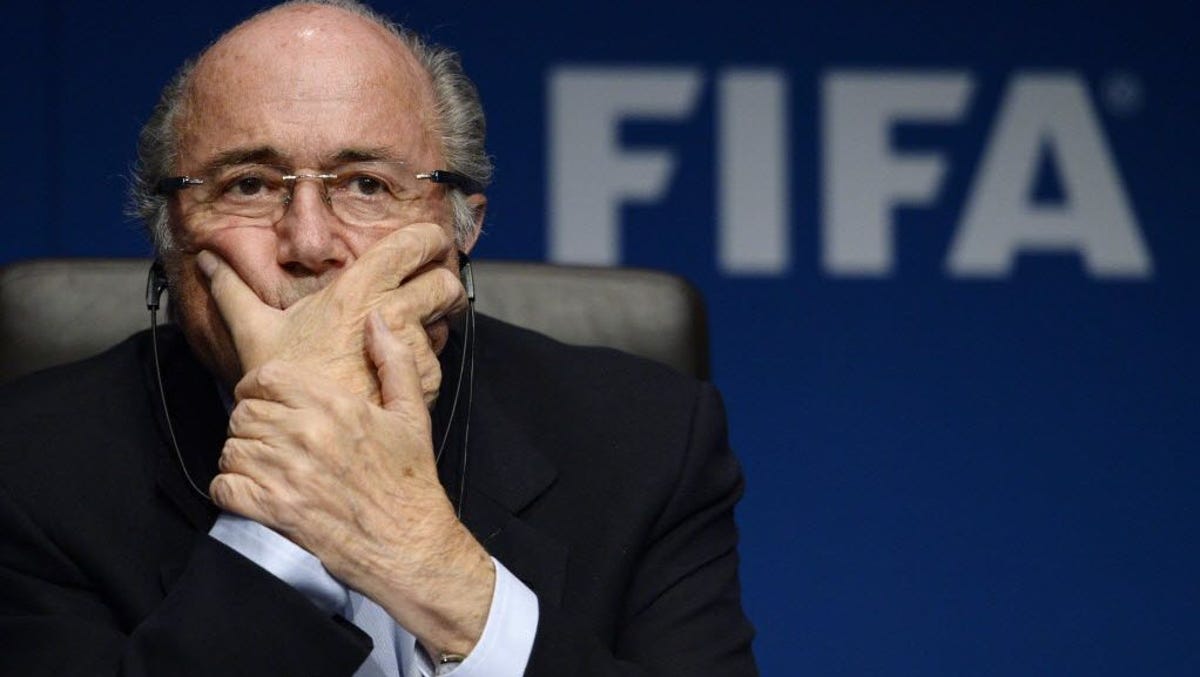
FIFA Files Criminal Complaint Against Sepp Blatter
By Adedapo Adesanya
The Federation of International Football Association (FIFA) has issued a complaint of criminal mismanagement against its former president, Mr Sepp Blatter.
The world football’s governing body said on Tuesday it suspected criminal mismanagement over the finances of its loss-making football museum in Zurich, Switzerland.
The complaint has been sent to the Zurich prosecutor and it relates to the involvement of Mr Blatter and other former officials at the world governing body in the FIFA museum project.
According to a statement from FIFA, “Following a detailed review of historic facts and circumstances concerning the construction and on-going operational costs of the FIFA Museum, FIFA has become aware of many serious irregularities regarding this project, which raise strong suspicions of criminal misconduct on the part of various different officials and companies associated with the matter.
“As a result, FIFA is now duty-bound to refer the matter to the Zurich prosecutor’s office for further investigation and, if necessary, prosecution.
“The criminal complaint filed by FIFA is directed against various members of the former FIFA management, including former president Joseph Blatter, as well as further unknown potential suspects. It is suspected that these individuals may have been involved in various acts of criminal mismanagement, and possibly other related offences.”
The FIFA World Football Museum opened in 2016 after $140 million of football money was spent refurbishing the 1970s office building to also include 34 rental apartments.
Speaking on the allegation, the deputy secretary-general of FIFA, Mr Alasdair Bell, said: “Given the massive costs associated with this museum, as well as the general way of working of the previous FIFA management, a forensic audit was conducted in order to find out what really happened here.
“That audit revealed a wide range of suspicious circumstances and management failures, some of which may be criminal in nature and which therefore need to be properly investigated by the relevant authorities.
“We came to the conclusion that we had no choice other than to report the case to state prosecutors, not least because the current management of FIFA also has fiduciary responsibilities to the organisation and we intend to live up to them, even if those before us dismally failed to.”
The documents allege that the project was “deliberately mismanaged” and points to the decision to put 140 million Swiss francs (over £117 million) into a building FIFA did not own, to lock FIFA into a rental agreement with the building’s owner – insurance firm Swiss Life – until at least 2045, costing it a further 360 million Swiss francs (over £300 million), and the failure to consider other any other suitable properties.
The documents state that the former head of FIFA repeatedly misled different FIFA bodies as to the cost and viability of the project, including the existence of alternative sites.
It also alleged grave conflicts of interest and “suspected nepotism” in relation to the project.
Mr Blatter is already under criminal investigation in Switzerland over a separate matter – an alleged undue payment to the former president of the Union of European Football Association (UEFA), Mr Michel Platini.
He was issued an initial eight-year ban from football by FIFA’s ethics committee in relation to that payment, reduced to six years on appeal.
That sanction was later upheld by the Court of Arbitration for Sport (CAS).
The new FIFA complaint comes at a time when its current president, Mr Gianni Infantino, is also under investigation by a Swiss special federal prosecutor.
Sports
WAFCON 2026: Super Falcons Lead Hunt for 11th Title, World Cup Qualification
By Adedapo Adesanya
The Super Falcons of Nigeria will begin their quest for a record-extending 11th Women’s Africa Cup of Nations (WAFCON) title when the 2026 tournament kicks off in Morocco on Sunday, with qualification for the 2027 FIFA Women’s World Cup and a record $2 million winners’ prize also at stake.
Nigeria has been drawn in Group C with Egypt, Zambia and Malawi for the defence of their WAFCON title in March, which will be hosted again in Morocco.
Last year, the Nigerian team won the record 10th tournament after defeating the host nation, Morocco, 3-2 in a spectacular final after going down 2-0.
The 2026 edition will once again be played in Morocco from July 26 to August after the earlier March 17-April 3 date was shifted.
The Confederations of African Football (CAF) cited “unforeseen circumstances” for the delay, but the late change has afforded more time for the newly expanded 16-team tournament, which will feature 34 matches and culminate in the final on Sunday, August 16.
Nigeria’s preparations
As part of preparations, the Super Falcons defeated Tanzania’s Twiga Stars 2-1 on Thursday in Casablanca.
The team debuted an iconic Nike jersey featuring 10 stars, which symbolises the number of victories at the continental tournament.
Nigeria will begin the defence of their title against tournament debutants Malawi at the Al Madina Stadium in Rabat on Tuesday, July 28, then face Zambia and Egypt.
Nigeria coach Justine Madugu told reporters the priority for the Falcons is reaching the semi-finals and clinching one of four World Cup places automatically reserved for Africa.
“Our second goal is to defend the trophy and bring it back to Nigeria. We know it will not be easy because every other nation wants to depose us,” he said.
“We have in our possession something precious that everybody else wants. However, we will remain resolute and focused and try to achieve both objectives.”
Squad
Goalkeepers: Chiamaka Nnadozie (Brighton & Hove Albion, England), Comfort Erhabor (Portsmouth Ladies, England), Fatima Oloko (Abia Angels)
Defenders: Osinachi Ohale (Pachuca Tuzas, Mexico), Michelle Alozie (Chicago Stars FC, USA), Shukurat Oladipo (AS Roma, Italy), Rofiat Imuran (London City Lionesses, England), Glory Ogbonna (FC Kiryat Gat, Israel), Oluwatosin Demehin (Galatasaray, Turkey), Sikiratu Isah (Bnot Netanya, Israel), Christy Ucheibe (SL Benfica, Portugal)
Midfielders: Rasheedat Ajibade (Paris Saint-Germain, France), Halimatu Ayinde (BK Hacken, Sweden), Deborah Abiodun (Washington Spirit, USA), Toni Payne (Everton Women, England), Jennifer Echegini (Paris Saint-Germain, France)
Forwards: Asisat Oshoala (Al Hilal, Saudi Arabia), Gift Monday (Washington Spirit, USA), Esther Okoronkwo (AFC Toronto, Canada), Joy Omewa (BK Hacken, Sweden), Francisca Ordega (Ittihad Ladies, Saudi Arabia), Folashade Ijamilusi (Liaoning Shenyang Shenbei Hefeng, China), Omorinsola Babajide (AS Roma, Italy), Chinwendu Ihezuo (Pachuca Tuzas, Mexico), Uchenna Kanu (Cruz Azul Femenil, Mexico).
Teams
Of the 16 qualified teams, nine had taken part in the 2024 edition, while Botswana, DR Congo and Tunisia missed out, having qualified in 2024. Cape Verde and Malawi both will make their first appearance in the final tournament.
Group A: Algeria, Kenya, Morocco, Senegal
Group B: Burkina Faso, Ivory Coast, South Africa, Tanzania
Group C: Egypt, Malawi, Nigeria, Zambia
Group D: Cameroon, Cape Verde, Ghana, Mali.
Schedule and Final
The kick-off times will be at 6 p.m. and 9 p.m. throughout the tournament except the final.
Quarter-finals will take place on August 8 and 9, with both semi-finals following on August 12.
The final will be on Sunday, August 16, at 8 pm at either the Moulay Hassan Stadium or the Prince Moulay Abdellah Stadium in Rabat, which hosted the scandalous AFCON 2025 final.
Sports
Football Talent Investment Across West Africa
Football talent systems have become one of the most attractive investment areas in West African sport. Investors no longer focus only on stadiums, sponsorships, or broadcasting rights. They increasingly direct capital toward player development systems that can produce long-term financial returns.
The logic is straightforward. A successful talent system can develop players, generate transfer income, attract sponsors, and strengthen club performance. As a result, investment in player pathways now influences football analysis, player markets, and betting interest across the region.
West Africa remains one of the world’s most productive football talent hubs. Players from Ghana, Senegal, Côte d’Ivoire, Mali, and other countries continue to move into top European leagues. Many of those careers started in local talent programs that received steady investment and professional management.
Football audiences increasingly consume content through digital platforms. Many supporters follow player development, transfer news, and performance statistics in one place. Entertainment options often appear alongside sports content, and features such as online slots on 1xBet form part of the broader group of digital services that many football fans use throughout the season.
Why football talent systems attract investor attention
Football talent programs offer something many sports projects cannot provide. They create assets that can appreciate in value over time.
A promising player may arrive with little commercial value. Several years later, that same player can generate a transfer fee worth millions of dollars. Clubs understand this equation. Investors understand it as well.
The region already provides strong evidence. Transfer records show that footballers developed in West African talent systems continue to secure contracts with clubs across Europe, North America, and the Middle East. Those transfers create revenue streams that help finance future development programs.
Three factors continue to attract investors:
- Lower development costs compared to many global markets.
- Strong supply of athletic and technically gifted players.
- Growing international demand for emerging football talent.
Some talent program operators compare player development to venture capital. Many players may never reach elite level. One successful transfer can still justify years of investment.
The business model behind talent development
Investment in player development systems involves much more than coaching sessions and training pitches. Modern development centers operate like professional businesses.
Investors fund facilities, medical support, performance analysis, scouting networks, and player support services. Clubs seek efficiency at every stage because player development requires patience. Returns rarely appear overnight.
A single successful transfer can transform a development center’s financial position, yet sustainable projects depend on producing quality players year after year. Consistency matters more than one breakthrough star.
Several West African talent programs maintain partnerships with clubs abroad. These relationships help players gain exposure, create pathways toward professional contracts, and increase potential returns.
Investors increasingly favor structured development programs over short-term spending. They want systems that continue producing talent long after individual players leave.
How regional talent systems changed the football economy
Football development in West Africa looked very different twenty years ago. Many talented players relied on informal pathways to reach professional clubs.
Today, organized talent systems play a much larger role. Better facilities, qualified coaches, and stronger recruitment systems have changed the process.
The transformation has influenced local football economies in several ways:
- Higher transfer revenues for clubs.
- Greater international scouting activity.
- Stronger commercial partnerships.
These changes created more structured club operations . Clubs can now plan for long-term growth rather than relying only on matchday income.
The economic impact extends beyond football itself. Talent programs generate employment for coaches, analysts, medical staff, administrators, and facility managers. They also attract sponsors seeking exposure within football communities.
Some observers describe talent development as the region’s most valuable football export. The statement may sound bold, yet transfer activity supports that argument.
Real-world examples illustrate the scale of investment in player development systems. Senegal’s Generation Foot has built one of the most successful development models in African football. The organization helped produce players who later joined major European clubs and national teams. Ghana’s Right to Dream followed a similar path, combining player development with long-term commercial planning. In Côte d’Ivoire, ASEC Mimosas developed a reputation for producing professional footballers who moved to leading leagues abroad. These projects demonstrate how structured investment can create both sporting and financial returns.
Data, analytics, and modern recruitment
Football recruitment no longer relies solely on traditional scouting. Data now plays a larger role in identifying prospects and evaluating performance.
Investors pay attention because data reduces risk. Better information helps clubs decide where to allocate resources.
Modern talent programs track physical performance, match statistics, and technical development. Coaches use this information to refine training programs and monitor progress.
One development program director described football data as “a second set of eyes.” The phrase reflects how clubs evaluate talent more efficiently.
A growing number of clubs also use video analysis software. Scouts can review matches from different regions without extensive travel costs. This approach improves efficiency and expands recruitment networks.
Why investors view talent as a long-term asset
Football often rewards patience. Some players progress quickly, while others require additional years before reaching professional standards.
Financial reports from football organizations worldwide show that player trading remains a major source of revenue. West African clubs want a larger share of that market. Investment in talent systems represents one route toward achieving that goal.
A few projects already demonstrate encouraging results. Several regional talent programs have produced players who later competed in major European competitions. Those success stories attract fresh investment and strengthen confidence in the model.
One long-term trend appears especially interesting. International investors increasingly look for football projects that combine sporting success with commercial sustainability, and well-managed talent systems often satisfy both objectives.
How talent development growth influences betting interest
Statistics, domestic competitions, and transfer rumors generate discussion throughout the season.
The betting audience increasingly follows football through multifunctional digital platforms. Many users combine match analysis, player research, and entertainment features within the same digital ecosystem. Games such as Chicken Road 2 1xBet often appear alongside football content, reflecting how sports and digital entertainment continue to attract overlapping audiences across the region.
Analysts frequently study players emerging from talent systems when assessing future team performance. This information becomes part of broader football research that betting audiences also consume.
Several trends connect talent development with betting interest:
- Greater attention to player statistics and performance data.
- Increased coverage of football talent and transfers.
- More detailed analysis of club development strategies.
The connection remains indirect but clear. Better information creates more informed football discussions. Betting markets often respond to the same information that attracts scouts, journalists, and analysts.
For experienced football followers, understanding talent systems can provide useful context when evaluating future team strength. Clubs with productive development programs often maintain stronger squad depth over time.
The next stage of football investment
Investment in football talent systems is receiving greater attention across West Africa. Clubs, private investors, and international partners increasingly view talent development as a strategic priority.
The region already supplies players to many of the world’s leading leagues. Stronger infrastructure may increase that influence even further.
Competition between talent programs continues to intensify. Clubs seek better facilities, stronger coaching staffs, and more efficient recruitment systems to strengthen their development structures.
Football remains a results-driven business. Yet some investors focus on what happens long before matchday. They understand a simple truth: successful teams often begin with successful development systems. Investment in talent systems may not deliver instant rewards, but many believe it offers one of football’s most reliable long-term opportunities.
Sports
Team Drogba Clinches First E1 Victory in Monaco
By Modupe Gbadeyanka
On Saturday, July 18, 2026, Team Drogba Global Africa claimed its first E1 victory in Monaco, moving to sixth on the table with 59 points.
It defeated Team Brady, which came second over the week, though it leads the championship with 119 points, nine points more than the second on the log, Westbrook Racing by Visit Angola.
Kiwi Micah Wilkinson and his Spanish teammate Tara Pacheco combined to put together a memorable performance and secure a long-awaited first visit to the top step.
Drogba’s best result of the season so far had been seventh in Lake Como, but something clicked in the Principality, and the victory has moved them up to sixth overall.
Home heroes Team Monaco had set the fastest time in qualifying and were leading the way, but they made a wrong turn on the course, which consigned them to join Westbrook in the Place Race. Will Smith’s team took a damage-limiting victory, leaving them in seventh at the end of the day.
But the Finals were both dominated by Drogba. In Final 1, with Tara Pacheco at the wheel, they finished just ahead of Emma Kimiläinen’s Brady E1 RaceBird. The battle resumed in Final 2 and, on this occasion, Micah held off Sam Coleman. Timmy Hansen came through to finish third for Miami to secure their first podium in 13 races.
Micah Wilkinson was also rewarded with PIF Pilot of the Day for his performance in Final 2.
Hosted at the world-renowned Yacht Club de Monaco, the Championship’s third visit to the Principality once again transformed Port Hercule into one of the world’s most spectacular sporting venues.
E1 now heads to its first foray in Southern Africa for the E1 Luanda GP 2026, Angola, on September 12 to 13.
“Huge congratulations to everyone at Team Drogba on securing a remarkably assured maiden victory here in Monaco. We leave with a new Championship leader in Team Brady, with Will Smith’s team in close contention.
“The Principality once again delivered an extraordinary weekend of thrilling on-water action to reinforce our belief that E1 is creating a new chapter in global motorsport. We now head to Angola, Africa, for the next round as the Championship battle intensifies,” the chief executive of E1, Mr Jamie Copas, said.