Connect with us

Sports

St Petersburg Prepares to Hold UEFA Euro 2020 Matches

Published

on

Russia Fan ID Euro 2020 matches

By Kester Kenn Klomegah

Saint Petersburg, Russia’s second-largest city, has prepared all the necessary infrastructure and facilities for hosting UEFA Euro 2020 matches this June and through July, according to information emerging from the office of City Governor Alexander Beglov.

The organizers assured that they would try to do everything to make the tournament as safe as possible. For those who have purchased tickets for football matches, it is enough to obtain a Fan ID. But before entering Russian territory, they will need to pass a coronavirus test. Fans who come to Russia for the European Championship will be able to stay in the country until July 12.

In addition to maintaining all the required security measures during the tournament, the City Administration also assured that the matches would be organized with strict adherence to safety measures for preventing the spread of the coronavirus. These measures worked out by the steering committee within the requirements set by the World Health Organization (WHO).

“As far as general security is concerned, our law enforcement services work very well. They will have a command centre directly at the stadium,” Alexander Beglov told local Russian media in late May. “Training is underway, and we have the understanding of what to do and how it should be done. We have the experience of hosting various tournaments.”

In and around St. Petersburg, the venue for the matches, the playing fields have been prepared. “We have the main arena, and we have prepared three more venues – the Petrovsky and Turbostroitel stadiums, and the facility in Zelenogorsk, where teams will train. There will be fan zones on Konyushennaya Square and Palace Square. Besides, another fan zone will be set up near the Yubileyny (Sports Palace),” he said,” adding that, “All the necessary infrastructure is ready.”

In March last year, UEFA announced a decision to postpone the 2020 UEFA Euro Cup for exactly one year as a preventive measure against the ongoing global spread of the novel coronavirus.

St. Petersburg was among the 12 cities initially proposed in Europe to host the European championship’s matches. It was granted the right to host three group stage matches and one of the quarterfinals of the UEFA Euro Cup. This was after Dublin (Ireland) and Bilbao (Spain) pulled out from the organization of the European football games citing anti-COVID-19 measures.

Overall, Russia’s second-largest city is scheduled to host the following matches: Belgium vs Russia (June 12), Poland vs Slovakia (June 14), Finland vs Russia (June 16), Sweden vs Slovakia (June 18), Finland vs Belgium (June 21), Sweden vs Poland (June 23) and a quarterfinal on July 2.

According to RIA Novosti report, the Head of the Government of the Russian Federation, Mikhail Mishustin, said that foreign fans would not need Russian visas to attend the European Football Championship in St. Petersburg and that corresponding order was already signed. In addition, UEFA official representatives, staff involved in the preparation and holding of the tournament, athletes and volunteers will get entry documents under the simplified procedure.

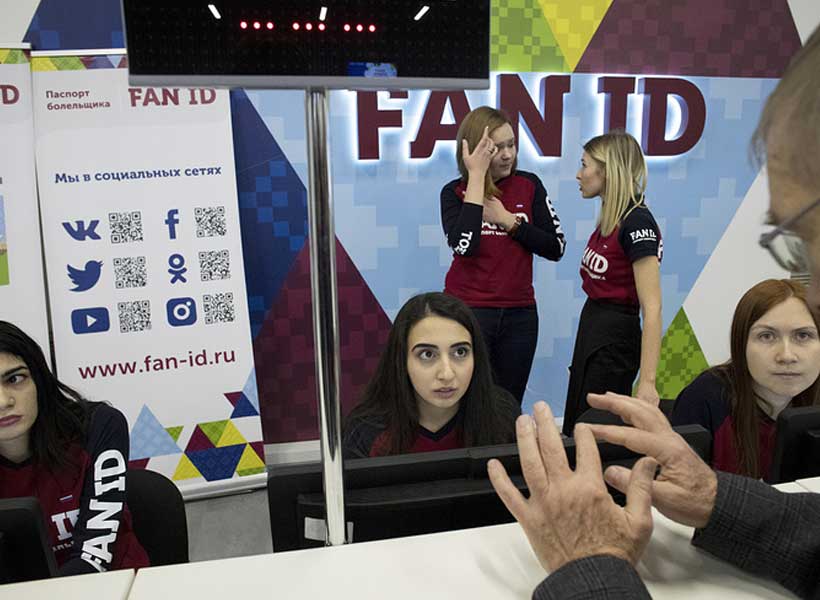
In order to attract fans as it was during the FIFA matches, Russia’s diplomatic missions abroad have started informing potential fans of the procedure for entering the Russian Federation during the Championships, specifically, how to obtain personal spectator cards or FAN IDs.

Russia’s diplomatic missions abroad have received FAN ID samples and related pamphlets for fans. FAN IDs allow their holders to enter the Russian Federation multiple times visa-free from May 29, through July 2, and to exit from the Russian Federation multiple times. The visa is provided exclusively free of charge, that is without any payment of fees, from May 29 through July 12, 2021.

The Foreign Ministry has instructed Russia’s diplomatic missions abroad to issue high-priority visas to media representatives, participants in sporting events and certain other categories of foreign citizens planning to take part in the Championships.

During the weekly media briefing, Foreign Ministry Spokeswoman Maria Zakharova discussed the situation about electronic visas to Russia. “It began with the FIFA World Cup. When football lovers, tourists and fans came to Russia despite spooky stories about Russia in Western media, they were shocked by the difference between what they had read and what they actually saw. They saw that our country is truly interesting, wonderful and spectacular,” she said at the briefing.

She, however, recalled how many people wanted to stay here longer and extended their visas and how many wanted to return. It was at that time that discussions began on the need to take relevant efforts to attract sports fans and change the negative social attitudes and image among foreigners.

The World Cup has left an indelible impression on the memory of many foreign fans who arrived in the country from all over the world. “I think the point here is not about our response to something, but about the desire to show what we really are, our country and give people an opportunity to decide for themselves,” explained Zakharova.

Significant to recall here that at the end of the last FIFA World Cup, President Vladimir Putin said: “We prepared responsibly for this major event and did our best so that fans could immerse themselves in the atmosphere of a magnificent football festival and, of course, enjoy their stay in Russia – open, hospitable, friendly Russia – and find new friends, new like-minded people.”

FIFA World Cup also ran in summer, from June 14 to July 15, in ten (10) different cities in Russia. The foreign fans who received Fan IDs and purchased tickets for the matches went to Russia without visas. After the World Cup, President Putin declared that the Fan ID holders would have the right to visit repeatedly visa-free until the end of that year.

UEFA Euro Cup is set in 11 cities, namely in London (England), Munich (Germany), Rome (Italy), Baku (Azerbaijan), Saint Petersburg (Russia), Bucharest (Romania), Amsterdam (The Netherlands), Budapest (Hungary), Glasgow (Scotland), Copenhagen (Denmark) and Seville (Spain). The European Championship 2020, for the first time, played in different countries. The tournament includes 12 cities in honour of the anniversary of the competition. The European Championship in 2020 marked 60 years.


Click to comment

Leave a Reply

Your email address will not be published. Required fields are marked *

Sports

UEFA, CONCACAF, AFC Begin Talks on Rival FIFA Tournaments

Published

on

UEFA Club Competitions

By Adedapo Adesanya

European, North and Central American, and Asian football governing bodies have begun preliminary discussions on organising rival international tournaments to those run by the Federation of International Football Association (FIFA).

According to Bloomberg, the talks involve the Union of European Football Associations (UEFA), the Confederation of North, Central America and Caribbean Association Football (CONCACAF), and the Asian Football Confederation (AFC).

The proposed rival competitions represent the latest challenge to FIFA president Gianni Infantino, following his failed plan to spin off the organisation’s commercial operations in a deal involving JPMorgan Chase & Co.

Such tournaments could threaten FIFA’s lucrative international competition circuit, including the World Cup, which generated more than $9 billion during the 2026 edition, a record for the tournament.

UEFA, whose members are home to some of the richest domestic leagues in the world, has led efforts to pressure Mr Infantino to leave office. Despite shelving the plan to further commercialise FIFA’s operations, the European body is still considering a boycott of the World Cup and other FIFA competitions if Infantino remains president.

The first major tournament that could be affected by any boycott is the 2027 Women’s World Cup in Brazil, although several youth competitions are scheduled to take place in the coming months.

According to one of the people familiar with the discussions, the proposed alternative competitions could provide players with opportunities to participate in international tournaments if a disruption to FIFA competitions occurs.

The three confederations also demanded an independent review of Infantino’s World Cup proposal in an open letter issued on Monday.

They argued that, as president of Switzerland-based FIFA, Mr Infantino has a responsibility to act in the best interests of the organisation.

“When trust is broken through deception, when an individual places himself above the collective that entrusted him with authority, that duty has been abandoned,” UEFA, Concacaf and the AFC said in the letter.

The three confederations called for a fully ⁠independent review into the stake sale proposal.

“Football’s strength has ⁠always been its unity,” the statement concluded. “We call for that unity to ‌be honoured now, for leadership that serves football, not ‌seeks ‌to command it.”

FIFA comprises more than 200 national associations organised under six regional confederations. Besides UEFA, CONCACAF and the AFC, the other confederations are the Confederation of African Football (CAF), South American Football Confederation (CONMEBOL) and Oceania Football Confederation (OFC).

The next FIFA presidential election is scheduled for March, with Mr Infantino planning to seek a third four-year term, which would be the final term permitted under the organisation’s rules.

Continue Reading

Sports

Can South Africa’s Provincial Gambling Model Work in Nigeria?

Published

on

nigeria gambling framework

South Africa is not new to gambling legislation and regulatory affairs. As opposed to relying on one singular gambling regulator, like the UK and Malta, South Africa opts for a provincial licensing system, meaning it allows state provinces to regulate gambling, with the model supported by a national legislation. As Nigeria continues to shape and reform its gambling industry, questions are arising.  Can Nigeria use South Africa’s provincial gambling model as a blueprint to monitor online gaming?

South African Gambling Model explained

South Africa monitors gambling both via its national gambling laws along with provincial regulators. Online gaming laws are outlined by the government on a national level, with each province in charge of licensing, compliance and enforcement within each region.

Although widely debated, the current South African market allows sports betting sites to operate legally, yet casino gambling is still regarded as illegal.  Having said that, sports betting sites do offer games of chance such as slot games, table games and quick games via their platforms.

Whilst the main legislation is laid out by the South African government, respective provinces are in charge of the following gambling elements with the region:

  • License bookmaker sites
  • Monitor games with fixed odds offered by platforms
  • Tracks legal compliance and regulations
  • Collects gambling taxes that are generated
  • Promotes responsible gambling practices.

Nigeria’s current gambling framework

Just like South Africa, Nigeria has ample potential in the gambling industry. Currently, the country does not have any licensing procedures in place to legally operate an online casino. Having said that, no laws forbid Nigerian players to join offshore online gambling sites and tempt their luck at gambling.

Sports betting sites in Nigeria are legal. This means, players have the option to go online, register at a sports site and place bets. The National Lottery Regulatory Commission is in charge of the legal framework, with many states developing their own licensing bodies, or in the process of.

Latest court cases in Nigeria and South Africa are giving more power to provinces and states to outline gambling laws, with the government ready to support new laws and licensing bodies.

Could South Africa’s decentralized provincial system serve as a blueprint?

Nigeria and South Africa are very much alike in terms of territories. The latter has 9 provinces, with Nigeria having 36 states and the Central Federal Territory. The constitutional infrastructure of both aligns, with states and provinces having their own gambling territories to monitor. Both countries have a love for sports, with both participating in major sporting events such as the African Cup, Boxing and major athletic competitions. Several provinces in Nigeria have already established a foothold in the gambling market with Lagos being a major player. In recent years, we have seen many live events shown on DAZN, TNT and ESPN happening live from Nigeria. Can the country capitalise from that?  Having Nigerian provinces and regions regulate their own gambling laws just like South Africa will see the market grow, flourish and hopefully see also online casinos or fixed odds games being available to enjoy online.

South Africa’s sportsbetting sites have been working with legislators to officially legalize online casinos. Currently, South African players can register as betting sites and enjoy online games. In theory, they are the everyday online games we grew to love at online casinos, but they are called ‘ fixed odds games’ which in the eyes of South African lawmakers, this is not illegal to do.

Having Nigeria states set the gambling regulations for the region, will see the country move forward in terms of progress, and will also please many online punters. Each state can look at the numbers generated by the state and adapt laws and regulations in line with the customer’s gaming needs. Nigeria, can benefit massively from applying South Africa’s decentralized system as a model of excellence or blueprint.

How will Nigeria benefit from developing State gambling laws and regulations?

Having control of gambling within the state is an important factor to consider. The Nigerian states can develop laws based on customer feedback, activity and state needs. Currently, Nigeria players are allowed to visit offshore sites, register and play, so why not have the possibility of doing so within the state?  Nigeria would benefit massively by doing so, and here is what each state can obtain by legalising online casino gaming:

Revenue Opportunities

  • Licensing Fees paid by each online casino / sportsbook site
  • Collecting of taxes and contribution to the state’s GDP
  • Vast employment opportunities for Nigerians
  • Economic development by investing tax money into State development.
  • Better control on gambling activities happening within the state
  • Licensing online casinos will see operators flock to grow in a new and flourishing market.

Things to consider if Nigeria adopts the South African provincial model

Adopting the South African model of provincial licensing can also pose some challenges for Nigeria. With 36 states, 36 licensing bodies would need to be established, with a centralised body overseeing and setting national gambling standards. Whilst each state can opt to have different technical standards, Nigeria needs to find a way to adopt a compliance stronghold. Each license would need to be monitored, and this could be done adopting the South African model of a national legislation. Operators would need to have a closer look at each state, and ultimately decide on which license to acquire. The good news is that states will deal with licensing requirements at a state level, and thus the process would be easier from an operator standpoint.

Responsible Gambling regulations can be outlined at a national level, with each state having to abide by RG. Centralised RG rules will see Nigeria dealing and tackling illegal and problematic gambling, with states having a blueprint of how to help gamblers in need.

Next Steps for Nigeria

With sporting markets and gambling opportunities everywhere, Nigeria could adopt the South African model or go for a hybrid model of provincial gambling. A national gambling authority would set the minimum regulatory standards. Technical infrastructure and requirements can also be standard across all Nigeria. Ultimately, each state would be responsible in issuing licenses, and operators upholding their part by complying to compliance rules set by licensing states.

The above model can mirror South African’s model, improve enforcement and also attract new operators to Nigeria’s markets. Success is achieved when national standards are clearly set, promoting discussion and cooperation amongst Nigerian states.

Success would depend on creating clear national standards, promoting cooperation among state regulators, and ensuring consistent consumer protections across all jurisdictions. Online Gambling is indeed a growing market, with Nigeria benefitting massively by adopting a standard regulatory system within each state collaborating.

Continue Reading

Sports

Super Falcons’ 2027 World Cup Hopes Alive Despite WAFCON Exit

Published

on

Super Falcons WAFCON 2026

By Adedapo Adesanya

The Super Falcons can still qualify for the 2027 FIFA Women’s World Cup despite losing to Cameroon in the quarter-finals of the 2026 Women’s Africa Cup of Nations (WAFCON) on Sunday.

Nigeria, the 10-time African champions, were beaten 1-0 by the Lionesses after conceding an early free-kick goal, ruling them out of contention for one of Africa’s four automatic tickets to next year’s World Cup in Brazil.

However, the Super Falcons still have another opportunity to secure a place at the tournament, albeit through a longer qualification route.

The Nigerian side will join the three other quarter-final losers — South Africa, Ghana and Côte d’Ivoire — in the continental play-offs.

Following their defeat to Cameroon on Sunday, the Super Falcons will quickly regroup to face South Africa on Thursday.

A victory over Banyana Banyana will earn Nigeria one of the two available continental play-off tickets.

The two teams that emerge from the continental play-offs will then advance to the global play-off tournament, where they will battle for the final remaining places at the 2027 Women’s World Cup.

According to FIFA, the first phase of the global play-off tournament will take place in November and December 2026 at a centralised venue and will feature six teams — two from the Asian Football Confederation (AFC), two from the Confederation of African Football (CAF), one from the South American Football Confederation (CONMEBOL) and one from the Oceania Football Confederation (OFC).

“Using a format which will be confirmed at a later date, two teams will qualify for the final play-off phase,” FIFA stated on its website.

The final play-off phase will be held at a centralised location in February 2027, with the two qualifiers from the first phase joined by two teams from Concacaf, one from CONMEBOL and one from UEFA.

The six teams will be drawn into three paths, with a direct knockout match in each path determining the final three teams to qualify for the World Cup. Teams from the same confederation will not be drawn in the same pathway.

This means only three teams from the global play-off tournament will ultimately secure places at the World Cup in South America next year.

The Super Falcons, therefore, have little room for error if they are to maintain their record of appearing at every edition of the Women’s World Cup since the tournament was introduced in 1991.

At the 2023 World Cup, Nigeria reached the Round of 16 before losing to eventual finalists England on penalties.

Continue Reading