Technology
3 Startups Win $150,000 at MEST Africa Tech Summit
Pan-African entrepreneurial training program, seed fund, and incubator, MEST Africa, yesterday closed its fourth successful MEST Africa Summit, in partnership with Microsoft.
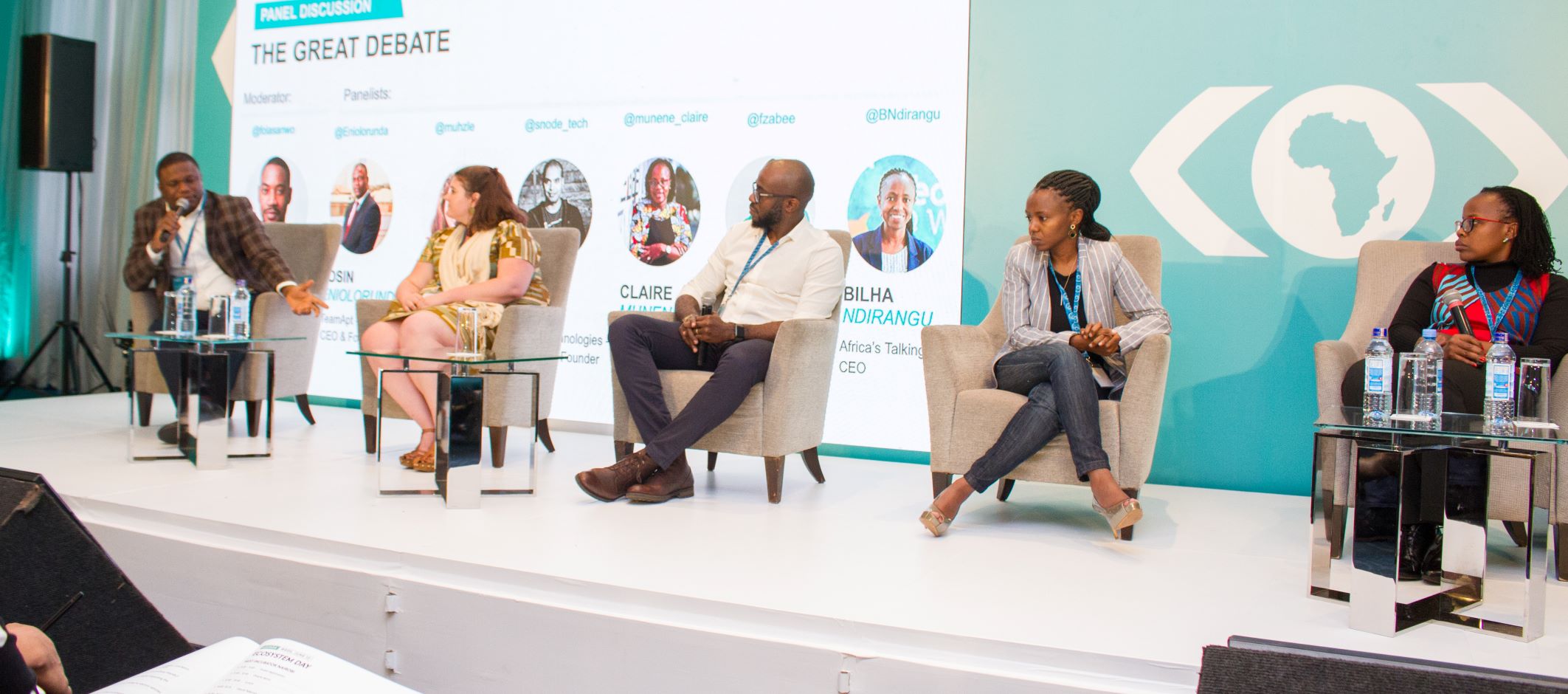
The event saw entrepreneurs, investors, ecosystem players and executives from across Africa and the globe meet to explore innovations and rising stars in the African tech ecosystem.
Panelists discussed topics ranging from data in the fintech space, to the latest in agritech and healthcare, to ways we can cultivate a Pan-African tech ecosystem, and more.
In addition to keynotes from MEST Founder Jorn Lyseggen, Microsoft’s Chris Lwanga and Lori’s Josh Sandler, key speakers this year included Dr. Bitange Ndemo, Philip Thigo, Andreata Muforo (Partner, TLcom), Bilha Ndirangu (CEO, Africa’s Talking), Ngozi Dozie (Co-Founder, Carbon) as well as representatives from Google Launchpad, Safaricom, the African Development Bank and more.
This year’s Summit was held in partnership with Microsoft. Additional sponsors included Liquid Telecom, Africa’s Talking, Oracle, Intel, Lori Systems, Flutterwave, Stratlink, Ethiopian Airlines and a number of ecosystem partners.
The Summit was held at the Radisson Blu Hotel in Nairobi on Conference Day, and the Nairobi Garage, home of MEST Africa’s Nairobi Incubator, on Ecosystem Day – both buzzing atmospheres as more than 300 guests came together.
Back by popular demand, Conference Day began with The Great Debate, as representatives from key African markets argued in favour of their home nations regarding which is best to launch a business. The day culminated in the finals of the MEST Africa Challenge; an annual Pan-African pitch competition, and ended with a twist. Rather than choosing one winner, the judges awarded $50,000 in equity investment from MEST and $25,000 in credit from Microsoft to each of three startups: Oze from Ghana, Snode Technologies from South Africa and WayaWaya from Kenya.
With discussions across a number of industries including AI and IoT, healthcare, cleantech and more, and an exclusive peek inside the MEST Africa Training Program and Incubator, the Summit saw an emergence of new thought leaders outlining the main opportunities and challenges for Africa’s next generation of entrepreneurs.
Ecosystem Day on June 12 also saw the rollout of workshops designed for entrepreneurs and developers, led by sponsors, by Microsoft Azure, Liquid Telecom, Intel, Stratlink and MEST.
Aaron Fu, Managing Director at MEST Africa, mentioned, “It’s our fourth year running the Summit and it always serves as a reminder of what Africa can achieve with the right blend of talent and experience.
“Over the three days, it’s always amazing to observe how the relationships between attendees grow, and the fact that we are able to facilitate that is something we never take for granted.
“We started this with the aim of creating a space for honest discussions on how the continent can continue to move forward and markets can come together – my personal hope is that we continue to see this grow and that more collaborations across markets take shape.”
MEST Africa has been training, supporting and investing in tech entrepreneurs on the continent for more than 10 years. Over 330 individual entrepreneurs have been trained at MEST, and nearly 60 tech companies have been launched via seed funding and mentorship.
Five companies have exited, including Amplify Payments Ltd. (Amplify) who was recently acquired by leading Nigerian fintech player, One Finance Limited (OneFi), to further develop the payments ecosystem in Nigeria.
Since its 2008 launch in Accra, Ghana, MEST has been at the forefront of driving some of the continent’s most successful entrepreneurs – pushing them to scale, while achieving Pan-African and global reach and recognition. MEST has invested over $22 million to date, with portfolio companies going on to receive follow-on funding.
Technology
9 African Firms, Others for 2026 AWS Social Entrepreneur Accelerator Cohort
By Modupe Gbadeyanka
Nine African organisations, including Nigeria, will join 33 others from the USA, Australia, India, the UK and others for the fourth Social Entrepreneur Accelerator cohort of Amazon Web Services (AWS).
The companies from Africa chosen for the 2026 edition of this programme are from Nigeria, Kenya, Ghana, South Africa, Cameroon and Tanzania.
These founders are using cloud and AI technology to solve skills shortages, youth unemployment and food security. Building from the ground up, they are creating African solutions for African challenges.
Nigeria leads the selection with three organisations, namely Sabi Scholar, Kayode Alabi Leadership and Wetech Incorporated.
The chief executive of Sabi Scholar, Mr Divine Iloh, said he is creating an “operating system” for African higher education, enabling any university to launch online degrees in 30 days, a potential game-changer for the continent’s 200M+ youth population.
For Kayode Alabi Leadership, the founder, Hammed Kayode Alabi, is reducing inequalities by empowering underserved young people to lead and innovate through transformative education and technology-driven solutions to solve local challenges and thrive as community changemakers.
As for Wetech Incorporated, established by Gabriella Uwadiegwu, it is building Africa’s largest pipeline of women in technology, from training to mentorship to direct employment pathways.
Kenya follows with two organisations, KuzeKuze and STEM Centre Africa. According to the CTO of KuzeKuze, Enock Sangaka Mong’are, the organisation is building “education passports,” as digital records that follow learners throughout their lives, making personalised education measurable and scalable.
While STEM Centre Africa, a non-profit launched in 2017 by two brothers, Dancun, the CTO and Denish Akoum, the CEO, to promote hands-on STEM education, including coding, robotics and 3D design, reaching over 18,000 + students since inception, with 90 per cent gaining proficiency in Python, Scratch and electronics. Operating two centres in Homa Bay County with 10 organisational partners, SCA aims to reach 100,000 learners by 2030.
The remaining four spots are shared by Ghana, South Africa, Cameroon and Tanzania.
In Ghana, BASICS International, founded by CEO Patricia Wilkins, is breaking cycles of poverty by providing education, certified digital skills training and holistic support to underserved children and youth, equipping them to thrive academically, economically and socially.
For South Africa, FunHouse Digital, founded by Ayabulela Yokwana, is turning gaming lounges into self-sustaining education hubs in rural communities – profits from gaming directly fund free coding and digital literacy programs.
In Cameroon, EduCloud, founded by Rosius Ndimofor Ateh, delivers hands-on Cloud and AI workshops across Africa, bridging the gap between academic theory and industry-ready skills.
From Tanzania is Fiqra Academy, founded by CEO Gerald Revocatus. The firm is creating a direct pipeline from digital skills training to employment for East African youth, with certifications that lead to real careers through their digital learning platform.
In collaboration with Deloitte, the accelerator provides technical training, strategic business planning, and ongoing AWS and Deloitte support to help mission-driven organisations scale.
Since 2023, the programme has supported more than 100 social entrepreneurs across 34 countries, bringing together a global community of social entrepreneurs who are working to address some of the world’s most urgent challenges across education, health and climate resilience.
“Africa’s representation in this cohort reflects what we’re seeing across the continent: a generation of founders who don’t wait for conditions to be perfect. They build anyway.
“Our role is to ensure they have access to the same world-class cloud and AI technology as any startup in Silicon Valley and the support to scale impact across borders,” the General Manager for Sub-Saharan Africa at AWS, Jyoti Ball, stated.
Technology
Telco Ownership Changes Above 10% Now Subject to NCC Approval
By Adedapo Adesanya
The Nigerian Communications Commission (NCC) and the Corporate Affairs Commission (CAC) have introduced a new regulatory requirement mandating prior approval for significant changes in the ownership structure of telecommunications companies operating in Nigeria.
This was contained in a statement jointly signed by the Director of Public Affairs at the NCC, Mrs Nnenna Ukoha and Head of Public Affairs at the Corporate Affairs Commission, Mr Rasheed Mahe.
According to a joint press release issued by the two agencies, the directive, which takes immediate effect, requires all licensed telecom operators seeking to transfer ownership or control of shares amounting to 10 per cent or more of their total share capital to first obtain a Letter of No Objection from the NCC before such transactions can be registered by the CAC.
The statement reads in part, “The directive, which takes immediate effect, requires all licensed communications companies seeking to transfer ownership or control of shares amounting to 10 per cent or more of their total share capital to obtain a Letter of No Objection from the NCC before such transactions can be registered with the CAC.
“The requirement is in line with the provisions of Section 90 of the Nigerian Communications Act 2003, Regulation 28(2) of the Competition Practices Regulations 2007, and Regulation 42 of the Licensing Regulations 2019, which empower the NCC to monitor transactions involving licensees and ensure fair competition within the sector.
“Under the new arrangement, the CAC will only process and register requests for changes in shareholding structures of telecommunications companies where the transaction involves 10 per cent or more of the company’s shares and is accompanied by evidence of prior approval from the NCC.
“According to the two regulatory agencies, the measure is aimed at strengthening oversight of significant ownership changes, preventing anti-competitive practices, and preserving a fair and competitive communications market. It is also expected to enhance transparency, boost investor confidence, provide greater regulatory certainty, and support the long-term stability and sustainability of Nigeria’s telecommunications industry.
The NCC and CAC reaffirmed their commitment to fostering a transparent, stable, and investor-friendly business environment. Both agencies pledged continued collaboration to promote fair market practices, strengthen regulatory compliance, and ensure the orderly development of Nigeria’s communications sector.”
Technology
Rising Cyber Threats Could Undermine Business Sustainability, Profitability—ISSAN
By Modupe Gbadeyanka
The relevant stakeholders have been urged to take urgent action to curb the rising sophistication of cyber threats, which could undermine business sustainability and profitability.
This call was made by the Information Security Society of Africa – Nigeria (ISSAN) during its monthly meeting held in collaboration with MAXUT Consulting.
The group noted that identity theft, mobile fraud, ransomware, and social engineering attacks are threats to organisations, especially those who may struggle to protect information assets, maintain operational resilience, and address vulnerabilities before they can be exploited.
The president of ISSAN, Mr David Isiavwe, who doubles as the Executive Director for Risk Management at Nova Bank, stressed that cybercriminals are deploying increasingly sophisticated attack methods targeting individuals, businesses, critical national infrastructure, and strategic assets.
Among the threats highlighted were identity theft, Business Email Compromise (BEC), phishing, ransomware, WhatsApp account hijacking, Distributed Denial-of-Service (DDoS) attacks, payment card fraud, cryptocurrency-related attacks, and other forms of social engineering.
According to him, the increasing frequency and sophistication of cyberattacks mean cybersecurity can no longer be viewed solely as an IT issue but as a critical business and national security priority.
To address these challenges, he urged organisations to adopt proactive risk management practices, implement continuous monitoring systems, promptly address vulnerabilities, and invest in regular cybersecurity awareness programmes for employees and customers.
Also, the importance of leveraging emerging technologies such as Artificial Intelligence (AI), Machine Learning (ML), and automation to enhance threat detection and response capabilities was emphasised.
“No organisation can successfully confront today’s cyber threats in isolation. Information sharing, collaboration, and collective vigilance remain essential to protecting our digital ecosystem and safeguarding public trust,” the ISSAN leader said at the event, which featured a technical presentation titled, Confronting the New Mobile Threat Landscape: Beyond User Authentication.
ISSAN reaffirmed its commitment to promoting cybersecurity awareness, capacity building, information sharing, and industry collaboration to strengthen Nigeria’s cyber resilience and support a secure digital economy.
-
Feature/OPED6 years agoDavos was Different this year
-
Travel/Tourism10 years ago
Lagos Seals Western Lodge Hotel In Ikorodu
-
Showbiz3 years agoEstranged Lover Releases Videos of Empress Njamah Bathing
-
Banking8 years agoSort Codes of GTBank Branches in Nigeria
-
Economy3 years agoSubsidy Removal: CNG at N130 Per Litre Cheaper Than Petrol—IPMAN
-
Banking3 years agoSort Codes of UBA Branches in Nigeria
-
Banking3 years agoFirst Bank Announces Planned Downtime
-
Sports3 years agoHighest Paid Nigerian Footballer – How Much Do Nigerian Footballers Earn